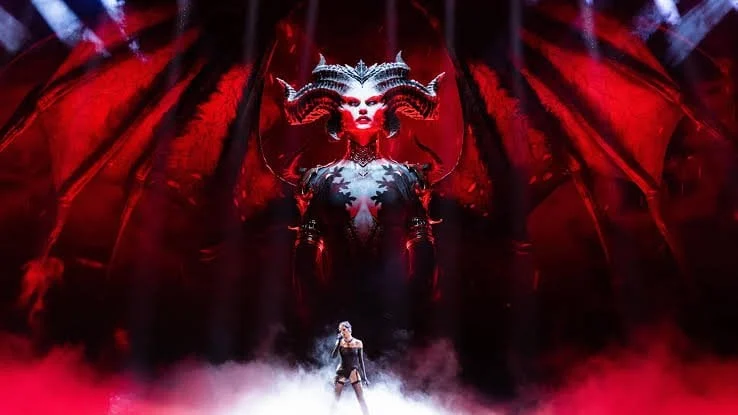
The dark, gothic landscape of Sanctuary is officially set to transition from the interactive medium of video games to the streaming screen. During the highly anticipated opening ceremony of BlizzCon 2026 at the Anaheim Convention Center, Blizzard Entertainment President Johanna Faries confirmed that an animated series based on the iconic Diablo franchise is currently in active development at Netflix. This announcement marks a significant milestone in Blizzard’s long-term strategy to expand its intellectual property beyond the confines of traditional gaming, leveraging the massive, multi-generational appeal of a series that has defined the action-RPG genre for three decades.
A Legacy of Darkness: Three Decades of Sanctuary
The Diablo franchise first emerged in 1996, a year that fundamentally altered the landscape of PC gaming. Created by Blizzard North, the original title introduced players to the town of Tristram and the harrowing quest to descend into the depths of a cathedral to confront the Lord of Terror. The game’s isometric perspective, randomized loot systems, and atmospheric storytelling became the blueprint for countless imitators.
Over the subsequent 30 years, the franchise has expanded into a sprawling tapestry of lore. From the visceral combat of Diablo II—widely regarded as one of the greatest sequels in gaming history—to the divisive yet commercially successful Diablo III, and finally the expansive, live-service model of Diablo IV released in 2023, the franchise has maintained a consistent thematic core: the Eternal Conflict. This central struggle between the High Heavens and the Burning Hells, with humanity trapped in the middle as a casualty and a pawn, provides a narrative foundation that is ripe for the serialized, long-form storytelling format typical of modern adult animation.
The Strategic Partnership with Netflix
Netflix’s involvement in the project is part of a broader industry trend where streaming giants aggressively acquire or license premium gaming intellectual property. Following the success of projects like Castlevania, Arcane (based on Riot Games’ League of Legends), and Cyberpunk: Edgerunners, Netflix has proven that high-fidelity animation can capture both hardcore fans and general audiences.
Blizzard’s official statement regarding the partnership emphasizes a commitment to narrative depth: “After decades of bringing entire universes to life through our games, we’re partnering with some creative powerhouses to tell even more stories beyond gaming across new screens. A new animated series set in the world of Diablo is in development with Netflix. More details will be shared in the future, but this is only the beginning, with even more taking shape across our universes.”
While specific creative leads, showrunners, or animation studios have not yet been disclosed, the project represents a significant shift for Blizzard. Under the corporate umbrella of Microsoft—following the successful closure of the $69 billion acquisition of Activision Blizzard in 2023—the company is clearly pivoting toward a transmedia strategy. By utilizing the reach of Netflix, Blizzard can re-engage lapsed players and introduce the complex, gritty lore of Sanctuary to a broader global demographic.
BlizzCon 2026: A New Era for the Studio
The announcement was the centerpiece of BlizzCon 2026, a two-day festival that carried significant weight as the first iteration of the event held under Microsoft’s direct ownership. For Blizzard, the event was not merely a celebration of the past but a declaration of future intent. Johanna Faries, who has been instrumental in navigating the studio through post-acquisition transitions, noted that the timing of the announcement was deliberate.

“BlizzCon in and of itself represents so much for all of us to be able to shine a light on all the great work going on at Blizzard,” Faries stated in an interview with Variety. “We have put a lot of thought into this moment, and why now, and how do we continue to capture and build on the momentum we’re experiencing as an organization.”
The pressure to deliver at this specific BlizzCon was palpable. With the gaming industry facing increased scrutiny regarding development cycles and quality control, the announcement of a Diablo series—paired with the reveal of the Diablo 5 teaser trailer—aimed to reassure stakeholders and fans that Blizzard remains a powerhouse of content creation. The transition from the "Activision-Blizzard" era to the "Microsoft-Blizzard" era has seemingly provided the studio with the capital and creative freedom to pursue these high-budget multimedia endeavors.
Industry Implications and Market Context
The move to adapt Diablo for television is a calculated risk that reflects current market data. Action-RPGs are inherently combat-focused, often prioritizing mechanics over character-driven narratives. Translating this into a linear television format requires a substantial departure from the player-agency model of the games. However, recent history suggests that audiences are increasingly receptive to dark fantasy animation.
The success of Arcane demonstrated that a gaming IP could win critical acclaim, including Primetime Emmy Awards, by focusing on character development within an established, beloved world. Diablo, with its rich cast of characters—such as Tyrael, Deckard Cain, Lilith, and Inarius—offers a wealth of narrative material. Analysts suggest that the series will likely focus on the prequel events of the Eternal Conflict or perhaps a side-story that explores the formation of the Horadrim, allowing for a fresh perspective that does not require the viewer to have played all four main entries in the game series.
Furthermore, the synergy between game launches and media adaptations is a powerful marketing engine. With Diablo IV still receiving seasonal updates and Diablo 5 now in the public eye, the animated series will serve as a constant touchpoint for the brand, maintaining engagement in between major software releases. This creates a "sticky" ecosystem where players of the game are incentivized to watch the series, and viewers of the series are funneled into the games.
Challenges and Future Prospects
Despite the enthusiasm, the project faces significant challenges. The Diablo fanbase is notoriously protective of the series’ aesthetic—a signature "gothic, dark, and gritty" look that has defined the brand since the mid-90s. Any deviation from this tone, or any perceived simplification of the lore for mass consumption, could lead to fan backlash. The production team will need to balance the high-octane violence and demonic imagery inherent to the source material with the narrative pacing required for a television series.
Moreover, the animation style will be a critical point of contention. If the series opts for a 3D, game-engine-style aesthetic, it risks feeling like a long-form cutscene. If it opts for a hand-drawn or stylized approach—similar to the acclaimed Castlevania—it could stand out as a distinct piece of art. Given Netflix’s successful track record with stylized animation, it is probable that the project will aim for a unique visual signature that honors the dark oil-painting aesthetic associated with the Diablo concept art of the late 90s.
As development continues, the industry will be watching closely. The success of this project could determine the viability of other Blizzard franchises for similar adaptations. If Diablo succeeds, it is not difficult to imagine a World of Warcraft anthology series or an Overwatch cinematic universe appearing on the horizon. For now, the focus remains on the depths of the Burning Hells, with fans worldwide waiting to see if the small-screen transition can capture the same addictive, dark, and legendary essence that has made Diablo a pillar of the gaming industry for thirty years. Further details, including casting, director assignments, and a release window, are expected to be unveiled in the coming months as the project moves out of pre-production.