Oscilloscope Laboratories has officially unveiled the new United States trailer, key art poster, and theatrical release schedule for Game, a distinct genre-bending British survival thriller directed by John Minton. Set against the gritty backdrop of the late-summer 1993 UK underground rave scene, the film merges the claustrophobic tension of traditional wilderness survival narratives with psychedelic psychological horror. The project is distinguished by its unconventional creative team, featuring a musical score and co-writing contributions from Portishead co-founder Geoff Barrow, and starring Marc Bessant alongside Jason Williamson of the electronic punk duo Sleaford Mods. Following an initial festival circuit run in 2025, the film is scheduled for a select US theatrical release via Oscilloscope Films beginning December 4, 2026, with an initial run at Alamo Drafthouse cinemas.
Core Plot Dynamics and Narrative Setup
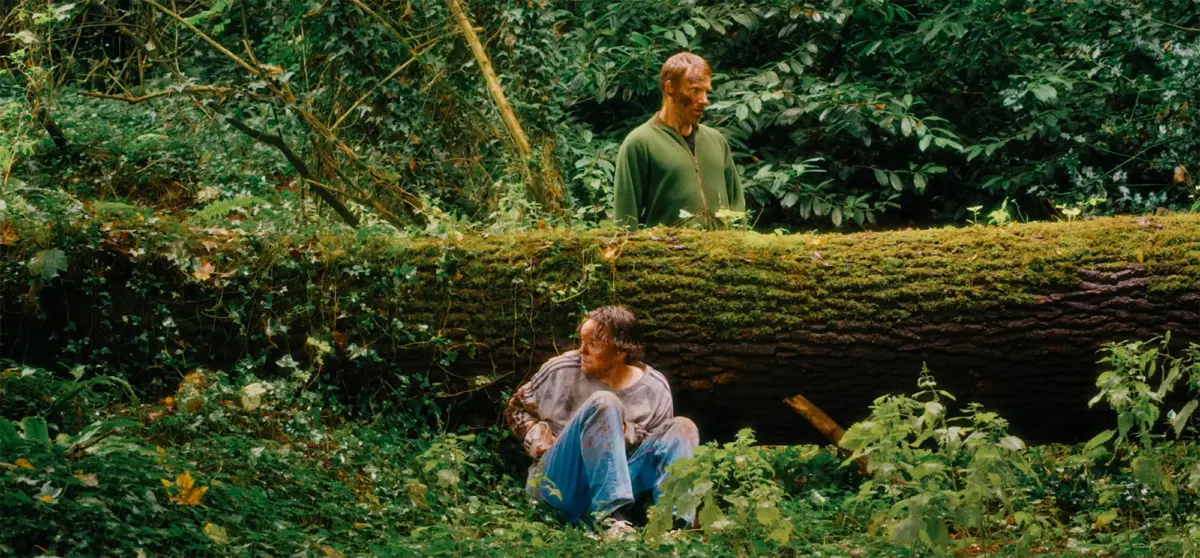
The narrative of Game plunges viewers into the tense aftermath of a nocturnal catastrophe in the remote British countryside. Set in late August 1993, the plot centers on David, an aging veteran of the illegal rave circuit portrayed by Marc Bessant. Having recently executed a high-stakes heist, David flees into the secluded, densely wooded wilderness carrying a substantial stash of illicit cash and narcotics.
The escape is abruptly cut short when David loses control of his vehicle, resulting in a devastating high-speed car crash deep within the forest canopy. Left trapped within the mangled wreckage of the automobile, injured, immobile, and vulnerable to the elements, David hangs in a precarious balance between survival and mortality.

The film shifts from a fast-paced crime thriller into a psychological endurance test when a local poacher, played by Jason Williamson, stumbles upon the wreckage. Rather than offering aid or summoning emergency rescue services, the poacher adopts a chillingly passive stance. He lingers as a watchful, unsettling presence, seemingly content to let the harsh wilderness and mounting injuries finish the job. As hours stretch into days and environmental conditions deteriorate, David is forced into a desperate, claustrophobic battle of wills and wits. Survival ultimately depends on his ability to outlast both the unforgiving natural terrain and the apex predator lurking at its edge.
Behind the Scenes: A Collaborative Art-House Production
Game marks the feature-length directorial debut of British filmmaker John Minton, an artist widely recognized for his extensive work in music video direction, visual art, and projection design. Minton’s distinct visual style heavily influences the atmosphere of the film, which early promotional materials have described as a "psychedelic Deliverance."
The development of the screenplay was a collaborative endeavor, credited jointly to Geoff Barrow, Marc Bessant, John Minton, and Rob Williams. Production duties were spearheaded by Geoff Barrow and Deborah Rawlings. Barrow’s involvement extends far beyond writing and production; as a founding member of the influential trip-hop band Portishead and the soundtrack composer for films like Ex Machina and Men, Barrow brings a signature sonic landscape to Game. The auditory design of the film relies on industrial soundscapes and hallucinogenic textures to mirror the psychological unraveling of the protagonist.
Casting choices further ground the film in authentic British counterculture. Marc Bessant, primarily known for his work as a graphic designer and art director for prominent UK music labels, takes on his first major leading film role. Opposite him is Jason Williamson, the incendiary frontman of Sleaford Mods, whose reputation for abrasive, working-class social commentary translates into a deeply unsettling, taciturn cinematic antagonist.

Chronology and Distribution Timeline
The journey of Game from conception to US distribution spans multiple phases across international markets:
- August 1993 (In-Universe Setting): The narrative timeline unfolds in the late summer, capturing the height of the UK free party and rave era before the passage of the Criminal Justice and Public Order Act 1994 imposed severe restrictions on unauthorized gatherings.
- Late 2025: Following the completion of post-production, Game embarked on its international festival run, premiering at select specialized film festivals in the United Kingdom and Europe to generally favorable reviews regarding its atmospheric tension and unique premise.
- Late 2025 (Initial UK Promotion): The original UK-focused promotional trailer debuted online, generating niche interest among fans of independent British cinema, electronic music history, and psychological thrillers.
- November 13, 2026: Oscilloscope Laboratories officially released the localized US trailer, official poster, and launch details for the North American market.
- December 4, 2026: The scheduled US theatrical release date, commencing with specialized runs at Alamo Drafthouse locations and select arthouse cinemas nationwide.
Contextualizing the 1990s British Rave Scene in Cinema
To fully understand the premise of Game, it is necessary to examine the cultural significance of its setting. The early 1990s in the United Kingdom represented a golden age for illegal warehouse parties, outdoor free festivals, and the burgeoning techno and house music movements. Driven by anti-establishment sentiment and a widespread youth culture phenomenon, this era created a distinct subculture characterized by escapism, chemical experimentation, and a rejection of traditional societal norms.
While numerous documentaries and fictional dramas—such as 24 Hour Party People or Beats—have explored the hedonistic highs of the rave era, Game subverts the standard nostalgic formula. By stranding an aging participant of this counterculture in a rural, pre-digital environment devoid of music, crowds, and communal safety nets, the film explores the vulnerability of a generation aging out of a transient lifestyle. The stark contrast between the neon-lit, bass-heavy escapism of the rave and the isolating, silent brutality of the British woods provides a thematic commentary on the inevitable collision between youthful escapism and harsh reality.
Distribution Strategy and Audience Reception
Oscilloscope Laboratories, the independent film distribution company founded by the late Adam Yauch of the Beastie Boys, acquired the rights for the North American release of Game. Known for championing idiosyncratic, artist-driven, and boundary-pushing independent cinema, Oscilloscope’s positioning of the film at Alamo Drafthouse theaters aligns with the distributor’s target demographic: cinephiles interested in genre subversion, auteur-driven debuts, and cult cinema.

Early critical reactions from its festival screenings emphasize the film’s reliance on practical effects, minimalist dialogue, and atmospheric dread rather than traditional jump scares. Industry analysts note that while Game is unlikely to compete with wide-release Hollywood blockbusters, its distinct pedigree—combining prominent figures from the UK independent music scene with a gritty survivalist aesthetic—positions it to find a dedicated cult following in the home video and streaming markets following its theatrical window.
As arthouse distribution continues to navigate shifting consumer habits in the mid-2020s, specialized projects like Game demonstrate the ongoing viability of regional genre filmmaking that bridges the gap between music subcultures and psychological horror. Minton’s debut stands as a testament to the enduring appeal of the man-versus-nature survival trope, recontextualized through a uniquely British, countercultural lens.