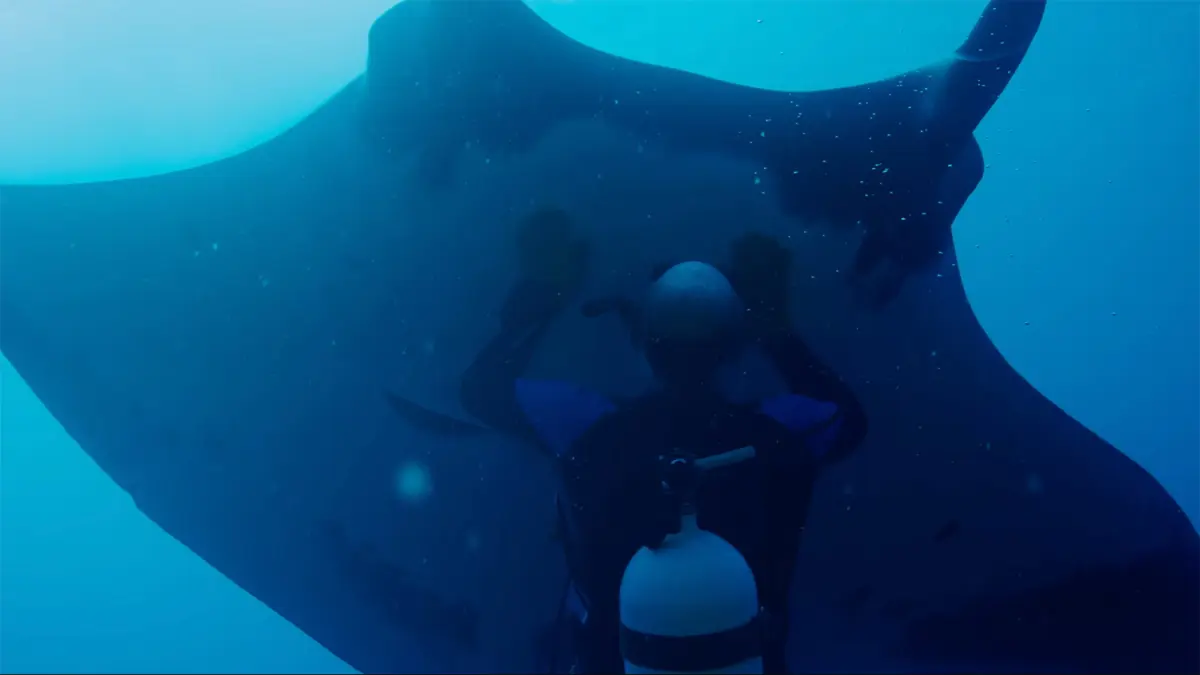
The global distribution rights and theatrical rollout schedule have officially been confirmed for The Last Dive, a poignant feature-length documentary directed by acclaimed filmmaker Cody Sheehy. Distributed by Area 23A, the film chronicles the extraordinary, two-decade relationship between Terry Kennedy, an American military veteran and former Hell’s Angel living in Baja, California, and an immense 22-foot oceanic manta ray named Willy. Following its initial world premiere at the 2025 Tribeca Film Festival, the documentary is slated for a worldwide theatrical release beginning in November 2026.
The newly released official trailer, accompanied by key promotional art and character posters, offers audiences a glimpse into a narrative that explores cross-species companionship, personal redemption, and the emotional toll of aging and mortality. Standing as a thematic companion to celebrated nature documentaries like My Octopus Teacher, The Last Dive examines how profound interactions with the natural world can fundamentally realign a human life, steering an individual away from a troubled past toward unexpected stewardship and conservation.
Main Facts and Narrative Overview
At the center of The Last Dive is Terry Kennedy, an octogenarian American expatriate who has spent the better part of his adult life embedded in the coastal ecosystems of Baja, Mexico. Kennedy’s backstory is marked by the rugged, counter-cultural turbulence of his youth as a member of the Hells Angels, followed by his transition into a life centered around the open water. According to the documentary’s production notes and director Cody Sheehy, Kennedy was a man heavily burdened by the psychological weight of his past until an accidental, transformative encounter with marine wildlife altered his trajectory.
Enter Willy, a massive 22-foot oceanic manta ray (Mobula birostris) inhabiting the waters of the Baja Peninsula. Over a span of twenty years, the magnificent creature established a predictable, communicative routine with Kennedy. The manta ray would regularly approach Kennedy’s sailboat, utilizing its cephalic fins to slap the vessel’s hull as an unmistakable acoustic signal that it was time for another underwater excursion.

These synchronized dives evolved far beyond casual wildlife encounters into a sophisticated, trusting partnership. The documentary details how this bond catalyzed a profound shift in Kennedy, turning a hardened former biker into a passionate, de facto advocate for marine life and oceanic preservation. Now in his eighties, Kennedy faces the physical limitations of advanced age and resolves to undertake one final maritime expedition. Navigating to a remote volcanic island, his objective is twofold: to seek a final reunion with his long-time aquatic companion, and to achieve the emotional closure necessary to bid a final farewell.
Chronology and Production History
The journey of The Last Dive from conception to global distribution spans several years of meticulous field production, editing, and festival navigation.
Pre-Production and Field Filming
Director Cody Sheehy, known for his ability to translate complex human and scientific narratives to the screen through projects like Voices of Mongolia, Beyond the Mirage: The Future of Water in the West, and Make People Better, began developing the project alongside a veteran production team. Producers Rachel Cohen, Jana Edelbaum, Christopher Gebhardt, Randy Gebhardt, and Mark Monroe collaborated to capture the remote underwater environments of Baja, Mexico, blending archival materials of Kennedy’s younger years with high-definition underwater cinematography of oceanic manta rays in their natural habitat.
Festival Circuit Premiere
The documentary made its high-profile debut at the prestigious Tribeca Film Festival in 2025. Screened before critics and documentary enthusiasts, the film drew positive notices for its intimate storytelling, striking underwater visuals, and the emotional weight of Kennedy’s twilight mission. Festival screenings established the film’s reputation as an emotionally resonant entry into the wildlife and environmental documentary subgenre, prompting Area 23A to secure distribution rights for a broader commercial footprint.
Theatrical Release Rollout
Following a carefully managed festival run throughout late 2025 and mid-2026, the filmmakers and distributors finalized a global theatrical release strategy. The official trailer debuted in October 2026, setting the stage for a rollout in select theaters worldwide commencing on November 10, 2026.

Supporting Data: Marine Biology and Human-Animal Bonds
To fully appreciate the narrative framework of The Last Dive, it is vital to examine the biological realities of oceanic manta rays and the scientific context surrounding inter-species communication.
- Species Profile: The oceanic manta ray (Mobula birostris) is the largest species of ray in the world, capable of reaching wingspans up to 23 feet (7 meters) or more. They are pelagic filter feeders, highly migratory, and possess the largest brain-to-body mass ratio of any fish species.
- Cognitive Complexity: Marine biologists have increasingly recognized mobulid rays as highly intelligent, sentient animals capable of recognizing individual humans, displaying curiosity, and engaging in complex spatial navigation and social learning.
- Longevity: Oceanic manta rays have lifespans estimated to exceed 40 to 50 years in the wild, making a 20-year observational and interactive relationship biologically plausible and historically significant for researchers tracking individual animal behaviors over prolonged periods.
The documentary highlights these scientific realities not through dry exposition, but by anchoring data to the visceral, lived experience of an aging diver whose mental health and life purpose became inextricably linked to the survival and presence of an individual marine animal.
Director and Production Team Backgrounds
The credibility of The Last Dive is anchored by its established creative team, whose collective portfolio spans critical journalism, historical archiving, and high-end scientific filmmaking.
Director Cody Sheehy has built a career focusing on human resilience and environmental transformation. His prior work on Beyond the Mirage demonstrated an aptitude for handling ecological vulnerabilities, while Make People Better highlighted complex ethical landscapes in science.
The production collective brings considerable industry weight:

- Mark Monroe: A celebrated documentary writer and producer whose credits include critically acclaimed, emotionally gripping non-fiction features such as The Cove, The Dissident, and The Beatles: Get Back. Monroe’s structural storytelling influence is evident in the pacing and emotional resonance of The Last Dive.
- Rachel Cohen and Jana Edelbaum: Veteran independent film producers with extensive experience in shepherding prestige documentaries and narrative features through the global market.
- Christopher and Randy Gebhardt: Executive producers who provided financial and logistical backing necessary to sustain long-term remote oceanic shoots in the challenging waters of the Baja Peninsula.
Broader Impact and Industry Implications
The release of The Last Dive arrives at a time of shifting paradigms within environmental and nature documentary filmmaking. For decades, traditional wildlife documentaries favored an observational, objective distance—often presenting nature as pristine, untouched wilderness entirely divorced from human intervention. However, the immense success of projects like Netflix’s Academy Award-winning My Octopus Teacher established a clear public appetite for narratives that explicitly center on the emotional, reciprocal relationships between humans and wild animals.
Shifts in Conservation Storytelling
By framing oceanic preservation through the personal lens of Terry Kennedy’s redemption and his bond with Willy, The Last Dive utilizes character-driven storytelling to foster empathy for marine ecosystems. Environmental psychologists and media analysts note that audiences are frequently more motivated to engage in conservation efforts when complex ecological data is synthesized into personal, relatable narratives. The film’s emphasis on the vulnerability of oceanic manta rays—which face severe threats from targeted fisheries, bycatch, and habitat degradation—serves an educational purpose without relying on heavy-handed didacticism.
Commercial Prospects in the Post-Streaming Era
As independent distributors like Area 23A navigate a crowded theatrical landscape dominated by major studio franchise fare, counter-programming with emotionally resonant, high-quality documentary features remains a viable strategy for capturing niche demographics, older audiences, and film festival enthusiasts. Documentaries focusing on human-animal bonds possess robust international appeal, transcending cultural and linguistic barriers due to their universal themes of love, grief, and connection with the natural world.
As The Last Dive heads toward its November 2026 theatrical debut, it invites audiences to reconsider the boundaries of empathy, the healing power of the natural world, and the enduring legacy of an old sailor and the massive creature that changed his life forever.