The annual pilgrimage of fandom has officially commenced in the heart of Manhattan, drawing tens of thousands of enthusiasts to the Javits Center for New York Comic Con (NYCC). As one of the largest pop culture conventions in North America, the event serves as a massive economic driver for New York City’s hospitality, tourism, and retail sectors, while offering studios and publishers a premier platform to debut upcoming intellectual property. Yet, alongside the excitement of exclusive panels, celebrity photo-ops, and floor-wide merchandising, public health officials and convention organizers have reiterated long-standing protocols regarding crowd hygiene. In massive indoor gatherings where millions of items are handled by thousands of attendees, infectious disease mitigation remains a central operational focus. Medical professionals continue to advise basic preventative measures, such as hand sanitation and avoiding the direct handling of consumables with unwashed hands, to curb the transmission of seasonal pathogens commonly referred to within fandom circles as the convention crud.
Publishing Milestones: The Long-Awaited Arrival of Tove Jansson’s The Hobbit
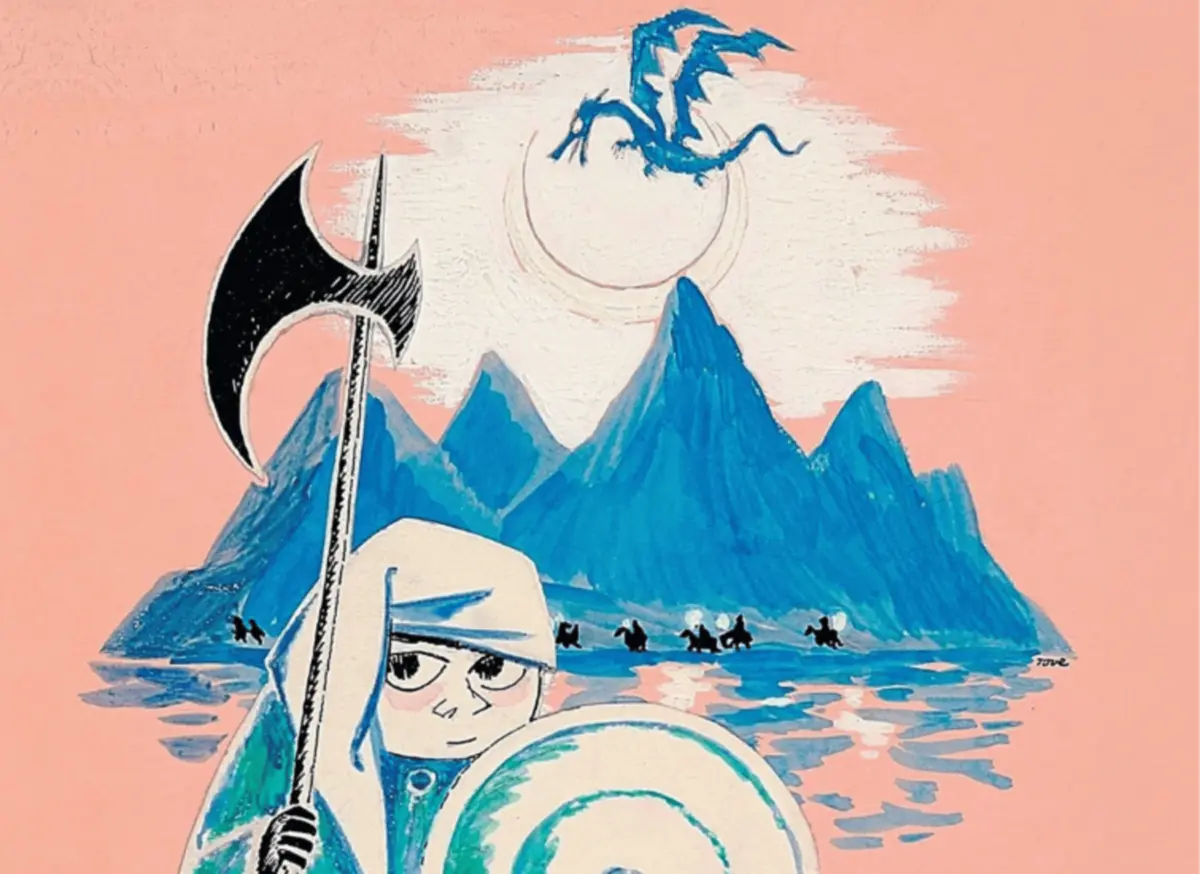
While the exhibition halls of the Javits Center dominate industry headlines, the broader literary landscape is experiencing a significant milestone with the official U.S. publication of The Hobbit: Illustrated by Tove Jansson. Released this week by William Morrow, an imprint of HarperCollins, the volume brings together J.R.R. Tolkien’s foundational fantasy narrative and the distinct artistic vision of the late Finnish-Swedish author and illustrator, best known for creating the beloved Moomin universe.
The transatlantic journey of this specific edition spans decades. While readers in Finland and Sweden have enjoyed Jansson’s whimsical and starkly minimalist interpretations for generations, American audiences have historically been restricted to standard domestic editions featuring Tolkien’s own cartography and spot illustrations, or subsequent interpretations by artists like Alan Lee and John Howe.
Historical archives trace the origin of this unique artistic pairing to a pivotal correspondence initiated by legendary Swedish children’s author Astrid Lindgren. Writing in her professional capacity as a publisher at Rabén & Sjögren, Lindgren approached Jansson with the commission, displaying remarkable foresight regarding Tolkien’s burgeoning legacy. In her initial letters, Lindgren argued that Tolkien’s masterpiece would transcend contemporary children’s literature, asserting that it would become the definitive narrative of the century.
Jansson’s artistic approach to Middle-earth diverges sharply from the high-realism and pastoral romanticism often associated with Tolkien’s legendarium. Her depictions of Smaug the dragon and the company of dwarves lean into the eccentric, expressive, and slightly melancholic aesthetic that defined her broader artistic catalog. Cultural analysts note that the arrival of this edition broadens the American discourse surrounding Tolkien adaptation, demonstrating how international interpretations can recontextualize canonical literary text for contemporary readers.
Television Adaptations and the Resurgence of Classic Maritime Fiction
In the realm of serialized television, autumn lineups are introducing high-profile literary adaptations that continue a long-standing industry trend of mining historical and adventure fiction for prestige streaming audiences. Notably, MGM+ is preparing for the premiere of its new live-action adaptation of Robert Louis Stevenson’s classic pirate novel, Treasure Island.
Set to premiere on Sunday, October 11, the series features an acclaimed ensemble cast including David Oyelowo and Hayley Atwell. Industry observers have noted the curious marketing trajectory of the project, which arrives amidst a crowded landscape of maritime narratives. The series enters the market following the critical acclaim of Starz’s pirate drama Black Sails, a thematic precursor to Stevenson’s novel that developed a passionate cult following despite arguably lower mainstream viewership relative to its production budget.
The enduring appeal of Treasure Island is further underscored by broader industry movements, including Ridley Scott’s reported feature film adaptation slated for theatrical release in 2027. Media analysts suggest that Hollywood’s recurrent return to 19th-century adventure tropes reflects a studio preference for pre-existing intellectual properties that carry built-in global recognition while offering broad creative latitude for revisionist storytelling.
The casting of high-caliber dramatic actors like Oyelowo and Atwell signals a deliberate effort by streaming networks to elevate traditional adventure frameworks into prestige drama territory, appealing to adult demographics seeking narrative depth alongside high-stakes action.
Speculative Nonfiction and Modern Technology in We Radiant Things
Beyond traditional narrative fiction and adaptation, the contemporary essay market is seeing vital contributions from artists exploring the intersection of identity, technology, and alienation. This week marks the wide release of We Radiant Things: Notes on Being Alien and Becoming Cyborg, a new essay collection by acclaimed poet and multidisciplinary writer Franny Choi.
Following the critical success of Choi’s 2019 poetry collection Soft Science, this new release shifts the authorial lens toward critical analysis infused with personal narrative. The collection opens with an incisive examination of Alex Garland’s 2014 science fiction film Ex Machina, using the cinematic text as a springboard to explore broader societal discourses surrounding artificial intelligence, structural racism, coming-of-age narratives, and contemporary technological dependency.
Literary critics have praised Choi’s methodology, which subverts traditional detached academic critique in favor of an emotionally resonant, socially conscious framework. As articulated within the text, Choi approaches cultural criticism "tenderly, from stabbing range," establishing a distinct tone that balances rigorous intellectual inquiry with vulnerable personal reflection. Subsequent chapters in the collection pivot toward other seminal works of speculative media, notably Mamoru Oshii’s anime masterpiece Ghost in the Shell, cementing the book as a major text for readers engaging with the socio-technical anxieties of the twenty-first century.
Streaming Landscapes and Genre Experimentation: The Case of Below
Rounding out the week’s media developments, subscription streaming platforms continue to test audience appetites for high-concept genre hybrids. Netflix’s newly debuted series Below, a supernatural thriller set against the atmospheric backdrop of a coastal Newfoundland community, has generated a polarized critical response since its silent rollout.
Starring established actors Josh Hartnett and Mackenzie Davis alongside Charlie Heaton, the project combines traditional procedural investigation tropes with creature-feature mythos. Initial reviews from major trade publications have spanned a wide spectrum, with Variety characterizing the production as an "exhilarating" genre exercise, while consensus reviews from independent critics oscillate between cautious approval and mild bewilderment regarding its tonal shifts.
The project highlights a broader industry pattern wherein streaming services greenlight high-concept regional thrillers designed to capture global algorithmic engagement through recognizable talent and moody, location-specific cinematography. While questions remain regarding the long-term cultural footprint of such mid-tier streaming releases, their presence underscores the ongoing demand for standalone, atmospheric genre television that occupies the space between blockbuster cinema and traditional weekly broadcasting.