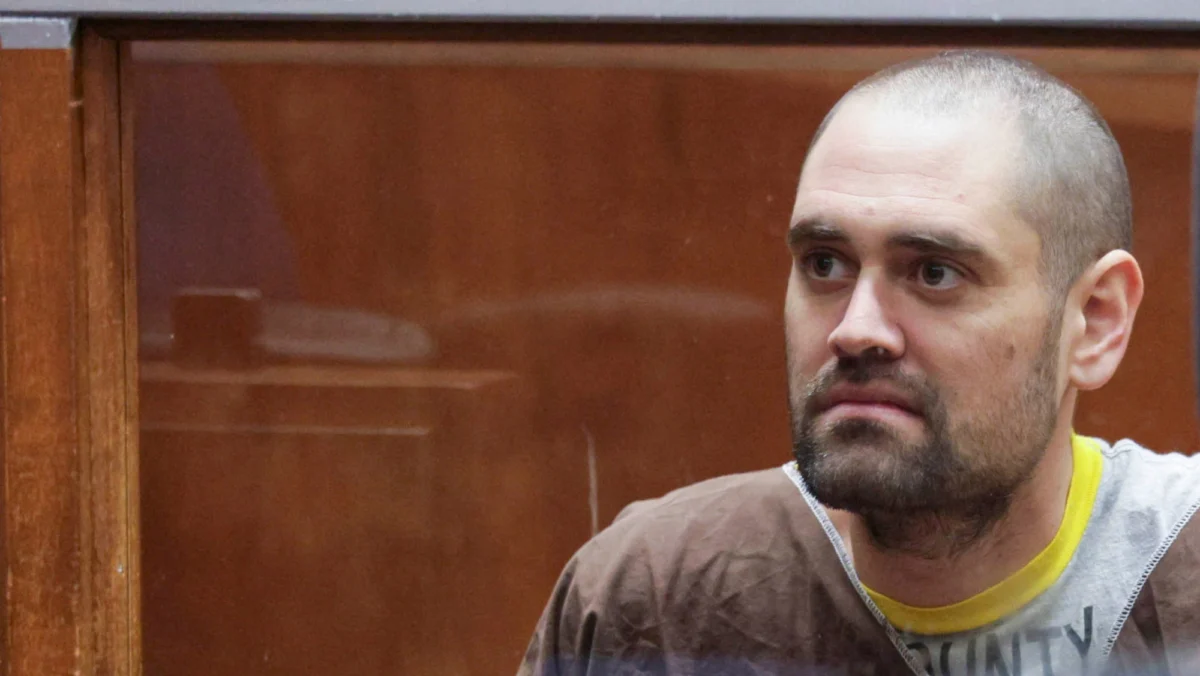
The legal saga surrounding Nick Reiner, the 32-year-old son of the late entertainment industry icons Rob and Michele Reiner, has shifted into a high-stakes civil dispute that highlights the complexities of estate law and the rights of the incarcerated. Currently detained on charges of double homicide, Reiner has launched a concerted effort to unlock his personal trust, arguing that the fiduciaries managing the account are improperly withholding funds under the guise of the California “Slayer Statute.”
At the heart of the litigation is Reiner’s desire to re-engage high-profile defense attorney Alan Jackson. Jackson, a veteran litigator known for representing notable figures such as Harvey Weinstein and Karen Read, previously withdrew from Reiner’s criminal case due to an inability to secure payment. With prosecutors recently announcing that they will not pursue the death penalty—a decision reached following consultations with the victim’s surviving family—the urgency of the criminal defense has shifted toward securing a robust legal strategy for trial. Reiner maintains that his constitutional right to counsel is being impeded by the financial gridlock imposed by his own trust.
The Conflict Over Inheritance and the Slayer Statute
The core of the dispute lies in the interpretation of the California Probate Code, specifically the “Slayer Statute.” This legal provision is designed to prevent a wrongdoer from profiting from their criminal actions. Under this law, an individual who feloniously and intentionally kills another person cannot inherit from the victim’s estate.
The fiduciaries of the Reiner trust have utilized this statute as a blanket justification for halting all disbursements. However, the legal team representing Reiner contends that this application is an overreach. They argue that the trust contains assets that are entirely independent of his parents’ estates. Most notably, the filing highlights that a significant portion of the $1.6 million trust is derived from the estate of Nick’s grandfather, the legendary filmmaker and actor Carl Reiner, who passed away in 2020.
“Nick is not accused of causing his [grandfather’s] death,” the recent court filing states. The defense argues that funds inherited through Carl Reiner should be treated as distinct personal assets. By failing to differentiate between parental inheritance and independent assets, the trustees are effectively punishing Reiner before a verdict is rendered, according to his legal counsel. They further assert that even if the funds were categorized differently, the Slayer Statute does not grant the trustees the authority to seize or withhold assets that do not originate from the victims of the alleged crime.
A Financial Impasse: The Cost of Litigation
The financial strain caused by the litigation is becoming a focal point of the civil case. Court documents reveal that the trust has already expended more than $250,000 in legal fees to defend the fiduciaries against Reiner’s demands. This figure represents nearly 45 percent of the $558,000 distribution that Reiner claims he was contractually entitled to receive upon reaching the age of 30—a milestone he reached before the murders took place.
Reiner’s attorneys emphasize the irony of the situation, noting that the trust’s own administrative costs are rapidly depleting the very assets the fiduciaries claim to be protecting. Furthermore, the defense notes that Reiner has been denied access to even nominal funds for basic jail necessities. The lack of access to his own money for hygiene items and support has become a point of contention, framing the trustees’ actions as punitive rather than protective.
Key Figures and Oversight: The Role of Jodi Montgomery
The lawsuit names both the current and former fiduciaries of the trust. Among the defendants is Jodi Montgomery, a professional conservator who gained national prominence during the high-profile conservatorship of Britney Spears. Montgomery served as Spears’ conservator from 2019 until the legal arrangement was dissolved in 2021. Her inclusion in this litigation adds a layer of complexity to the case, as observers analyze how a professional fiduciary manages the balance between legal risk mitigation and the beneficiary’s rights.
For Montgomery and her co-fiduciaries, the decision to withhold funds is likely a defensive maneuver to avoid personal liability. In cases involving severe criminal allegations, trustees often err on the side of caution to avoid being accused of violating the Slayer Statute, which could lead to personal financial liability if they were to distribute funds that were later deemed illicit.
Chronology of Events
- July 2020: Carl Reiner, the grandfather of Nick Reiner and a titan of the entertainment industry, passes away. His estate contributes significantly to the trust in question.
- Pre-2023: Nick Reiner reaches the age of 30. His legal team contends that a mandatory distribution of $558,000 was required under the terms of the trust but was never fulfilled.
- 2023–2024: Nick Reiner is arrested and charged with the double homicide of his parents, Rob and Michele Reiner.
- Early 2024: Alan Jackson, Reiner’s chosen criminal defense attorney, withdraws from the case due to lack of funding from the trust.
- Mid-2024: Prosecutors announce they will not seek the death penalty in the criminal case, a move intended to provide a measure of relief to the surviving family.
- Present Day: Reiner initiates civil litigation against the trust fiduciaries to compel the release of funds for legal fees and basic support.
Legal and Ethical Implications
The Reiner case serves as a poignant example of the tension between protecting the integrity of an estate and the presumption of innocence in the criminal justice system. While the Slayer Statute is an essential legal instrument to ensure that no one benefits from murder, its application in civil probate court often creates a “freeze” that can leave an accused person unable to mount an effective defense.
Legal experts point out that the right to counsel is a fundamental tenet of the American judicial system. When a defendant’s access to their own private funds is blocked by third-party fiduciaries, it raises questions about the intersection of private trust law and public criminal procedure. If a defendant is stripped of the ability to pay for experienced counsel, the efficacy of the adversarial system is compromised.
Furthermore, the case highlights the risks inherent in professional fiduciary roles. As fiduciaries like Montgomery navigate the legal landscape, they must weigh the potential for being sued by beneficiaries against the risk of being held in contempt or violating fiduciary duties if they act prematurely. The $250,000 already spent on legal fees by the trust underscores a common phenomenon in probate litigation: the assets being fought over are often exhausted by the very process intended to secure them.
As the criminal trial proceeds, the civil court’s decision regarding the release of these funds will likely set a precedent for how future estates handle beneficiaries facing severe criminal charges. Whether the court will order the segregation of “clean” funds—those originating from the grandfather’s estate—from the “disputed” funds remains the critical question. For now, the legal battle continues to unfold, leaving Reiner in a state of financial limbo while he prepares to face the serious allegations against him.