Brazilian-born Japanese director Eiji Uchida returns to his distinctive cinematic territory with "Night Flower," a poignant drama that once again casts its gaze upon the lives of individuals navigating the periphery of society, often rendered invisible by mainstream narratives. The film, currently screening at the esteemed Nippon Connection festival, resonates with the thematic depth and social commentary that characterized Uchida’s critically acclaimed 2020 drama, "Midnight Swan," which garnered significant recognition, including Best Film and Best Actor at the prestigious Japan Academy Film Prize. "Night Flower" continues this exploration, delving into the intricate web of desperation, resilience, and the formation of unexpected bonds among those struggling for survival.
Eiji Uchida’s Cinematic Vision: A Focus on the Unseen
Eiji Uchida has established himself as a filmmaker committed to portraying the raw realities of contemporary Japanese society, particularly focusing on characters who exist outside conventional societal norms. His filmography frequently explores themes of identity, struggle, and the human capacity for connection amidst adversity. "Midnight Swan," for instance, told the story of a transgender woman who unexpectedly becomes a guardian to a neglected teenager, earning widespread critical acclaim for its sensitive portrayal of LGBTQ+ issues and its powerful performances. Its success cemented Uchida’s reputation as a director capable of blending social realism with deeply emotional storytelling, eschewing melodrama in favor of nuanced observation. "Night Flower" builds upon this foundation, further refining Uchida’s signature style by examining the systemic pressures that force individuals into desperate circumstances and the unexpected forms of solidarity that can arise from shared hardship.
The Dual Narrative: Lives Converging on the Margins
The narrative of "Night Flower" unfolds through two initially distinct but ultimately intertwined storylines, meticulously crafting a portrait of lives under immense strain. The first follows Natsuki (portrayed by Keiko Kitagawa), a single mother grappling with the sudden disappearance of her husband, who leaves behind not only his family but also a substantial burden of debt. Forced to become the sole provider for her young son and daughter, Natsuki juggles multiple low-wage part-time jobs during the day, supplementing her meager income by working as a hostess at night. The relentless grind of work, coupled with the emotional and financial pressure, takes a visible toll, leading to moments of exhaustion-induced impatience with her children, quickly followed by profound regret. Her struggle epitomizes the plight of many single-parent households in Japan, where societal support structures can often prove inadequate. According to recent data, single-mother households in Japan face significantly higher poverty rates compared to the national average, underscoring the systemic challenges Natsuki confronts.
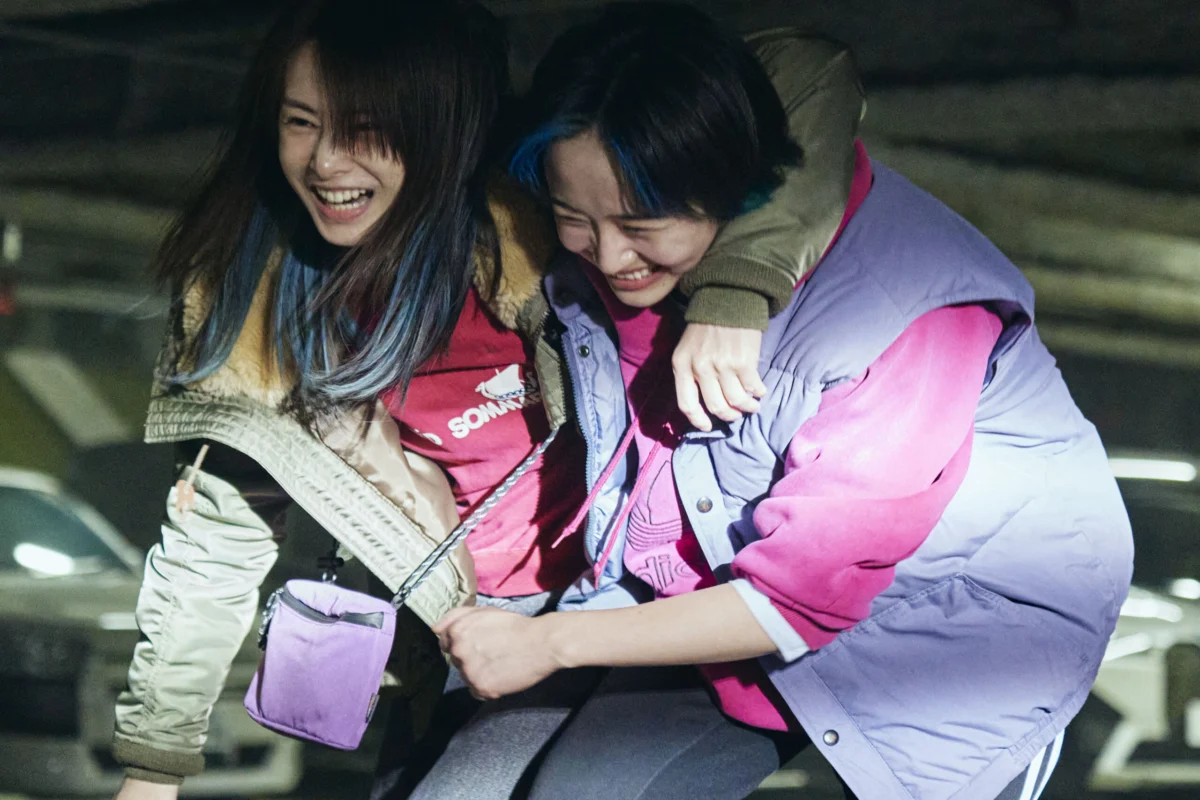
Parallel to Natsuki’s ordeal is the story of Tamae (Misato Morita), a determined and somewhat tomboyish young woman striving to forge a career as an MMA fighter. Despite her athletic prowess and unwavering commitment, financial hardship remains a constant companion. The demanding and often unlucrative nature of professional fighting, particularly for emerging athletes, compels Tamae to supplement her income through sex work, highlighting another facet of economic precarity faced by women in Japan. Both Natsuki and Tamae, despite their differing paths, are united by the invisible chains of financial desperation and the constant pressure to survive in a society that often overlooks their struggles.
A Desperate Alliance: The Genesis of a Found Family
The catalyst for their convergence arrives one night when Natsuki, on her way home, inadvertently witnesses a violent drug deal. The encounter leaves one participant unconscious and, crucially for Natsuki, a bag of pills abandoned on the ground. Desperate and with her financial resources dwindling to mere coins, she makes the agonizing decision to retrieve the drugs, hoping to sell them and alleviate her family’s immediate needs. Her initial, clumsy attempts at dealing prove futile until she encounters Tamae. Recognizing a shared desperation and an inherent vulnerability, Tamae intervenes, offering an unexpected lifeline.
This chance encounter sparks an unlikely partnership, a desperate pact forged out of necessity. Under the watchful eye of a local drug lord (played by Ryuta Shibuya), Natsuki takes on the role of the drug seller, leveraging her unassuming appearance to move product, while Tamae becomes her protector, her physical strength and intimidating presence serving as a deterrent against potential threats. What begins as a transactional relationship driven by survival gradually evolves into something far deeper. The two women, along with Natsuki’s children, begin to form a makeshift family, a "found family" built not on blood ties but on mutual need, shared vulnerability, and an emerging sense of loyalty. This fragile yet deeply emotional bond becomes the film’s beating heart, exploring how profound connections can emerge from the most unlikely and perilous circumstances.
The precarious balance of their new lives is shattered when one of their clients, a young woman from a wealthy family, triggers a chain of events that rapidly spirals out of control. This incident propels Natsuki and Tamae into a far more dangerous situation than they had ever anticipated, testing the limits of their partnership and their nascent familial bond.
Nippon Connection 2026: Showcasing Contemporary Japanese Cinema
"Night Flower"’s inclusion in the lineup of Nippon Connection 2026 underscores its significance within contemporary Japanese cinema and its potential for international resonance. The Nippon Connection Japanese Film Festival, held annually in Frankfurt, Germany, is one of the largest and most important festivals dedicated to Japanese cinema worldwide. Founded in 2000, it has grown to become a crucial platform for showcasing the breadth and diversity of Japanese filmmaking, from established masters to emerging talents, across various genres including fiction, documentary, animation, and experimental works.
The festival serves as a vital bridge for cultural exchange, offering European audiences a unique opportunity to engage with Japanese culture through its cinematic expressions. For films like "Night Flower," a screening at Nippon Connection provides critical international exposure, fostering dialogue about social issues prevalent in Japan and demonstrating the universality of human struggles. The festival’s programming often highlights films with strong social commentary, making "Night Flower" a natural fit for its discerning audience, which includes critics, industry professionals, and cinephiles. The 2026 edition, like its predecessors, promises a diverse program, with Uchida’s film standing out as a powerful example of social realist drama.
Thematic Resonance: Beyond Blood Ties and Social Critique
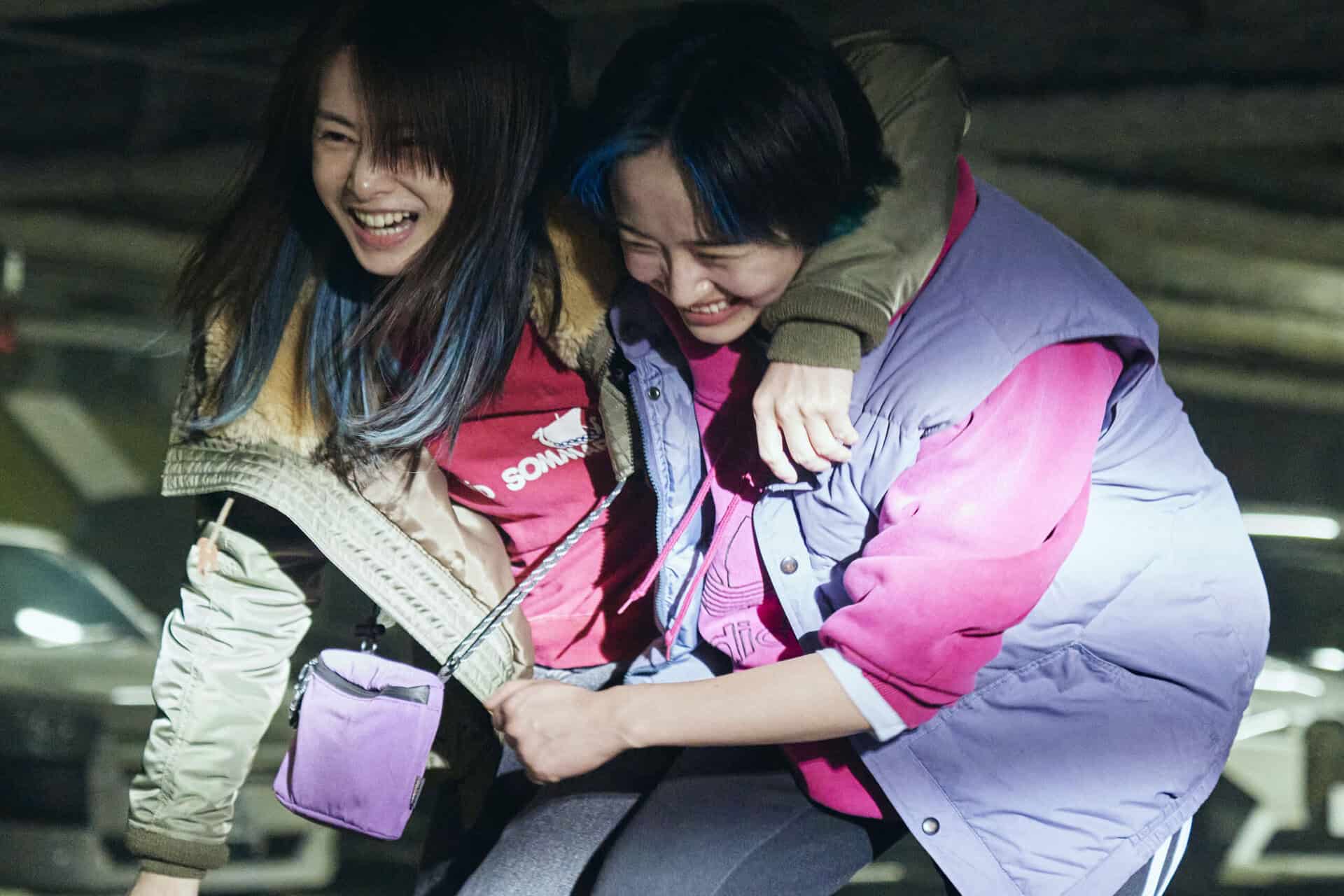
While the premise of a desperate mother resorting to crime for her children’s welfare is not entirely novel, "Night Flower" distinguishes itself through Uchida’s focused exploration of the "found family" dynamic. This central theme examines how individuals, pushed to the brink by societal neglect, can forge bonds that transcend traditional definitions of family. The film posits that necessity, shared experience, and mutual support can create a sanctuary, however precarious, for those otherwise adrift. This emotional core is presented without sentimentality, allowing the audience to witness the organic development of trust and affection between Natsuki, Tamae, and the children.
Furthermore, the film functions as a stark critique of the systemic failures that create and perpetuate such marginalization. "Night Flower" directly references the shortcomings of Japan’s welfare system, depicting Natsuki’s futile attempts to secure official support. Her experiences highlight a common societal perception that often treats those seeking aid with suspicion, implying exploitation rather than recognizing genuine need. This portrayal resonates with ongoing debates in Japan about social safety nets and the efficacy of government assistance programs, particularly for vulnerable populations such as single mothers and individuals engaged in precarious work. The film subtly but powerfully argues that societal structures themselves contribute to the desperate choices individuals are forced to make.
Uchida also skillfully contrasts different manifestations of motherhood and family within the narrative. Juxtaposed against Natsuki’s raw, instinctual, and desperate maternal love is a subplot involving a wealthy, upper-middle-class family. Here, the father is consumed by his work, and the mother, despite her privileged position, proves incapable of understanding or controlling her "spoiled rich girl" daughter. When crises inevitably arise, the mother’s response is driven by guilt and social anxiety rather than genuine love, culminating in a disturbing act of violence. This stark comparison underscores the film’s nuanced perspective on family, suggesting that economic stability does not automatically equate to emotional health or effective parenting, and that love can manifest in complex, unconventional forms.
Art as Liberation: A Glimmer of Hope
A significant thematic parallel with "Midnight Swan" emerges in "Night Flower" through the depiction of art as a potential escape from hardship. In "Midnight Swan," the young protagonist dreams of becoming a ballerina, finding solace and purpose in artistic expression. Similarly, in "Night Flower," Natsuki’s daughter is presented as a gifted violin player. These artistic talents are not merely incidental details but rather symbolic pathways to liberation. Uchida suggests that for children growing up in harsh realities, artistic expression can offer a form of survival, a means to transcend their immediate circumstances, and a vision of a different future. It represents a fragile yet persistent glimmer of hope amidst the pervasive bleakness.
Subtlety and Power: Uchida’s Directorial Masterclass
What truly elevates "Night Flower" is Uchida’s masterful command of tone and execution. The film deliberately shuns melodrama, excessive dialogue, or an overtly emotional musical score. Instead, everything is understated and restrained, allowing the narrative’s inherent power to emerge from its quietness. The cinematography, the performances, and the overall atmospheric tension carry more weight than explicit exposition. Some of the film’s most poignant and impactful moments are almost entirely silent. A particularly striking scene involves Natsuki unexpectedly witnessing her daughter playing the violin on the street, busking for money. No words are exchanged; the profound impact is conveyed solely through the mother’s anguished gaze, a silent testament to her love, her failure, and her hope. Similarly, Tamae, a character of few words, communicates a wealth of emotion and resolve through her silence and physical presence. This minimalist approach amplifies the film’s emotional resonance, allowing the audience to deeply connect with the characters’ internal struggles.
Despite the often bleak subject matter, Uchida skillfully injects moments of understated humor. These instances, often born from incongruity, provide brief respites from the pervasive tension. Examples include Tamae’s awkward discomfort when forced to wear high heels as part of her sex work, a stark contrast to her masculine MMA persona, or the surprising softening of the intimidating drug dealer by Natsuki’s maternal instincts. These touches of humor serve to humanize the characters further, preventing the film from descending into unremitting despair.
Exceptional Performances and Ensemble Cast
"Night Flower" is anchored by two exceptionally strong central performances from Keiko Kitagawa and Misato Morita, who exhibit an effective and believable chemistry. Misato Morita, already recognized for her talent with Best Supporting Actress awards for previous roles, delivers a controlled yet deeply emotional portrayal of Tamae. Her performance is physically honest and emotionally raw, conveying the character’s inner turmoil and unwavering determination with remarkable nuance. Keiko Kitagawa matches this intensity, bringing a palpable sense of desperation, love, and resilience to her role as Natsuki. Both leads embody the physical and emotional toll of their characters’ struggles, grounding the film in a powerful sense of realism.
The supporting cast further enriches the film. Daisuke Sakuma of the popular idol group Snow Man appears, his presence perhaps owing more to his star power than the depth of his role, yet he contributes to the film’s broader appeal. Ryuta Shibuya of the band Super Beaver delivers a more convincing performance as the menacing but occasionally vulnerable head drug dealer, adding a layer of complexity to the criminal underworld. Long-time Uchida collaborator Kiyohiko Shibukawa makes a welcome, albeit brief, appearance as a private investigator, his consistent presence in Uchida’s cinema adding a familiar touch for fans of the director’s work.
Broader Implications and Uchida’s Enduring Legacy
"Night Flower" solidifies Eiji Uchida’s position as a significant voice in contemporary Japanese cinema, confirming his continued dedication to exploring the lives of society’s marginalized. The film masterfully juggles sharp social critique with emotional precision, all while infusing moments of subtle humor that prevent it from becoming overly didactic. Its screening at Nippon Connection 2026 not only provides a crucial platform for international exposure but also contributes to a broader global conversation about economic inequality, social welfare, and the resilience of the human spirit.
Through "Night Flower," Uchida challenges audiences to look beyond superficial judgments and to empathize with those often deemed "invisible." The film’s understated power and profound humanism ensure its place as a compelling and important work that will undoubtedly resonate with viewers long after the credits roll, cementing Uchida’s legacy as a filmmaker unafraid to confront the uncomfortable truths of society with compassion and artistic integrity.