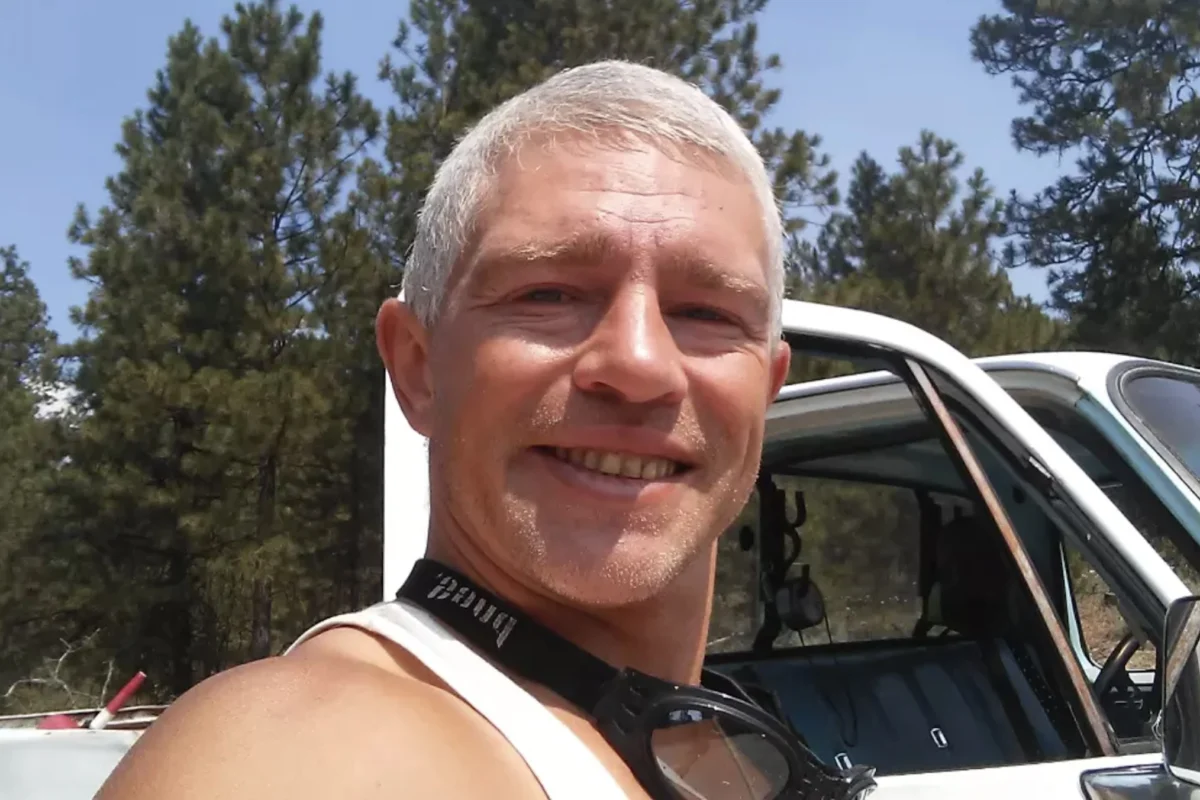
The Okanogan County Coroner’s Office has officially confirmed the cause of death for Matt Brown, the eldest son of the famous Brown family featured on Discovery Channel’s long-running reality series, Alaskan Bush People. Following a forensic examination and toxicology report, officials determined that the 42-year-old reality television personality died by suicide. The primary cause of death was cited as a single penetrating gunshot wound to the head. The coroner’s report also noted significant contributing factors, including the presence of methamphetamine in his system at the time of death and the subsequent immersion of his body in water.
The confirmation comes just days after the search for Brown ended in tragedy. On Saturday, May 30, local authorities and search and rescue volunteers discovered a body in a river south of Oroville, Washington. The location, situated in the rugged terrain of Okanogan County near the Canadian border, had been the focus of intense search efforts after Brown was reported missing. The official identification was made shortly after the recovery, bringing a somber conclusion to a life defined by both high-profile adventure and public personal struggle.
Chronology of the Incident and Recovery Efforts
The timeline leading to the discovery of Matt Brown reflects a period of increasing concern among his family members and the local community. While Brown had spent years living away from the primary family homestead in Washington—often seeking solitude or working through personal issues in relative isolation—his sudden lack of communication prompted a search effort.
On the morning of Saturday, May 30, search and rescue teams concentrated their efforts on the waterways south of Oroville. Oroville is a small town known for its proximity to Lake Osoyoos and the Okanogan River, characterized by swift currents and dense shoreline vegetation. According to reports from the scene, Matt’s younger brother, Noah Brown, was present during the search operations. Noah, who has been a staple of the Alaskan Bush People series alongside his siblings, reportedly assisted volunteers and law enforcement in the physical recovery of the body from the river.
Following the recovery, the body was transported to the Okanogan County Coroner’s Office for a formal autopsy. While initial reports suggested the possibility of an accidental drowning given the location, the forensic evidence of a gunshot wound quickly shifted the investigation toward a self-inflicted injury. The toxicology report, which revealed the presence of methamphetamine, provided further context for the state of mind and physical condition of the deceased in his final hours.
Bear Brown, another of Matt’s brothers, was the first family member to break the news to the public. In a poignant social media update, Bear confirmed that the body found in the river was indeed his brother. "They found a body in the river a few hours ago, and it was positively identified as being Matt," he shared, expressing the shock that reverberated through the "Wolfpack," the nickname the family used for themselves on their television program.
Background: A Life in the Public Eye and Private Struggles
Matt Brown rose to international fame in 2014 with the debut of Alaskan Bush People. As the eldest of Billy and Ami Brown’s seven children, Matt was often portrayed as the charismatic, inventive, and highly skilled outdoorsman of the group. The show, which followed the family’s attempts to live off the grid in the Alaskan wilderness and later in the mountains of Washington, became a cultural phenomenon, drawing millions of viewers fascinated by their unconventional lifestyle.
However, behind the scenes and in later seasons, Matt’s life was increasingly complicated by substance abuse and mental health challenges. His struggle with alcohol addiction first became public knowledge in 2016 when he entered a rehabilitation facility. Despite several attempts at maintaining sobriety, including a second stint in rehab in 2018, Matt’s relationship with the rest of the family became strained. By the time the show moved production from Alaska to a ranch in Washington state, Matt had largely stepped away from the series, choosing to live a more solitary life.
In recent years, Matt had used social media to document his journey toward healing, often posting videos about his life in the mountains, his art, and his efforts to remain sober. He was open about the difficulties of his past, including the pressures of fame and the trauma associated with his upbringing and his father’s strict leadership. Despite these public efforts at transparency, his brother Bear noted that the family remained concerned about his well-being.
"I would have never suspected he would have hurt himself, honestly," Bear Brown stated following the coroner’s report. "He struggled for a long time, as I’ve mentioned, and I worried he was going to end up, like, OD’d or something like that. I didn’t think he would hurt himself." This sentiment underscores the complex nature of mental health crises, where even those closest to the individual may not fully grasp the depth of the despair or the immediate risk of self-harm.
Official Statements and Family Tribute
On Sunday, May 31, the Brown family released a comprehensive statement mourning the loss of a man they described as "intelligent, curious, and creative." The statement sought to balance the public persona of the reality star with the private reality of the brother and son they knew.
"It is with broken hearts that we share the loss of our beloved son, brother, uncle, and friend, Matthew Brown," the family wrote. "To millions of viewers, Matt was known as one of the original stars of Alaskan Bush People. To us, he was so much more. Matt was a gifted outdoorsman, fisherman, boatman, artist, and lifelong learner. He loved adventure, nature, and discovering new things. Matt had an extraordinary mind."
The family did not shy away from the more difficult aspects of Matt’s life, acknowledging the "mistakes, struggles, and painful chapters" that had defined much of his adulthood. "Some of those chapters caused hurt, and we do not minimize that," the statement continued. "At the same time, we do not believe any person’s life should be defined solely by their lowest moments."
The tribute concluded by focusing on his humanity and the legacy of his character: "When we think of Matt, we will remember the young man who loved the wilderness, could navigate rough waters, draw for hours, lose himself in learning, make us laugh unexpectedly, and dream bigger than most people ever dared. He was imperfect. He was human. He was deeply loved. And he will be missed beyond words."
Supporting Data: Substance Abuse and Mental Health in Rural Contexts
The circumstances of Matt Brown’s death highlight several critical public health issues, particularly the intersection of substance abuse and suicide. According to data from the Centers for Disease Control and Prevention (CDC), individuals struggling with substance use disorders are at a significantly higher risk for suicidal ideation and completion. Methamphetamine, in particular, is associated with intense psychological distress, paranoia, and severe "crashes" that can exacerbate underlying mental health conditions.
In rural areas like Okanogan County, access to mental health resources and addiction treatment is often limited by geography and a shortage of specialized providers. National statistics indicate that suicide rates in rural America are often higher than in urban centers, a trend attributed to factors such as social isolation, economic instability, and easier access to firearms.
The mention of "subsequent immersion in water" in the coroner’s report also points to the environmental challenges faced by first responders in the Pacific Northwest. Rivers in the region can be treacherous, and the recovery of individuals in such environments requires specialized dive teams and search and rescue equipment. The involvement of Noah Brown in the recovery process highlights the personal toll these incidents take on family members in close-knit, rural communities.
Broader Impact and Industry Implications
The death of Matt Brown adds to a growing conversation regarding the mental health of reality television participants. The transition from a private, off-grid existence to being the subject of international scrutiny can create unique psychological pressures. For the Brown family, whose entire identity was commodified for television, the boundaries between their real lives and their produced narratives were often blurred.
This tragedy follows the 2021 death of the family patriarch, Billy Brown, who died at the age of 68 after suffering a seizure. The loss of both the father and the eldest son in a relatively short span of time represents a significant turning point for the family and the future of the Alaskan Bush People franchise. While the show has continued to document the family’s life after Billy’s passing, the loss of Matt—a figure synonymous with the show’s early success—leaves a profound void.
Industry analysts suggest that networks may face increasing pressure to provide long-term mental health support and "aftercare" for reality stars, particularly those whose shows focus on high-stress environments or personal trauma. The "Wolfpack" had become a symbol of resilience to many, but the reality of Matt Brown’s death serves as a stark reminder of the vulnerabilities that exist behind the camera.
As the community in Oroville and fans around the world process the news, the focus remains on the importance of intervention and support. Mental health advocates emphasize that addiction and suicidal ideation are often linked, and comprehensive treatment must address both simultaneously.
If you or anyone you know is having suicidal thoughts, please contact the National Suicide Prevention Lifeline by texting or dialing 988. If you or a loved one is in immediate danger, call 911.