Studiocanal has officially released a brand-new 4K trailer for Richard Attenborough’s 1992 biographical drama Chaplin, breathing new life into a film that historically served as a critical milestone in the career of lead actor Robert Downey Jr. The upcoming release brings a pristine visual upgrade to the sweeping cinematic journey of Charles Spencer Chaplin Jr., one of the founding architects of the motion picture industry. While the studio has bypassed a theatrical rollout in favor of a dedicated physical media push, the high-definition restoration arrives amid a broader cultural reappraisal of the film, which initially struggled at the box office upon its initial winter release more than three decades ago.
Main Facts of the 4K Restoration and Release
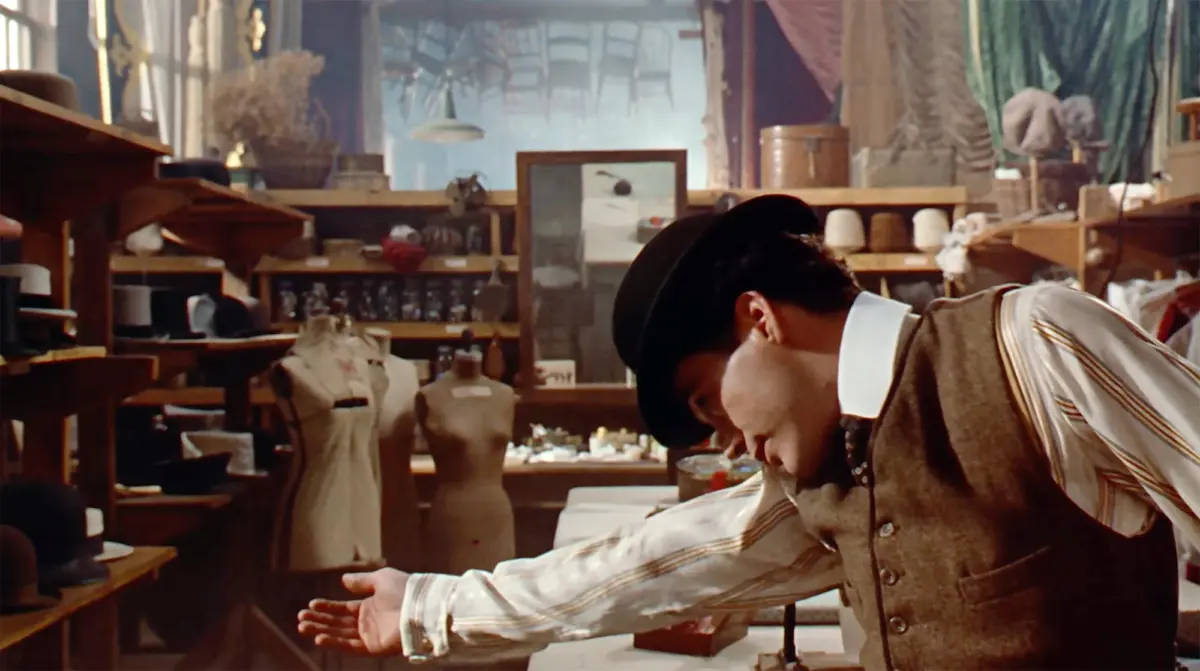
The newly minted 4K restoration of Chaplin is scheduled to debut this fall, anchored by a specialized 4K Ultra HD Blu-ray release distributed via retailers such as HMV in the United Kingdom. Alongside the physical release, Studiocanal has published a newly minted 4K master trailer across digital platforms, offering cinephiles a glimpse at the meticulous visual clean-up applied to the classic 90s biopic.

Directed by the esteemed British actor and filmmaker Richard Attenborough, the production chronicles the tumultuous and triumphant trajectory of Charlie Chaplin’s life. The framing device of the narrative features an aging Chaplin reflecting upon his extraordinary memoir with his editor, contrasting his widespread global adulation against a backdrop of personal controversy, political exile, and profound private loss. The film adapts material from two primary source texts: Chaplin’s own My Autobiography and David Robinson’s definitive biography, Chaplin: His Life and Art.
The feature boasts an expansive ensemble cast featuring major Hollywood figures of the era. Robert Downey Jr. leads the production in his career-defining title role, supported by Sir Anthony Hopkins as fictionalized editor George Hayden, alongside Kevin Kline, Dan Aykroyd, Penelope Ann Miller, David Duchovny, Moira Kelly, Marisa Tomei, and Geraldine Chaplin—the real-life daughter of the legendary comedian, who portrays her own paternal grandmother, Hannah Chaplin. The emotional scope of the production is further elevated by an Academy Award-nominated musical score composed by the celebrated John Barry.
Chronology and Historical Context
The trajectory of Chaplin spans from its protracted development in the late 1980s to its eventual re-evaluation in the modern digital streaming and physical media era. Richard Attenborough, celebrated for his sweeping historical epics and intimate character studies alike, took on the project as his eighth directorial effort, situated chronologically between his anti-apartheid drama Cry Freedom (1987) and his literary adaptation Shadowlands (1993).

Principal photography on Chaplin captured the grand scale of the silent film era, utilizing elaborate set designs to replicate the Victorian slums of South London, early 20th-century music halls, and the burgeoning studio lots of early Hollywood. When the film premiered in December 1992 in both the United Kingdom and the United States, expectations were remarkably high given Attenborough’s track record with prestige historical dramas, most notably his multi-Academy Award-winning 1982 epic Gandhi.
Despite the high profile of the production and a widespread marketing campaign, the film underperformed commercially, failing to recoup its production budget during its initial theatrical run. Pacing critiques and the inherent structural challenges of compressing a sprawling, controversial life into a standard feature-length narrative contributed to mixed critical reception at the time. Nevertheless, the industry recognized the monumental technical and physical transformation undertaken by Robert Downey Jr., whose performance earned widespread acclaim and culminated in his first-ever Academy Award nomination for Best Actor at the 65th Academy Awards in 1993. In total, the film secured three Oscar nominations, including nods for Best Art Direction and Best Original Score, though it ultimately did not win in any category.
Supporting Data and Production Background
The narrative framework of Chaplin relies heavily on historical documentation and rigorous biographical research. Screenwriters William Boyd, Bryan Forbes, and William Goldman synthesized thousands of pages of archival history, working from a story treatment by Diana Hawkins. The primary intellectual property foundation derived from Charles Chaplin’s 1964 autobiography offered a distinct perspective, though the filmmakers intentionally balanced the subject’s self-reported accounts with the more objective analytical framework provided by film historian David Robinson’s 1985 publication, Chaplin: His Life and Art.

Financially, the production was a major international undertaking, backed by Mario Kassar’s independent powerhouse Carolco Pictures alongside StudioCanal. The film’s estimated production budget hovered around $31 million, a substantial sum for a dramatic biography in the early 1990s. Its domestic box office return in the United States stalled at approximately $9.5 million, marking it as a notable commercial disappointment for Carolco, which was navigating financial pressures during that period.
Despite these early commercial hurdles, the cultural legacy of the film has steadily improved. Over the subsequent decades, as younger generations of film enthusiasts discovered the title through home video formats and online film communities, its reputation has evolved. On contemporary cinema-tracking platforms such as Letterboxd, the film maintains a solid average rating of 3.6 out of 5 stars, signaling a warm retrospective appreciation that outpaces its original 1992 box office metrics.
Industry Implications of the 4K Physical Media Renaissance
Studiocanal’s decision to commission and distribute a high-end 4K restoration of Chaplin reflects broader economic and cultural trends within the modern home entertainment landscape. As major Hollywood studios increasingly pivot their resources toward streaming subscription models, boutique physical media labels and European distributors have stepped into the vacuum, catering to dedicated cinephiles who value archival preservation and high-bitrate physical presentations.

The restoration of catalog titles from the late 20th century serves multiple commercial and artistic functions. For the intellectual property holders, upgrading classic negatives to 4K Ultra High Definition ensures that films from the pre-digital celluloid era remain viable for licensing across international television networks, digital storefronts, and premium physical collectors’ editions. For actors such as Robert Downey Jr., whose career subsequently traversed massive blockbuster ubiquity through the Marvel Cinematic Universe before returning to prestige character work, revisiting Chaplin in 4K highlights the formative theatrical foundation upon which his enduring reputation was built.
Furthermore, the release underscores a growing industry appetite for the rediscovery of underappreciated 1990s studio dramas. While the decade is frequently remembered for the birth of modern CGI blockbusters and independent cinema explosions, many mid-budget prestige pictures from that era initially fell victim to shifting audience demographics and crowded holiday box office competition. Through meticulous digital restorations, distributors are providing these titles with a second lease on life, allowing contemporary audiences to re-evaluate historical performances, grand-scale set designs, and musical compositions—such as John Barry’s sweeping orchestrations—with technical clarity that surpasses their original theatrical presentations.