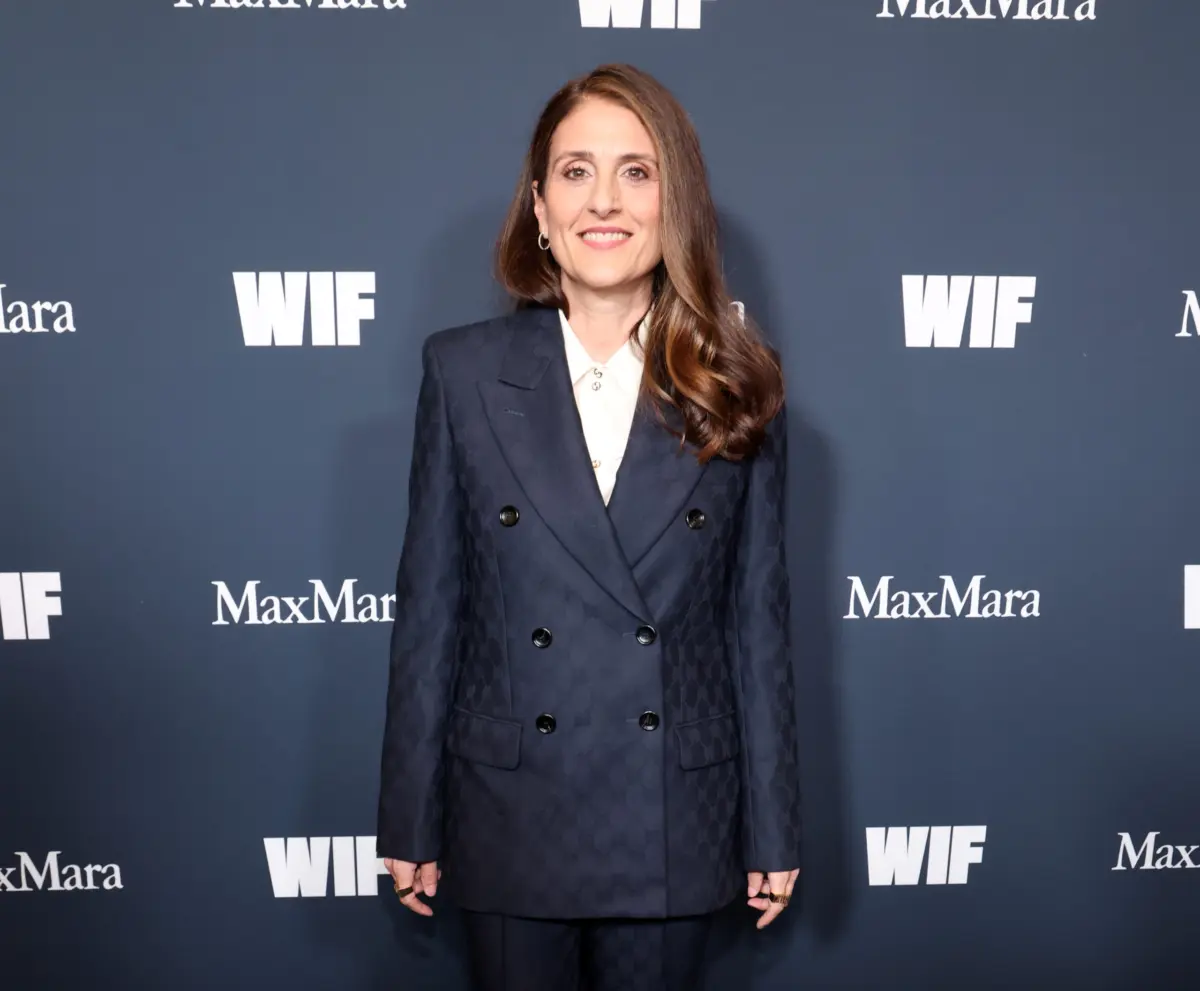
The annual Women in Film (WIF) Honors event, held at the Beverly Hilton, served as the backdrop for one of the most candid and searing indictments of Hollywood’s gender dynamics in recent memory. Pamela Abdy, the former Warner Bros. executive, made her first high-profile public appearance since her departure from the studio—a transition precipitated by the monumental $111 billion merger between Paramount Skydance and Warner Bros. Accepting the inaugural Vanguard Award, Abdy transformed a traditional industry accolade into a platform for addressing systemic inequality, the toll of public scrutiny, and the professional barriers that persist for women in executive leadership roles.
A Career Marked by Resilience and Structural Change
Abdy’s career has long been defined by her ability to navigate the complexities of legacy studios and streaming giants alike. Before her tenure at Warner Bros., where she worked alongside Mike De Luca, Abdy held high-ranking positions at MGM and New Regency, building a reputation for balancing high-concept commercial projects with auteur-driven cinema. Her recognition by WIF was intended to highlight a career that has pushed the boundaries of industry norms. However, the timing of her award—occurring in the immediate aftermath of a corporate restructuring that saw her exit the studio—gave her speech a sense of urgency that resonated throughout the room.
The Vanguard Award, which recognizes leadership and the fostering of industry-wide progress, stands as a testament to Abdy’s influence. Despite her professional achievements, her speech focused less on her resume and more on the precarious nature of the path she and other women have had to forge. By publicly acknowledging her collaboration with De Luca and thanking him for his support through "public failures," Abdy bridged the gap between professional partnership and the personal toll of high-stakes corporate transitions.
The Anatomy of a Raging Narrative
In a fifteen-minute address that held the attention of an industry currently grappling with widespread contraction, Abdy articulated a "pure, unadulterated rage." This expression of emotion served as a direct counter-narrative to the historical criticism she has faced—labels such as "difficult," "emotional," or "combative."
Abdy noted that such descriptors are frequently weaponized to undermine female executives. She detailed a specific pattern of behavior within the industry, where women are encouraged to "tamp down" their professional instincts to appear more palatable, only for that suppression to lead to a more profound, internal burn. This phenomenon, she argued, is not merely an individual struggle but a systemic one. She pointedly addressed the "big-boy pants" mentality, noting that she has been told to smile more—a trope that remains a staple of gender-based workplace discrimination, even at the highest levels of the C-suite.
Challenging the Myth of the "Broken Ceiling"
A central theme of Abdy’s remarks was the misconception that the appointment of a few women to chairperson roles signifies the end of institutional gender bias. Abdy argued that the industry has not, in fact, "paved the way" for future generations as effectively as is often claimed. She highlighted the disparity in visibility, noting that lists of "most powerful women" are ubiquitous, while no such gendered distinction exists for men, simply because men are viewed as the default architects of the industry.
This analysis hits on a core reality of modern Hollywood: while representation has increased in the boardroom, the underlying infrastructure of the business remains resistant to change. Abdy noted that the "traditional tracking" of film success continues to be used as a rationale for excluding women from high-budget productions. The argument—that men will not show up for female-led or female-directed content—has been consistently debunked by box office data, yet it persists as a justification for reduced support and smaller budgets for women in the industry.
The Broader Landscape of Executive Contraction
The timing of Abdy’s speech coincides with a significant period of instability for top-level female executives. Beyond the restructuring at Warner Bros., other notable departures have signaled a potential rollback in executive diversity. The exit of Cindy Holland as Paramount’s streaming chief and the departure of Bela Bajaria from her role as Netflix’s chief content officer have sent shockwaves through the industry.
When asked by The Hollywood Reporter about these departures, Abdy maintained a stance of professional solidarity. She emphasized that the value of an executive’s career is defined by the work they leave behind and the impact they have on the next generation of storytellers, rather than the singular event of a corporate exit. However, the data suggests that these departures are part of a larger, more concerning trend. According to reports from various industry think tanks, including the Geena Davis Institute and the Annenberg Inclusion Initiative, the gains made in gender parity for executive roles have stalled, and in some sectors, regressed as studios tighten budgets and prioritize "safe" bets amidst a struggling theatrical market.
Fact-Based Analysis of Industry Implications
The implications of Abdy’s speech are twofold. First, it highlights the growing disillusionment among veteran executives regarding the "media ecosystem." Abdy’s critique of a clickbait-driven environment suggests that the traditional analysis of cinema is being eroded by the need for sensationalized content. This creates a volatile environment where the success of a film is often filtered through the lens of controversy rather than artistic or commercial merit.
Second, the speech serves as a call to action regarding the next generation. If the industry remains one where women must "fight the fights" of their predecessors, it risks losing the very talent it needs to innovate. Abdy’s focus on the political climate—noting the hope she felt seeing women appointed to top political positions—suggests that she views the entertainment industry as lagging behind other sectors in terms of genuine, structural integration.
A Night of Celebration and Recognition
While Abdy’s speech provided the evening’s most intense moment, the WIF Honors also served to celebrate a diverse group of creators who have made significant strides in their respective fields:
- Adria Arjona: Honored with the WIF Max Mara Face of the Future Award, recognizing her rapid ascent and potential to shape the future of film.
- Gemma Chan and Beth de Araújo: Recipients of the Crystal Award for Advocacy in Film for their work on the project Josephine, which highlights issues of historical representation and social justice.
- Hannah Waddingham: Received the Crystal Award for Advocacy in TV, acknowledging her contribution to the cultural impact of Ted Lasso.
- Salma Hayek Pinault: Awarded the Jane Fonda Humanitarian Award, presented by Fonda herself, for her long-standing commitment to social causes and her work as an advocate for women’s rights.
Looking Toward the Future
Abdy concluded her speech with a message of resilience, stating that she has reached a point in her 31-year career where she no longer prioritizes the opinions of those who dismiss her passion as "difficulty." By reclaiming the term, she redefined it as a marker of someone who is deeply committed to the craft of filmmaking.
As for her next steps, Abdy remained characteristically pragmatic. The uncertainty of her post-Warner Bros. future is, in her view, a "nice thing," providing a rare moment of reflection after decades of constant output. Her commitment to the community remains unshaken, and her speech serves as a defining moment for an executive who is refusing to exit the stage quietly. Whether or not the industry takes heed of her warnings regarding the health of the business and the treatment of female leadership, Abdy has set a clear precedent: the era of the "sublimated" female leader may be coming to an end, replaced by a generation that is increasingly willing to voice its demands for a more equitable future.