The landscape of modern horror television is set to shift once more as Prime Video officially announces a second-season renewal for Mike Flanagan’s acclaimed adaptation of Stephen King’s seminal 1974 novel, Carrie. The decision, confirmed by Amazon executives, comes as a significant development for an anthology-style reimagining that has already proven unafraid to dismantle and reconstruct King’s original narrative framework. While the renewal may catch casual viewers off guard—particularly given the definitive nature of the source material’s tragic climax—creator Mike Flanagan has long maintained that his vision for the White family legacy extends far beyond a single, self-contained television event.
The Evolution of the Adaptation: Main Facts and Narrative Departure
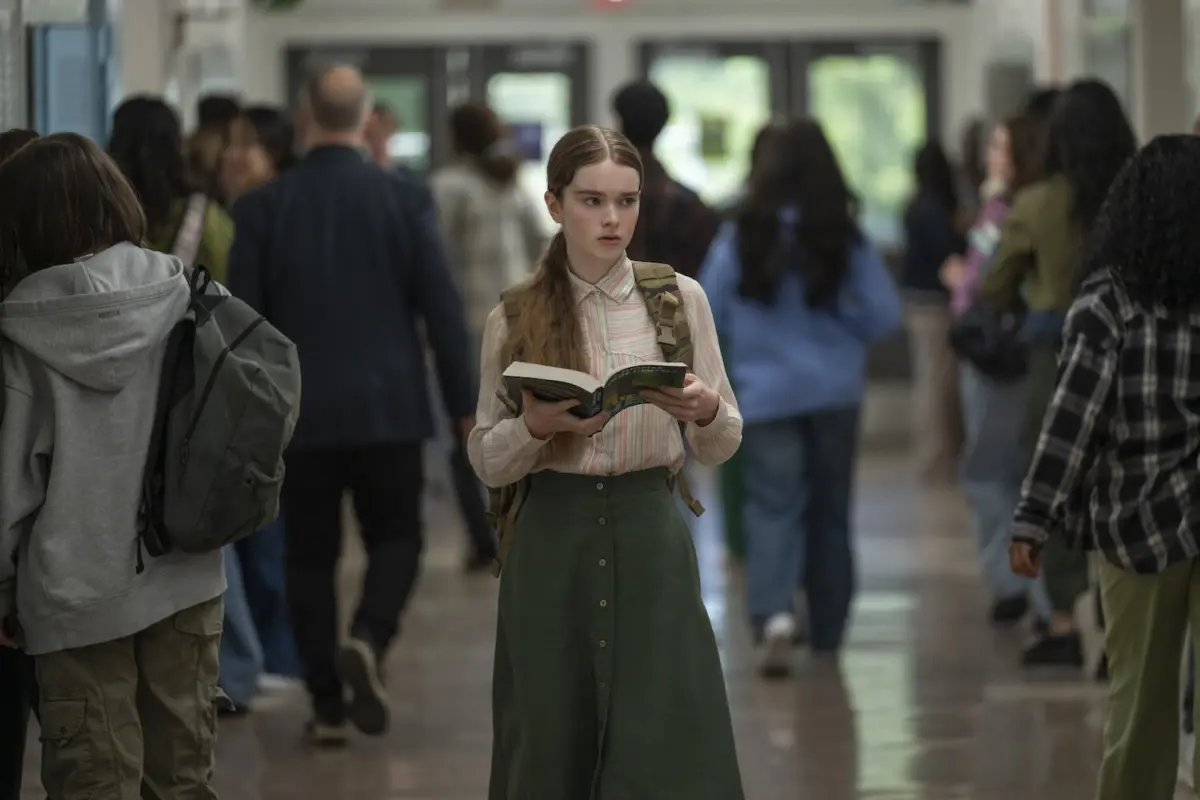
For decades, Carrie has served as a cornerstone of horror literature and cinematic history, most notably adapted by Brian De Palma in his 1976 feature film, as well as subsequent iterations in 2002 and 2013. However, Flanagan’s Prime Video series represents a radical departure from the traditional trajectory of Carrie White’s story. Rather than concluding with the systemic horrors of the catastrophic prom massacre and the subsequent destruction of the White household, the first season introduces a major narrative twist: Carrie White survives.
This structural pivot fundamentally alters the thematic resonance of the property. In King’s original novel, Carrie’s telekinetic rampage results in her own death at the hands of her zealot mother, Margaret, before the narrative reaches its apocalyptic conclusion. By allowing Carrie to escape into the wider world, Flanagan and his creative team have transformed a closed-ended tragedy into an open-ended serial drama. According to production notes and early viewer metrics, this bold reimagining has sparked intense debate among literary purists while successfully capturing a broader, multi-demographic streaming audience.
Chronology of the Project and Production Timeline
The path to a second season has been meticulously calculated by Flanagan, who approached the series with a multi-year blueprint. The chronology of the project’s development highlights a deliberate strategy to secure long-term narrative real estate:
- Pre-Production and Conceptualization (2024–2025): Mike Flanagan enters negotiations with Amazon MGM Studios to develop a prestige television adaptation of Carrie, emphasizing a departure from standard horror remakes in favor of an expansive, character-driven universe.
- Principal Photography (Mid-2025): Filming commences under tight security, with key casting announcements kept under wraps to preserve narrative surprises, particularly regarding the fates of central characters.
- Fall 2026 Festival Circuit and Premiere: Flanagan discusses his long-term ambitions for the series during promotional appearances at the Toronto International Film Festival, noting his conceptualization of a three-season arc.
- Late 2026 Season 1 Debut: The first season premieres on Prime Video, featuring a controversial finale that subverts traditional expectations and introduces mysterious new figures, notably Adelaide (portrayed by Kate Siegel).
- Official Season 2 Renewal (Late 2026): Prime Video confirms the greenlight for a second season, validating Flanagan’s vision for a multi-chapter exploration of the character’s survival.
Supporting Data and Creative Intentions
Behind the scenes, the production was guided by extensive collaboration with Stephen King himself. Industry insiders report that King was actively consulted during the writers’ room process, offering direct input regarding world-building and character dynamics. Flanagan revealed in interviews with international media outlets that the author’s primary contributions manifested in the development of new characters, specifically Emaline, whose presence helped broaden the sociological scope of the narrative beyond the confines of Chamberlain, Maine.
Data from streaming analytics firms indicate that serialized horror adaptations command some of the highest retention rates on subscription video-on-demand (SVOD) platforms, particularly when helmed by established genre auteurs. Flanagan, who has previously built successful partnerships with major streaming platforms through acclaimed horror titles like The Haunting of Hill House and Midnight Mass, brings a built-in audience base that significantly mitigates the financial risks associated with expanding classic intellectual property.
Official Statements and Behind-the-Scenes Insights
Flanagan has been remarkably transparent about the mechanics of his narrative choices, particularly the deliberate effort to balance tragedy with moral ambiguity. Addressing the media during the initial rollout of the series, the showrunner emphasized the necessity of evolving Carrie from a purely reactive victim into a complex, autonomous agent.
"In my dream scenario, I think it’s three seasons," Flanagan stated during his appearance at the Toronto International Film Festival. "In my dream scenario, I think Carrie has a wonderful three-step arc. It’s a trilogy, really."
Regarding the construction of the first season’s finale, Flanagan noted the delicate balance required to satisfy network expectations while leaving the door open for future expansion. "Our priority was really just to make it as satisfying as possible when we did cut to black, but also let Carrie White go out into the world, whether we’re allowed to follow her or not," he explained. "We thought she’d earned that… But it was very much on my mind that there was so much potential for it to expand further, and we wanted to leave room for that too."
Furthermore, Flanagan addressed the ethical implications of portraying a mass casualty event without making the protagonist an irredeemable monster. "We also struggled with—we’re never gonna be able to love this character as much as we do and then watch her intentionally murder so many people," Flanagan noted. "Carrie’s culpability became a major question. How do we allow the tragedy to unfold in a way that she’s still responsible, but that she isn’t a monster herself?"
Broader Impact: The Stephen King Multiverse and The Dark Tower Connection
Perhaps the most compelling implication of the Carrie renewal lies in its potential to integrate more deeply with the broader Stephen King literary multiverse. Flanagan has made no secret of his long-term ambition to bring King’s magnum opus, The Dark Tower, to the screen in a definitive manner. Industry analysts suggest that anchoring contemporary adaptations like Carrie and upcoming projects such as The Mist within a shared thematic continuity serves as a strategic backdoor pilot for a larger interconnected universe.
In discussions with entertainment journalists, Flanagan acknowledged that conversations regarding King’s 2019 novel The Institute—which centers on a clandestine organization exploiting children with psychic and telekinetic abilities—heavily influenced the conceptual architecture of Carrie’s expanded world. By introducing shadowy organizations and hinting at a global history of extraordinary women possessing abilities akin to Carrie’s, the series establishes a framework where disparate paranormal elements can coexist.
Moreover, Flanagan’s deliberate use of terminology associated with King’s psychic lexicon—such as subtle nods to the concept of "the shine"—provides Easter eggs for dedicated literary fans while laying the groundwork for cosmic-level world-building. Whether these narrative threads will eventually converge on the higher levels of the Dark Tower remains one of the industry’s most closely guarded secrets, but the renewal of Carrie ensures that the foundation for such a monumental crossover is officially under construction.
Fact-Based Analysis of Market Implications
The formal greenlighting of Carrie Season 2 underscores a broader industry trend favoring serialized prestige horror over traditional cinematic remakes. By granting creators the autonomy to subvert expectations and extend closed narratives into multi-season arcs, streaming platforms are redefining how classic literary properties are monetized. For Amazon MGM Studios, the gamble on Flanagan’s vision not only capitalizes on established intellectual property recognition but also positions Prime Video as a premier destination for elevated genre television. As production ramps up for the subsequent chapters of Carrie White’s journey, industry observers will be watching closely to see how far the boundaries of King’s universe can be stretched without losing the tragic core that made the original work a timeless American classic.