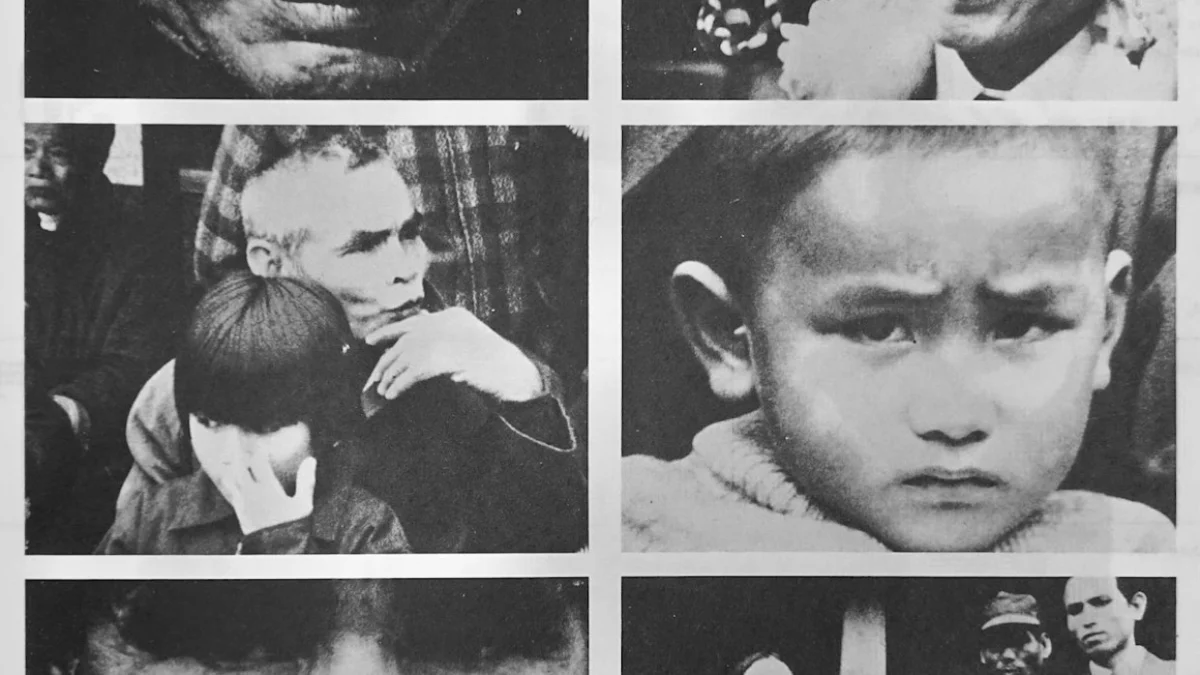
The 15th edition of the Taiwan International Documentary Festival (TIDF) served as a major platform for exploring the intersections of political nonfiction, regional memory, and historical revisionism in Asian cinema. Established in 1998—a decade after the formal lifting of martial law on the island—the festival has consistently championed politically engaged documentary works from across Asia. This year’s program, spanning both recent productions and newly restored archival media, offered a rigorous examination of how national narratives are constructed, contested, and re-evaluated through the lens of modern filmmaking.
Main Facts and Festival Overview
Running over ten days in May, the 15th TIDF featured a diverse slate of competitive and non-competitive screenings, prominently highlighting regional Asian cinema alongside local Taiwanese productions. Among the most notable showcases were strands dedicated to the social movements of the 1980s, the complex identities of conscripted soldiers during the Japanese colonial period, and contemporary urban displacement in mainland China and Hong Kong.
The centerpiece of the archival program was the rare public screening of Archive: Li Guang-hui (1979/2024), a 30-minute compilation of television newsreel outtakes directed by the late, renowned photographer Chang Chao-tang. Originally filmed between 1975 and 1979 while Chang worked as a photojournalist for the China Television Company (CTV), the work documents the return of Suniuo—also known as Teruo Nakamura or Li Guang-hui—an Indigenous Amis soldier drafted into the Japanese Imperial Army during World War II.
Chronology of the Suniuo Homecoming and Archival Recovery
The historical trajectory captured in Chang’s footage spans decades of geopolitical realignment in East Asia:
- 1943–1945: Suniuo is dispatched as an Imperial Japanese Army conscript to the Indonesian island of Morotai, where he subsequently loses contact with military command.
- 1974: Suniuo is discovered living in complete isolation in the Indonesian jungle, completely unaware that World War II had concluded nearly three decades prior.
- 1975–1979: As a photojournalist for CTV, Chang Chao-tang captures extensive outtakes of Suniuo’s family interviews, public homecoming spectacles, and his eventual struggles with terminal lung cancer, which led to his death in late 1979.
- 2024: Following Chang’s passing, his private archives—including the unreleased Archive: Li Guang-hui—are officially donated to the Taiwan Film and Audiovisual Institute (TFAI) by his family.
- May 2026: The 15th TIDF presents the world premiere screening of the restored 30-minute compilation, providing contemporary audiences with a critical look at state-orchestrated mythmaking.
Supporting Data and Structural Analysis of Archival Works
In examining Archive: Li Guang-hui, film historians and critics noted Chang’s deliberate editorial choices. Rather than offering an unmediated record, the filmmaker compiled sequences that highlight the heavy mediation of public appearances. The footage features original news narration but entirely omits any spoken words from Suniuo himself.
Through close-up framing—most notably during a sequence featuring Taiwanese folk singer Chen Da—the documentary exposes the dissonance between the state’s nationalist narrative and the subject’s lived reality. What the Kuomintang (KMT) nationalist government framed as a triumphant return of a national hero who resisted the Japanese empire was, in practice, an alienating spectacle for a man confronted with a Mandarin-language tradition completely foreign to him.
The inclusion of this work challenges the historical assumption that independent Taiwanese documentary filmmaking began exclusively with the termination of martial law in 1987. Instead, works like Chang’s footage position the 1970s as a critical transitional era where media workers began subverting official state documentation from within.
Broadening the Lens: Colonial Legacies and Transnational Labor
The festival’s retrospective and thematic programs extended beyond individual biographies to address systemic historical trauma. The strand titled "War Memories, Shifting Identities" foregrounded the hybrid identities forged through colonial subjugation, drawing attention to suppressed Indigenous Amis and Tayal histories.
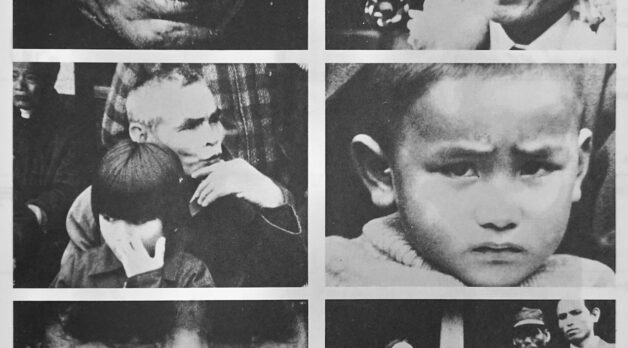
This thematic focus was complemented by historical documentaries such as Asia Is One (1973) by the leftist collective NDU. The film stitches together testimonies from postwar Taiwanese fishermen in Okinawa, Zainichi Okinawan miners in mainland Japan, and rural Tayal villagers. By mapping the movements of seasonal laborers across maritime borders, the program illustrated the heterogeneity of East Asia and its historical vulnerability to competing territorial nationalisms—a dynamic that remains acutely relevant amid contemporary geopolitical tensions involving Taiwan, China, and the United States.
Urban Displacement and the Ethics of Observation
In the contemporary documentary slate, several films examined the friction between individual existence and rapid, predatory urban development. Hu Sanshou’s 150-minute feature Xiangzidian Village: The Stage (2026) documents the erasure of rural communities over a six-year production window. Rather than relying on standard journalistic interviews, Hu employs sustained wide shots that position villagers as dwarfed by earthmovers, mounds of crushed rock, and emerging highway systems.
Film critics observing the independent Chinese documentary circuit noted Hu’s departure from fast-paced cinéma vérité tropes frequently tailored for international festival audiences. By observing his subjects with formal distance while documenting the deaths of aging villagers during production, Hu constructs a patient, elegiac record of rural erosion.
Similarly, post-2019 political realities in Hong Kong were explored in works such as Compact Disc (2026) and Maps of Traces (2025). These films focus on the aftermath of political unrest, documenting citizens who navigate societal disillusionment without falling into total apathy, thereby locating resilience within everyday endurance.
Legal Fragmentation and Collective Trauma
The challenges of pursuing justice for historical state violence formed the core of Anocha Suwichakornpong’s Narrative (2026). The film documents a theatrical workshop involving family members of Red Shirt pro-democracy activists killed during the 2010 Bangkok military crackdown.
Through a structured three-act workshop framework—incorporating primal memory, legal mediation, and expressions of gratitude—the film analyzes how institutional legal systems process mass tragedy. By treating each casualty as an isolated civil case rather than part of a systemic state action, legal frameworks effectively fragment collective accountability. Suwichakornpong contrasts this bureaucratic scattering with intimate scenes of domestic mourning, questioning the ethical boundaries of artistic and legal testimony.
Institutional Implications and the Exhaustion of Public Life
Concluding the festival’s exploration of contemporary social conditions, Canadian-Chinese filmmaker Luo Li’s Air Base (2025) presented a fictionalized, observational portrait of post-pandemic Wuhan. Utilizing staged public interventions—such as individuals pretending to direct traffic from overpasses, collecting sighs from pedestrians, or attempting to straighten symmetry in public spaces—the film portrays a society suspended in administrative exhaustion.
Despite the Sisyphean repetition of empty gestures, the film records emergent forms of camaraderie among citizens navigating environments stripped of traditional narrative or political propulsion.
Broader Impact and Implications
As geopolitical pressures mount across the region, the 15th Taiwan International Documentary Festival demonstrated how archival curation and contemporary nonfiction cinema function as vital counterweights to state-sanctioned amnesia. By juxtaposing historical outtakes from the martial law era with modern explorations of displacement in China, Hong Kong, and Thailand, the festival underscored the enduring necessity of critical documentation. The institutional preservation of these works—evidenced by the ongoing cataloging of Chang Chao-tang’s materials at the TFAI—ensures that marginalized histories remain accessible for future analysis, offering a prismatic view of East Asia’s complex sociopolitical landscape.