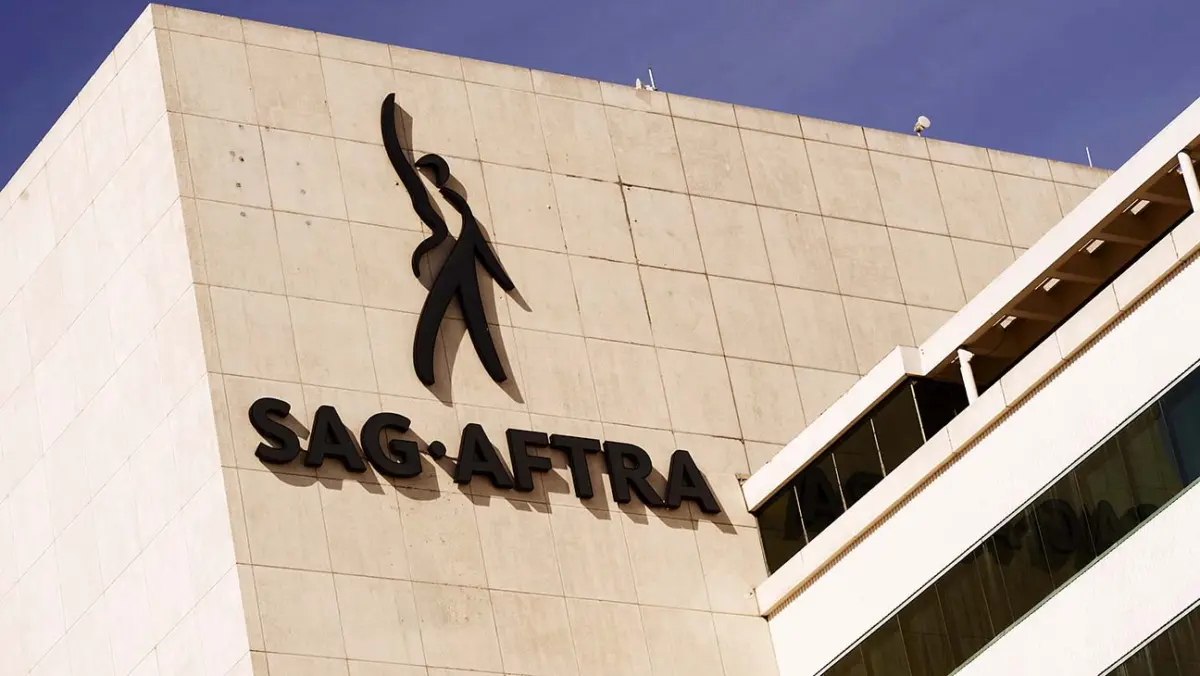
The landscape of professional acting in the United States is currently defined by a stark paradox: while the industry’s top-tier stars command historic salaries and prestige, the vast majority of the 160,000-member SAG-AFTRA union struggle to secure the most basic of employment benefits. Following months of mounting internal pressure, public criticism, and reports of mass membership terminations due to unpaid dues, the SAG-AFTRA national board has voted unanimously to launch the President’s Healthcare Task Force. This new initiative is tasked with pivoting the union’s institutional influence toward the advocacy of universal healthcare, marking a significant strategic shift for an organization traditionally focused on industry-specific collective bargaining.
The move comes at a critical juncture for the labor group. In recent weeks, social media campaigns such as "One Job Away"—spearheaded by actors like Cheyenne Jackson—have highlighted the precarious reality for performers who find themselves just a few days or a few thousand dollars short of the strict threshold required to trigger union-subsidized health coverage. With the entertainment industry still reeling from production slowdowns and the broader economic headwinds of inflation, the union’s internal structures have come under intense scrutiny from a membership that feels increasingly disconnected from its leadership.
The Financial Thresholds of Eligibility
At the heart of the crisis lies the SAG-AFTRA Health Plan’s stringent qualification requirements. Currently, to qualify for coverage, a member must earn a minimum of $28,090 in covered earnings or work a minimum of 108 days per year. According to union President Sean Astin, while the health plan itself maintains a strong financial standing, these benchmarks act as a barrier for a substantial majority of the membership.
The reality for many working actors is defined by "gig-to-gig" instability. In a landscape where streaming services have shortened production cycles and reduced residual payments, securing consistent, long-term employment has become a rarity for the average performer. The current eligibility model, designed for a previous era of high-volume network television production, is struggling to adapt to the modern "content-on-demand" reality.
For the thousands of actors who fall just below these earnings thresholds, the impact is profound. Without union-sponsored insurance, they are forced into the private marketplace, where premiums are often prohibitive. This creates a cycle where an actor might be "one job away" from health security, yet unable to reach that milestone because the industry itself is producing fewer opportunities for the middle-class worker.
A Timeline of Growing Discontent
The decision to form the task force follows a series of controversial developments that have strained the relationship between the union’s rank-and-file and its national leadership:
- October 24, 2026: The SAG-AFTRA national board votes to extend the contract of Chief Executive Officer Duncan Crabtree-Ireland until 2032. Reports indicate this deal included a 15% raise, further cementing his position as the highest-paid labor leader in Hollywood with a salary exceeding $1 million annually.
- Late October 2026: Actor Cheyenne Jackson launches the "One Job Away" social media campaign, gaining traction among members who share stories of losing health coverage due to narrow margins in earnings.
- November 1, 2026: The union officially ends its COVID-era grace period, which had previously allowed members who were behind on dues to retain their status. As a result, thousands of members are terminated, sparking outcry regarding the timing and empathy of the move.
- December 2026: Following weeks of intense criticism on public forums and internal member platforms, the national board announces the unanimous vote to create the President’s Healthcare Task Force.
Dues, Terminations, and Leadership Optics
The resumption of dues-based terminations has been a major flashpoint. For many members, the transition back to pre-pandemic rules felt particularly callous given the lack of work in the industry. Critics have pointed to the disparity between the leadership’s administrative choices—specifically the extension and salary increase for Crabtree-Ireland—and the financial reality of the average actor.
The union’s defense of the contract extension rests on the need for "stability and continuity" during a period of unprecedented industry disruption, including the rapid integration of artificial intelligence and the restructuring of media business models. However, for a member struggling to pay union dues while simultaneously being dropped from the health plan, these explanations have done little to dampen the perception of an ivory-tower leadership.
The Push for Universal Healthcare
The newly formed President’s Healthcare Task Force is not merely a symbolic gesture; it represents an attempt to redefine the union’s role in the American political economy. By moving the conversation from "how to get members qualified for the union plan" to "how to ensure universal access to healthcare for all Americans," the union is attempting to externalize a problem that it can no longer solve through traditional collective bargaining alone.
This shift aligns with broader national trends. Healthcare inflation remains one of the primary concerns for the American electorate, and the political appetite for systemic reform has grown in the wake of midterm elections that focused heavily on economic affordability. By mobilizing its collective strength—including the celebrity influence of its members—the union aims to provide a structured, formal path for actors to advocate for legislative changes at the state and federal levels.
Fact-Based Analysis of Future Implications
The union’s pivot presents both opportunities and risks. On the positive side, it provides a unifying cause for a fragmented membership. By aligning with the broader movement for universal healthcare, SAG-AFTRA can leverage its unique position in the public eye to elevate the issue, potentially creating legislative allies who would otherwise be indifferent to the plight of actors.
Conversely, there are practical risks. Critics within the industry suggest that focusing on national policy might distract from the immediate, granular work of negotiating better terms for residual payments and working conditions in upcoming contract cycles. Furthermore, the union risks overextending its political capital; universal healthcare is a massive, complex, and highly polarized legislative goal. Achieving meaningful progress will require the union to navigate complex lobbying environments that are often hostile to labor-backed health mandates.
Moreover, the upcoming 2027 adjustments to health insurance premiums and earnings requirements represent a ticking clock. As these costs rise, the union will face increased pressure to find solutions that do not involve simply raising the bar for its members. If the Task Force fails to show tangible results—either through internal reform of the plan or progress in external advocacy—the current tension between the leadership and the membership is likely to deepen.
Conclusion
The formation of the President’s Healthcare Task Force is a clear acknowledgement that the status quo is unsustainable. Whether it serves as a meaningful bridge to future healthcare security or as a temporary diversion from the immediate frustrations of a struggling workforce remains to be seen. As the industry continues to evolve under the pressures of digital transformation and economic volatility, the ability of SAG-AFTRA to reconcile the disparate experiences of its elite and its rank-and-file will be the true test of its efficacy as a labor organization in the 21st century. The union has promised to engage policymakers and gather allies, but the ultimate success of this initiative will be measured not by the policy papers produced, but by the tangible relief provided to the thousands of performers currently navigating the precarious gap between employment and basic health security.