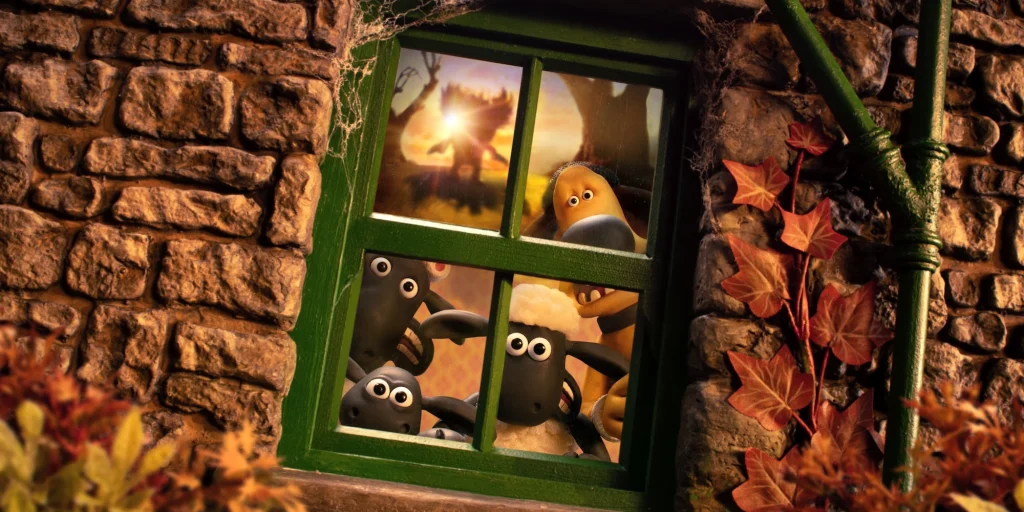
Aardman Animations has once again proven its mastery of the stop-motion medium with the theatrical release of Shaun the Sheep: The Beast of Mossy Bottom. Clocking in at an 80-minute runtime, the studio’s third feature-length outing centered on the beloved woolly protagonist ventures into the cinematic territory of classic monster features. Directed by Steve Cox and Matthew Walker, from a screenplay penned by Mark Burton and Giles Pilbrow, the film blends retro horror tropes with the signature physical comedy and handcrafted aesthetic that has defined the British studio for decades. The voice cast features returning talents Justin Fletcher, John Sparkes, Kate Harbour, and Nina Sosanya, who bring emotional depth to a narrative devoid of traditional spoken dialogue.
The Production Chronology and Aardman’s Legacy
The journey of Shaun the Sheep to the silver screen spans nearly two decades of strategic franchise expansion. Originally introduced as a supporting character in Nick Park’s 1995 Academy Award-winning short film A Close Shave, which starred Wallace and Gromit, Shaun quickly became a fan favorite. This led to his own hit television series produced by Aardman Animations and CBBC, which premiered in 2007.
Capitalizing on the television show’s international success, Aardman transitioned the character to feature films. The first theatrical release, Shaun the Sheep Movie, debuted in 2015 to critical acclaim and grossed over $106 million worldwide, alongside an Academy Award nomination for Best Animated Feature. Five years later, the studio released its sci-fi-infused sequel, A Shaun the Sheep Movie: Farmageddon (2019), which explored alien-invasion tropes with affectionate nods to Steven Spielberg’s cinematic style.
Development on Shaun the Sheep: The Beast of Mossy Bottom began shortly after the completion of Farmageddon. Aardman’s leadership recognized the potential of pivoting from science fiction to gothic horror and classic creature features. Over a meticulous three-year production schedule at the studio’s Bristol headquarters, animators engineered complex stop-motion rigs to handle the film’s unique technical challenge: animating dense, voluminous fur without the distracting visual artifacts typically referred to in the industry as "boiling."
Plot Overview and Cinematic Inspirations
Set against the autumnal backdrop of Mossy Bottom Farm on Halloween Eve, the narrative unfolds when the notoriously clumsy Farmer accidentally trips and demolishes the flock’s prize-winning giant pumpkin patch. Desperate to restore the patch in time for the regional agricultural fair, Shaun takes matters into his own hooves, adopting the persona of a mad scientist equipped with retro laboratory gear and glowing concoctions.
Shaun’s scientific intervention yields unintended results. After manufacturing a mysterious, highly potent growth ooze, he stores the leftover formula in an old bottle labeled "Hair-Grow." The Farmer inadvertently discovers the bottle and applies it liberally to his scalp. Within hours, the concoction triggers a dramatic, full-body transformation. The Farmer sprouts thick, unruly hair across every inch of his frame, obscuring his glasses and giving him a silhouette reminiscent of classic cinematic monsters, combining the towering stature of Frankenstein’s monster with the feral appearance of a werewolf. Compounding the situation, a misstep through wet concrete leaves him with heavy, hardened cement boots.
Upon returning to the farmstead, the transformed Farmer inadvertently terrifies the livestock. The narrative cleverly weaves in visual gags and subtle tributes to cinematic milestones, including Alfred Hitchcock’s Psycho and James Whale’s Frankenstein, alongside playful choreography reminiscent of Michael Jackson’s Thriller music video. Despite the spooky motifs, the directors maintain a gentle, family-friendly tone that avoids genuine terror in favor of whimsical, atmospheric suspense.
Technical Achievements in Stop-Motion Animation
Industry analysts and animation historians have frequently cited Aardman as one of the few remaining bastions of traditional stop-motion production operating at a major commercial scale. Nearly 40 years after the debut of Wallace and Gromit and 25 years after the release of the studio’s first feature film, Chicken Run (2000), the studio’s commitment to physical materials remains unchanged.
The production of The Beast of Mossy Bottom presented formidable technical hurdles. Animating characters covered in thick, voluminous hair or fur in stop-motion traditionally risks visual jitter, as individual hair fibers shift slightly between frames. Aardman’s team of puppet fabricators and animators utilized advanced silicone molding techniques and internal armature stabilization to ensure fluidity of motion.
Furthermore, the film continues Aardman’s tradition of silent storytelling. Relying entirely on visual acting, expressive eye movements, pantomime, and an orchestral score, the animators convey complex emotional beats. Central to the film’s emotional core is the Farmer’s underlying vulnerability; beneath his monstrous transformation lies a deeply lonely figure whose primary motivation is simply to ask the local veterinarian to the upcoming Halloween Hoedown.
Critical Reception and Industry Implications
Early critical responses to Shaun the Sheep: The Beast of Mossy Bottom have highlighted the film’s ability to cross generational demographics, appealing to adult cinephiles who catch the classic horror references while engaging younger audiences through slapstick physical comedy. Box office analysts project a strong theatrical run, bolstered by the strategic September release date that positions the film as a seasonal family outing ahead of the autumn holidays.
From a broader industrial perspective, the film underscores the commercial viability of mid-budget stop-motion features in an era dominated by computer-generated imagery. While major studios frequently pivot toward fully digital pipelines, Aardman’s ongoing investment in physical puppet animation demonstrates sustained consumer demand for tactile, handcrafted cinematic art.
As Aardman prepares for future projects, including upcoming entries in the Wallace and Gromit franchise, Shaun the Sheep: The Beast of Mossy Bottom reinforces the studio’s reputation for creative consistency. By successfully transplanting its mute protagonist into diverse cinematic genres—transitioning from pastoral comedy to science fiction and now to monster horror—the studio has established a versatile formula that continues to generate critical acclaim and commercial success worldwide.