The Karlovy Vary International Film Festival (KVIFF) has marked a historic milestone, celebrating its Diamond Jubilee with its 60th edition spanning an eighty-year legacy defined by political upheaval, structural adaptation, and unwavering artistic endurance. Held annually in the historic Czech spa town of Karlovy Vary, the festival remains a premier cornerstone of European cinema, balancing the architectural nostalgia of its Brutalist headquarters with a rigorously curated program that bridges regional European debuts with global masterworks.
Historical Evolution and Geopolitical Context
The origins of the festival are deeply intertwined with the turbulent geopolitical landscape of mid-20th-century Europe. The inaugural edition of Karlovy Vary took place in 1946, immediately following the restoration of Czechoslovakia from Nazi occupation and just weeks prior to the launch of the inaugural Cannes Film Festival. Initially established as a non-competitive showcase, the event quickly gained international prominence.
By 1958, following the 1948 Czechoslovak coup d’état and the subsequent establishment of a state-communist regime, the International Federation of Film Producers Associations (FIAPF) designated Karlovy Vary as a Category-A film festival—the highest tier recognizing international impact and prestige. However, the Cold War soon imposed administrative constraints. Beginning in 1959, the Soviet Union dictated that Karlovy Vary alternate years with the Moscow International Film Festival. This arrangement persisted for over three decades until 1994, four years after the dissolution of the Soviet bloc and two years following the formal establishment of the independent Czech Republic.

Today, KVIFF successfully navigates its complex heritage, preserving specific aesthetic markers of its Communist-era past—such as the distinctive Brutalist facade of the Hotel Thermal sanatorium—while firmly shedding ideological baggage to operate as a proudly progressive, borderless European cultural institution.
The "Out of the Past" Retrospective and Repertory Highlights
To commemorate its 60/80 anniversary, the festival programmed a dedicated retrospective section entitled "Out of the Past – KVIFF 60/80," designed to chart the historical trajectory of both the institution and Central-Eastern European cinematic output.
Among the historical centerpieces was Powell and Pressburger’s fabulist war melodrama A Matter of Life and Death (1946), which reached Czechoslovak audiences in the immediate wake of World War II. The retrospective also highlighted former Crystal Globe winners, including Ján Kadár and Elmar Klos’s acclaimed 1964 courtroom drama The Defendant, and Ken Loach’s Kes (1970), which claimed the festival’s top prize immediately following the suppression of the Prague Spring.
Furthermore, the program acknowledged works by once-suppressed directors, such as Juraj Jakubisko’s Birds, Orphans and Fools (1969), a film that remained shelved by state censors until 1990. Alongside Eastern European deep cuts, the retrospective underscored KVIFF’s historical receptivity to international movements, notably screening Glauber Rocha’s Barravento (1962), a foundational work of Brazil’s Cinema Novo.

Contemporary repertory screenings further energized the schedule. World premieres of digitally restored editions drew significant crowds, most notably Jonathan Glazer’s Sexy Beast (2000), which debuted to a packed house at the Grand Hall, and Věra Chytilová’s psychosexual tragicomedy Tainted Horseplay (1988).
Competitive Sections and Critical Standouts
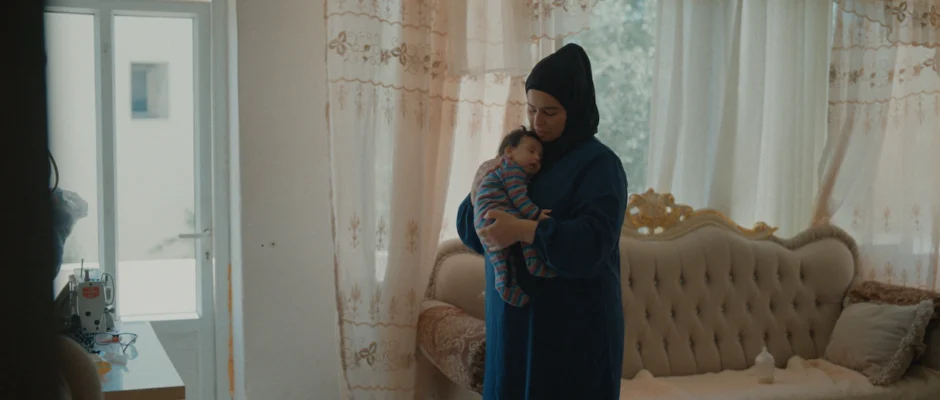
KVIFF’s competitive programming reflects a dual commitment to honoring established international auteurs while championing emerging cinematic voices. The prestigious Crystal Globe competition, dedicated to mature global filmmakers, awarded its top honor to Aung Phyoe’s Fruit Gathering, a tender romance set among seamstresses in Yangon, Myanmar. Meanwhile, Slovak auteur Ivan Ostrochovský secured the FIPRESCI prize for Only Beautiful Things to Look At.
Parallel to the main competition, the Proxima section—which replaced the region-specific "East of the West" showcase five years ago—continues to highlight boundary-pushing, youthful artistic visions from around the world. The Proxima Grand Prix was awarded to Lover, Not a Fighter, the debut feature by Slovak director Martina Buchelová. The film chronicles the volatile romance of a 20-year-old protagonist navigating self-destructive impulses against the backdrop of a changing society, utilizing a fragmented montage of vertical phone footage and reflexive subtitling to engage contemporary viewing habits.
Political Resonance and Contemporary Cinema
Several prominent entries at the festival interrogated the mechanics of historical compromise, creeping fascism, and the psychological defense mechanisms of ordinary citizens in times of geopolitical crisis.

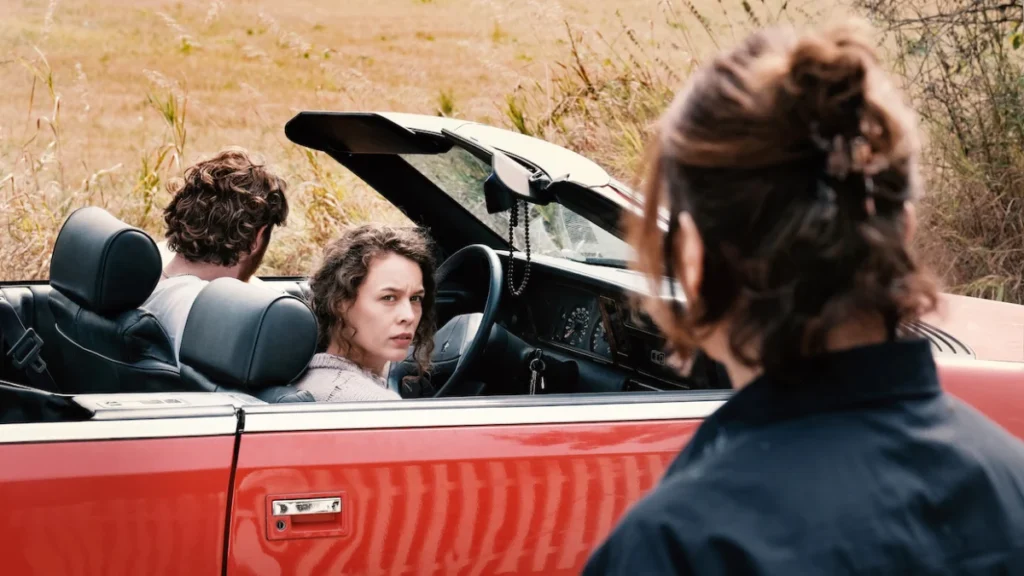
Emmanuel Marre’s 155-minute historical drama A Man of His Time examined the moral descent of Henri, a protagonist navigating the Vichy regime through a combination of personal ambition and ethical vacuum. Utilizing stationary framing and a fly-on-the-wall observational approach by cinematographer Olivier Boonjing, the film mirrors Henri’s incremental integration into the machinery of state-sponsored atrocities. Lead actor Swann Arlaud delivered a critically lauded performance characterized by an unsettling balance of charisma and administrative indifference.
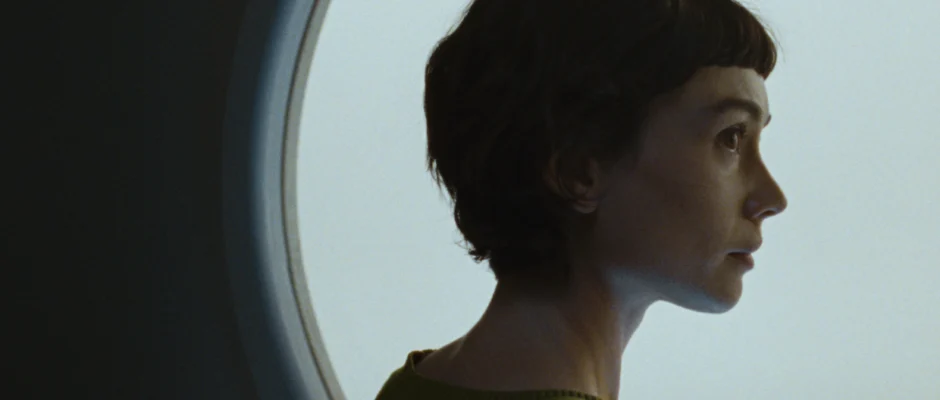
Similarly, Sandra Wollner’s memory piece Everytime explored the themes of childhood grief and irreversible life changes. Drawing inevitable stylistic and thematic comparisons to Charlotte Wells’s Aftersun (2022)—bolstered by shared cinematographer Gregory Oke—Wollner’s work employs a hallucinogenic register set against urban realism to examine the emotional terrain of trauma and familial rupture.
Thematic Analysis: Black Money for White Nights
One of the most critically discussed entries, though ultimately overlooked by the official prize juries, was the Bulgarian feature Black Money for White Nights, directed by Kristina Grozeva and Petar Valchanov.
The narrative follows Marina and Gosha, an elderly couple who have spent their working lives pocketing minor workplace bribes to finance a dream trip to St. Petersburg to witness Russia’s famed "white nights." As they secure their final funds, Russia launches its full-scale invasion of Ukraine. Despite the geopolitical reality, the tour agency insists the conflict poses no barrier to their itinerary, prompting the couple to consciously mute television news reports and embrace willful ignorance.

Film critics and industry analysts interpreted the work not merely as a localized critique of Bulgarian administrative corruption, but as a universal fable examining the futility of attempting to insulate oneself from systemic political violence. The film’s high-key lighting and heavily stylized set design—most notably a living room wallpapered with idealized birch forests—served as a visual manifestation of their reliance on romanticized cultural myths, which ultimately collapse under the weight of contemporary geopolitical realities.
Implications and Legacy
The 60th anniversary edition of the Karlovy Vary International Film Festival reinforced its unique position within the international festival circuit. By maintaining a balance between accessible public programming—such as its celebrated, eccentric black-and-white festival trailers featuring international stars—and rigorous academic retrospectives, KVIFF has successfully preserved its historical identity while modernizing its curatorial framework.
As the festival concludes its eighth decade, its enduring institutional resilience underscores the vital role of independent and state-supported film festivals in contextualizing the past, interrogating contemporary sociopolitical anxieties, and providing a borderless platform for global cinematic discourse.