The landscape of superhero movie marketing has dramatically shifted, transforming Marvel trailers from mere promotional tools into elaborate breadcrumbs for intricate fan theories. This evolution, a phenomenon that has captivated audiences and fueled online discourse, is particularly evident with the upcoming release of Spider-Man: Brand New Day. The film’s marketing campaign, marked by carefully curated glimpses and deliberate omissions, has propelled speculation to fever pitch, echoing the successful, albeit complex, fan-decoding efforts surrounding previous MCU installments like Spider-Man: No Way Home and Doctor Strange in the Multiverse of Madness.
The genesis of this trailer-as-conspiracy-theory trend can be traced back to specific moments that subtly hinted at unfolding narratives. In Spider-Man: No Way Home, early footage depicting the Lizard being attacked by an unseen force was swiftly interpreted by the internet as evidence of Andrew Garfield’s then-unconfirmed cameo, a digital ghost visible only to the most discerning eyes. Similarly, Doctor Strange in the Multiverse of Madness teased audiences with the unmistakable voice of Patrick Stewart, strongly suggesting a Professor X appearance. Even the reveal of a new Black Panther suit in Wakanda Forever was accompanied by a strategic silence regarding the identity of the wearer, leaving fans to deduce Shuri’s ascension to the mantle.
Now, Spider-Man: Brand New Day is following a similar trajectory. With the fourth Marvel Cinematic Universe (MCU) installment featuring Tom Holland’s Spider-Man slated for release next month, online forums and social media platforms are abuzz with predictions. Star Tom Holland himself acknowledged the film’s enigmatic nature in a recent interview with Esquire, stating, "This movie is a real mystery. And for a large portion of the film even Spider-Man is a little bit at odds and lost and is like, ‘What is going on?’ We’re just trying to find ways to make this movie feel like a detective movie." This admission by the lead actor underscores the deliberate ambiguity woven into the film’s promotional material.
Deconstructing the Trailers: Clues and Conundrums
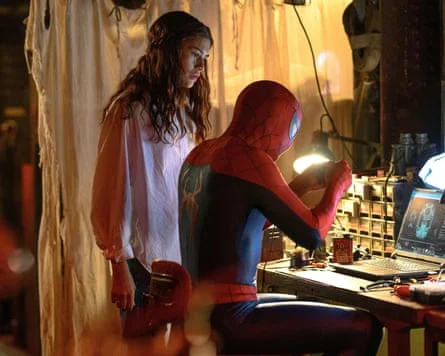
Two trailers have been released to date, offering tantalizing fragments of the unfolding narrative. These glimpses reveal a Spider-Man undergoing a peculiar metamorphosis, suggesting a physical or perhaps even identity-based transformation. The trailers also hint at an unsettling "musical chairs" scenario involving human bodies, raising questions about possession, cloning, or multiversal displacement. The return of the Hulk, seemingly larger and more formidable than ever, has also been a prominent feature, prompting discussions about his role in Peter Parker’s evolving predicament. Crucially, the trailers reinforce the consequence of Doctor Strange’s spell at the end of the previous film, with Peter Parker’s identity as the web-slinger now a closely guarded secret. Despite these revelations, the overarching plot remains remarkably elusive, a testament to Marvel’s intricate storytelling.
The success of the fan-driven deconstruction of No Way Home‘s trailers, particularly the accurate predictions of multiple Spider-Men appearing, has conditioned audiences to approach subsequent Marvel marketing with a heightened sense of scrutiny. Even the slightest visual anomaly—a peculiar frame, an ambiguous subtitle, an unusual eyeline, or a seemingly missing element—is now subjected to intense analysis. This has led to a phenomenon where the flimsiest of rumors can be elevated to "forensic evidence" by dedicated bloggers and YouTubers, eager to be the first to uncover the next major MCU secret.
The Enigma of Sadie Sink’s Role
A prime example of this intense scrutiny surrounds the casting of Sadie Sink in an undisclosed role. Theories abound, with some fans positing that she embodies the consciousness-swapping, hooded antagonist seen in the trailers. This speculation draws parallels to the X-Men’s Jean Grey, potentially being integrated into the Spider-Man narrative in a manner reminiscent of Spider-Man’s own debut within Captain America: Civil War. However, alternative theories suggest Sink could be portraying Mayday Parker, a beloved comic book character also known as Spider-Girl, and Peter Parker’s potential daughter from another universe. Other prominent fan hypotheses include Rachel Summers, Jean Grey’s time-displaced daughter; Madelyne Pryor, Jean Grey’s clone; Hope Summers, the mutant messiah; or even Shathra, a formidable spider-wasp deity from a more obscure corner of Marvel continuity. The sheer breadth of these possibilities highlights the speculative environment cultivated by the trailers.
The Hulk’s Multifaceted Presence
The inclusion of Mark Ruffalo’s Bruce Banner in the trailers is ostensibly to provide a scientific explanation for Peter Parker’s apparent regression, particularly the recurrence of black eyes and web-slinging from his wrists, a visual echo of the character’s early days. However, the rumor mill has predictably churned out more complex interpretations. Some fans believe this signifies the long-awaited return of the Savage Hulk, citing the trailer’s depiction of a larger and more overtly aggressive Banner. Others speculate that Marvel is leveraging the Hulk’s iconic status to pit Spider-Man against a formidable adversary before revealing the true, potentially more insidious, threat—perhaps the body-hopping villain operating from within the Hulk’s psyche, likened by one fan to a "wasp in a pint glass."

The Persistent Specter of Miles Morales
The persistent rumors surrounding the potential introduction of Miles Morales into the MCU, while not directly substantiated by trailer content, are fueled by the perceived inevitability of multiversal convergence in modern superhero cinema. The narrative logic suggests that if multiple Spider-Men have appeared before, it is only a matter of time before Miles Morales joins the fray. Such a move would represent a significant strategic decision for Sony, the studio that retains primary control over the Spider-Man IP and is already home to its own critically acclaimed animated Miles Morales universe. Furthermore, introducing Miles would necessitate another deep dive into the multiverse, potentially at a time when the MCU appeared to be steering Spider-Man back towards more grounded, street-level narratives.
The Villainous Unknown
Adding another layer of intrigue, Tom Holland has publicly stated that the true antagonist of Brand New Day remains a mystery, a claim that has paradoxically intensified fan speculation. Given the sheer volume of theories already circulating, the notion that no one has yet correctly identified the villain seems almost improbable, akin to "the prospect of J Jonah Jameson opening a mindfulness retreat." The speculative roster of potential villains is extensive, ranging from established comic book figures like Mister Negative, the Jackal, and Mister Sinister, to more obscure characters such as William Metzger, an anti-mutant zealot whose inclusion would align with the film’s perceived X-Men undertones. The question of whether this is a street-level Spider-Man story or one deeply intertwined with the mutant-centric narratives of the X-Men continues to be a focal point of discussion.
The Evolving Art of Trailer Crafting
Marvel’s current trailer strategy represents a significant evolution from their earlier approach. Where trailers once served primarily to showcase action and key plot points, they now function as carefully constructed puzzles, designed to both entice and mislead. This deliberate obfuscation is a response to the audience’s increasing sophistication and their voracious appetite for uncovering narrative secrets. The success of No Way Home, which masterfully played on pre-release speculation and delivered on numerous fan-anticipated moments, has set a new benchmark for how interconnected cinematic universes can leverage audience engagement through carefully managed information.
The implications of this strategy are far-reaching. On one hand, it fosters a highly engaged and active fan community, driving substantial pre-release buzz and discussion. On the other, it risks alienating audiences who prefer a more straightforward cinematic experience or who become fatigued by the sheer volume of unsubstantiated rumors. The balance Marvel strikes between providing enough information to pique interest and withholding enough to maintain mystery is a delicate one.
Data and Precedent: The Case of No Way Home
The success of Spider-Man: No Way Home provides a compelling precedent for Marvel’s current approach. Released in December 2021, the film shattered box office records, grossing over $1.9 billion worldwide, becoming the sixth-highest-grossing film of all time. A significant portion of its success has been attributed to the widespread fan theories and the anticipation built around the confirmed (and unconfirmed) appearances of previous Spider-Man actors. The film’s narrative, which directly addressed the multiverse and the consequences of altering reality, perfectly aligned with the speculative landscape that had emerged from its trailer releases. This demonstrated the power of a meticulously crafted marketing campaign that could not only generate hype but also actively shape audience expectations and engagement.
The online discourse surrounding Spider-Man: Brand New Day mirrors the intensity seen prior to No Way Home‘s release. Websites dedicated to comic book lore, fan theory forums, and social media platforms are inundated with analyses of every frame, every line of dialogue, and every casting rumor. This level of pre-release engagement is invaluable for studios, creating a sustained period of public interest that extends beyond the typical promotional cycle.
Looking Ahead: The Impact of Strategic Secrecy
The long-term impact of Marvel’s evolving trailer strategy remains to be seen. If Spider-Man: Brand New Day proves to be as successful as its predecessors in both critical reception and box office performance, this method of trailer construction is likely to become a standard for future MCU projects. It signifies a shift from simply showing what a movie is about to inviting the audience to actively participate in deciphering its mysteries. This participatory approach not only deepens audience investment but also creates a powerful word-of-mouth effect, driven by the collective effort of fans working to unravel the cinematic puzzle.
However, the challenge lies in maintaining this delicate balance. As the number of potential plot threads and character inclusions multiplies, the risk of overwhelming audiences or generating an excessive amount of misinformation also increases. The success of Spider-Man: Brand New Day will ultimately be judged not only on its narrative and visual spectacle but also on how effectively its marketing campaign managed to intrigue, engage, and ultimately satisfy the dedicated fanbase that has come to expect nothing less than a complex, multi-layered cinematic experience. The "detective movie" approach, as described by Tom Holland, is not just a narrative device for the film itself, but a meta-commentary on the very nature of its promotion.