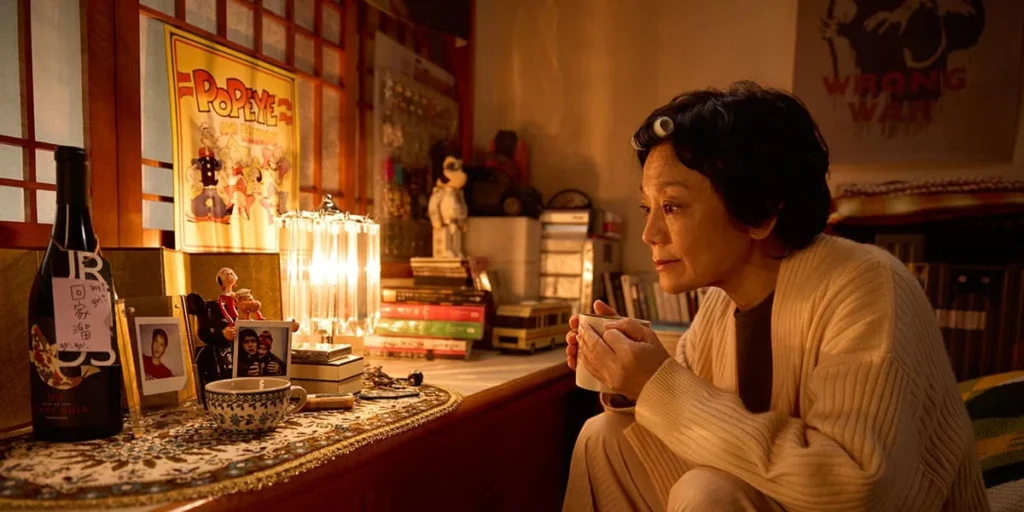
Clare Chong, the acclaimed Singaporean filmmaker, video artist, and creative director, continues to make significant strides in the international film circuit with her latest short film, "Tamasira." The psychological horror short, co-written with Moira Loh and executive produced by the renowned Mattie Do, is currently captivating audiences at the prestigious Fantasia International Film Festival, underscoring Chong’s evolving prowess in crafting narratives that merge cinematic artistry with profound social commentary.
A Filmmaker’s Ascendant Journey: From Singapore to Locarno
Clare Chong’s trajectory in the world of cinema is marked by a blend of rigorous academic training and a multidisciplinary artistic vision. Her foundational education at the School of the Arts Singapore provided a robust platform for her early creative explorations, fostering a unique approach that seamlessly integrates various artistic disciplines. This was further solidified during her tenure at LASALLE College of the Arts, where she earned a Bachelor of Arts in Film. Her academic pursuits were not merely theoretical; they were a fertile ground for developing a distinctive voice that transcends conventional filmmaking boundaries, encompassing cinema, installation art, and community-based projects. This broad artistic scope allows her to engage with diverse audiences and explore complex themes through varied mediums.
A pivotal moment in Chong’s burgeoning career arrived in 2023 when she was selected for the highly esteemed Locarno Filmmakers Academy. This selection is a testament to her emerging talent and the international recognition of her potential. The Locarno Film Festival, one of the oldest and most respected film festivals globally, is renowned for its commitment to discovering and nurturing new cinematic voices. Participation in its Filmmakers Academy offers an unparalleled opportunity for promising directors to refine their craft, engage with industry veterans, and gain exposure on a global stage. During her time at Locarno, Chong presented her previous short film, "A Waking," which garnered critical attention and laid the groundwork for the thematic and stylistic explorations seen in "Tamasira." Her presence at such a high-profile event signifies not only personal achievement but also a growing recognition of Southeast Asian cinema on the international stage.
"Tamasira": A Deep Dive into Societal Pressures and Psychological Horror
"Tamasira" unfolds as an 18-minute cinematic experience that is as visually striking as it is psychologically unsettling. The narrative centers on Ruby, a young woman grappling with profound insecurities about her body image and an intense desire for self-transformation. The film opens with a scene that immediately establishes Ruby’s internal conflict: she observes another woman, seemingly in peak physical condition, with an almost obsessive gaze. This initial encounter, culminating in a subtle reprimand from the observed woman, sets the stage for Ruby’s journey into self-doubt and aspiration. Later, Ruby is shown trying on a shirt discarded by the fitter woman, a poignant act that symbolizes her yearning to inhabit an idealized form, projecting herself into a desired, yet unattainable, physique.
The narrative swiftly transitions to a serene, yet subtly sinister, yoga retreat, where Ruby’s quest for self-improvement takes a darker turn. Her arrival, accompanied by a somewhat reluctant mother, underscores Ruby’s unwavering determination to pursue this path, despite potential misgivings from those closest to her. Upon entering the retreat, Ruby finds herself immersed in an environment populated by women who appear uniformly fit and conform to a singular aesthetic ideal. In this homogenous setting, Ruby’s perceived imperfections become acutely magnified, making her stand out "like a sore thumb." This visual juxtaposition effectively highlights her sense of alienation and inadequacy, laying the psychological groundwork for the horrors to come.
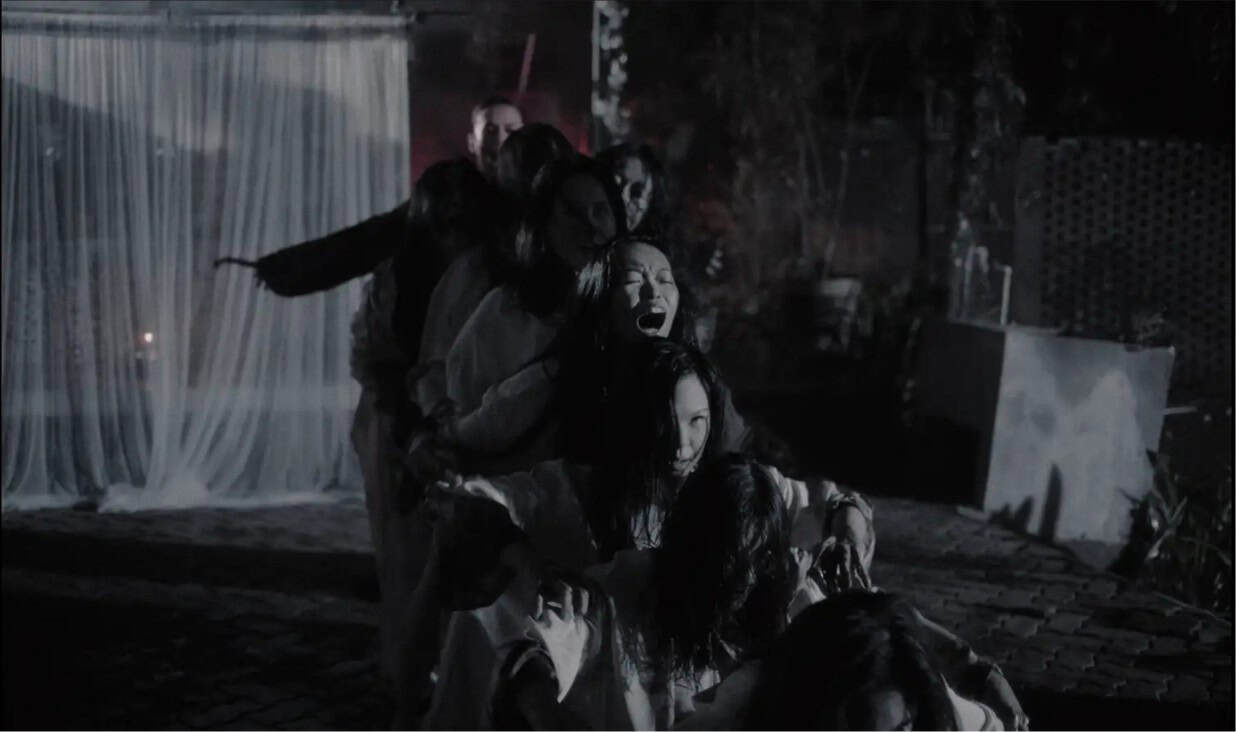
The retreat’s exercises, effortlessly executed by the other participants, further exacerbate Ruby’s feelings of inadequacy. Her struggles are noticed by Yogini, the enigmatic instructor portrayed by Moira Loh, who offers her assistance. However, Yogini’s methods are anything but conventional, initiating a profound and disturbing transformation within Ruby. As the sessions progress, Ruby begins to experience increasingly vivid and horrific hallucinations, blurring the lines between reality and her deteriorating mental state. These visions, often ghastly and disorienting, are direct manifestations of her escalating anxieties and the intense pressure she feels to conform. The film masterfully portrays how the pursuit of an idealized self, when taken to extremes, can lead to a terrifying unraveling of the mind. The horror in "Tamasira" is not merely supernatural; it is deeply rooted in the psychological torment inflicted by societal expectations and internal struggles.
Thematic Resonance: Beauty, Conformity, and Identity in a Modern World
At its core, "Tamasira" functions as a sharp and incisive social commentary on the contemporary pursuit of beauty and the broader, often relentless, drive for self-improvement. The film critiques the pervasive cultural narrative that equates physical perfection with personal fulfillment and societal acceptance. The uniform appearance of the women at the yoga retreat serves as a powerful visual metaphor for the pressures of conformity, particularly on women, who are frequently subjected to stringent and often unrealistic standards of beauty, appearance, and even prescribed emotional states.
Chong and Loh’s screenplay delves into the psychological toll of these pressures, illustrating how the relentless pursuit of an idealized physique can lead to a profound disassociation from one’s authentic self. Ruby’s desperate attempts to "cut her ties with her past" in pursuit of this elusive beauty are depicted as excessive and ultimately destructive, particularly in the film’s climactic moments. This extreme transformation highlights the dangers of sacrificing one’s identity at the altar of societal validation. The film suggests that while the desire for self-improvement can be positive, its commodification and the imposition of external ideals can be deeply damaging, leading to a loss of self and a descent into psychological distress.
The gradual shift of the narrative into supernatural horror amplifies these thematic concerns, injecting an additional layer of intensity and allegorical depth. The horror elements are not merely gratuitous; they serve as a visceral representation of Ruby’s internal turmoil and the monstrous consequences of her obsession. This blending of genres — psychological drama, social commentary, and supernatural horror — allows "Tamasira" to explore complex themes with a heightened sense of urgency and entertainment value. The inclusion of a "touch of sensuality" further complicates the narrative, hinting at the seductive yet perilous nature of the transformation Ruby undergoes, suggesting a connection between physical desire, self-perception, and the occult. The film’s ability to weave such a rich tapestry of context and meaning within its concise 18-minute runtime is a remarkable achievement, demonstrating the potency of the short film format for profound storytelling.
Technical Brilliance: Crafting an Immersive Audiovisual Experience
Beyond its compelling narrative and thematic depth, "Tamasira" stands out for its exceptional technical execution, which significantly elevates its impact. The collaboration of a skilled crew brings Chong’s vision to life with an audiovisual quality rarely encountered in short films.
Aaron Ang’s cinematography is a standout element, meticulously crafting the film’s atmosphere. His lens captures Ruby’s emotional landscape, from her initial curiosity and despair to her eventual resolve and transformation. Ang employs a variety of techniques, from intimate close-ups that convey Ruby’s internal struggles to broader shots that emphasize her isolation within the pristine, yet unsettling, retreat environment. The visual language adeptly transitions from mundane reality to the unsettling supernatural, using lighting, color palettes, and framing to heighten suspense and horror. The visual style frequently uses stark contrasts and unsettling compositions, immersing the viewer directly into Ruby’s fragmented perception of reality.
Maryann Yee’s special effects are crucial in manifesting Ruby’s deteriorating psychological state. Rather than relying on overt gore, the effects are subtle yet disturbing, creating a sense of creeping dread that is deeply psychological. These effects are integral to illustrating Ruby’s hallucinations and the monstrous aspects of her transformation, making the horror feel organic and deeply personal. They serve as visual metaphors for the internal corruption brought about by her extreme pursuit of an idealized self.
Yu Ting Yen’s sound design is equally instrumental in building the film’s suspense and atmosphere. The soundscape is carefully constructed to enhance the psychological horror, utilizing unsettling ambient noises, distorted vocalizations, and sudden sonic shocks to jolt the audience. The meticulous layering of sound creates an immersive experience that mirrors Ruby’s escalating paranoia and the increasingly surreal nature of her surroundings. The absence of sound in key moments is often as powerful as its presence, emphasizing isolation and dread.
Russell Goh’s production design contributes significantly to the film’s thematic undercurrents. The yoga retreat, initially presented as a sanctuary for self-improvement, gradually reveals its sterile and almost artificial perfection, reflecting the forced conformity and unnatural beauty standards the film critiques. The meticulous design of the environment, from the minimalist decor to the uniform attire of the participants, underscores the film’s commentary on manufactured ideals and the loss of individual identity.
Furthermore, the editing of "Tamasira" plays a critical role in its effectiveness. The narrative unfolds at a brisk pace, preventing any lag and maintaining a consistent level of tension. The editor employs sudden, jarring cuts at opportune moments, which become an integral part of the horror experience, disorienting the viewer and mirroring Ruby’s increasingly fragmented reality. This dynamic editing style ensures that the film’s 18-minute duration is utilized to its fullest potential, delivering maximum impact in a compact timeframe.
Stellar Performances Anchor the Narrative
The success of "Tamasira" is also significantly bolstered by its strong performances, particularly from its two lead actresses. Rebekah Dorai delivers an excellent portrayal of Ruby, carrying the emotional weight of the film with remarkable depth. Dorai skillfully communicates Ruby’s initial curiosity, her growing despair, and her unwavering resolve, before revealing a dramatically different persona by the film’s conclusion. Her expressive eyes are particularly effective, conveying a complex range of emotions—from vulnerability to obsessive determination—without the need for extensive dialogue. Her performance anchors the film’s psychological journey, making Ruby’s descent into horror both believable and profoundly disturbing.
Moira Loh, in her role as Yogini, is perfectly cast as the mysterious and manipulative instructor. Loh embodies a captivating duality, appearing both seductive and dangerously authoritative. She masterfully portrays the archetypal "evil instructor," whose seemingly benevolent guidance masks a more sinister agenda. Her performance is critical in establishing the unsettling dynamic between mentor and student, driving Ruby further down her perilous path of transformation. Loh’s subtle menace and alluring presence contribute significantly to the film’s psychological tension and its exploration of power dynamics within the pursuit of idealized beauty.
Minor Criticisms and Broader Implications
While "Tamasira" is widely lauded for its overall competence and artistic ambition, some minor criticisms have been noted. Certain developments, particularly towards the film’s conclusion, are occasionally described as somewhat excessive, pushing the boundaries of realism within its established psychological framework. Additionally, some extreme close-ups, while intended to heighten intensity, do not always achieve their desired effect, occasionally detracting from the narrative flow rather than enhancing it. The final section, though impactful, has also been perceived by some as slightly rushed, potentially leaving certain plot points feeling underdeveloped given the richness of the preceding narrative.
Despite these minor quibbles, the consensus remains that "Tamasira" operates at a remarkably high technical and artistic level. Its presence at the Fantasia International Film Festival, a globally recognized event for genre cinema, further solidifies its standing. Fantasia is celebrated for its eclectic programming, showcasing innovative and boundary-pushing films, particularly those that blend genre elements with compelling storytelling from Asia. The selection of "Tamasira" underscores its appeal to an audience appreciative of unique horror narratives that also offer substantial social commentary.
"Tamasira" represents a significant contribution to contemporary cinema, artfully combining entertainment with trenchant social commentary within an impressive audiovisual package. The film not only highlights Clare Chong’s formidable talent as a filmmaker but also adds a powerful voice to ongoing global discussions about body image, mental health, and the pervasive societal pressures that shape individual identity. As Chong continues to evolve as an artist, "Tamasira" positions her as a distinctive and important figure in Southeast Asian cinema, capable of crafting compelling narratives that resonate deeply with audiences worldwide and provoke critical thought long after the credits roll.