The Premise and Literary Origins
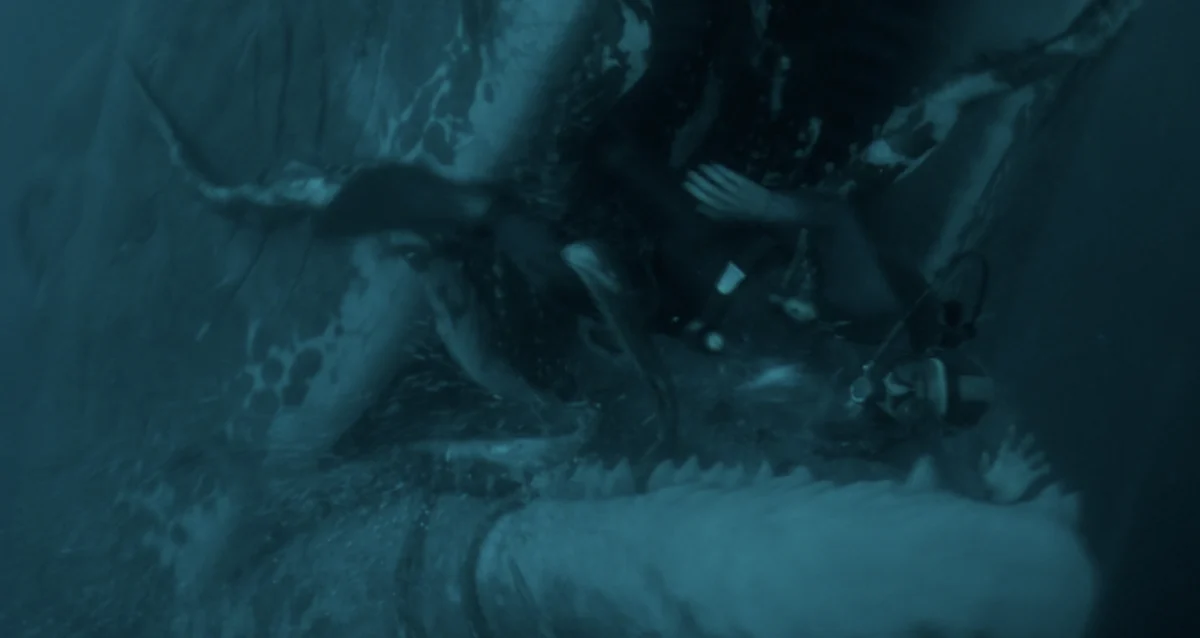
At the heart of the narrative is a deeply personal conflict that elevates the film beyond standard creature-feature tropes. The story centers on a protagonist, played by Austin Abrams, who finds himself trapped within the digestive tract of a sperm whale. The narrative is heavily informed by the original source material, which received widespread critical acclaim for its scientific accuracy regarding whale anatomy and the psychological toll of prolonged isolation.
Unlike traditional films where the primary antagonist is an external force, Whalefall utilizes the whale’s internal environment as a hostile, shifting landscape. The protagonist must contend with the biological reality of being submerged in an alien biome, forced to rely on limited equipment and the internalized lessons of his late father. This "tough love" dynamic serves as the emotional anchor of the film, suggesting that the survival skills instilled in him during his youth are the only factors separating him from a grim fate.
Chronology of Production and Marketing
The journey of Whalefall from page to screen has been marked by a focused production cycle. Following the acquisition of the film rights by 20th Century Studios, the project moved into active development with an emphasis on practical effects and immersive sound design to replicate the auditory experience of being submerged.
- Pre-Production: The creative team prioritized authenticity, consulting with marine biologists to understand the physiological limitations of a human trapped in such an environment.
- Production Phase: Principal photography utilized sophisticated water-tank facilities and advanced animatronics to capture the visceral nature of the whale’s interior.
- Marketing Launch (September 2026): The official marketing campaign began in earnest with the release of a theatrical trailer that emphasizes the countdown to death. The poster art, which utilizes visual cues reminiscent of classic suspense cinema such as Jaws, signals a return to high-stakes, practical survival thrillers.
- Release Date: The film is scheduled for an exclusive theatrical release on October 16, 2026.
Scientific Context: The Reality of Whale Encounters
While the scenario of being swallowed by a sperm whale is statistically improbable, it remains a frequent subject of maritime folklore. Sperm whales (Physeter macrocephalus) are the largest toothed predators on Earth, capable of diving to depths of over 2,000 meters. Their throats are generally narrow, designed for the consumption of squid and fish, making the premise of a human being swallowed a unique narrative challenge that the film tackles through the lens of extreme circumstances.

The "Whalefall" phenomenon, in scientific terms, typically refers to the process of a whale carcass sinking to the ocean floor, providing a nutrient-rich oasis for deep-sea ecosystems. The film subverts this ecological term, applying it to a living organism and exploring the biological reality of the whale’s stomach, which contains high levels of stomach acid and lack of oxygen. The film’s commitment to these environmental hurdles is what distinguishes it from typical monster-movie fare, grounding the horror in tangible, physical constraints.
The Evolution of the Survival-Thriller Genre
The survival-thriller genre has seen a resurgence in recent years, with audiences demonstrating a preference for "contained" narratives—films that restrict characters to a single location for the duration of the runtime. This format allows for a heightened focus on character development and tactical problem-solving.
Previous successes in this space, such as 127 Hours or The Shallows, have proven that audiences respond well to narratives where the protagonist’s ingenuity is the primary driver of the plot. Whalefall appears to be leaning into this tradition. By stripping away external support and limiting the character to his immediate surroundings, the film forces a narrative intimacy that is often lost in larger-scale disaster epics. The use of the "ticking clock" element—represented by the finite oxygen supply and the whale’s own life cycles—ensures that the tension remains consistent throughout the film.
Strategic Implications for 20th Century Studios
The choice to release Whalefall in mid-October is a strategic move, positioning the film as a high-profile entry during the autumn season, which is often dominated by suspense and horror-adjacent content. By leveraging the prestige of Imagine Entertainment and the distribution muscle of 20th Century Studios, the production team aims to bridge the gap between niche thriller enthusiasts and a broader, mainstream audience.
Furthermore, the casting of Austin Abrams—a performer known for his ability to carry character-driven dramas—suggests that the studio is prioritizing acting quality over mere spectacle. The marketing materials, which emphasize the emotional weight of the father-son dynamic, aim to attract viewers who might otherwise be deterred by the film’s high-concept, visceral premise.

Analysis of the Film’s Impact
The film serves as a case study in how literary adaptations can be modernized for a visual medium. By transforming a static narrative into a dynamic visual experience, Whalefall challenges the audience to consider the physical and psychological threshold of human resilience.
Industry analysts observe that the success of this film could dictate future trends in "contained" cinema. If Whalefall achieves its projected performance at the box office, it may signal to studios that audiences are increasingly interested in high-stakes survival stories that emphasize psychological depth over traditional action tropes. The film’s reliance on practical effects and a focused, singular setting also aligns with current trends in cost-effective yet high-impact filmmaking.
Looking Ahead to the Theatrical Release
As the October 16 release date approaches, anticipation continues to build. The promotional campaign has successfully utilized visual nostalgia—specifically the Jaws-inspired poster—to evoke a sense of heritage in the horror genre while introducing a fresh, unique premise.
For the production team, the challenge lies in sustaining the intensity of the trailer across a feature-length runtime. If the film succeeds in translating the claustrophobia of the novel into a compelling auditory and visual experience, it could secure its place as one of the most memorable thrillers of the year. The combination of intense, localized tension and the vast, indifferent nature of the ocean provides a stark contrast that is rarely captured with such specificity.
In summary, Whalefall represents a sophisticated approach to the survival genre. By anchoring its terrifying premise in the physical laws of the natural world and the emotional weight of human relationships, the film positions itself as a significant cinematic event. Audiences will have the opportunity to experience the result of this high-pressure production when it arrives in theaters globally, offering a harrowing look at what happens when the boundary between predator and environment dissolves entirely.