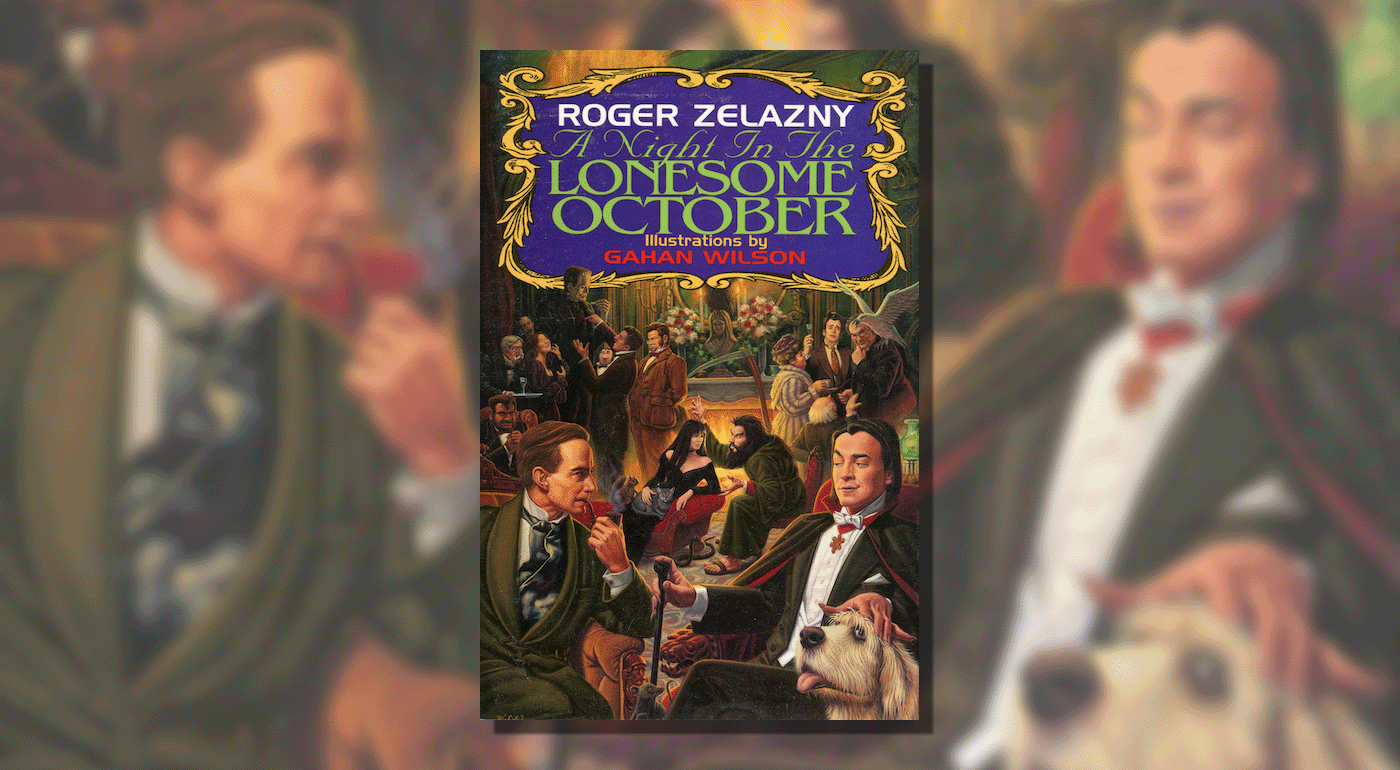
For decades, a distinct subculture of speculative fiction authors, critics, and dedicated readers has observed an idiosyncratic literary tradition spanning the entirety of October. Beginning on the first day of the month and culminating precisely on Halloween night, participants engage in a synchronized, chapter-by-chapter reading of Roger Zelazny’s final completed novel, A Night in the Lonesome October. Published originally in 1993, just two years before the acclaimed author’s passing from cancer at the age of 58, the book has achieved cult classic status. This annual communal reading serves not only as a seasonal celebration of Gothic and speculative literature, but also as a sustained scholarly and fan-driven tribute to Zelazny’s intricate synthesis of classic horror iconography, historical pastiche, and mythic folklore.
The title itself is drawn directly from Edgar Allan Poe’s atmospheric 1847 ballad “Ulalume,” setting a melancholic and shadowed tone for a narrative that defies simple genre categorization. Structurally and thematically, the novel functions as an early masterclass in literary mashups and Lovecraftian pastiche. Zelazny weaves together a dense web of canonical figures and archetypes from Victorian literature and folklore. Alongside Jack the Ripper and Sherlock Holmes, the narrative features legendary representations of Grigori Rasputin, Bram Stoker’s Count Dracula, Larry Talbot the Wolf Man, Victor Frankenstein and his creation, and ancient lineages of witches operating alongside their supernatural familiars. Far from a chaotic accumulation of disparate intellectual properties, Zelazny’s novel integrates these disparate historical and fictional figures into a tightly woven, internally consistent mythos that resolves logically by its final chapter.
The Mechanics of the Game and the Victorian Setting
Set in and around Victorian London during a rare calendar year in which a full moon coincides with the final day of October, the plot revolves around a clandestine and high-stakes ritual known simply as “the Game.” The participants consist of a designated group of players, divided into opposing factions with fundamentally incompatible objectives regarding the cosmic order. The core parameters of the competition require each player to spend the month of October identifying fellow participants, ascertaining their alignments, attempting to persuade rivals to switch allegiances, and ultimately calculating the exact geographic coordinate where a cosmic portal will open on Halloween night.
This convergence point serves as a threshold capable of releasing the Cthulhu-esque Elder Gods into the earthly plane. Consequently, the player base is sharply polarized: one faction labors to facilitate the opening of the portal and herald an era of eldritch dominion, while the opposing faction deploys every available resource to seal the breach, thwart their adversaries, and preserve humanity. The stakes are absolute, involving potential fatalities or fates far more permanent and psychologically devastating than ordinary death. A mandatory marker of participation in the Game is the accompaniment of an animal familiar, though the presence of these creatures does not automatically grant their human partners active status in the competition, as various independent observers and interlopers frequently attempt to manipulate the outcome from the periphery.
Narrative Perspective and the Role of Snuff the Dog
The primary narrative perspective of the novel is delivered through an unconventional protagonist: a loyal, highly analytical, and industrious dog named Snuff. Operating as the tactical coordinator and canine companion to Jack—a legendary master of the blade whose historical associations point unmistakably toward London’s infamous unidentified serial killer—Snuff provides readers with a grounded, highly observant vantage point on the clandestine maneuvering of the Game.
Unlike the majority of the human participants, who appear to be engaging in the ritual for the first time, both Snuff and Jack possess deep institutional memory of previous iterations of the Game. While Jack remains a sphinx-like figure whose interiority is largely withheld, Snuff’s background is defined by a supernatural metamorphosis. Bound by an ancient and immutable curse, Snuff lives his existence entirely within a canine form, a condition he shares with familiar tropes of magical transformation in fantasy literature, such as the fictional feline Salem Saberhagen.
Rather than lamenting his lost humanity, Snuff embraces his role with pragmatic diligence. He systematically patrols his assigned territory, maps the movements of rival players across London, and executes complex logistical calculations to determine the future location of the dimensional portal. His duties require him to navigate a treacherous landscape of shifting alliances, temporary truces, and outright hostilities. Throughout October, participants frequently engage in cooperative ventures, trading magical talismans, pooling specialized talents, and sharing vital intelligence before the final reckoning forces them into opposing camps.
Inter-Species Networks and the Constraints of the Curse
Snuff’s operational network relies heavily on communication with other animal familiars, establishing a complex sub-rosa diplomatic corps operating beneath the notice of human authorities. Among his primary contacts is Nightwing, an intelligent owl who serves as an independent advisor and intelligence broker; a serpentine entity associated with the Russian mystic; a loyal bat belonging to Count Dracula; a displaced squirrel bound into the service of a Druid; and, most crucially, Graymalk, a sophisticated feline whose human partner is the practitioner of witchcraft, Crazy Jill.
The relationship between Snuff and Graymalk forms the emotional core of the inter-species dynamic. Representing the traditional enmity of cats and dogs, the two animals forge a strategic and genuine friendship based on mutual respect and the pooling of resources. Even as the progression of the Game reveals them to be aligned with opposing cosmic factions, their bond—echoed by the partnership between Jack and Jill—remains intact. Graymalk utilizes her feline agility and diminutive scale to infiltrate restricted locations, providing reconnaissance capabilities that complement Snuff’s terrestrial hunting prowess and spatial mapping skills.
However, Snuff’s canine form imposes strict physiological and supernatural limitations. Governed by the terms of his curse, Snuff is entirely incapable of speaking human languages to his master or any other human except during a precise, one-hour window between midnight and 1:00 a.m. Every urgent revelation, strategic warning, or tactical adjustment must be stored until this nocturnal hour, requiring Jack and other human allies to remain consciously awake to receive critical data. Conversely, Snuff retains full comprehension of human speech at all hours, creating dramatic irony as he confronts the perennial literary trope of human incomprehension regarding animal communication.
The psychological toll of servitude on animal familiars is a recurring thematic element throughout the text. While Snuff finds contentment in his canine existence, other creatures experience profound alienation. The squirrel allied with the Druid confides to Snuff that his elevation in sapience and cognitive processing capacity came at the direct expense of his instinctual identity as a wild animal, leaving him intellectually accelerated yet psychologically impoverished, stripped of the primal urges required to forage and prepare for winter.
Chronology and the Culmination of the Game
As the month advances toward its midnight climax on October 31, the narrative chronology accelerates through a series of escalating operational crises. Snuff is tasked with complex, physically demanding undertakings, including the covert disposal of an inconvenient corpse—a logistical nightmare requiring days of calculated effort and precarious cooperation with individuals whose loyalties remain entirely unverified.
The climax of the novel converges on Halloween night under the light of the full moon. The competing factions clash at the calculated portal site, engaging in a decisive confrontation to determine whether the ancient entities of the cosmos will breach the earthly veil. The resolution of the conflict reflects Zelazny’s signature economy of style, blending high-stakes cosmic horror with character-driven resolution.
Critical Reception, Artistic Contribution, and Legacy
Upon its publication by Morrow in 1993, A Night in the Lonesome October received critical acclaim for its structural ingenuity and tonal balance. Reviewers noted that despite its incorporation of gruesome historical murders, cosmic entities, and anatomical horror, the novel maintains an underlying warmth and domestic comfort, largely anchored by Snuff’s earnest devotion and the affectionate rapport he establishes with those around him.
An indispensable component of the book’s enduring identity is the inclusion of original interior illustrations by renowned fantasy and horror artist Gahan Wilson. Wilson’s distinctive visual style—characterized by whimsical yet grotesque renderings of Victorian architecture, occult machinery, and anthropomorphic animal behavior—complements Zelazny’s prose, establishing a definitive aesthetic standard that continues to shape the annual reading rituals of the author’s global fanbase. Decades after its release, the novel stands as a singular achievement in Zelazny’s bibliography, securing a permanent place in the canon of speculative fiction as both a playful pastiche and a sophisticated meditation on loyalty, destiny, and the cyclical nature of cosmic struggle.