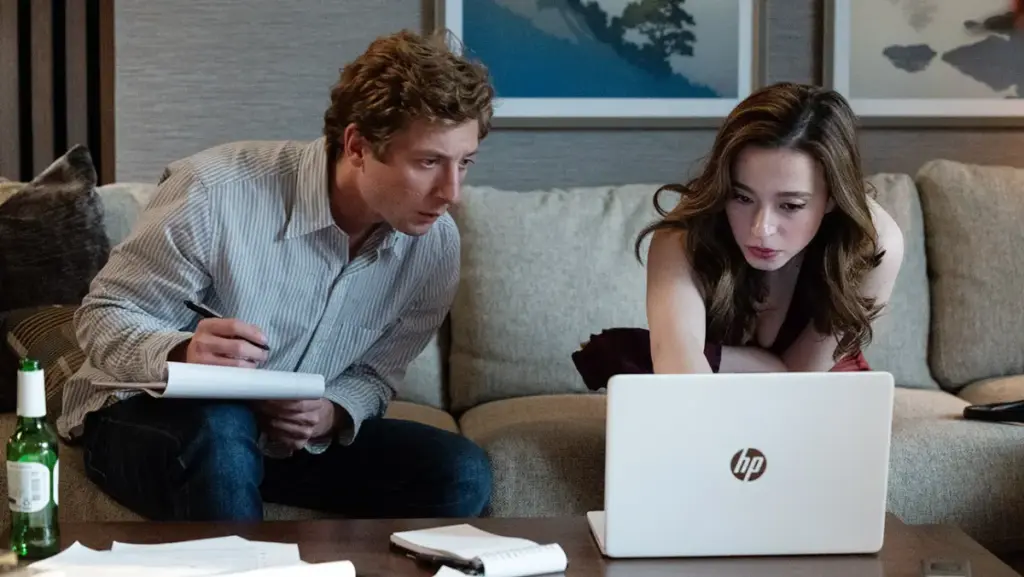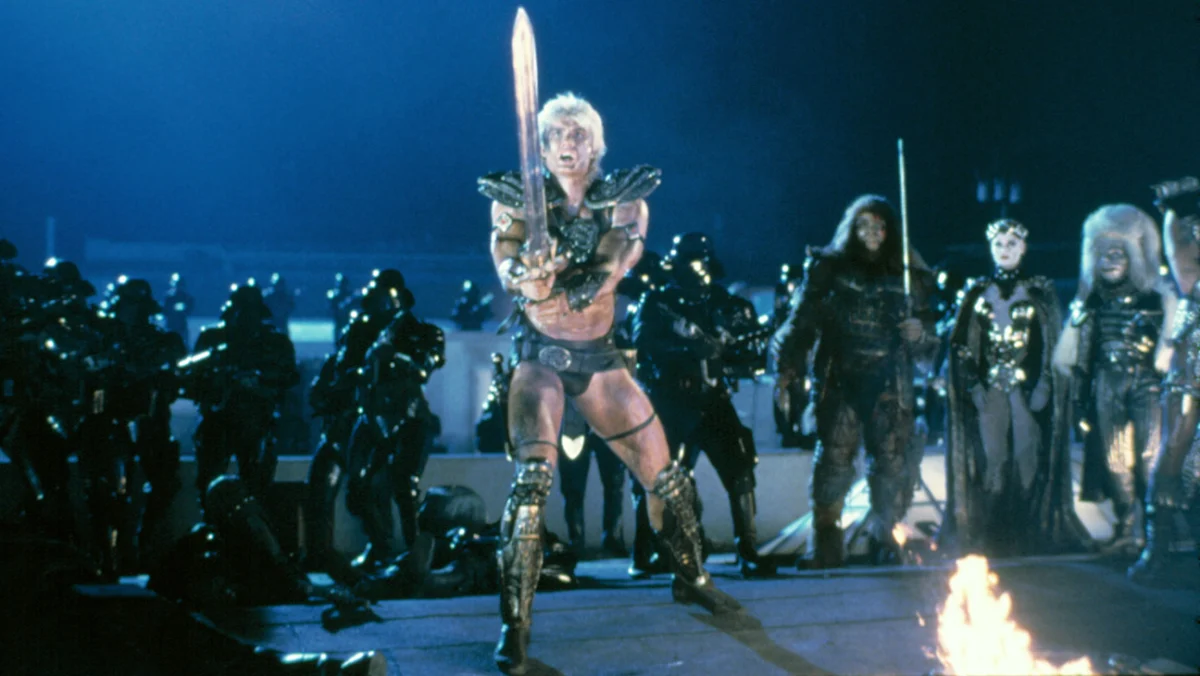
Nearly four decades before its anticipated big-screen revival, the original Masters of the Universe live-action film navigated a labyrinth of production challenges and financial constraints to power its way into theaters. Released in 1987, the movie, an adaptation of the immensely popular Mattel toy line and animated series, represents a significant, albeit complex, chapter in the franchise’s history, showcasing both the ambitious spirit of 1980s filmmaking and the inherent difficulties of translating beloved animated properties to the live-action format.
The Genesis of a Phenomenon: From Toy Aisle to Television Screen
The Masters of the Universe saga began not on the silver screen, but in the competitive aisles of toy stores. Mattel, a company predominantly known for its iconic Barbie doll and often struggling to establish a strong foothold in the male-centric action figure market, launched the Masters of the Universe toy line in 1982. This initiative was a direct response to the burgeoning popularity of action figures in the late 1970s and early 1980s, fueled by properties like Star Wars and G.I. Joe. Mattel’s internal designers, including Roger Sweet, are credited with creating the initial concepts for He-Man, envisioning a powerful barbarian hero who could appeal to young boys. The line quickly introduced central characters such as the sword-wielding, muscle-clad hero He-Man and his skeletal nemesis Skeletor, alongside a rich cast of supporting figures and playsets, most notably Castle Grayskull.
The toy line’s immediate success was astronomical, capturing the imaginations of children globally. Capitalizing on this burgeoning popularity, Mattel partnered with Filmation Studios to produce an animated series, He-Man and the Masters of the Universe, which debuted in 1983. The animated series, airing in syndication, became a cultural touchstone. It expanded the lore of Eternia, a planet where Prince Adam secretly transformed into He-Man to protect Castle Grayskull from Skeletor’s malevolent schemes. Each episode typically concluded with a moral lesson, a signature element of Filmation’s programming, further embedding the characters into the daily lives of millions of young viewers and solidifying the franchise’s commercial viability. By the mid-1980s, Masters of the Universe was a global merchandising powerhouse, ripe for a feature film adaptation.
The Treacherous Path to Live-Action: Cannon Group’s Vision
The leap from animation to live-action was spearheaded by Cannon Group, a prolific independent film studio known for its high-volume output of action, martial arts, and exploitation films throughout the 1980s. Headed by cousins Menahem Golan and Yoram Globus, Cannon had a reputation for ambitious projects often produced on tight budgets and accelerated schedules. Their acquisition of the Masters of the Universe film rights from Mattel was a bold move, signaling an intent to venture into larger-scale, family-oriented blockbusters, a departure from their typical fare.
Development of the live-action film began with a script penned by David Odell, a writer previously known for his work on The Muppet Show. Odell faced the complex task of translating the vibrant, often fantastical world of Eternia, with its unique blend of science fiction and fantasy elements, into a cinematic narrative that could appeal to both the established fanbase and a broader audience. The screenplay aimed for a darker, more serious tone than the animated series, a common approach in 1980s adaptations, often seen in films like Flash Gordon (1980) or Conan the Barbarian (1982), which themselves drew inspiration from pulp fantasy.
However, the production was plagued by a myriad of issues, primarily financial. Director Gary Goddard, who had a background in theme park design and special effects, found himself constantly battling budget limitations. In a 2015 retrospective, Goddard candidly recalled the intense financial pressures: "Behind the scenes, it was pretty hairy, with regards to the money not being there." This sentiment was echoed by cast members, including Barry Livingston, who portrayed Charlie, one of the film’s Earth-based characters. Livingston recounted to The Hollywood Reporter, "By the end of shoot, which was dragging on and going way over budget and schedule, there was a lot of tension. I sensed that the director was under a lot of pressure to get it finished." This tension was characteristic of many Cannon productions, where financial constraints frequently dictated creative decisions and logistical execution, often resulting in compromises on set design, special effects, and shooting schedules. The estimated production budget for Masters of the Universe was approximately $22 million, a substantial sum for Cannon at the time, but relatively modest for a fantasy epic, especially when compared to contemporary blockbusters.
Casting Challenges and On-Set Realities
The casting for Masters of the Universe presented its own unique set of challenges and triumphs. For the pivotal role of He-Man, the production selected Dolph Lundgren. The Sweden-born martial arts expert had risen to international prominence just two years prior, captivating audiences as the formidable Soviet boxer Ivan Drago in 1985’s Rocky IV. Lundgren’s imposing physique and screen presence made him a natural fit for the muscle-clad hero. However, his relative inexperience as a leading man, combined with his ongoing efforts to perfect his English, created a linguistic hurdle. His delivery of lines was at times perceived as garbled, prompting director Goddard to advocate for a different actor to dub Lundgren’s dialogue. This proposal, however, was ultimately rejected due to the pervasive budget limitations, forcing Lundgren to rely on his own vocal performance. Reflecting on the experience, Lundgren admitted to The Hollywood Reporter, "I felt very on-the-spot." This added pressure likely contributed to the film’s distinctive vocal style for He-Man, a departure from the booming, confident voice provided by John Erwin in the animated series.
Conversely, the role of Skeletor was entrusted to the esteemed Tony Award-winning actor Frank Langella. Langella’s theatrical background and gravitas brought a compelling villainy to the character, elevating Skeletor beyond a cartoonish antagonist into a truly menacing presence. However, the physical demands of the role proved arduous. Langella spent extensive periods in heavy prosthetic makeup, a process that was not only time-consuming but also deeply uncomfortable. Barry Livingston recalled the actor’s frustrations: "Some nights, they wouldn’t even get anything done [with him]." Livingston vividly described one instance where Langella’s patience wore thin: "Once I saw him so fed up, he just peeled all that shit off his face and said, ‘I’m going home.’" Such anecdotes underscore the grueling realities of 1980s special effects makeup, which, while revolutionary for its time, imposed significant physical and psychological tolls on performers. Despite these challenges, Langella’s commitment to the role is widely praised by fans and critics, who often cite his performance as a highlight of the film.
The ensemble cast was rounded out by veteran actors like James Tolkan, known for his roles in Back to the Future and Top Gun, and Meg Foster, whose striking blue eyes added an otherworldly quality to the Sorceress. The film also marked an early career appearance for Courteney Cox, who would later achieve global stardom on Friends. Chelsea Field, who portrayed Teela, the captain of the Royal Guard, shared insights into the camaraderie that developed amongst the cast and crew despite the on-set tensions. She recalled spending weekends with a close-knit group, including Cox, Tolkan, Langella, and editor Anne V. Coates, an Academy Award winner known for her work on Lawrence of Arabia. "We all would have dinner parties every week," Field reminisced. "We’d go to Courteney’s house and my house. Courteney loved cooking, and I did, too." This glimpse into the off-screen life provides a stark contrast to the reported production difficulties, illustrating how personal connections often form amidst professional pressures, fostering a sense of community.
Theatrical Release and Commercial Performance
Masters of the Universe officially premiered in theaters on August 7, 1987. The film entered a highly competitive summer movie season, contending with major releases such as RoboCop, The Living Daylights, and Dirty Dancing, all of which debuted in the same month. Despite the massive popularity of its source material, the film suffered from limited marketing support, a common consequence of Cannon Group’s financial straits and their often decentralized distribution strategies. The advertising campaign failed to effectively convey the film’s blend of fantasy and sci-fi to a broad audience, nor did it fully leverage the established fanbase of the animated series and toy line.
Upon its release, Masters of the Universe garnered a modest $17 million at the domestic box office. When adjusted for inflation, this figure equates to approximately $50 million in today’s currency, a sum that, while not insignificant, fell far short of turning a profit against its reported $22 million production budget and additional marketing and distribution costs. The film was largely met with mixed-to-negative reviews from critics, who often praised Langella’s performance but criticized the script, pacing, and perceived departure from the animated series’ tone. The commercial disappointment was a significant setback for Mattel’s ambitions for a wider cinematic universe and further exacerbated Cannon Group’s already precarious financial situation, contributing to their eventual decline. The failure to generate substantial revenue also led to the cancellation of a planned sequel, which was reportedly close to production with a script already written.
Enduring Legacy and Future Resurgence
Despite its initial commercial and critical reception, Masters of the Universe has steadily cultivated a dedicated cult following over the decades. Its unique aesthetic, blending high fantasy with 1980s sci-fi elements, coupled with its memorable performances and distinctive visual style, has resonated with subsequent generations through home video releases, television syndication, and the enduring power of nostalgia. Dolph Lundgren, reflecting on the film’s initial box office performance, described it as "disappointing." However, he proudly acknowledged its lasting impact, adding that Masters "has become one of my most popular movies." This sentiment is widely shared by fans who grew up with the film, appreciating its earnest attempt to bring a beloved franchise to life, regardless of its imperfections.
The enduring popularity of Masters of the Universe underscores the powerful influence of intellectual properties from the 1980s, which continue to be fertile ground for reboots and reimaginings in contemporary Hollywood. The franchise is poised for another return to theaters on June 5, with Amazon MGM’s reboot, starring Nicholas Galitzine as He-Man and Jared Leto reportedly in talks for Skeletor. This new iteration signifies Hollywood’s continued interest in revitalizing established brands for new audiences, a trend that sees studios investing heavily in franchises with built-in recognition. Notably, Dolph Lundgren is slated to make a cameo appearance in the upcoming reboot, providing a symbolic bridge between the past and present iterations of Eternia’s epic struggle. His return serves as an homage to the original film’s contribution to the franchise’s legacy, acknowledging its role in shaping the cinematic journey of He-Man and the enduring battle for Castle Grayskull.
This story appeared in the June 3 issue of The Hollywood Reporter magazine.