For actress Noa Cohen, the process of reconstructing the events of October 7, 2023, for the screen has been a dual exercise in professional craft and personal exorcism. While months of production were dedicated to capturing the harrowing reality of the Hamas-led attacks on Southern Israel, Cohen acknowledges that the cinematic recreation remains a secondary experience to the persistent, vivid trauma she carries from the day itself. As Israel grapples with the collective psychological scars of the massacre, the release of Our Loves, directed by veteran filmmaker Avi Nesher, marks a significant milestone in how the nation attempts to process its most profound modern tragedy.
The Morning That Changed Everything
The events of October 7, 2023, began at approximately 6:30 a.m. local time, when Hamas militants launched a massive, coordinated surprise attack from the Gaza Strip. The assault involved thousands of rockets fired into Israeli territory, providing cover for a ground, sea, and air incursion by approximately 3,000 militants.
For Cohen, then residing in Tel Aviv, the onset of the attack was initially a confusing blur of digital notifications and urgent family messages. "I was in my apartment with my partner and our dog," she recalls. "The news started — I think my mother messaged me to turn on the TV — and suddenly we couldn’t believe what we were watching."
As the morning progressed, the scope of the catastrophe expanded. The attack targeted over 20 towns, kibbutzim, and military outposts, as well as the Nova music festival near Kibbutz Re’im. By the time the dust settled, more than 1,200 people had been killed, and 251 individuals were taken hostage into Gaza. For Cohen, the reality hit with devastating intimacy when the names of the victims began appearing on news broadcasts. "You’d start seeing victims and you’d think, ‘I went to school with that person.’ Or, ‘they’re a friend of my friend.’ Death was all around, with so many people you know."
A Narrative of Individual Lives
Our Loves arrives as one of the first major dramatic interpretations of that day. Rather than focusing on the high-level military or political failures that preceded the attack, Avi Nesher chose to lens the catastrophe through the micro-experiences of diverse, interconnected characters. The film features a tapestry of perspectives: police officers forced into frontline combat roles due to the slow response of the Israel Defense Forces (IDF), a young religious woman and a secular man traversing the fields of the Nova festival, and a former soldier named Shabi, played by Shalom Michaelshvili, who attempts to lead a group of teenagers through the chaos.
Cohen portrays Liri, a young woman whose narrative arc centers on a harrowing standoff in a kibbutz safe room. As militants surround the structure, the tension escalates to the point of arson, a reflection of the brutal, close-quarters combat that defined the October 7 experience.
"When something that tragic happens, the human stories — the individual people and what they’re going through — get lost," Cohen explains. "That’s what we’re trying to honor in the film." This sentiment is echoed by Nesher, who has described the project as a necessary antidote to the dehumanization inherent in large-scale casualty statistics. "We wanted to make it not just a dark blot; we wanted to remember their individuality. We wanted the world to know each of these people was special."
The Method Behind the Memory
The production of Our Loves utilized an unconventional, immersive approach. Drawing on techniques reminiscent of the Mike Leigh method, Nesher prioritized the emotional truth of his actors over scripted rigidity. During casting, actors were encouraged to disclose personal details regarding their own lives, particularly regarding complex family dynamics.
Cohen found that the lines between her personal history and the character of Liri were frequently blurred. "I was then surprised to get the script and see whole chunks of what we said in there," she notes, reflecting on the experience of seeing her own vulnerabilities woven into the screenplay. This approach, while artistically potent, was physically and emotionally taxing. Having previously starred in the Netflix biblical epic Mary, Cohen found this role required a different, more visceral level of commitment. "I think it helped and hurt," she admits, describing the process of revisiting her own trauma as a therapeutic but painful necessity.
The Controversy of Representation and Boycotts
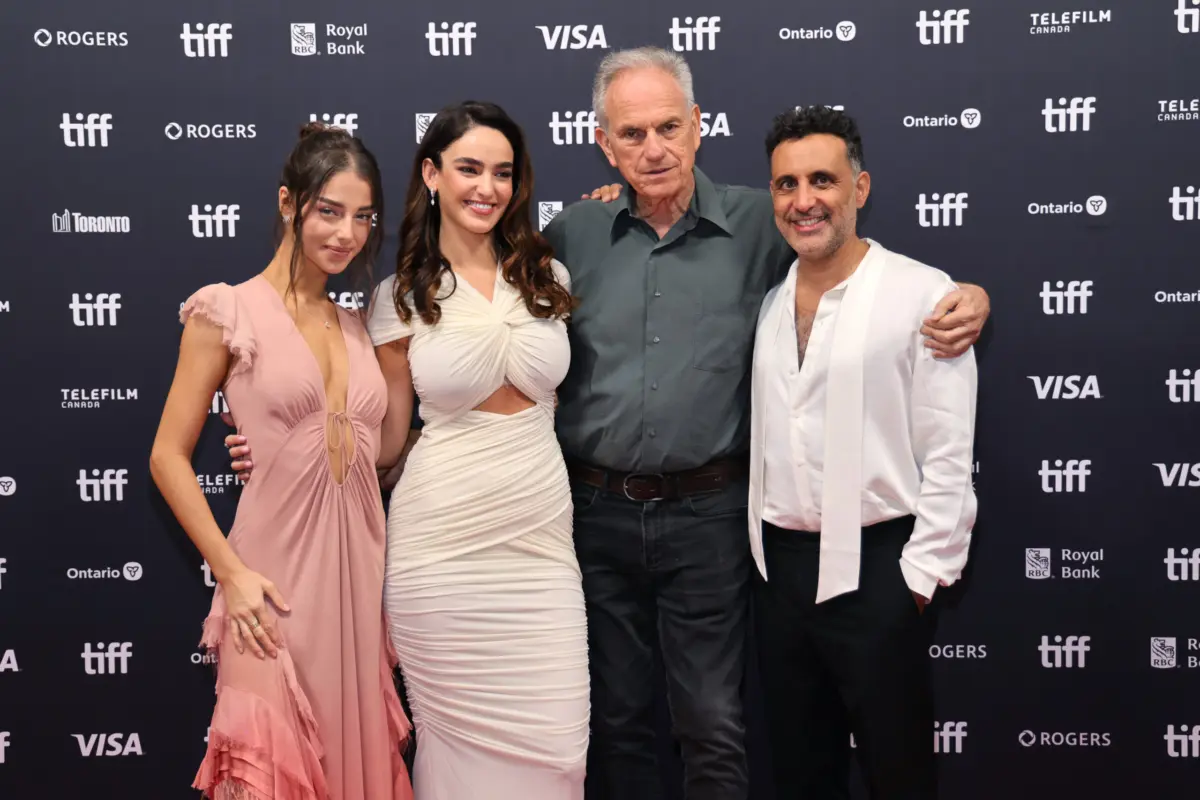
The film’s premiere at the Toronto International Film Festival (TIFF) has drawn both critical acclaim and pointed debate regarding the politics of representation. Some critics have questioned the decision to center the narrative exclusively on the Israeli experience, arguing that the omission of Palestinian perspectives limits the film’s scope.
Cohen remains steadfast in her defense of the project’s focus. "The film portrays many different perspectives of the people who went through that day," she says. "Portraying that doesn’t need to erase the point-of-view of those who didn’t and have gone through other difficult things. This is just the story we’re telling."
Furthermore, Cohen has expressed profound disappointment regarding calls for a boycott of Israeli cultural institutions, a movement supported by various Hollywood figures, including Mark Ruffalo and Emma Stone. "Silencing artists because of government policies closes conversation," she argues. "Don’t we need to keep that open? I mean, you don’t have to agree with a government to hear the stories of its people."
Contextualizing the National Trauma
The release of Our Loves coincides with a fragile moment in Israeli society. Following the return of hostages—or their remains—the country has begun a process of grief that is far from complete. The national mood remains heavily influenced by the ongoing military campaign in Gaza and the uncertainty of future political stability.
The film will see a domestic release in Israel shortly before the national elections, a timing that adds another layer of gravity to its reception. Analysts suggest that the film serves as a cultural lightning rod, forcing audiences to confront the events of October 7 while the wounds are still fresh.
Executive produced by Shari Redstone and the Blavatnik family, the film is currently seeking broader U.S. distribution. Its journey from private screenings at the WGA to the global stage at TIFF reflects a broader desire within the Israeli artistic community to reclaim the narrative of the massacre from the vacuum of news cycles and political rhetoric.
Looking Toward the Future
Despite the grim subject matter, both Cohen and Nesher insist that Our Loves is ultimately a film about human connection and resilience. The film features moments of reconciliation, often occurring under the most extreme duress, which serve as an emotional anchor for the audience.
For Cohen, the act of grieving is a long-term, multi-generational process. "You couldn’t really grieve until all the hostages were home," she says. "So really, we’re not even at the end of the first year of grieving. And there will be many more years."
As Israel prepares to commemorate the anniversary of the attacks, Our Loves stands as a testament to the power of art to provide a framework for mourning. By grounding the macro-events of October 7 in the micro-realities of individual lives, the film hopes to bridge the gap between historical fact and emotional memory, offering a space where, even amidst profound tragedy, there is a flicker of hope for the future. Whether the international audience will embrace this specific perspective remains to be seen, but the film’s arrival marks a critical step in the ongoing effort to define how the events of 2023 will be remembered by the next generation.