The current landscape of prestige cinema is undergoing a profound shift as a wave of high-profile documentaries and fact-based dramas directly challenge the influence of Silicon Valley’s most prominent tech moguls. This movement, characterized by a string of recent releases including A24’s You Can See Everything, Alex Gibney’s Musk, The Social Reckoning, and the New York Film Festival standout Artificial, marks a departure from traditional industry storytelling. Rather than focusing on tech as an abstract force of progress, these films are meticulously deconstructing the personal, political, and ethical legacies of figures such as Elon Musk, Mark Zuckerberg, Sam Altman, and Elizabeth Holmes. This cinematic trend suggests that the creative class—long threatened by the encroachment of artificial intelligence and algorithmic automation—has found a potent mechanism for professional and cultural resistance: the power of the narrative.
A Chronology of Confrontation
The recent surge of anti-tech cinema did not materialize in a vacuum; it is the culmination of years of escalating tension between Hollywood and the platforms that dominate modern media distribution. The timeline of this confrontation began in earnest following the 2023 labor strikes, where writers and actors voiced existential concerns regarding the role of AI in creative labor.
- Early 2024: Industry buzz builds around projects aiming to expose the "move fast and break things" ethos of the 2010s.
- Mid-2024: Production wraps on several major biopics and documentaries that bypass traditional corporate-sanctioned narratives.
- October 2024: The New York Film Festival debuts Artificial, a searing procedural directed by Luca Guadagnino that examines the internal power dynamics of OpenAI.
- November 2024: The back-to-back releases of Musk and The Social Reckoning solidify a trend of critical scrutiny aimed at specific tech leaders.
- December 2024: The wide release of You Can See Everything, directed by Nathan Fielder and Lance Oppenheim, signals that even disgraced figures like Elizabeth Holmes are being revisited to interrogate the broader "fake-it-til-you-make-it" culture of Silicon Valley.
Fact-Based Analysis of the Films
Each of these productions utilizes a distinct methodology to challenge its subject. Alex Gibney’s four-hour documentary, Musk, functions as an investigative procedural. It examines the mechanisms of power utilized by the SpaceX and Tesla CEO, including allegations of political influence and the suppression of dissenting voices on his social media platform, X. Data points within the film suggest that Musk’s control over Starlink technology has created a unique, de facto geopolitical role for a private citizen, raising questions about accountability in an era where corporate infrastructure dictates military outcomes.
In contrast, The Social Reckoning provides a psychological examination of Meta’s Mark Zuckerberg. The film leans into the socio-economic impacts of algorithm-driven engagement, arguing that the platform’s business model inherently prioritizes divisiveness. By focusing on the tangible, human-scale consequences of these digital environments, the film shifts the narrative away from the stock market valuation and toward the societal cost of social media usage.
Perhaps the most culturally significant entry is Artificial, which focuses on the rise of Sam Altman and the internal struggle at OpenAI. Featuring a performance by Andrew Garfield, the film depicts the marginalization of engineers like Ilya Sutskever, whose primary focus was safety and ethics. The film serves as a cautionary tale about "accelerationism"—the practice of rapidly advancing technology regardless of the potential for unintended harm. By centering the human cost of these decisions, the filmmakers provide a counter-narrative to the utopian marketing typically associated with generative AI.
Official Responses and Industry Friction
The tech industry has responded to these films with a mixture of public dismissiveness and private concern. When asked about his portrayal in Artificial, Sam Altman told Vanity Fair, "I don’t think they’re going for accuracy," a comment that industry observers interpreted as a defensive reaction to a film that portrays his professional maneuvers in an unflattering light.
Marketing friction has also played a role in the promotion of these films. Reports indicate that multiple social media platforms, including TikTok and YouTube, initially rejected advertisements for Gibney’s Musk, citing policy violations regarding political content or controversial subjects. While some of these restrictions were later rolled back following public pressure, the initial resistance highlighted the power imbalance between content creators and the platforms that control the reach of their work.
The Economic and Cultural Implications
The success of these films represents a rare instance where the major studios—Neon, Sony, HBO, and A24—have positioned themselves in opposition to the tech giants. This pivot is particularly notable given the deep integration of tech capital within modern Hollywood. For instance, while HBO is bankrolled by Larry Ellison’s interests and Sony produces hardware, these companies have nonetheless greenlit content that explicitly critiques the tech-centric world order.
From an economic perspective, these films are testing whether audiences are willing to pay for content that directly challenges the systems they use every day. Initial box office returns and high engagement rates suggest a significant appetite for this form of "accountability cinema." By turning the lens on the tech elite, Hollywood is reclaiming a role as a cultural arbiter, asserting that while a machine can generate code, it cannot replicate the nuance, empathy, and investigative rigor required to critique the people who build them.
The Human Element in the Age of Automation
At the core of these films is a fundamental debate about the nature of human agency. In You Can See Everything, the interaction between subject and interviewer is a focal point. Nathan Fielder’s presence—often characterized by a stoic, observant skepticism—creates a dynamic where the subject’s attempts to manipulate the narrative are laid bare. This is not merely a stylistic choice; it is a declaration of the filmmaker’s power to interpret and frame reality.
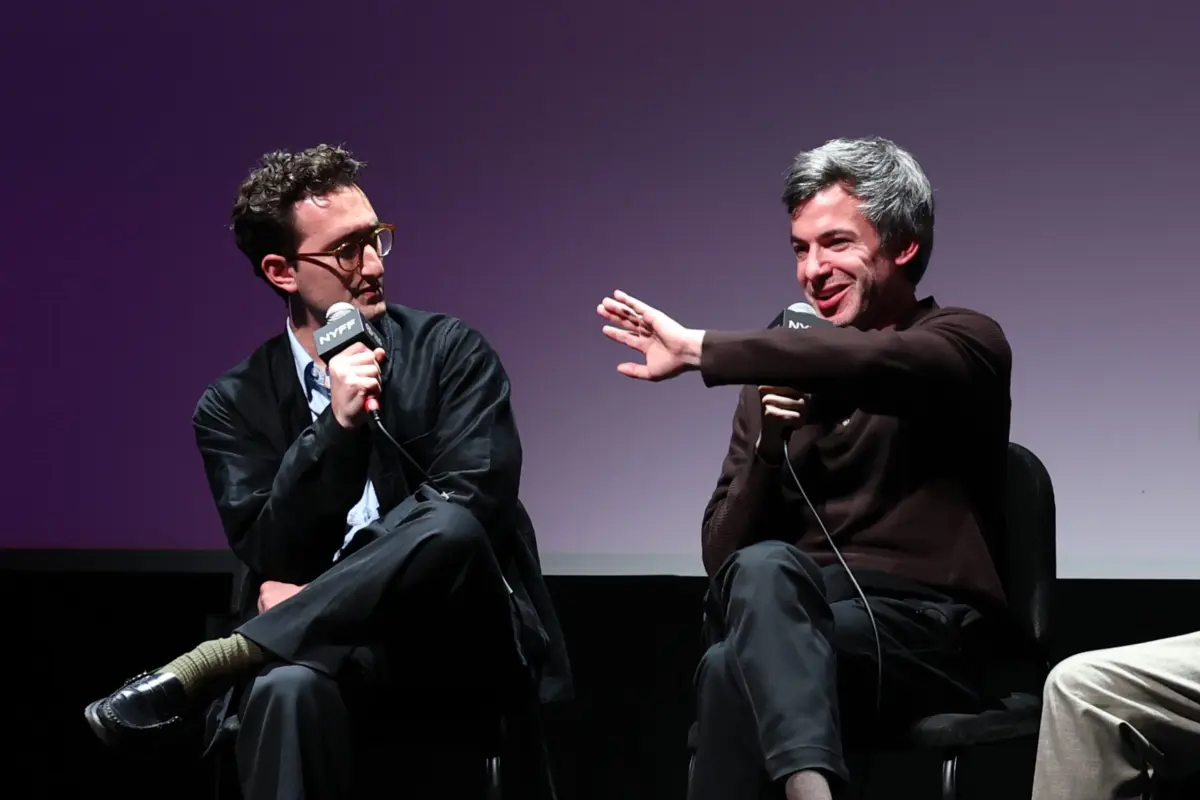
The broader "trans-cinematic" message across these four films is consistent: while engineers may design the interfaces that occupy our attention, storytellers define the meaning behind those experiences. This is an attempt to bridge the gap between the rapid, often cold, advancement of technology and the persistent human need for ethical accountability. As screenwriter Simon Rich remarked at the New York Film Festival, the act of writing a film about these issues is a "last-ditch effort to warn mankind."
Future Outlook
As we move further into the decade, the friction between Silicon Valley and the creative industry is unlikely to abate. The rise of AI-generated content will continue to put pressure on traditional roles, but these films suggest that a counter-movement is forming. If the "tech alpha" era was defined by a belief that every problem had a "solve," the current cinematic era is defined by the belief that those solutions must be subjected to public scrutiny.
Whether these films succeed in shifting the needle on policy or public perception remains to be seen. However, their existence proves that the storytellers of Hollywood are no longer content to remain passive observers of the digital revolution. By documenting the rise of the tech elite, these films have transformed the act of filmmaking into a form of modern accountability. For an audience weary of the relentless pace of technological change, these stories offer not just entertainment, but a lens through which to understand—and potentially challenge—the architects of the future. The long-term impact may be a re-evaluation of the tech industry’s role in our lives, one that recognizes that a "solve" for one person’s problem often comes at the expense of another’s autonomy. In this sense, the grudge held by the storyteller against the technocrat is not merely a matter of ego; it is a vital function of a healthy society in an era of unprecedented technological disruption.