The Dreamed Adventure is a 162-minute feature film directed and written by Valeska Grisebach, marking a significant entry in the contemporary European cinema landscape. Set against the backdrop of the rugged border region where Bulgaria, Greece, and Turkey converge, the film explores themes of historical trauma, ethnic identity, and the lingering shadows of the 1990s post-communist transition. Starring a cast of largely non-professional actors, including Yana Radeva and Syuleyman Alilov Letifov, the production employs a rigorous, naturalistic style to depict a world where past grievances and present economic struggles intersect.
Narrative Overview and Setting
The story commences with the arrival of Said, portrayed by Syuleyman Alilov Letifov, in the small Bulgarian town of Svilengrad. Said has returned to the region after a long absence to facilitate a clandestine transaction involving the purchase of diesel from a local criminal figure known as "The Raven." Shortly after his arrival, Said’s vehicle is stolen, an event he meets with a Stoic resignation that sets the tone for the film’s understated emotional register.
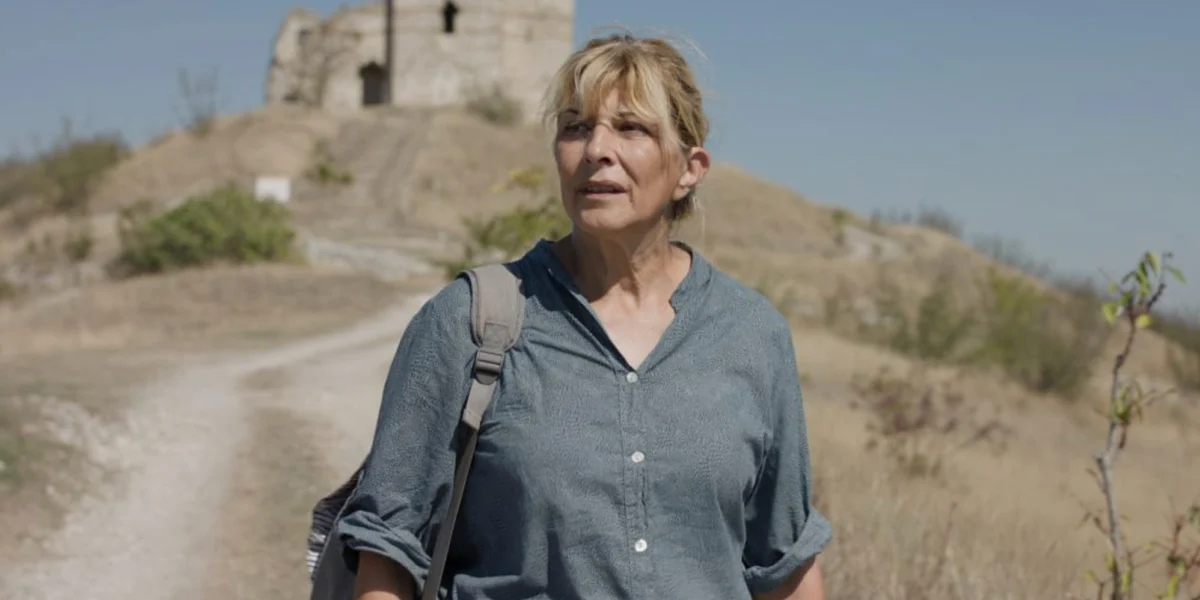
The narrative takes an unconventional turn when Said encounters an old acquaintance, Veska (Yana Radeva), an archaeologist managing a local excavation site. Following Said’s sudden and unexplained disappearance, Veska chooses to assume his role in the illegal diesel deal. This shift in perspective transforms the film from a standard crime procedural into a character study of a woman navigating a dangerous, male-dominated underworld with an unexpected degree of composure.
The setting of Svilengrad is pivotal to the film’s atmosphere. As a tri-border hub, the town serves as a microcosm of the larger geopolitical tensions in the Balkans. The region is historically significant for its proximity to major migration routes and its history of shifting borders, which Grisebach uses to ground the film’s more abstract themes of displacement and survival.
Historical Context: The 1990s Transition and the Pomak Identity
A central pillar of the film’s thematic depth is its focus on the "tricky transitional period" of the 1990s in Eastern Europe. Following the collapse of the socialist regime in 1989, Bulgaria experienced a decade defined by hyperinflation, the rise of organized crime (the "mutri" era), and significant social upheaval. The characters in the film frequently reference this period, suggesting that their current hardened dispositions are a direct result of surviving those turbulent years.
Furthermore, the film touches upon the complex history of the Pomaks—Bulgarian-speaking Muslims. A brief but significant reference is made to Said being a Pomak and the historical "Revival Process" of the 1980s, during which the Bulgarian Communist Party forced ethnic Turks and Pomaks to adopt Slavic names and suppress their cultural identity. By weaving these historical threads into the dialogue, Grisebach situates the narrative within a specific regional history of forced assimilation and cultural resilience.
Chronology of Production and Aesthetic Choices
Valeska Grisebach, a prominent figure in the "Berlin School" of filmmaking, is known for her meticulous and slow-burning approach to storytelling. Her previous work, such as Western (2017), also explored the presence of outsiders in rural Bulgarian landscapes. The production of this latest project reflects her commitment to "Slow Cinema," a genre that prioritizes atmosphere, long takes, and a lack of traditional dramatic peaks.
- Casting Phase: True to her established methodology, Grisebach utilized non-professional actors to enhance the film’s authenticity. Yana Radeva, in her debut role, brings a grounded and unpolished quality to the character of Veska.
- Filming Style: The film eschews a traditional musical score, relying instead on the ambient sounds of the Bulgarian countryside and the quiet intensity of its dialogue. The cinematography is often described as "unmotivated," opting for long, static shots that allow the viewer to observe the environment in real-time.
- Narrative Pacing: With a runtime of 162 minutes, the film deliberately resists conventional pacing. The story moves through "unhurried, unvarying" sequences, emphasizing the mundane aspects of Veska’s journey over the inherent danger of her situation.
Character Analysis and Interactions
Veska serves as the film’s moral and narrative anchor. Despite the risks involved in her "shady underground journey," she remains unshakably unafraid. Her interactions with the local crime boss, Iliya (Stoicho Kostadinov), reveal a shared history that complicates the power dynamics of their transaction. Iliya is portrayed as both charming and intimidating, representing the lingering influence of the criminal structures that emerged during the 1990s.
The dialogue in the film often takes the form of "prolonged, often rambling conversations." These scenes are designed to reflect the way older generations in the Balkans process their history—through circular storytelling and the constant recollection of past hardships. While some critics have noted that these scenes can feel "aimless," they are integral to Grisebach’s goal of capturing the "placid observation" of a world still reckoning with its past.
Supporting Data and Regional Implications
The border region depicted in the film is not merely a backdrop but a site of active socio-economic importance. According to data from the Bulgarian Ministry of Interior, the Svilengrad region remains a critical point for border security and customs. The film’s inclusion of references to immigrant smuggling and illegal fuel trades mirrors real-world challenges faced by authorities in the tri-border area.
The fuel trade mentioned in the film—specifically the "shady transaction involving diesel"—is a nod to the historical "embargo trade" of the 1990s. During the UN sanctions against Yugoslavia, smuggling fuel across borders became a primary source of income for many in the region, fueling the rise of local oligarchs and crime syndicates. By centering the plot on a diesel deal, Grisebach links her characters’ motivations to these deep-seated economic realities.
Official Responses and Critical Reception
While the film has been praised in festival circuits for its "fierceness" and "decency," it has also faced scrutiny for its extreme length and lack of "cinematic drive." Critical reception has been divided between those who appreciate the film’s "deliberate" pace and those who find its refusal to engage in traditional entertainment "practically arrogant."
Film scholars have noted that Grisebach’s work functions more as a sociological study than a traditional drama. The film’s "low energy" and "muted emotions" are seen as a deliberate choice to avoid sensationalizing the lives of people in the border region. In interviews regarding her previous works, Grisebach has stated her interest in the "micro-politics" of human interaction, a theme that remains prevalent here.
Broader Impact and Industry Analysis
The release of this film contributes to the ongoing visibility of Bulgarian cinema and its collaboration with German production houses. The "Berlin School" influence—characterized by a focus on the everyday, the use of non-professional actors, and a rejection of Hollywood-style editing—continues to be a major force in European arthouse cinema.
The film also highlights the growing interest in stories from the "periphery" of Europe. By focusing on Svilengrad rather than Sofia or Berlin, Grisebach draws attention to the marginalized communities that live at the literal and figurative edges of the European Union. The film’s exploration of ethnic identity (the Pomaks) and the scars of the post-communist transition provides a necessary counter-narrative to more centralized European histories.
Conclusion: A Study in Persistence
The Dreamed Adventure stands as a testament to the persistence of both its characters and its creator. By choosing to document the "unbothered strides" of a woman like Veska, Grisebach challenges the audience to find meaning in the quiet moments of life. The film’s refusal to provide easy answers or high-stakes action serves as a reflection of the region it depicts—a place where history moves slowly, and the past is never truly forgotten.
Despite its polarizing nature, the film remains a significant work for those interested in the intersections of history, identity, and the evolving language of cinema. It provides a rare, unvarnished look at a corner of the world that is often overlooked, demanding that the viewer engage with its characters on their own terms and at their own pace. Through its 162-minute journey, the film ultimately offers a profound meditation on what it means to survive in the "deep water" of history.