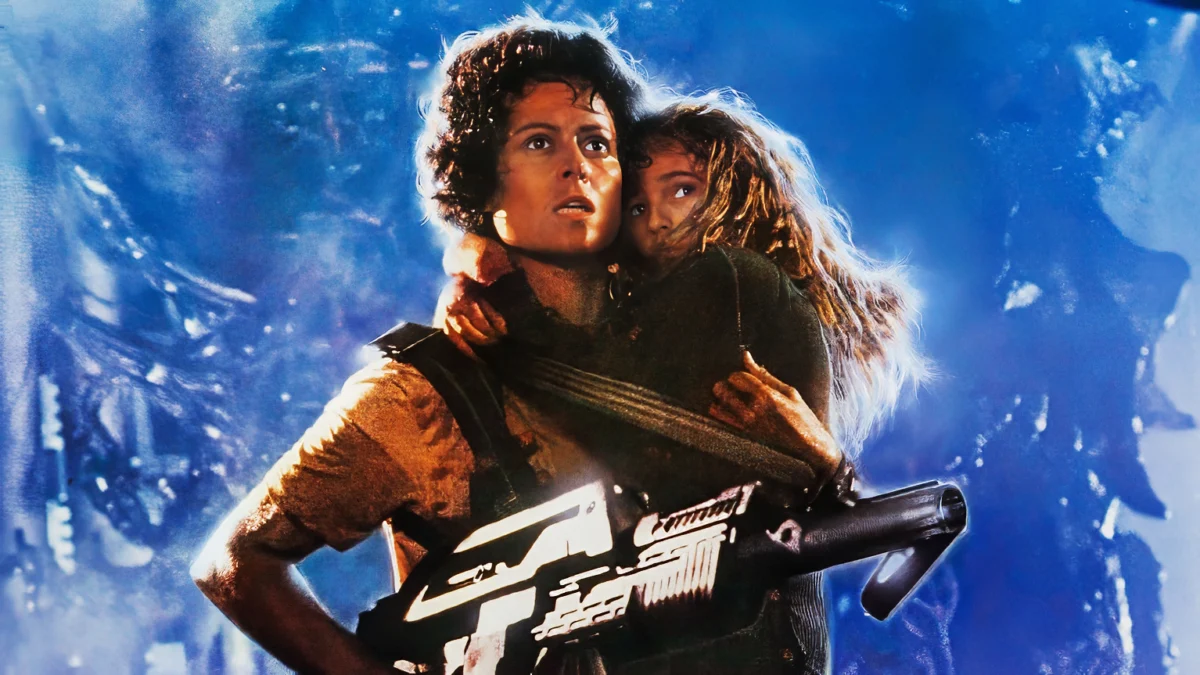
Released in 1986, James Cameron’s Aliens serves as a pivotal moment in the history of science fiction, effectively bridging the gap between atmospheric horror and high-octane action. Following the success of Ridley Scott’s 1979 masterpiece Alien, the sequel introduced a radical shift in tone, scope, and narrative complexity. The film follows Ellen Ripley, portrayed by Sigourney Weaver, who returns to the desolate planetoid LV-426 after spending 57 years in hypersleep. Her return is prompted by a loss of communication with the Hadley’s Hope colony, a terraforming settlement established by the Weyland-Yutani Corporation. Accompanied by a unit of Colonial Marines, Ripley faces not a single predatory organism, but an entire hive of extraterrestrial threats, culminating in a confrontation that redefined the "strong female lead" in Hollywood cinema.
The Narrative Foundation and Character Arc of Ellen Ripley
The core of Aliens rests upon the psychological trauma and eventual empowerment of Ellen Ripley. When the salvage crew of the Narcissus discovers her escape shuttle, Ripley is a woman out of time. She learns that her daughter, Amanda, has passed away of old age during her nearly six-decade stasis, a narrative beat that provides a profound emotional anchor for the ensuing conflict. This personal loss informs her maternal bond with Rebecca "Newt" Jorden, the sole survivor of the Hadley’s Hope massacre.
Unlike the slasher-esque survival of the first film, the sequel positions Ripley as a technical advisor and, eventually, a tactical leader. Her expertise regarding the Xenomorph biology proves superior to the bravado of the United States Colonial Marines (USCM), a group of technologically advanced soldiers who initially underestimate the threat. This dynamic serves as a critique of over-reliance on military technology and the arrogance of colonial expansion. The narrative reaches its zenith when Ripley utilizes a Caterpillar P-5000 Powered Work Loader to engage the Alien Queen, an iconic sequence that remains a benchmark for practical effects and character-driven action.
Chronology of Production and Franchise Development
The journey from the 1979 original to the 1986 sequel was marked by legal disputes and creative shifts. Following the release of Alien, 20th Century Fox was initially hesitant to fund a sequel due to the high costs involved. However, the success of James Cameron’s The Terminator in 1984 provided the studio with the confidence to entrust him with the franchise.
- 1979: Ridley Scott’s Alien premieres, grossing over $100 million and establishing the "haunted house in space" trope.
- 1983: James Cameron writes a treatment for Aliens, originally titled Alien II. His pitch famously involved writing the word "Alien" on a chalkboard and adding a "$" to the end.
- 1985: Principal photography begins at Pinewood Studios in England. The production was notoriously difficult, characterized by tensions between the American director and the British crew.
- July 18, 1986: Aliens is released in North American theaters to critical acclaim and commercial success.
- 1987: The film receives seven Academy Award nominations, a rare feat for a science fiction sequel.
The production was also notable for its use of miniatures, rear-projection, and sophisticated puppetry. Stan Winston, the legendary special effects artist, was tasked with creating the Alien Queen, a 14-foot-tall animatronic that required multiple operators to function. This commitment to practical effects contributed to the film’s enduring visual fidelity, which many critics argue surpasses contemporary CGI-heavy productions.
Supporting Data: Box Office and Critical Reception
From a financial perspective, Aliens was a resounding success for 20th Century Fox. Produced on a budget of approximately $18.5 million, the film grossed $85.1 million in North America and an additional $46 million internationally, totaling roughly $131 million worldwide. Adjusted for inflation, this figure represents a massive return on investment, solidifying James Cameron’s reputation as a "bankable" director capable of handling large-scale spectacles.
Critical reception was equally robust. On the review aggregator Rotten Tomatoes, the film maintains a high approval rating, with critics praising its pacing and Weaver’s performance. At the 59th Academy Awards, the film won for Best Sound Effects Editing and Best Visual Effects. Perhaps most significantly, Sigourney Weaver received a nomination for Best Actress, a landmark achievement that signaled the Academy’s growing recognition of the science fiction and action genres as legitimate platforms for high-level acting.
| Category | Outcome |
|---|---|
| Production Budget | $18.5 Million |
| Worldwide Box Office | $131.1 Million |
| Academy Award Wins | 2 (Visual Effects, Sound Editing) |
| Academy Award Nominations | 7 |
Institutional and Corporate Critique: The Role of Weyland-Yutani
A central theme in the Alien mythos, which Cameron expanded upon significantly, is the predatory nature of corporate interests. The Weyland-Yutani Corporation, represented in the film by the character Carter Burke, views the Xenomorph not as a threat to be neutralized, but as a biological asset to be weaponized.
This corporate greed serves as the true antagonist of the film. Burke’s willingness to sacrifice the lives of the colonists and the Marines to secure a specimen reflects a broader 1980s anxiety regarding deregulation and the "profit at any cost" mentality. The famous line, "I don’t know which species is worse. You don’t see them screwing each other over for a goddamn percentage," encapsulates the film’s cynical view of human institutions. By contrasting the primal, hive-minded survival of the Aliens with the calculated, bureaucratic betrayal of the corporation, Cameron creates a multi-layered conflict that transcends simple monster-movie tropes.
Industry Perspectives and Stakeholder Reactions
Reflecting on the film years later, key figures in the production have highlighted the unique challenges and triumphs of the project. Gale Anne Hurd, the film’s producer, noted that the industry was skeptical of a female-led action movie at the time. "There were many who believed that an audience wouldn’t accept a woman in that kind of role," Hurd stated in retrospective interviews. "Sigourney proved them wrong by bringing a level of vulnerability and grit that hadn’t been seen before."
James Cameron has often discussed the film as a tribute to the resilience of the human spirit. He envisioned the Colonial Marines as a reflection of the Vietnam War era—technologically superior forces struggling against a determined, "low-tech" enemy in a hostile environment. This subtext added a layer of realism to the film’s world-building, influencing countless subsequent works in literature and gaming.
Sigourney Weaver herself has frequently commented on the character of Ripley as a "blueprint" for future protagonists. She emphasized that Ripley was not written specifically to be a "female" hero, but rather a capable human being who happens to be a woman. This nuance is often cited by film scholars as the reason for the character’s longevity and universal appeal.
Broader Impact and Implications for Modern Media
The legacy of Aliens extends far beyond the confines of its own franchise. It essentially birthed the "Space Marine" subgenre, which has become a staple of modern science fiction. The aesthetics of the USCM—gritty, utilitarian, and lived-in—can be seen in the design of the Halo video game series, the Gears of War franchise, and even in the portrayal of military forces in films like Starship Troopers and Cameron’s own Avatar.
Furthermore, the film’s exploration of "The Mother" archetype—pitting a human mother (Ripley) against a monstrous mother (the Queen)—remains a subject of intense academic study. This psychological depth elevated the film from a mere sequel to a foundational text in contemporary cinema.
In terms of franchise health, Aliens expanded the lore in ways that allowed for a sprawling expanded universe, including comic books, novels, and crossover films like Alien vs. Predator. While subsequent sequels and prequels have met with varying degrees of critical and commercial success, the 1986 film remains the gold standard against which all other entries are measured.
Conclusion
James Cameron’s Aliens stands as a masterclass in sequel filmmaking, demonstrating how to evolve a narrative while remaining faithful to its origins. By shifting the focus from individual survival to collective warfare, and by deepening the emotional stakes for its protagonist, the film achieved a rare balance of spectacle and substance. Its technical innovations, combined with a sharp critique of corporate ethics and a groundbreaking performance by Sigourney Weaver, ensure its place in the pantheon of cinematic history. As the film approaches its fourth decade, its influence on the visual language of science fiction and the portrayal of action heroes remains as potent as ever, proving that the "horrific amount of unfinished business" between Ripley and her extraterrestrial adversaries was, in fact, the catalyst for a masterpiece.