Main Facts
Filmmaker Rustin Thompson has released a 78-minute documentary titled The Last Picture Shows, which investigates the current state of independent, small-town movie theaters across the American West. Over the course of his extensive production journey, Thompson traversed ten states and logged 10,825 miles, documenting a total of 123 cinema locations. The project highlights a cross-section of historic and modern venues, ranging from completely abandoned, graffiti-scarred structures to shuttered buildings converted into alternative commercial spaces, as well as struggling enterprise houses and thriving cultural hubs sustained by dedicated caretakers.
The documentary arrives at a pivotal juncture for the exhibition industry. As streaming platforms, the lingering effects of the COVID-19 pandemic, and corporate consolidation continue to transform the media consumption habits of the general public, the traditional single-screen neighborhood theater faces unprecedented financial and operational pressures. Thompson’s film serves as both a visual archive of vanishing Americana and an examination of the resilient individuals who continue to operate these venues out of a deep-seated passion for the cinematic arts.
Chronology and Production Journey
The genesis of The Last Picture Shows lies in Thompson’s longstanding interest in regional American culture and the architecture of leisure. Production began with an ambitious mapping phase, wherein the director identified historic distribution routes and rural population centers that once boasted thriving downtown commercial districts.
Beginning his expedition in the Pacific Northwest, Thompson traveled through remote regions of Oregon, Washington, Idaho, Montana, Utah, and surrounding states. His route systematically targeted towns with populations lower than those of standard suburban neighborhoods, areas where the local cinema historically functioned as the primary evening gathering space.
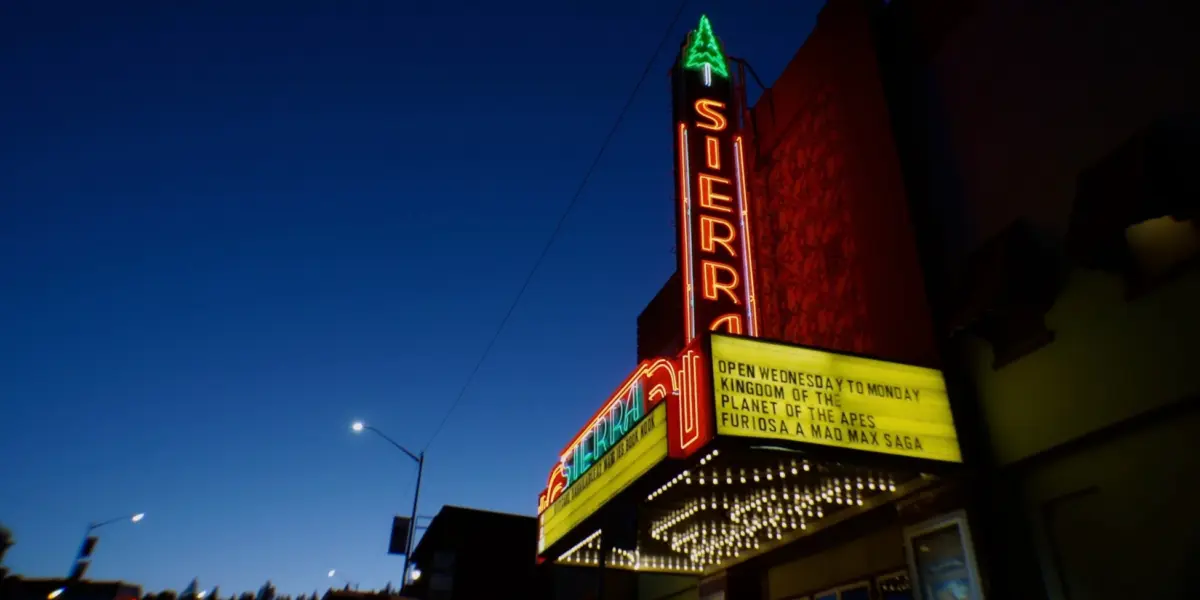
Throughout the filming process, which spanned multiple months, Thompson captured the physical transition of these spaces. The chronology of the project moves deliberately from the haunting remains of defunct movie palaces—where fading marquees and peeling posters offer clues to the exact year of closure—to operating theaters grappling with contemporary distribution mandates. The timeline of the film reflects a cyclical struggle: the initial boom of small-town theater construction in the early-to-mid 20th century, their mid-century decline due to the advent of household television, and their twenty-first-century battle against algorithmic streaming and studio monopolization.
Supporting Data and Industry Logistics
The empirical scope of The Last Picture Shows is anchored by hard figures regarding travel and geographical distribution:
- Total Distance Traveled: 10,825 miles
- States Covered: 10
- Theaters Documented: 123
- Runtime: 78 minutes
Beyond geographical data, the documentary sheds light on the economic friction between independent exhibitors and major Hollywood studios. A recurring operational challenge highlighted in the film involves rigid studio distribution models. Major studios frequently mandate that an incoming film must remain on a screen for a minimum duration of three to four weeks as part of the standard booking agreement.
For a single-screen theater situated in a rural community with a finite population pool, this policy creates a severe financial bottleneck. While operators feel compelled to book high-profile, wide-release tentpole features—such as the DC Studios sequel Shazam! Fury of the Gods, which frequently appears as the background feature playing during Thompson’s visits—the local audience is typically exhausted within the first week. Consequently, operators are forced to project screenings to near-empty auditoriums for the remainder of the mandatory booking window, significantly cutting into profit margins that are already razor-thin.
Stakeholder Perspectives and Theater Owner Responses
The human element of The Last Picture Shows is driven by interviews with independent theater proprietors and managers. These individuals articulate a complex mixture of exhaustion, economic anxiety, and unwavering devotion to their communities.
According to the operators interviewed by Thompson, the motivation to keep their doors open rarely stems from the prospect of high financial return. Instead, owners cite a commitment to preserving physical "third spaces"—neutral social environments separate from home and the workplace—which are rapidly disappearing from modern civic life. Many proprietors have personally absorbed operating debts, invested personal savings, or transitioned their businesses into non-profit models supported by community donations and volunteer labor.
A central grievance expressed by these stakeholders is the lack of market-flexible terms from major distributors. Theater managers argue that the one-size-fits-all booking requirements established for major metropolitan multiplexes are structurally incompatible with rural, low-density markets. They advocate for scalable distribution agreements that would allow single-screen venues to rotate programming more fluidly, thereby serving local demographic tastes more effectively and maintaining healthier revenue streams.
Broader Impact, Cultural Implications, and Future Outlook
Despite its melancholic visual framing of decaying marquees and deserted box offices, The Last Picture Shows ultimately presents a cautiously optimistic outlook for the future of independent exhibition.
The documentary parallels the recent cultural revivals seen in independent bookstores, analog music formats (such as vinyl records), and specialized physical media. These trends suggest a growing consumer fatigue with homogenized, algorithmic content delivery systems and purely digital home entertainment. Audiences in various regional pockets have demonstrated a tangible appetite for curated, communal artistic experiences that cannot be replicated by domestic streaming devices.
Furthermore, the film places current industry struggles within a historical continuum. Independent cinemas have successfully adapted to major structural disruptions in the past, including the economic pressures of the Great Depression, the rise of domestic television in the 1950s, and the collapse of the traditional studio system in the late 1960s. By diversifying revenue streams—such as hosting live community events, offering specialized food and beverage programs, and transitioning into community-funded cultural centers—surviving theaters are proving adaptable.
Ultimately, The Last Picture Shows functions as a vital record of cultural geography. By pairing sweeping cinematography of western landscapes with intimate portraits of projection booths and glowing neon signs, Thompson’s documentary emphasizes that while corporate exhibition models evolve and shift, the foundational human desire to gather in the dark and share a cinematic experience remains an enduring element of American social fabric.