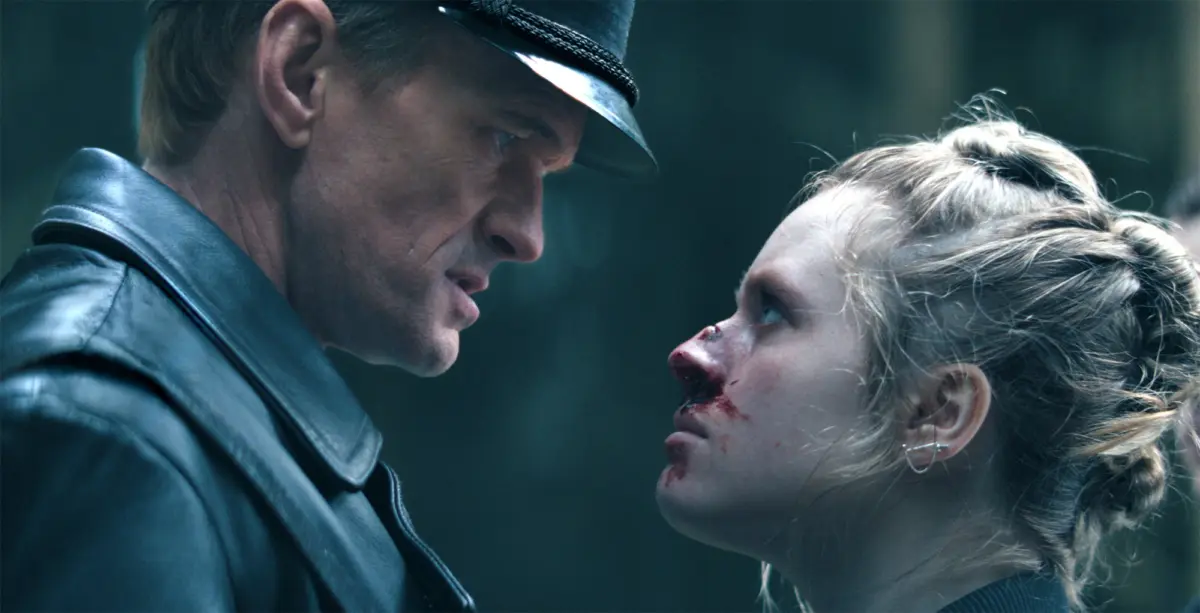
Quiver Distribution has officially released the first teaser trailers for The Last Temptation of Becky, marking the explosive third installment of the high-octane action-horror franchise. Following the commercial and critical success of 2020’s Becky and its 2023 sequel, The Wrath of Becky, the upcoming film elevates the stakes by transitioning the titular character from an embattled teenager into a fully operational Central Intelligence Agency field agent. Directed by genre filmmaker Jenn Wexler, known for her work on The Ranger and The Sacrifice Game, the sequel promises to blend the signature visceral violence and dark humor that defined the previous chapters with a sprawling international espionage narrative.
The feature film is scheduled to make its theatrical debut in the United States on November 4, 2026, following a successful festival run earlier this year that included prominent screenings at the Fantasia Film Festival and FrightFest London. As anticipation builds among genre enthusiasts, industry analysts are closely watching to see how the trilogy closer performs at the box office and whether it can sustain the momentum generated by its predecessors.
Main Facts and Plot Overview
In The Last Temptation of Becky, Lulu Wilson reprises her role as Becky, a character who has evolved significantly since the harrowing events at her family lake house in the original film. Now operating as a trained field agent for the CIA, Becky is dispatched on a covert assignment in Poland. Her mission requires her to infiltrate a seemingly ordinary family running a local tourist inn and hospitality venture.
However, the location of their operation carries immense historical weight: The Wolf’s Lair, Adolf Hitler’s infamous World War II military headquarters in the Masurian forests. Becky soon uncovers a sinister plot orchestrated by the patriarch of the family, Wilhelm Reuss, played by Neil Patrick Harris. Reuss is not merely running an inn; he is the mastermind behind a clandestine movement dedicated to sparking the rise of the Fourth Reich. Recognizing the global implications of the plot, Becky abandons standard protocol and decides to neutralize the threat single-handedly, setting the stage for a brutal confrontation within the historic concrete bunkers.

Alongside Wilson and Harris, the ensemble cast features prominent genre and dramatic actors, including Kate Siegel, Brandon Flynn, Catherine Walker, and James Urbaniak. The screenplay was co-written by director Jenn Wexler and Matt Angel, drawing from a foundational story crafted by Matt Angel and Suzanne Coote. Production duties are shared by a robust team of producers, including Chadd Harbold, Russ Posternak, Jordan Beckerman, Larry Greenberg, Aideen Hand, Paul Kennedy, Jordan Yale Levine, and Bannor Michael MacGregor.
Chronology of the Becky Franchise
The journey of the Becky character from an ordinary youth pushed to extremes into a lethal covert operative spans six years of cinematic development, reflecting a carefully calculated expansion of indie-genre IP.
The trajectory began in the summer of 2020 with the release of the original Becky, directed by Jonathan Milott and Cary Murnion. Produced during a challenging period for the global film industry due to the COVID-19 pandemic, the film carved out a dedicated audience through drive-in screenings and digital platforms. The narrative centered on a rebellious teenager whose weekend getaway with her father is interrupted by a gang of escaped neo-Nazi convicts led by a brutal leader played by Kevin James. The film established the franchise’s distinct tonal juxtaposition: bright, suburban aesthetics crashing against unrelenting, inventive acts of violence, anchored by Wilson’s steely lead performance.
Three years later, in 2023, Jonathan Milott and Cary Murnion passed the directorial baton to Matt Angel and Suzanne Coote for The Wrath of Becky. Released theatrically by Quiver Distribution, the sequel found Becky living a transient existence before crossing paths with a fascist organization known as the Noble Men. The film expanded the scope of the universe, leaning further into dark comedic elements and establishing Becky as a folk-hero archetype for modern revenge cinema. The sequel grossed modest figures that satisfied its independent financiers, proving that the IP possessed sustainable commercial viability.
The greenlighting of a third installment moved swiftly. Production commenced with Jenn Wexler taking over directorial duties, shifting the tone from domestic survival to international political thriller elements while retaining the hard-R-rated carnage expected by the fanbase. Following principal photography and post-production, The Last Temptation of Becky secured world premiere slots on the summer festival circuit, premiering at the prestigious Fantasia Film Festival in Montreal and subsequently screening at FrightFest in London during August 2026. These festival screenings served to generate early critical buzz and solidify distribution agreements ahead of the upcoming November theatrical rollout.

Supporting Data and Production Background
The financial and logistical model behind the Becky trilogy represents a textbook example of modern independent genre filmmaking. Produced on controlled budgets that allow for creative autonomy, the franchise relies on high-concept premises, efficient execution, and strong demographic targeting.
While exact budgetary figures for The Last Temptation of Becky have not been publicly disclosed by Quiver Distribution, the first two films operated under modest independent financing thresholds that allowed them to recoup their investments quickly through ancillary markets, international sales, and domestic VOD revenues. The decision to elevate the production value by utilizing international backdrops—specifically recreating the atmosphere of historical European locales—indicates a step up in financial backing, reflecting the growing confidence of the production entities involved, including Yale Productions and Epic Pictures.
Director Jenn Wexler brings a distinct stylistic pedigree to the project. Having established herself as a notable voice in contemporary horror through her directorial debut, the 1980s-punk-infused slasher The Ranger (2018), and her follow-up historical horror-thriller The Sacrifice Game (2023), Wexler’s involvement signals a director-driven approach to the franchise’s conclusion. Her background as a producer on acclaimed indie horror titles such as Hartbeespoort and Most Beautiful Island has also lent operational stability to the ambitious scope of the Poland-set narrative.
Official Responses and Critical Reception
Early reactions from genre critics following the festival premieres at Fantasia and FrightFest have highlighted the film’s willingness to subvert audience expectations while delivering on the core promises of the franchise. Reviewers have praised Lulu Wilson for seamlessly carrying the physical and emotional weight of the character across three distinct developmental stages, transitioning from a traumatized child to an uncompromising vigilante, and now to a hardened intelligence asset.
Neil Patrick Harris’s casting as the primary antagonist, Wilhelm Reuss, has generated significant commentary across entertainment media. Known predominantly for comedic and light dramatic roles throughout his celebrated career, Harris’s foray into playing a neo-Nazi mastermind represents a deliberate against-type casting choice that early festival reviews have singled out as a high point of the production. Industry observers note that stunt casting of recognizable television and film actors in villainous roles has become a successful formula for the franchise, following in the footsteps of Kevin James in the original film and Seann William Scott in the first sequel.

Quiver Distribution executives have expressed high confidence in the film’s commercial prospects this fall. By securing a November theatrical window, the distributor aims to capture both the remaining autumn horror audience and counter-programming demographics looking for action-centric entertainment prior to the heavy winter holiday studio releases.
Broader Impact and Industry Implications
The release of The Last Temptation of Becky carries several broader implications for the current landscape of independent action and horror cinema.
First, the successful sustainment of a mid-tier independent action-horror franchise over a six-year period demonstrates the viability of alternative distribution models outside of major studio conglomerates. In an era where original mid-budget films struggle to secure theatrical space, targeted genre films backed by dedicated distributors like Quiver can carve out reliable market share by cultivating direct relationships with fan communities through festivals, digital platforms, and strategic theatrical events.
Second, the film highlights the ongoing trend of expanding female-led action IPs that do not rely on traditional superhero mythology. Becky occupies a unique space in contemporary cinema: an R-rated, hyper-violent anti-hero whose narrative arc prioritizes visceral catharsis and meticulous revenge over conventional moral redemption. The character’s evolution from a domestic survivalist to a CIA operative taking down fascist cells in historical European bunkers reflects a broader willingness among filmmakers to bend genre boundaries, blending exploitation-style action with geopolitical thriller tropes.
As the release date of November 4, 2026, approaches, the primary question facing the franchise is whether this third installment will serve as a definitive conclusion to Becky’s cinematic journey or merely another chapter in an expanding universe. While the title—The Last Temptation of Becky—suggests a final reckoning, the modern commercial landscape for profitable genre IPs leaves open the possibility of future extensions should box office and streaming metrics exceed expectations. For now, audiences awaiting the fall theatrical release can anticipate a blood-soaked, high-stakes conclusion to one of independent cinema’s most unexpected modern trilogies.