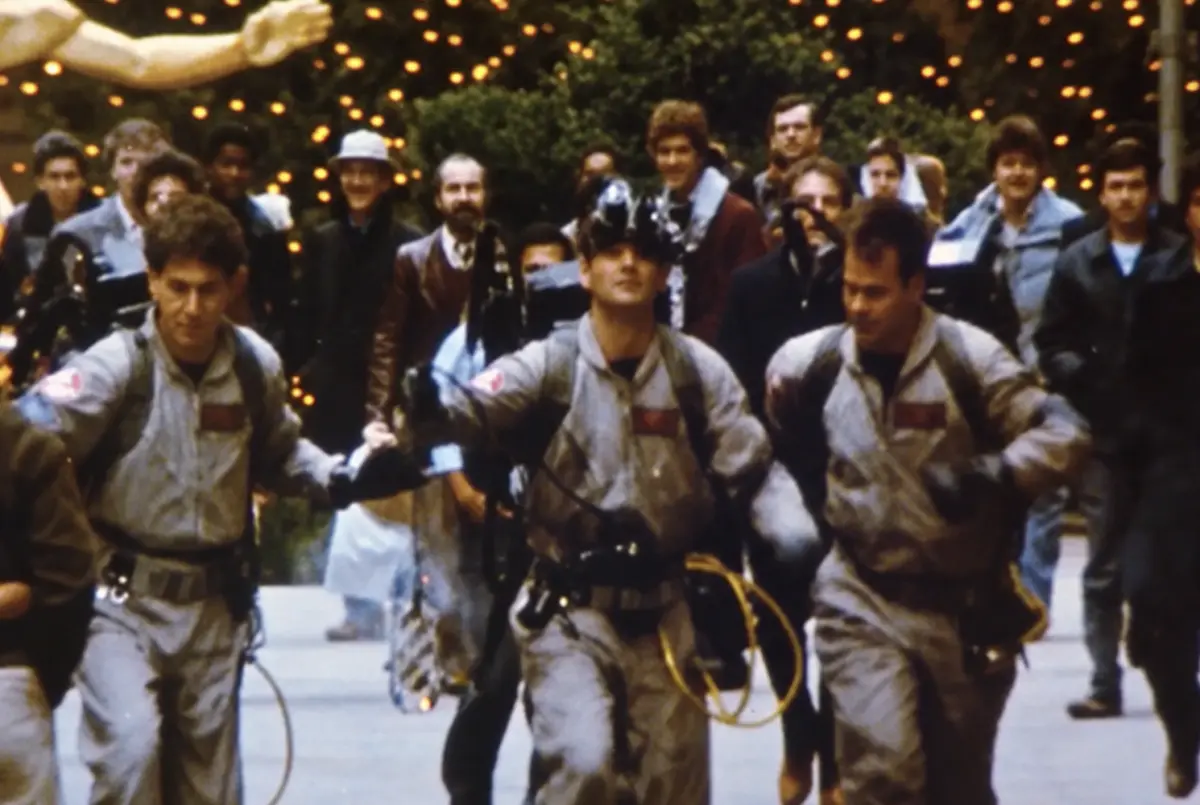
The 1984 release of Ivan Reitman’s supernatural comedy Ghostbusters remains a seminal moment in cinema history, fundamentally altering the landscape of the blockbuster era. While the film is inextricably linked to Ray Parker Jr.’s eponymous, chart-topping theme song—a cultural phenomenon that spent three weeks at number one on the Billboard Hot 100—archival materials have recently resurfaced a forgotten piece of production history. A vintage teaser trailer, circulated widely by enthusiasts at Ghostbusters News, reveals that the initial marketing efforts for the film utilized a completely different, unidentified musical composition that predates the iconic Parker Jr. track.
The Mystery of the Unidentified Theme
The existence of this alternate musical score has long been documented by dedicated film historians and fans, most notably through the exhaustive efforts of the archival repository Spook Central. The teaser in question, which features a significantly different sonic identity, was preserved on the 1989 Criterion Collection LaserDisc release of the film. Its inclusion in subsequent home media releases, such as the 2019 Sony 4K/Blu-ray anniversary collection, has allowed modern audiences to scrutinize the early marketing decisions made by Columbia Pictures.
Despite the accessibility of the footage, the identity of the performers or the composer behind this early track remains an enigma. Unlike the later, well-documented submissions from artists like Glenn Hughes and Pat Thrall, this specific piece of music appears to have been a placeholder or an early concept track utilized specifically for the teaser campaign. The absence of a formal credit in official studio documentation suggests that it was likely an internal library piece or a work-for-hire composition that was swiftly abandoned once the production shifted toward a more marketable, pop-oriented sound.
Chronology of the Ghostbusters Marketing Campaign
The timeline of the film’s promotion provides necessary context for why such an outlier exists. In early 1984, the Ghostbusters production team was operating under significant pressure. The concept of a high-budget supernatural comedy was considered a gamble by the studio, and the marketing department was tasked with distilling a complex, high-concept narrative into a concise, enticing teaser.
- Pre-Production and Early Teasers (Early 1984): The initial teaser trailer was designed to build intrigue without revealing the full extent of the visual effects, which were still being rendered by Boss Film Studios. At this stage, the iconic Ray Parker Jr. track had not yet been finalized or recorded.
- The Scoring Process (Spring 1984): Elmer Bernstein was hired to compose the film’s orchestral score. While Bernstein’s work provided the thematic foundation for the movie’s tone, the studio required a standalone radio single to drive publicity.
- The Ray Parker Jr. Sessions (May 1984): Ray Parker Jr. was famously brought in at the eleventh hour to create a song that could effectively market the film. His track was finished just weeks before the film’s June 8, 1984, theatrical release.
- The Transition: As the Parker Jr. track gained momentum, the initial, unnamed teaser track was phased out, effectively becoming a footnote in the film’s extensive marketing history.
Distinguishing the Myths: The Hughes and Thrall Connection
In discussing the history of unused musical scores for the franchise, it is critical to distinguish the teaser track from other legendary "lost" songs. The industry has frequently conflated the teaser’s music with the rejected demo by Glenn Hughes (of Deep Purple fame) and guitarist Pat Thrall.

In 2021, Pat Thrall provided clarity on this matter by publicly sharing their demo recording. The Hughes and Thrall composition was a rock-heavy, synth-driven track intended to capture the edgy, adult-leaning comedy of the film. While that song has a distinct, identifiable pedigree, it is categorically different from the music heard in the 1984 teaser trailer. By separating these two entities, film historians have been able to map out the studio’s frantic search for the "perfect" sonic identity that would eventually define the Ghostbusters brand for decades.
Broader Implications of Soundtrack Marketing
The shift from an obscure, moody teaser track to the infectious, rhythmic pop of Ray Parker Jr. underscores the professionalization of film marketing during the mid-1980s. This period marked a transition where soundtracks began to serve as vital cross-promotional tools. The success of the Ghostbusters theme proved that a song could be as influential as the film itself, generating significant revenue through radio airplay and MTV rotation.
The existence of the early teaser music serves as a reminder that major studio productions are often the result of significant trial and error. Before the "Ghostbusters" brand was codified, it existed as a series of disparate creative choices. The teaser track represents a moment of uncertainty—a creative pivot point where the studio had not yet realized that the film required a definitive, catchy anthem to transcend its status as a mere comedy and become a cultural milestone.
Technical Preservation and Archival Value
The preservation of these artifacts is largely due to the persistence of the home media market. When the Criterion LaserDisc was released in 1989, it included archival materials that were otherwise destined to be lost to time. In the digital era, these clips are now subjected to frame-by-frame analysis by fans and researchers.
The fact that this teaser track remained largely unnoticed for 40 years—even by the most ardent enthusiasts—speaks to the overwhelming dominance of the final theme. Because the Ray Parker Jr. song became so deeply embedded in the public consciousness, the brain effectively filters out the incongruity of the original teaser’s soundscape upon retrospective viewing. This psychological phenomenon, known as "auditory anchoring," highlights the success of the film’s eventual branding strategy.
Conclusion
The archival re-emergence of the original Ghostbusters teaser music offers more than just a curiosity for fans; it provides a valuable look at the mechanics of 1980s film production. It highlights the collaborative and often chaotic nature of marketing a tentpole feature. While the unidentified track lacks the cultural resonance of the eventual hit, its presence in the historical record serves to humanize the massive commercial success of the franchise. It reminds us that behind every global phenomenon are thousands of decisions—some successful, some discarded, and some, like this forgotten melody, left to haunt the archives until they are finally brought to light.