The cultural landscape of contemporary media has rarely witnessed a phenomenon quite like the sudden, viral ascent of You Can See Everything, the groundbreaking three-hour documentary directed by Nathan Fielder and Lance Oppenheim. Centered on the enigmatic and disgraced founder of blood-testing startup Theranos, Elizabeth Holmes, the film has unexpectedly transformed from an anticipated autumn release into an unprecedented global box-office titan. Following a staggering $15 million opening weekend across the United States—shattering records to become the largest domestic documentary opening in more than two decades—the film has ignited fierce online debates, spawned millions of internet memes, and driven audiences back into physical theaters in numbers not seen since the historic "Barbenheimer" phenomenon of 2023.
As the film prepares for its eagerly awaited United Kingdom release on November 20, major cinema chains across Britain are reporting an extraordinary surge in advance ticket sales. Industry experts note that the public’s insatiable appetite for the project defies conventional wisdom regarding long-form documentary distribution, proving that ambitious, unconventional non-fiction storytelling can command the same theatrical urgency as traditional blockbuster fiction.
Record-Breaking US Debut and Unprecedented Global Momentum
The trajectory of You Can See Everything from a closely guarded industry secret to a mainstream cultural touchstone is a masterclass in modern cinematic marketing and word-of-mouth momentum. The project first caught the industry off guard in September, when it debuted during a surprise, unannounced screening at the Telluride Film Festival in Colorado. Festival attendees were subjected to strict security protocols, including mandatory phone confiscation, to preserve the secrecy of the film’s contents.
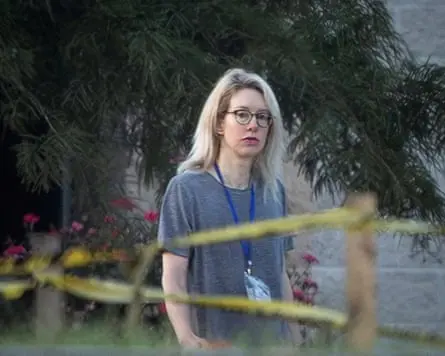
Coinciding with the secretive festival premiere, a teaser trailer was released online, immediately setting social media algorithms ablaze. The viral traction reached surreal heights when Elizabeth Holmes herself—currently navigating the final stages of her federal prison sentence and subsequent transition to a halfway home—weigh-in via social media, responding directly to online commentary and discourse surrounding the trailer.
When the film officially landed in American cinemas, the commercial response surpassed even the most optimistic studio projections. Playing across 855 locations, more than 2,000 individual screenings sold out entirely, accumulating a historic $15 million box office take over its first three days. Demographic data compiled from the opening weekend revealed a striking trend: over 70 percent of the ticket-buying audience was under the age of 35. This heavily skewing younger demographic has breathed new life into traditional theatrical exhibition models, demonstrating a distinct generational desire for collective cultural experiences over isolated streaming consumption.
Chronology of the Theranos Saga and the Road to the Screen
To fully understand the cultural weight of Fielder and Oppenheim’s documentary, one must examine the protracted chronology of the Theranos scandal, which has captivated the public imagination for nearly a decade.

Founded in 2003 by a nineteen-year-old Stanford dropout named Elizabeth Holmes, Theranos promised to revolutionize the healthcare industry through proprietary technology that allegedly required only a few drops of blood to run comprehensive diagnostic tests. At its peak, the company was valued at $9 billion, propelling Holmes to Silicon Valley stardom as a visionary entrepreneur often compared to Steve Jobs.
However, the house of cards began to collapse in late 2015 following a landmark investigative report by Wall Street Journal journalist John Carreyrou. The ensuing federal investigations, regulatory crackdowns, and civil lawsuits culminated in criminal charges of wire fraud and conspiracy. In January 2022, a federal jury convicted Holmes on four counts of fraud. By May 2023, she surrendered to federal authorities to begin serving an eleven-year and three-month sentence at the Federal Prison Camp in Bryan, Texas, later seeing her sentence adjusted as she transitioned toward community confinement.
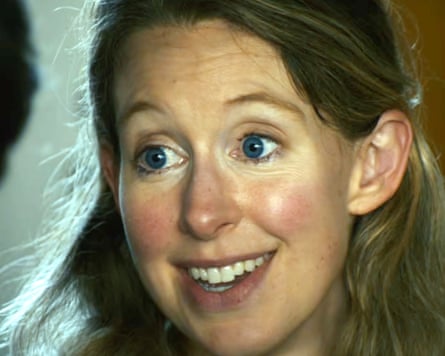
Despite the exhaustive coverage already dedicated to the scandal—including critically acclaimed narrative miniseries like The Dropout and numerous investigative podcasts—You Can See Everything broke new ground by embedding filmmaker Nathan Fielder with Holmes for a reported month. The resulting footage blurs the boundaries between documentary filmmaking, investigative journalism, and performance art, offering an unsettling, close-quarters psychological portrait that previous media iterations could not capture.
UK Exhibitor Response and Strategic Expansion
The shockwaves of the American box office triumph have reverberated rapidly across the Atlantic, prompting British cinema operators to scramble to meet unprecedented consumer demand. Clare Binns, the creative director of Picturehouse Cinemas, noted that the current frenzy mirrors the cultural urgency surrounding Greta Gerwig’s Barbie in 2023.
"People are hungry in a way that we haven’t really seen since then," Binns remarked. "And for it to be a three-hour documentary, it’s bonkers."
Advance ticketing at Picturehouse Central in London began even prior to the US premiere, forcing the exhibition chain to continually expand its allocations. At the Ritzy in Brixton, initial screen capacities were exhausted almost immediately, compelling management to open a second screen to accommodate the overflow. Binns attributes this enthusiastic reception to a broader shift in audience habits, noting strong historical turnouts for similarly daring, non-traditional releases such as Backrooms, Obsession, and NAZA.
Other major UK cinema operators have reported identical operational challenges due to overwhelming demand. Stuart Crane, international vice-president of content at Cineworld, stated that the speed and scale of ticket purchases were "remarkable." Following an initial launch across roughly 40 locations on a Sunday, Cineworld saw screenings at its flagship Leicester Square branch sell out within hours. In response, the chain added extra showtimes in central London while expanding bookings to an additional 35 cinemas nationwide.
Similarly, Vue Cinemas observed extraordinary engagement across its circuit. Dean Cross, senior screen content manager for Vue, highlighted the unique cross-generational appeal of the project, emphasizing how encouraging it is to witness a demanding documentary capture the undivided attention of younger cohorts.
Critical Acclaim and the Blurring of Cinematic Boundaries
Upon its wider festival and theatrical rollout, You Can See Everything garnered widespread critical acclaim, with reviewers singling out its structural audacity. Critics have lauded the film as a modern masterpiece of deceit, praising Fielder and Oppenheim for subverting traditional documentary tropes. Rather than relying solely on talking-head interviews and archival news footage, the directors construct an immersive, frequently disorienting narrative framework that interrogates the nature of truth, charisma, and public performance.
Industry analysts have noted that the documentary’s success signals a maturation in how audiences consume real-world tragedies. In an era saturated with true-crime content on streaming platforms, viewers increasingly view the cinema auditorium as a vital civic space for communal processing. The deliberate choice to experience a three-hour, emotionally heavy documentary in a shared environment underscores a rejection of passive couch-based viewing.
Broader Implications for the Future of Theatrical Exhibition
The staggering financial performance and cultural footprint of You Can See Everything arrive at a critical juncture for the global entertainment industry. Following years of volatility driven by pandemic-era restrictions, changing consumer habits, and the dominance of subscription-based streaming services, traditional exhibitors have continuously sought formulas to guarantee foot traffic outside of traditional superhero franchises and tentpole studio sequels.
The unexpected triumph of Fielder and Oppenheim’s work suggests a viable roadmap for the future: original, high-concept, director-driven non-fiction projects possessing distinct artistic signatures can generate blockbuster-level excitement. By treating complex contemporary history with stylistic daring and psychological depth, filmmakers can mobilize a demographic that prioritizes communal conversation and shared cultural critique.
As UK cinemas prepare for the nationwide rollout on November 20, industry stakeholders will closely monitor whether the momentum can be sustained through the crowded autumn awards season. What is already clear, however, is that Elizabeth Holmes’s extraordinary journey through the American legal and cultural systems has found its definitive cinematic mirror—and in doing so, has granted the traditional motion picture theater an unexpected and powerful lease on life.