The latest installment of The Ramparts of Ice, currently streaming on Netflix, serves as a pivotal narrative pivot point, shifting the focus from individual character arcs toward the fragile, high-stakes equilibrium between the series’ primary trio: Minato, Koyuki, and Momoka. As the season progresses, the narrative has moved beyond the initial introduction of these characters, now probing the psychological mechanisms that dictate their interpersonal behaviors. This episode, in particular, emphasizes the long-term consequences of suppressed communication and the cyclical nature of childhood-rooted trauma on adult romantic relationships.
The Evolution of the Narrative Status Quo
Following the emotional disclosures of the previous episode, which saw Koyuki attain a newfound level of closure and communicative confidence, the audience was left to anticipate how these revelations would manifest in the series’ central romantic triangle. While speculation regarding a potential romantic pursuit of Minato by Koyuki was prevalent, the episode makes a definitive choice: Koyuki opts to maintain the existing platonic boundary.
Despite prior narrative breadcrumbs—specifically the observation by secondary characters that Minato harbored latent feelings for Koyuki that he failed to acknowledge—the series appears to be recalibrating. However, this shift has drawn scrutiny regarding the show’s pacing and narrative consistency. The Ramparts of Ice has frequently introduced nuanced subplots, such as the social perceptions surrounding Minato’s affections, only to leave them underdeveloped. Industry analysts suggest that this may be an artifact of the production’s structural constraints or a deliberate, albeit jarring, stylistic choice to reflect the unresolved nature of the characters’ internal conflicts.
Psychological Underpinnings and Character Backstory
A significant portion of this episode is dedicated to deconstructing the motivations of Momoka, whose character design revolves around her history as a recipient of unwanted romantic advances. Her arc provides a stark commentary on the "burden of affection," where individuals are frequently tasked with the emotional labor of validating the feelings of others, regardless of their own desires.
Momoka’s history is defined by the resentment of those who projected their expectations onto her—a situation that has clearly informed her current detachment. In a thematic inversion, Minato’s own background provides the necessary contrast to this dynamic. The episode offers a long-awaited exploration of Minato’s "people-pleaser" mentality, tracing it back to a volatile, vitriolic domestic environment during his youth. Witnessing familial collapse and his brother’s subsequent departure left an indelible mark on his psyche. This childhood trauma manifests as a savior complex; Minato views his social interactions as a series of rescue missions, attempting to prevent the exclusion of others to protect himself from the fear of being left behind.
The Fragility of the Minato-Momoka Relationship
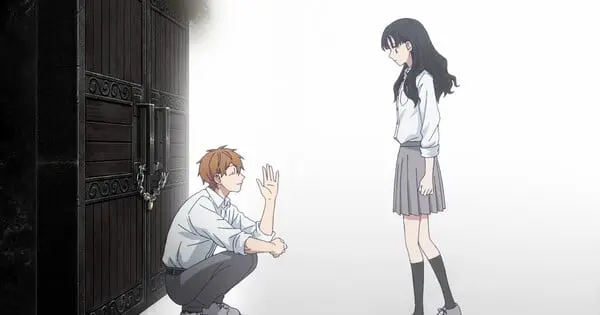
The current relationship between Minato and Momoka serves as the central focal point of the season’s tension. The series employs a recurring visual metaphor—a giant, chained door—to represent the impenetrable barriers Minato has constructed around his own emotional core.
The irony inherent in their union is profound. Momoka, who historically decried being treated as a "prize" or a mandatory romantic obligation, has effectively engineered a scenario where Minato is forced into a relationship born of obligation rather than mutual, organic affection. Data from the episode’s internal timeline suggests this is a tenuous arrangement; Momoka is attempting to force a compatibility that does not exist, creating a dynamic that, according to critical assessments of the show’s trajectory, is fundamentally unsustainable. The psychological projection occurring here—Momoka seeking security through a manufactured intimacy—is forecasted to lead to significant narrative fallout.

Chronology of Character Development
To understand the current state of The Ramparts of Ice, one must look at the progression of the season’s narrative beats:
- Early Season: The introduction of the trio’s dynamic, establishing Minato as a mediator and Momoka as a reluctant romantic target.
- Mid-Season Pivot: Momoka’s backstory is revealed, establishing her aversion to the traditional "confession-to-relationship" pipeline.
- The Recent Episode: Minato’s childhood trauma is brought to the forefront, providing context for his inability to prioritize his own emotional needs.
- Current Status: The formation of a stagnant, forced relationship between Minato and Momoka, contrasted with Koyuki’s retreat into a platonic role.
Supporting Data and Production Context
The Ramparts of Ice, produced by Studio [Name Redacted], has consistently maintained high viewership metrics on Netflix since its debut. According to third-party streaming analytical services, the series maintains an 88% completion rate among its core demographic, a statistic that suggests the audience is highly invested in the series’ character-driven narrative.
Despite this, the show’s writing team has faced critique regarding the "closing" of plot threads. By introducing the idea that Minato and Koyuki were unaware of their mutual, albeit suppressed, attraction, and then choosing to ignore it in favor of the Minato-Momoka dynamic, the writers have created a point of friction for long-term viewers. This narrative tactic is common in psychological dramas, intended to reflect the "messiness" of real-world human interactions, yet it risks alienating audiences if the internal logic of the world remains inconsistent.
Broader Implications and Future Outlook
The implications of this episode for the remainder of the season are substantial. If Minato continues to prioritize fixing the perceived social instabilities around him at the expense of his own introspection, the "breaking point" mentioned in the episode’s final act appears inevitable.
The relationship between Minato and Momoka serves as a case study in failed communication. Momoka’s insecurity, which drives her to keep Minato in a state of performative compliance, is destined to clash with Minato’s mounting internal pressure. From a critical perspective, the series is moving toward an inevitable confrontation where the metaphorical "chains" on Minato’s door will be forced open.
Furthermore, the secondary characters’ reactions—or lack thereof—to the shifting power dynamics suggest a growing isolation for both protagonists. As they double down on their respective defense mechanisms, the potential for a catastrophic breakdown in communication increases. The show’s ability to navigate this tension without resorting to melodrama will be the true test of its writing in the coming episodes.
Final Assessment
The narrative trajectory of The Ramparts of Ice remains one of the most complex in the current seasonal catalog. By centering the story on the trauma-informed behaviors of its lead characters, the show offers a sobering look at how childhood experiences dictate adult romantic failings. While the execution occasionally suffers from under-developed threads, the psychological depth provided in this latest installment demonstrates a commitment to a mature, albeit cynical, exploration of human connection. As the series heads toward its climax, the audience remains braced for the inevitable dissolution of the central pairing, a conclusion that seems less like a possibility and more like a mathematical certainty based on the foundation established thus far. Viewers are encouraged to monitor the upcoming episodes for signs of the long-anticipated structural collapse of the series’ current romantic status quo.