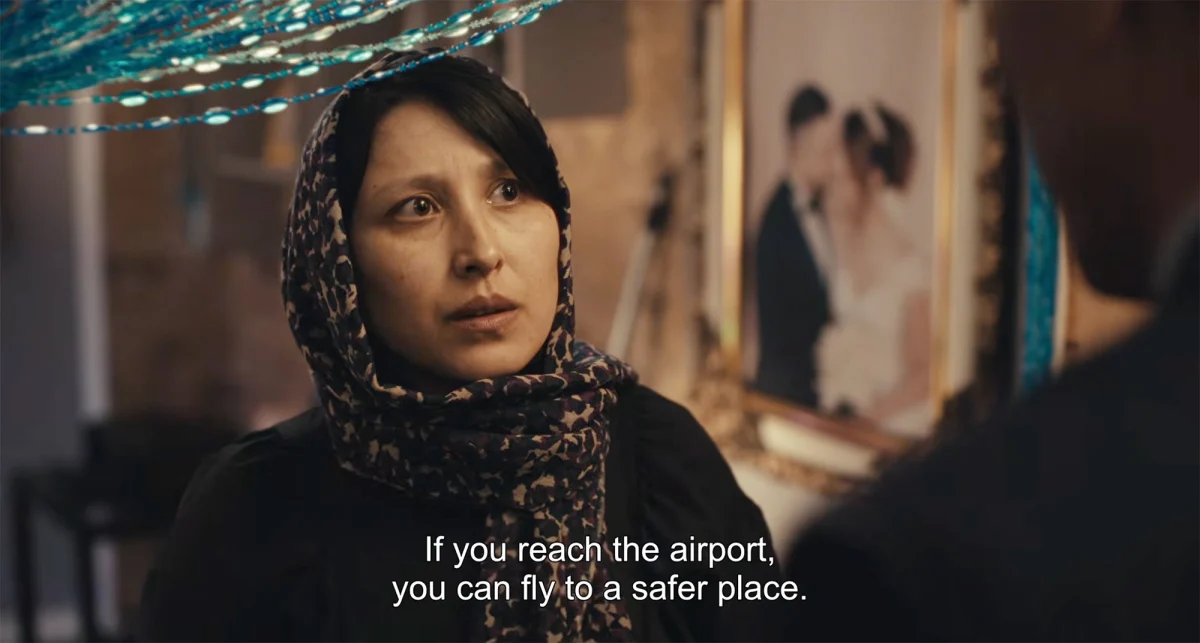
The official trailer and promotional poster for the acclaimed romantic comedy No Good Men have been released to the public, offering a fresh cinematic look at a deeply turbulent historical moment. Directed by and starring acclaimed Afghan filmmaker Shahrbanoo Sadat, the feature-length film is billed as a feel-good love story set against the backdrop of a profoundly challenging sociopolitical reality. Following its high-profile world premiere as the opening selection of the 2026 Berlin Film Festival earlier this year, the movie has embarked on an extensive international festival circuit, captivating audiences with its unique blend of poignant drama, situational humor, and stark historical urgency.
Set in the capital city of Kabul during the final, tense months of freedom in 2021—just prior to the return of the Taliban to power—the narrative follows Naru, portrayed by Sadat herself. Naru works as a television professional producing cooking shows and serving as a prominent camerawoman at a local station. Behind the scenes, however, her personal life is in turmoil. Having left her ex-husband following a series of infidelities, Naru lives with her three-year-old son in her parents’ apartment while locked in a difficult legal battle for full custody of the child. Due to prevailing legal frameworks that heavily favor paternal rights, Naru faces an uphill battle, reinforcing her deeply held cynicism toward men and leading her to conclude that no good men remain in her country.
Her perspective is unexpectedly challenged when Qodrat, recognized as Kabul Television’s premier journalist, approaches her with a lucrative and prestigious career opportunity. Accepting the proposal, Naru finds herself working alongside Qodrat as they crisscross the capital, reporting on the fading freedoms and rapidly shifting atmosphere of a city on the precipice of massive political upheaval. As the pair navigate the daily realities of their professional assignments, professional boundaries blur, romantic sparks fly, and Naru is forced to reevaluate her rigid convictions. The central emotional conflict of the film asks a deceptively simple question against a complex geopolitical landscape: Could there be a good man out there after all?
Chronology and Festival Circuit
The trajectory of No Good Men highlights the growing global appetite for authentic storytelling originating from regions undergoing significant political and cultural transformation. The film’s journey began with its selection as the prestigious opening night film at the Berlin Film Festival (Berlinale) in early 2026. This initial platform established the picture as a major critical darling, drawing praise from international film critics for its clever subversion of traditional romantic comedy tropes within an intensely dramatic framework.

Following its debut in Berlin, the production has maintained a steady presence on the international film festival calendar. Festival programmers and audiences alike have responded enthusiastically to its distinct tonal balance, which infuses levity into a narrative anchored by historical anxiety. The autumn slate features major screenings at both the London Film Festival and the Warsaw Film Festival, cementing its reputation as a standout international indie feature of the 2026 calendar year. Following its festival runs, European distributors have slated the film for a broader theatrical release across the continent during the fall season. At present, a formal distribution timeline or release date for North American audiences has not been finalized, leaving US film enthusiasts waiting for future announcements.
Background Context: Shahrbanoo Sadat’s Cinematic Legacy
To fully understand the artistic weight and stylistic choices of No Good Men, one must examine the career of its creator, Shahrbanoo Sadat. Recognized as one of the most vital voices in contemporary Afghan cinema, Sadat has consistently brought distinct, lived-in perspectives to the international silver screen. No Good Men marks her fourth feature film as a director, following a string of critically praised projects that established her distinct filmmaking sensibilities.
Her cinematic career includes earlier works such as Not at Home, Wolf and Sheep, and The Orphanage. Each of these preceding features demonstrated Sadat’s knack for blending realism with narrative engagement, often drawing heavily from her own life experiences and observations of Afghan society. Her films have regularly found homes at top-tier European festivals, including Cannes, where her works have previously earned critical acclaim and prestigious prizes. With No Good Men, Sadat takes a bold step into the romantic comedy genre, utilizing the structural conventions of the form to humanize a population whose daily lives and romantic aspirations are frequently flattened by foreign news headlines focused strictly on conflict and governance.
The collaborative effort behind the film is equally international, reflecting the complex realities of independent filmmaking involving displaced or exiled artists. No Good Men is produced by an extensive coalition of European and international producers, including Katja Adomeit, Shahrbanoo Sadat herself, Jeppe Wowk, Marina Perales Marhuenda, Xavier Rocher, Ingvil Sæther Berger, Balthasar Busmann, and Maxi Haslberger. This collaborative framework allowed the production to maintain artistic integrity while navigating the substantial logistical hurdles of producing a feature film dealing with sensitive subject matter regarding contemporary Afghan history.
Production Realities and Thematic Implications

Set precisely in the waning days of the Islamic Republic of Afghanistan in 2021, No Good Men captures a specific micro-era defined by collective anxiety, uncertainty, and a lingering desire for normalcy. While political history books record the macroscopic shifts of government collapses and territorial transitions, Sadat’s film opts for a microscopic lens, focusing on the domestic and professional routines of ordinary media workers attempting to maintain their livelihoods as the ground shifts beneath their feet.
The character of Naru serves as a vital anchor for this exploration. As a rare woman working behind the camera at a major television network in Kabul, she represents the strides made by Afghan women in media, education, and public life over the preceding two decades—strides that faced immediate erasure with the subsequent regime change. Her private struggle for child custody serves as a compelling metonymy for the broader legal and social disenfranchisement faced by women under the existing patriarchal structures of the region. By juxtaposing this intimate, high-stakes personal struggle with the external ticking clock of the city’s final days of relative freedom, the film creates a tense emotional landscape where romance and impending historical tragedy exist in constant dialogue.
Furthermore, the character of Qodrat—modeled after the elite tier of Afghan broadcast journalism—provides a window into the professional ethics, risks, and internal pressures experienced by journalists documenting the end of an era. The on-screen chemistry between Sadat (as Naru) and her co-star drives the romantic comedy elements of the film, providing audiences with laughter and emotional warmth without shying away from the somber reality of their historical environment.
Critical Reception and Industry Analysis
Industry analysts tracking the international indie film market have noted that No Good Men fills a unique niche. Traditional cinema addressing the modern history of Afghanistan has overwhelmingly leaned toward grim documentarian styles, harrowing war dramas, or trauma-centric narratives. While these films serve an important informational and empathetic function, industry observers suggest that films like Sadat’s offer a necessary counterweight by asserting the humanity, humor, and romantic desires of characters living through extraordinary circumstances.
Early critical notices out of the Berlin Film Festival praised the film for its narrative economy and its ability to balance lighthearted romantic banter with the looming, melancholic shadow of 2021. Reviewers highlighted Sadat’s dual performance—both behind the camera as director and in front of it as the lead actress—as a tour de force of independent filmmaking grit and artistic vision. The incorporation of authentic Kabul backdrops, media station environments, and culturally specific dialogue lends the project a texture of authenticity that resonates deeply with festival audiences.

As the film continues its autumn tour through major European showcases like London and Warsaw, distributor confidence remains high. European theatrical audiences are expected to embrace the picture’s unique genre-blending approach, which defies easy categorization. For the global film community, the project stands as a testament to the resilience of Afghan artists who continue to create, distribute, and champion independent cinema despite facing the barriers of displacement and the loss of domestic production infrastructure.
Future Outlook and US Market Prospects
With the official trailer now circulating globally via digital platforms, attention turns toward the broader commercial rollout of the project. European theatrical distribution windows are locked in for the upcoming autumn months, ensuring that audiences across the continent will have access to the film in traditional cinema settings.
The primary question remaining for international industry stakeholders is when and how the film will secure a North American distribution partner. Given the strong critical pedigree established at the Berlinale and the subsequent festival buzz in the UK and Poland, US arthouse distributors are anticipated to monitor audience reactions closely. Independent films that manage to successfully combine high-art festival prestige with accessible genre elements—such as romantic comedy conventions—frequently find dedicated audiences in the North American specialty box office.
Until a formal US release date is announced by the production team or domestic distributors, international cinephiles and fans of world cinema will have to rely on festival dispatches and the newly unveiled promotional materials. As No Good Men continues its international journey, it leaves an indelible mark on contemporary cinema, proving that even in the most challenging of historical settings, human connection, humor, and romance remain resilient forces.