The 15th edition of the Taiwan International Documentary Festival (TIDF), held in May, continued its distinguished tradition of exploring the vast and often challenging landscape of politically engaged nonfiction Asian cinema. Since its inception in 1998, a decade after the lifting of martial law in Taiwan, TIDF has served as a critical platform for independent voices, fostering a vibrant ecosystem for documentary filmmaking. This year’s program, featuring both newly produced and recently restored cinematic works, underscored the festival’s commitment to dissecting complex historical narratives, examining evolving national identities, and confronting contemporary societal challenges across the region.
A Legacy Forged in Freedom: The Genesis of TIDF
The establishment of the Taiwan International Documentary Festival in 1998 marked a pivotal moment for the island nation’s cultural and political landscape. The lifting of martial law in 1987, after nearly four decades of authoritarian rule by the Kuomintang (KMT), had unleashed a wave of social and political liberalization. This era fostered an environment ripe for independent video activism and the emergence of new community media models, which sought alternative structures for production and distribution outside traditional state control. At a time when few festivals championed politically engaged nonfiction cinema specifically from Asia – with the notable exception of the Yamagata International Documentary Film Festival, founded in 1989 – TIDF boldly stepped onto the global stage. Its inaugural edition immediately established dedicated strands like the "Asian Visions Competition" and a "Taiwan Competition," signaling its dual commitment to both regional solidarity and local storytelling. This foundational ethos has consistently guided TIDF, positioning it as a crucial arbiter and promoter of cinematic works that often challenge dominant narratives and give voice to marginalized communities.
Unearthing Hidden Histories: Archive: Li Guang-hui (1979/2024)
Among the most impactful screenings at the 15th TIDF was the revelatory 30-minute work, Archive: Li Guang-hui (1979/2024). Compiled from meticulously preserved TV newsreel outtakes by the late renowned photographer Chang Chao-tang, the film offers a profound, deconstructed look at a significant historical event. The footage, originally captured between 1975 and 1979 during Chang’s tenure as a photojournalist for the China Television Company (CTV), documents the extraordinary return of Suniuo. Known by various names – his Indigenous Amis name, his Japanese name Teruo Nakamura, and his Mandarin name Li Guang-hui assigned upon his return – Suniuo was an Amis Taiwanese soldier drafted into the Japanese Imperial Army during World War II. Dispatched to the Indonesian island of Morotai, he was discovered living in complete isolation in the jungle 30 years after the war had ended, entirely unaware of the global conflict’s conclusion.
Suniuo’s miraculous reappearance was swiftly appropriated and integrated into the KMT’s nationalist narrative, framing it as a potent symbol of the Republic of China’s triumph over the Japanese empire. He was recast as a national hero who had valiantly resisted and escaped the Japanese Imperial Army – though some historical accounts suggest he may have deserted as the Japanese forces began to lose ground. Regardless of the nuances of his personal experience, Suniuo became a powerful lodestar for the nascent Taiwan, a figure through which the KMT sought to solidify its national identity and legitimacy.
Chang Chao-tang’s compilation, chronologically assembled, traces Suniuo’s journey from initial press interviews with his family before their reunion, through the spectacle of his highly publicized homecoming, and ultimately to his struggle with lung cancer, which led to his death in 1979. Crucially, Chang deliberately confines the footage to Suniuo’s mediated public appearances, incorporating original narration by news reporters but never allowing Suniuo himself to utter a single word. Across numerous ceremonies staged to welcome him back into public life, Chang’s camera lingers in close-ups on Suniuo’s face. A particularly striking sequence captures the famed Taiwanese folk singer Chen Da serenading Suniuo with a song narrating his "story" as a Ulyssean epic of return to family and nation. What initially appears as contemplation on Suniuo’s face gradually reveals itself to the viewer as profound incomprehension, as he listens to a Mandarin folk song in a language and tradition entirely alien to his Indigenous Amis heritage.
Chang’s deliberate refusal to impose any new voiceover, combined with the cumulative power of his associative montage, crafts a fragmentary portrait. It portrays a man mythologized into a national symbol, his profound personal trauma subsumed by a historical narrative he had no agency in writing or understanding. This film remained unseen by the public, residing in Chang’s private archives until his son donated them to the Taiwan Film and Audiovisual Institute (TFAI) following Chang’s death in 2024. Archive: Li Guang-hui finds Chang Chao-tang at a fascinating juncture between the constellational style of his experimental shorts – such as his diaristic 8mm films, which were featured at TIDF in 2018 and catalyzed by the avant-garde postwar Taiwanese periodical Theatre Quarterly (劇場) – and his professional work as a photojournalist. This unearthed gem challenges the long-standing academic claim that Taiwanese documentary only truly emerged after the end of martial law in 1987, demonstrating a rich, if previously hidden, lineage of critical nonfiction filmmaking.
Hybrid Identities and Colonial Echoes: Taiwan’s Contested Past
Beyond Archive: Li Guang-hui, the festival’s "Reel Taiwan" program, focusing on social movements in the 1980s, and "War Memories, Shifting Identities," which examined conscripted Taiwanese soldiers during the Japanese colonial period, collectively re-evaluated the intricate hybridity of Taiwanese identity. These programs delved into the profound impact of colonial subjugation and the various modes of collective resistance that shaped the island’s unique character. By foregrounding Taiwan’s contested relationship to the Sinocentric world, its long-suppressed Indigenous Amis and Tayal histories, and its broader archipelagic connections across the Pacific and with the United States, TIDF illuminated a multifaceted heritage often overlooked by simplified geopolitical narratives.
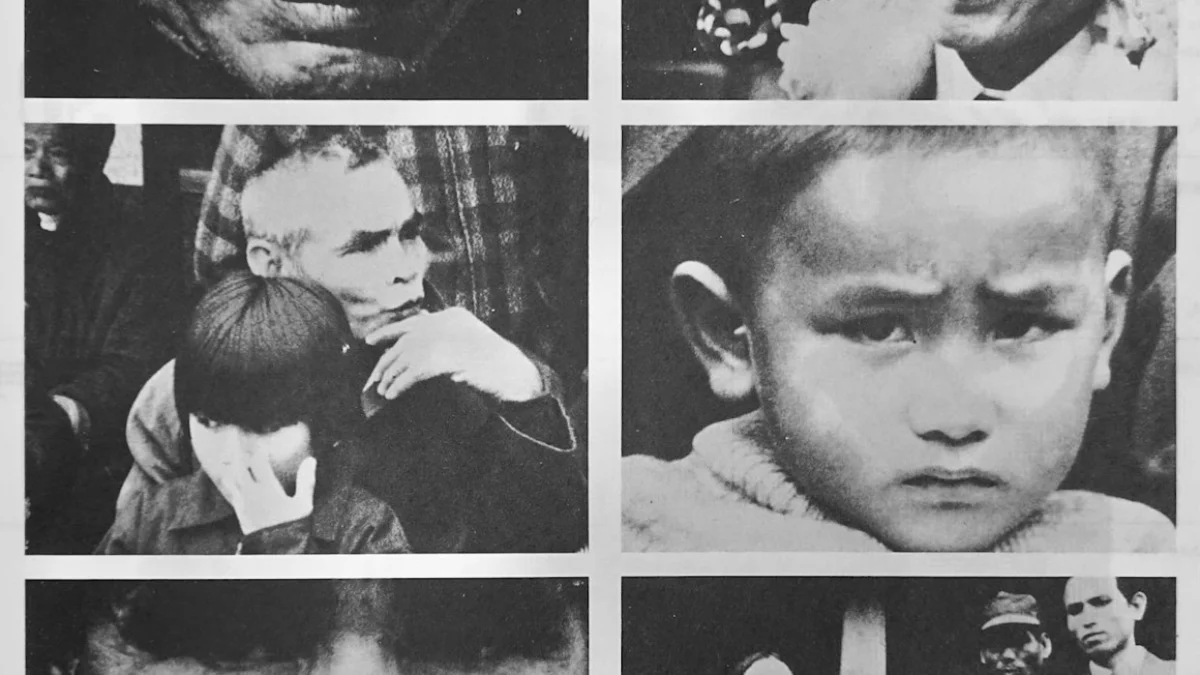
A prime example was Asia Is One (1973) by the leftist collective NDU. This powerful film skillfully weaves together diverse testimonies from postwar Taiwanese fishermen in Okinawa, Zainichi Okinawan miners on mainland Japan, and rural villagers from Tayal communities in Taiwan. The film meticulously limns their varying relationships to Japanese colonialism – some expressing strong critique, others displaying loyalty and even nostalgia. The vast expanses of the sea, continuously traversed by these seasonal laborers, serve as a poignant metaphor for the heterogeneity of East Asia, an immense region constantly pulled between competing forces of territorializing nationalisms.
In an era where Taiwan’s self-governance faces increasing precariousness, frequently framed through the competing imperial interests of the US and China, the festival’s deep attention to the island’s intricate histories is defiantly prismatic. This archival focus on local narratives resonated powerfully with broader global struggles, nowhere more explicitly than in the program "Palestine and Its Archiveless Archive." This curated section framed solidarity with Palestine as an integral part of a wider, ongoing continuum of anti-imperial struggle, underscoring TIDF’s commitment to connecting local experiences with universal themes of justice and resistance.
Confronting Urban Transformation: The Individual Against the Bulldozer
Many films in the TIDF program this year brought into sharp focus the often-unequal confrontations between individuals and the relentless march of predatory urban development. These narratives explore the profound question: what recourse does an individual have when pitted against the overwhelming force of a bulldozer, symbolizing state or corporate expansion? Hu Sanshou’s Xiangzidian Village: The Stage (2026), a sprawling 150-minute work, exemplifies this struggle. Over its runtime, the film meticulously documents the gradual transformation of a landscape, as earth and grass inexorably give way to crushed rock, dust, and finally, the flattened gray expanse of a highway. Paradoxically, this new highway becomes a stage upon which the enduring cycles of village life continue to unfold.
Unlike his previous film, Resurrection (2025), where he directly interviewed villagers, Hu Sanshou adopts a more distanced and reflective approach in Xiangzidian Village. He assumes the role of storyteller through a contemplative voiceover, offering poignant vignettes of individual villagers. These are often presented against sustained wide shots that spatially bind each subject to their surrounding environment, where they frequently appear dwarfed by vast hills, colossal mounds of rock, and the imposing presence of bulldozers, looming like new, unyielding gods.
Hu consistently refers to his subjects in terms of their familial relations – "that is the aunt, uncle, cousin, wife of so-and-so." Despite this formal distance, the film gleans much of its emotional force from Hu’s deeply personal connection to his subjects; the villagers who once watched him grow up are now the ones he quietly observes growing old. Each subject is portrayed as the center of an entire universe, held together by gingerly interlocking webs of relationships and traditions. All of them, in their own quiet way, take the stage again for the final act of their community’s transformation.
In a landscape saturated with independent Chinese documentaries that often present a cinéma vérité style "pic-n-mix" of the marginalized for a receptive European circuit, Hu’s film distinguishes itself through its distinct patience and profound empathy. Filmed over six years, it palpably mourns each elder who passed away during the extensive production process. The film’s only close-up, presented during the coda, captures a delicate pan across the villagers as they watch one of Hu’s previous films during his father’s funeral. Their faces, illuminated by the screen, register bursts of recognition and wonder, a testament to shared history and enduring connection.
Many of the works showcased at the festival were refreshingly unpretentious. Even as they unflinchingly revealed real-life horrors, they often mediated their approach with a certain artistic distance, deliberately avoiding any half-hearted claim that cinema alone would "change the world." Films like Compact Disc (2026) or Maps of Traces (2025), for instance, find their subjects in the disillusioned but not apathetic aftermath of Hong Kong’s intense political revolt. In numerous urban-development documentaries, the older generation often appears to plod on, still steadfastly clinging to hopes of securing the "good life" amidst profound disruption. Within the specific textures of their physical and emotional worlds, these filmmakers discerningly find resilience and endurance where others might mistakenly perceive only failure or passivity.
The Quagmire of Trauma and Justice: Narrative (2026)
Anocha Suwichakornpong’s Narrative (2026) delves into the intricate quagmire at the heart of contemporary political cinema, particularly how trauma is processed, represented, and litigated. The film stages a theatrical workshop with family members of the Red Shirts pro-democracy activists who were tragically killed in Bangkok during the 2010 massacre. The Red Shirt movement, a significant political force in Thailand, advocated for democracy and challenged the traditional power structures, leading to violent clashes with the military. Suwichakornpong structures her film around three workshop exercises that cleverly imitate an abstract three-act narrative.
In "Act One," participants are prompted to describe a memory corresponding to a primal emotion without explicitly naming that emotion. "Act Two" involves a discussion with a lawyer who mediates a conversation about the future of their ongoing legal action. Finally, in "Act Three," participants are asked to describe an experience for which they feel thankful. This codified narrative structure serves to expose the inherent ways in which stories of trauma are often shaped – typically suffering followed by a resolution – which can, intentionally or not, assuage any feeling of guilt on the part of the spectator. Most suggestively, during the final act, Eiko Ishibashi’s haunting score overrides the dialogue, rendering the participants’ words inaudible precisely at the moment the film asks them to articulate gratitude, highlighting the complexities and silences inherent in such requests.
During "Act Two," the participants collectively discuss their fifteen-year pursuit of justice for their family members. The 2010 inquest, a legal process often criticized for its shortcomings, treats each death as an isolated case, rather than acknowledging it as part of a collective tragedy. This legal fragmentation forces families into an exhausting cat-and-mouse chase across different military units in search of individual soldiers, thereby disaggregating violence enacted on a mass scale and effectively preventing any comprehensive reckoning with the military state as a whole. By comparing the way Thai law disaggregates a collective case to how popular representations of political trauma often tend to center individual testimonies, Narrative profoundly exposes the impossibility of individual healing without collective restitution.
Suwichakornpong, however, deftly troubles the rigidity of her own imposed structure. She intersperses each workshop scene with intimate glimpses into the participants’ everyday lives, transporting them out of the sterile brightness of the studio and back into the private, often solitary rituals of mourning. A mother retrieves a worn notebook, meticulously filled with records of her dreams, frequently visited by her deceased son. These deeply affective sequences draw the viewer back to the raw, personal root of the struggle. Yet, by continually returning to the workshops – which themselves form part of the research for Suwichakornpong’s forthcoming courtroom drama, Fiction – the filmmaker meticulously considers both the veracities and the inherent falsehoods of testimony, exploring how its tenderness has been invoked and shaped within therapeutic, legal, and filmic frameworks.
The Exhaustion of Reality: Wuhan’s Post-Pandemic Echoes in Air Base (2025)
Perhaps the most memorable film of the festival was Luo Li’s Air Base (2025), a work that brilliantly upends any conventional notion of resolution, transforming its own premise into an ouroboric, Beckettian walkaround. Set in Wuhan in 2023, the film captures a city slowly, warily, returning to a new form of public life in the aftermath of the global pandemic, which originated there. While Air Base has been described as a "city symphony," it perhaps makes more profound sense to interpret the metropolis itself as a sprawling stage for a motley crew of enigmatic performers.
The film introduces us to a series of recurring, almost absurd vignettes: a man pretending to be a traffic operator from an overpass, issuing commands to passersby; a young woman diligently collecting recordings of sighs from strangers; two men engaged in a seemingly endless, often fruitless, fishing endeavor in a man-made pond; another man meticulously dividing fallen autumn leaves into symmetrical piles atop public city bikes, or attempting to straighten the perpetually askew curtains of public buses. These meticulously staged sequences evoke the same peculiar intrigue as early-2000s prank shows, by provoking unscripted, often revealing, public reactions. Pedestrians mostly obey the self-appointed traffic operator’s commands to stop; passersby treat the young woman with suspicion, refusing to sigh as it is perceived as a "pessimistic" and "ungrateful" action in a society striving for optimism. The man who appears to "fix" the city’s asymmetries ultimately accomplishes nothing, his efforts dissolving into futility. Even an inanimate broom takes center stage, constantly falling on an ascending escalator, with people gingerly stepping over to one side, watching its Sisyphean descent but doing little to intervene.
These motifs recur throughout the film, spiraling into a pervasive sense of "limp time" – a suspended duration without end, stripped of conventional narrative propulsion. Such reactions acutely capture the stark, often detached nature of interpersonal relationships in the present era: no one bears overt responsibility for another, and each person acquiesces to authority or circumstance with shrugs of apathy. The film suggests that reality is not merely tired; it is profoundly exhausted.
Despite the proliferation of repeated, seemingly empty gestures in Air Base, the film’s profound force lies precisely in the accumulation of these subtle public responses. The repeated conversations by the lake, while yielding no fish, nevertheless produce a strange, quiet form of camaraderie among the persistent anglers. Occasionally, some people sigh without prompting, a spontaneous gesture revealing an exhausted mind that, despite everything, refuses to admit complete defeat. These films, far from collapsing under the weight of exhaustion, instead re-perform it across new permutations. They find peculiar, prickly forms that bend around the edges of the possible, still daring to imagine what comes after all that we have already seen before, reaffirming TIDF’s role as a vital incubator of challenging and thought-provoking cinematic explorations.