The landscape of television’s most prestigious accolades, the Primetime Emmy Awards, is in constant flux, a dynamic reality underscored by the upcoming ceremony on September 14. This year, the Television Academy will distribute 23 awards, celebrating excellence across comedy, drama, limited series, and variety and reality competition shows. Preceding this main event, approximately 100 additional Emmys are conferred in craft-focused categories and for guest acting during two Creative Arts Emmy ceremonies, held a week prior. This intricate system is further complicated by the Academy’s frequently updated rules and regulations, leading to continuous adjustments in award categories and eligibility criteria, creating an environment of both anticipation and occasional contention within the industry.
Navigating the Shifting Sands of Emmy Eligibility
One notable rule change implemented this year addresses the guest actor categories, preventing a performer from being nominated as a guest actor for a role they have previously received a lead or supporting actor nomination for. This adjustment aims to prevent "category shopping" and ensure fairness across the competitive fields. A recent historical example that would now fall under this prohibition is Claire Foy’s 2021 Emmy win for her brief yet impactful appearance as a young Queen Elizabeth in the fourth season of The Crown. This was a role for which she had already secured a Best Actress in a Drama Emmy in 2018, highlighting the Academy’s intent to refine category definitions.
The immediate impact of this new rule was dramatically illustrated by Jon Hamm’s disqualification from the guest actor category for his role on Apple’s The Morning Show. The streaming platform had mistakenly submitted him as a guest actor despite his prior 2024 supporting actor nomination for the very same character. While this particular submission was disallowed, Hamm remains eligible for two other Emmy nominations this year, underscoring the granular details and potential pitfalls of the submission process for even seasoned industry players. The rule’s introduction reflects the Academy’s ongoing efforts to adapt to evolving industry practices and star power, ensuring that nominations truly reflect the nature of the performance rather than a strategic category placement.
The Variety Series Category: A Historical Overview of Splits and Mergers
Beyond individual eligibility, a more profound and widely discussed category change this year impacts the variety series landscape, setting the stage for an intense competition among prominent late-night hosts Stephen Colbert, Jimmy Kimmel, John Oliver, and NBC’s iconic sketch comedy institution, Saturday Night Live. This category has a rich and often turbulent history, mirroring the evolution of television itself.
Established in 1951, the variety series category initially encompassed a broad spectrum of entertainment. Its first significant structural change occurred in the early 1970s, when it was briefly bifurcated into two subcategories: one for talk shows and another for musical/sketch series. This division was a direct response to the perceived imbalance of pitting conversational programs like The Tonight Show with Johnny Carson and The Dick Cavett Show against performance-driven productions such as Rowan & Martin’s Laugh-In and The Carol Burnett Show. The Academy recognized the distinct artistic merits and production demands of each format, seeking to create a more equitable competitive environment.
However, this split was short-lived. From the mid-1970s through 2014, the category reverted to a single, unified entity. This era often led to what critics termed "mismatched competitors," where disparate show formats vied for the same award. The 1990s, in particular, saw some perplexing outcomes. For instance, The Tonight Show with Jay Leno famously triumphed over MTV Unplugged in 1995, a win that highlighted the genre’s broad interpretation. Similarly, the intellectually charged political commentary of Politically Incorrect found itself competing against the family-friendly puppetry of Muppets Tonight—both ultimately losing to the distinct stand-up stylings of Dennis Miller Live. These examples underscore the challenges the Academy faced in categorizing and judging increasingly diverse programming under a single umbrella.
By the mid-2000s, the variety series category had largely become the dominion of late-night talk shows. Hosts like Stephen Colbert, Jimmy Fallon, Jimmy Kimmel, Bill Maher, Conan O’Brien, and Jon Stewart dominated the nominations and wins, gradually marginalizing sketch comedy and musical revues. While Saturday Night Live received occasional nominations, the prevailing narrative was the supremacy of male-led late-night programs. Jon Stewart’s The Daily Show became a titan in this period, setting a formidable record with ten consecutive wins, cementing its status as a critical and cultural powerhouse.
In 2015, the Academy once again acknowledged the growing divergence within the genre by splitting the category, this time into "Variety Talk Series" and "Variety Sketch Series." This move was widely lauded for creating more appropriate competitive spaces. The "Variety Sketch Series" category saw initial triumphs from Inside Amy Schumer and Key & Peele before Saturday Night Live embarked on an impressive six-year winning streak that lasted until 2023, reaffirming its enduring cultural relevance and comedic prowess.
Concurrently, HBO’s Last Week Tonight with John Oliver emerged as the undisputed champion of the "Variety Talk Series" category, securing seven consecutive Emmys. Its unique blend of investigative journalism, incisive political commentary, and satirical humor set a new standard for the genre. In 2023, the Academy made another significant decision, moving Last Week Tonight into the "Scripted Variety Series" category, where it continued its winning ways, adding three more Emmys to its already substantial collection.
However, the 2026 Emmy cycle marks yet another pivotal shift: the two variety categories have been merged once more. This decision means that the seemingly unbeatable Last Week Tonight will now compete directly against the network late-night shows and, crucially, against Saturday Night Live. This reunification not only reintroduces the "mismatched competitor" dynamic but also injects a potent political charge into the competition, given the recent tumultuous experiences of some of its leading contenders.
Late Night Under Siege: Political Turmoil and Industry Shifts
The timing of this category merger is particularly salient, coinciding with a period of unprecedented political scrutiny and pressure on late-night television, especially shows hosted by Stephen Colbert and Jimmy Kimmel. The past year has seen both hosts navigate significant controversies, with implications that extend far beyond television ratings and into the realm of political discourse and media freedom.
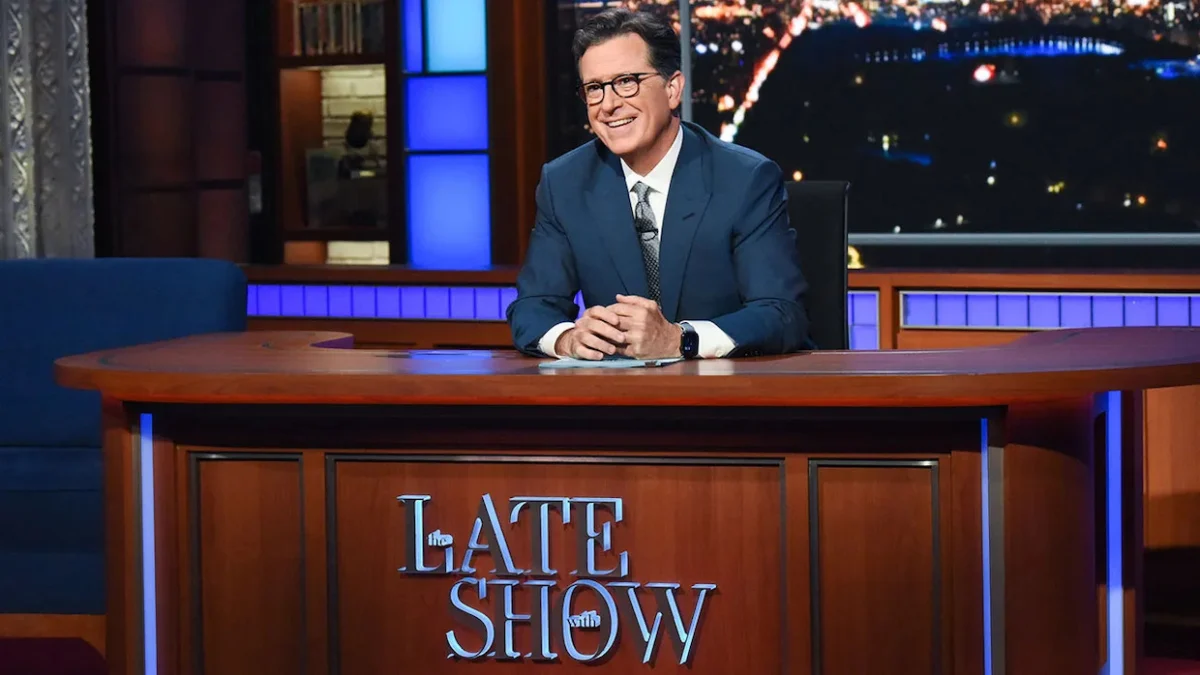
Stephen Colbert’s The Late Show, which he began hosting in 2015 after David Letterman’s departure, concluded its 11-season run on May 21. This cancellation by CBS ended a 33-year franchise that had been a network staple, a decision that followed parent company Paramount’s sale to Skydance Media, led by David Ellison. The official explanation provided by the company was that The Late Show was incurring annual losses of $40 million, a significant financial burden. However, many critics and industry observers voiced skepticism regarding this rationale. They posited that the cancellation might have been influenced by Colbert’s consistently sharp and often scathing criticism of the Trump administration over the years, alongside the publicly known friendly relationship between the Ellison family and the current administration. This perspective suggested a potentially politically motivated decision masquerading as a purely financial one.
Despite his abrupt termination, Colbert experienced what many describe as a triumphant final season. The show saw a parade of high-profile guests reflecting on Colbert’s impactful tenure and the surprising news of its cancellation. In a poignant moment, The Late Show won its first Variety Talk Series Emmy last September, a victory that felt like a powerful vindication. Colbert, while presenting at the ceremony, received a sustained standing ovation, a testament to his influence and the industry’s solidarity. His departure marks the end of an era for network late-night, leaving a significant void and raising questions about the future of political satire on traditional broadcast platforms.
Hot on the heels of Colbert’s cancellation, another late-night controversy erupted, this time involving Jimmy Kimmel. Jimmy Kimmel Live! was briefly pulled from the air on September 17, following immense pressure from the Trump administration and FCC Chairman Brendan Carr. The catalyst was a comment Kimmel made in an opening monologue regarding Charlie Kirk’s assassination, a remark that sparked immediate political backlash. Major media conglomerates, Nexstar Media Group and Sinclair Broadcast Group, which own numerous ABC affiliates, reportedly threatened to pull the show from their local broadcasts, placing Kimmel’s future in momentary jeopardy.
However, the public response was swift and overwhelming. An immediate and widespread public backlash, coupled with threats of audience boycotts against ABC and its affiliates, forced a rapid reversal. Within a week, Kimmel was back on air. His return episode on September 23 garnered a record-breaking 6.26 million viewers, marking a series high and demonstrating the formidable power of public opinion in the digital age. Furthermore, Kimmel’s monologue from that episode accumulated an astounding 26 million views across various social media platforms, underscoring his reach and the public’s appetite for his brand of humor and commentary, particularly in politically charged times. This incident highlighted the delicate balance between creative freedom, political pressure, and audience demand in contemporary media.
The Emmy Race: A Confluence of Politics, Legacy, and Artistic Merit
Against this backdrop of political turbulence and industry upheaval, the upcoming Emmy competition in the unified Variety Series category takes on an added layer of significance. It is difficult to imagine that the recent experiences of Colbert and Kimmel will not influence the Emmy outcomes.
The Late Show holds a unique edge in this race. For many Academy voters, this represents not only the final opportunity to honor the show and Stephen Colbert’s impactful career but also a potential opportunity to cast a symbolic vote against what many perceive as politically motivated media interference or "Trumpism." The emotional resonance of a potential acceptance speech from Colbert and his team, reflecting on their journey and the show’s abrupt end, could be a powerful moment that sways voters. This narrative of a "swan song" award, coupled with the political undertones, positions The Late Show as a formidable sentimental favorite.
Jimmy Kimmel Live!, a perennial nominee in this category for the past 12 years (despite its evolving focus and category adjustments), has yet to secure a Variety Series Emmy win. This long history of nominations without a victory, combined with the recent public outpouring of support following his temporary suspension, could place Kimmel in a strong second position. If Emmy voters are indeed considering the political implications of their choices, Kimmel’s resilience and the public’s defiance of pressure could be rewarded. This scenario, however, hinges on Last Week Tonight with John Oliver failing to continue its dominant winning streak.
John Oliver’s HBO show has been an unstoppable force, consistently lauded for its meticulously researched content, sharp satire, and uncompromising political stance. Its previous seven consecutive wins in Variety Talk Series and three in Scripted Variety Series demonstrate its critical acclaim and consistent excellence. The question now is whether the merged category, with its broader competitive field and the heightened political narratives surrounding Colbert and Kimmel, will finally break Oliver’s formidable streak. His show’s continued relevance and high quality make it a strong contender, irrespective of external political factors, but the emotional narratives this year are particularly potent.
Saturday Night Live, the similarly topical yet often less directly confrontational sketch series, is also expected to secure a nomination. While SNL does not typically "ruffle Trump’s feathers" with the same intensity as the late-night hosts (indeed, Trump famously hosted the show during his 2015 presidential campaign), its satirical take on current events remains a significant cultural touchstone. As a long-time observer and admirer of SNL, this author believes the sketch series, still riding high from its monumental 50th-anniversary celebrations last year, remains a deserving contender. Its 51st season saw the departure of fan-favorite Bowen Yang in December, who earned four acting nominations during his tenure. Despite this significant change, the show has maintained its creative energy in 2026, leaning more heavily into absurdist humor rather than strictly political timeliness. The unexpected success of the debut season of SNL UK, airing live from London, further solidifies Lorne Michaels’s unparalleled status as a comedy institution, showcasing the franchise’s global appeal and enduring format.
The Daily Show, currently featuring Jon Stewart back at the desk on Monday nights and a rotating ensemble of hosts throughout the rest of the week, is highly likely to secure the fifth slot in this competitive category. Recent history serves as a reliable predictor: the Trevor Noah-hosted iteration of The Daily Show won the talk show Emmy once Last Week Tonight was moved to the script variety category, and the subsequent multiple-host version also earned a nomination last year. Its continued relevance in political satire, even with its shifting leadership, ensures its place among the nominees.
However, the most compelling and unpredictable aspect of this year’s race remains the intense three-way battle among Colbert, Kimmel, and Oliver. For the predominantly liberal-leaning members of the Television Academy, of whom there are many, the Emmy ballot presents a unique opportunity to make a collective political statement. The outcomes could reflect not just artistic preference but also a response to the pressures faced by late-night comedy in an increasingly polarized media environment. Regardless of who ultimately takes home the coveted Emmy, one can almost certainly anticipate a rambling, characteristic rant from the former president on Truth Social by the time the award ceremony concludes on September 14, further underscoring the deep intertwining of entertainment and politics in contemporary America.
The 2026 Primetime Emmys Variety Series category is poised to be more than just an awards show; it’s a barometer of the cultural and political climate, a testament to the resilience of satire, and a reflection of the industry’s values in a challenging era. The results will undoubtedly send ripples throughout the television landscape, shaping narratives about media freedom, political commentary, and the enduring power of comedic voices.