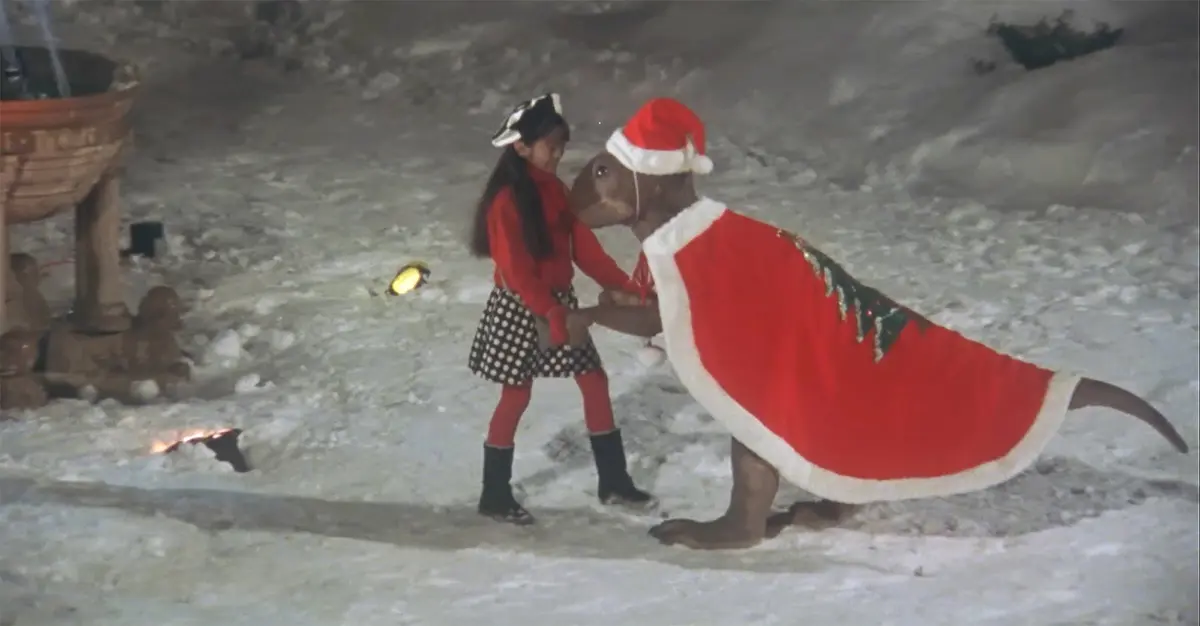
More than three decades after its initial release in the shadow of Hollywood blockbusters, the long-lost Japanese monster movie curio Rex: A Dinosaur’s Story (known natively as REX 恐竜物語) is finally making its official United States theatrical debut. Distributed by Kani Releasing, the film has undergone a meticulous high-definition remastering and restoration process, introducing contemporary American audiences to a wildly unique cinematic artifact. Originally released in Japanese cinemas in July 1993—precisely alongside Steven Spielberg’s monumental Jurassic Park—the film failed to capture global attention at the time. Today, however, its return is being heralded as a major event for enthusiasts of international cult cinema, tokusatsu creature effects, and forgotten box-office history.
Scheduled to roll out in theaters nationwide starting December 11, 2026, this upcoming holiday release bridges a massive gap in transpacific cinema distribution. Featuring expressive creature designs by legendary Italian special effects artist Carlo Rambaldi—whose resume includes iconic practical effects work on Alien, E.T. the Extra-Terrestrial, and Possession—the film blends traditional suit-mation, in-camera perspective gags, and frantic action sequences involving snowmobiles, horse-drawn carriages, and hot air balloons. As Kani Releasing brings this eccentric holiday crowd-pleaser to the big screen, film historians and genre fans alike are given a rare opportunity to reevaluate a fascinating casualty of international distribution and corporate scandal.
Main Facts of the Restoration and Theatrical Rollout

The newly unveiled US theatrical run aims to bring visibility to a film that was largely inaccessible to Western audiences for over thirty years. Kani Releasing has positioned the remastered 4K version of Rex: A Dinosaur’s Story as a premier holiday cinematic event, contrasting sharply with the standard slate of seasonal blockbusters. The narrative centers on Chie, played by young actress Yumi Adachi, the daughter of a paleontologist portrayed by Tsunehiko Watase. After her father co-discovers a mysterious prehistoric egg, Chie befriends the baby Tyrannosaurus rex that hatches from it.
The story quickly shifts from a wholesome coming-of-age creature feature into a frantic pursuit. As greedy industrialists and shadowy figures seek to exploit the dinosaur for corporate profit and advertising campaigns, Chie and Rex are forced on the run. This fictional corporate exploitation mirrors the film’s real-world multimedia strategy in 1993, which included extensive merchandising, promotional tie-ins, and a manga adaptation by the legendary creative group CLAMP. The upcoming screenings will provide audiences with high-definition clarity, allowing viewers to appreciate the tactile nature of Rambaldi’s practical creature effects and the distinct visual storytelling of Japanese cinema in the early 1990s.
Chronology and Historical Context: The 1993 Clash with Jurassic Park
To understand the trajectory of Rex: A Dinosaur’s Story, one must examine the crowded landscape of the summer of 1993. Universal Pictures unleashed Jurassic Park into global consciousness, setting a new benchmark for computer-generated imagery and practical animatronics that permanently altered the blockbuster landscape. Simultaneously, Japanese multimedia mogul Haruki Kadokawa directed Rex, hoping to capture the public’s fascination with prehistoric creatures through a localized, family-friendly lens.

However, the timing proved disastrous for box-office dominance. Released just weeks before Jurassic Park arrived in international markets, Rex struggled to compete with the sheer cultural gravity of Spielberg’s dinosaur phenomenon. Compounding these cinematic hurdles was a severe institutional crisis within Kadokawa’s own media empire. Later in 1993, Haruki Kadokawa was arrested on cocaine smuggling charges, a massive scandal that led to his immediate resignation from Kadokawa Shoten and crippled the film’s promotional momentum. The convergence of stiff Hollywood competition and internal corporate turmoil effectively buried the film outside of Japan, turning it into an obscure footnote in international film history.
Supporting Data and Industry Background
The production pedigree behind Rex: A Dinosaur’s Story reveals an ambitious project backed by prominent figures in Japanese media and literature. Directed by Haruki Kadokawa—whose diverse directorial and producing credits include The Last Hero, Cabaret, Heaven and Earth, and The Girl Who Leapt Through Time—the film was written by Shoichi Maruyama and Kadokawa himself, drawing inspiration from a foundational manga by Masanori Hata and CLAMP. Production duties were split between Kadokawa and Kazuyoshi Okuyama, signaling a high level of industry investment.
The film’s creature effects represent a unique cross-cultural collaboration. Carlo Rambaldi, a three-time Academy Award winner renowned for his work on American sci-fi and horror masterpieces, brought his mastery of animatronics to Japan. This partnership yielded a creature that was both expressive and deeply physical, adhering to traditional Japanese tokusatsu sensibilities while incorporating Western creature-design techniques. Furthermore, the film’s release strategy in 1993 utilized an aggressive "media-mix" framework that helped shape modern Japanese pop-culture marketing. Scholars note that the promotional apparatus surrounding Rex coincided with and reinforced broader commercial trends in Japan during the early 1990s, including the widespread cultural adoption of Western fast-food holiday traditions.

Official Responses and Exhibition Strategy
While contemporary statements from original cast members remain limited due to the passage of time, boutique distribution entities like Kani Releasing have provided clear rationales for unearthing such titles. By focusing on neglected international genre works, specialty distributors fill critical gaps in the modern arthouse and repertory cinema ecosystem. Kani Releasing’s decision to schedule Rex for a mid-December theatrical window underscores an understanding of counter-programming. Rather than competing directly with mainstream holiday tentpoles, the distributor is leaning into the film’s eccentric, wholesome-yet-unhinged tonal qualities to attract midnight-movie crowds, families looking for nostalgic oddities, and cinephiles seeking physical-media spectacles.
Exhibition partners have noted an uptick in interest surrounding rare 1990s restorations, driven largely by a generational nostalgia for the aesthetics of practical effects before the total digital transition of cinema. The theatrical booking page hosted by Kani Releasing indicates widespread availability across independent art-house chains and repertory cinemas nationwide beginning December 11, 2026, accompanied by newly minted promotional posters and digital marketing assets.
Broader Impact, Cultural Implications, and Legacy

The resurrection of Rex: A Dinosaur’s Story offers significant implications for the preservation and re-evaluation of global cinematic history. For decades, foreign genre films that stumbled during their initial theatrical windows risked permanent erasure, surviving only on degraded bootleg VHS tapes or obscure regional television broadcasts. The advent of 4K digital restoration techniques allows boutique labels to rescue these works from obscurity, presenting them with visual fidelity exceeding their original theatrical runs.
Beyond technical preservation, the US release of Rex challenges monolithic historical narratives of 1990s blockbuster cinema. While Jurassic Park remains the definitive cinematic touchstone of that era’s dinosaur craze, works like Rex reveal vibrant, parallel efforts by international filmmakers to engage with similar themes through distinct cultural lenses. By blending high-concept adventure with local melodrama, traditional suit-mation, and international special-effects artistry, Kadokawa’s film stands as an eccentric monument to a transitional period in media history. As audiences fill seats this December to witness a giant dinosaur on the run through snow-covered landscapes and hot-air balloons, Rex: A Dinosaur’s Story finally claims its long-delayed moment in the global spotlight.