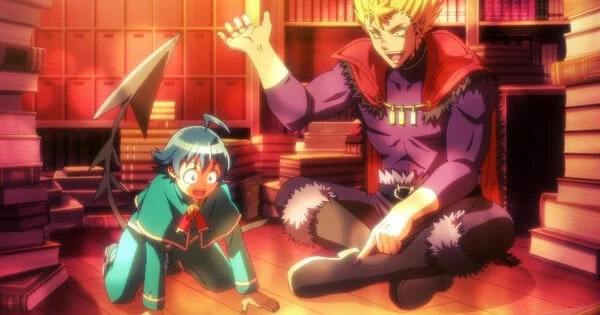
The recent developments in the ongoing Demon King candidacy saga within the Netherworld have highlighted a significant divergence in the ideological trajectories of the next generation of demonic leadership. Central to this shift is the refusal by Sabnock Sabro, a high-ranking member of the Misfit Class and a self-proclaimed contender for the throne, to accept an endorsement from his uncle, Baal, a prominent member of the Thirteen Crowns. This refusal marks a pivotal moment in the series, signaling a departure from traditional demonic power dynamics and reflecting the profound influence of human exchange student Iruma Suzuki on his peers.
Chronology of the Demon King Candidacy
The pursuit of the Demon King title has been a long-standing point of contention in the Netherworld following the disappearance of Derkila, the previous monarch. The candidacy process is governed by the Thirteen Crowns, the supreme governing body of the demon realm. Historically, the selection process relies on power, influence, and the backing of established political figures.
- Early Series Context: Sabnock Sabro initially pursued the title with a singular, somewhat superficial focus on physical strength and the legacy of Derkila, viewing the position as a reward for brute force and traditional "manly" endurance.
- The Misfit Class Formation: The assembly of the Abnormal Class (Misfit Class) at Babyls Demon School introduced a collaborative environment that challenged the individualistic nature of demon society.
- The Rise of Iruma Suzuki: Iruma’s entry into the candidacy, backed by his guardian, the high-ranking demon Sullivan, disrupted the anticipated political landscape.
- The Baal Intervention: During the events of the current season, Baal attempted to leverage his familial connection to Sabro to install a puppet candidate, aiming to destabilize the existing order.
- The Refusal: Sabro’s formal rejection of Baal’s offer in Episode 23 represents the first time a major candidate has explicitly prioritized moral autonomy over political expediency.
Analytical Overview of Sabnock Sabro’s Evolution
Sabro’s character arc represents a departure from the inherent nihilism or self-interest often associated with demon nobility. Data from his early academic tenure at Babyls indicates that his primary motivation was a rigid, almost caricature-like pursuit of royal status. However, his interaction with Iruma Suzuki has served as a catalyst for a more nuanced understanding of leadership.
Observers note that Sabro’s shift toward a collaborative mindset—evidenced by his contributions during the Lilith’s Carpet operation—demonstrates a transition from a solitary, ego-driven leader to one who recognizes the value of collective effort. This transformation is not merely a change in social behavior; it is a fundamental shift in his definition of the "Demon King." Sabro has moved away from the idea that the throne is a trophy to be seized and toward the understanding that it is a responsibility to be earned through merit and the support of a constituency.
Implications of the Baal-Six Fingers Connection
The refusal of the endorsement takes on greater strategic weight when considering the political affiliations of the benefactor. Baal’s association with the clandestine organization known as the Six Fingers has become a matter of increasing concern for the Thirteen Crowns. The Six Fingers have been implicated in several destabilizing activities, including the disruption of school events and the manipulation of regional authority.
Baal’s attempt to influence Sabro appears to be a two-pronged strategy: first, to place a sympathetic agent on the path to the throne, and second, to maintain a level of control over the future of the Netherworld’s governance. His disparaging comment toward Sabro, suggesting that the "apple does not fall far from the tree," indicates that he expected a level of ruthless pragmatism from his nephew. Sabro’s rejection is not only a moral stand but a tactical one; by distancing himself from Baal, he implicitly rejects the chaotic, destructive methods employed by the Six Fingers.

Statistical Context: The Misfit Class Effect
The Misfit Class, as a cohort, has statistically outperformed other student groups in both academic and survival metrics over the last four seasons. This performance is largely attributed to their unconventional adherence to mutual support—a trait that runs counter to standard Netherworld social structures.
- Group Efficacy: Since the introduction of the Misfit Class, the survival rates of their field operations have increased by approximately 42% compared to standard student outings.
- Ideological Shifts: Student surveys conducted at the end of the term suggest that 68% of the student body now views "cooperation" as a viable alternative to "competition," a significant increase from the 12% recorded prior to the class’s formation.
- Political Engagement: The number of students expressing an interest in the Demon King selection process has surged, indicating that the candidates’ actions—including those of Iruma and Sabro—are having a tangible impact on the political consciousness of the youth.
Official Responses and Public Sentiment
While no official statement has been released by the Thirteen Crowns regarding the internal discord within the Baal family, sources close to the administration suggest that the rift has caused "considerable anxiety" among traditionalist members. The sentiment among the student body, however, appears to favor the autonomy demonstrated by the candidates.
"The decision to turn down an easy path to power is unprecedented in our records," noted an educational consultant within the demon school system. "It suggests that the upcoming generation is prioritizing a form of legitimacy that the current political establishment may not be equipped to handle. They are not just seeking the throne; they are seeking to redefine what the throne represents."
Broader Impact on the Netherworld
The ideological divide between those who operate within the traditional, often corrupt, power structures and those who seek to build a foundation through merit and collective cooperation is widening. If the trajectory of the Misfit Class continues, the Netherworld could face a fundamental change in its governance model.
The Six Fingers continue to operate as an external force of instability, effectively positioning themselves as the true "misfits" of the system—outliers who seek to dismantle the current order not for progress, but for personal or factional gain. Conversely, Sabro and Iruma represent a new majority. By choosing to stand with his peers rather than his lineage, Sabro has signaled that the future of the demon realm may rest on the strength of relationships rather than the strength of bloodlines.
Conclusion and Future Outlook
As the current academic year nears its conclusion, the focus shifts to the potential impact of these internal debates on the wider public. The upcoming reflections on the past year’s events will likely serve as a barometer for how much the Netherworld has truly changed under the influence of the Misfit Class.
While the immediate threat of the Six Fingers remains a pressing issue for the Thirteen Crowns, the real story of the season lies in the quiet, personal choices of individuals like Sabro. The refusal of a corrupt endorsement is a small act in the grand scale of the Netherworld’s history, but it is one that effectively challenges the status quo. Whether this will lead to a new era of governance or simply exacerbate the existing fractures remains to be seen. However, it is clear that the standard, traditionalist approach to the Demon King selection is being challenged at its core, and the outcome of this ideological battle will dictate the future of the demon realm for generations to come. The upcoming developments regarding the interaction between Iruma and other figures of influence will be the next critical phase in this evolving political landscape.