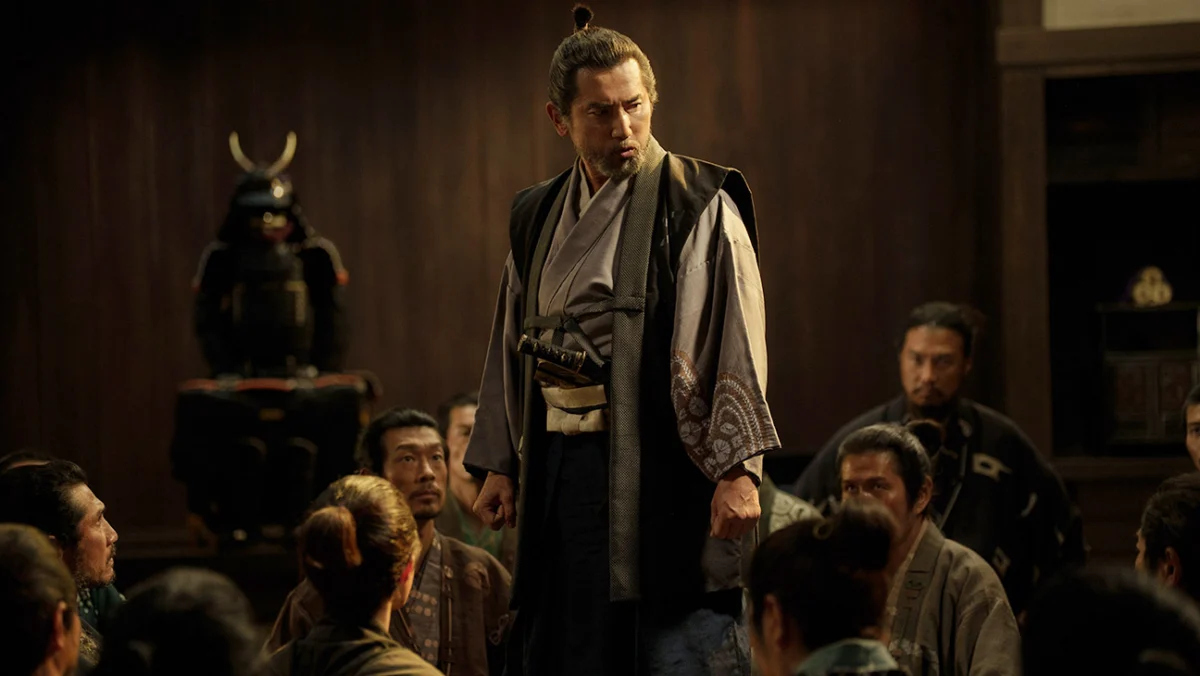
Kiyoshi Kurosawa, a filmmaker widely recognized for his profound impact on the Japanese cinematic landscape and beyond, has unveiled his latest work, The Samurai and the Prisoner (original title Kokurojo), at the prestigious Cannes Film Festival in the Cannes Première section. This new endeavor sees the acclaimed director, primarily known for his chilling J-horror masterpieces and a remarkably diverse filmography, venturing into the historical mystery genre, a significant departure that further underscores his artistic restlessness and willingness to explore uncharted narrative territories. Clocking in at 2 hours and 27 minutes, the film is an adaptation of Honobu Yonezawa’s prizewinning 2021 novel, presenting a stately and theatrical drama that recontextualizes a familiar Japanese historical narrative with a distinctly anti-war message resonant with contemporary global sensibilities.
Kiyoshi Kurosawa’s Evolving Vision: A Master of Genre Fluidity
For decades, Kiyoshi Kurosawa has been an enigmatic and influential figure in international cinema, revered for his ability to craft narratives that are both intellectually stimulating and viscerally impactful. Outside of Japan, his name is most frequently associated with the "J-horror" boom of the late 1990s and early 2000s, where films like Cure (1997), Pulse (2001, also known as Kairo), and Loft (2005) redefined the psychological horror genre. These films were celebrated for their eerie atmospheres, visually inventive compositions, and profound explorations of alienation, despair, and the unseen terrors of modern society, elevating genre cinema to an arthouse level. Cure, in particular, is often cited as a foundational text in the J-horror movement, influencing a generation of filmmakers with its unsettling portrayal of a serial killer linked to hypnotic suggestion. Pulse, a chilling exploration of loneliness and existential dread in the digital age, gained international acclaim for its prescient commentary on internet culture and its devastating psychological effects.
However, reducing Kurosawa’s extensive career to just horror would be a disservice to his remarkable versatility. His filmography spans a breathtaking array of genres, each tackled with a distinctive auteurial touch. He has delved into the intricacies of psychological thrillers with films like Creepy (2016), a taut and unsettling examination of neighborly paranoia and sinister manipulation. His exploration of the criminal underworld includes serial killer narratives such as Serpent’s Path (1998), showcasing his ability to infuse dark themes with a unique narrative rhythm. Science fiction has also been a canvas for his philosophical inquiries, as seen in Before We Vanish (2017), an alien invasion story that cleverly uses genre tropes to dissect human nature and identity. More recently, Kurosawa demonstrated his darkly comedic and anti-capitalist inclinations with Cloud (2023), an actioner that critiques modern economic structures through a satirical lens. Yet, amidst these genre exercises, he has also proven his prowess in pure drama, delivering critically acclaimed works like Tokyo Sonata (2008), a poignant and incisive portrait of a Japanese family grappling with economic hardship and existential crises, which garnered the Jury Prize in the Un Certain Regard section at the Cannes Film Festival.
With The Samurai and the Prisoner, Kurosawa embarks on yet another genre exploration: the historical mystery, specifically within the jidaigeki (period drama) tradition, set in Japan’s tumultuous 16th century. This latest artistic pivot is not merely a stylistic choice but signals a continued evolution in his thematic concerns, demonstrating a filmmaker who is unafraid to challenge both his audience’s expectations and his own established cinematic language.
Historical Canvas: The Sengoku Period and a Tale of Betrayal
The Samurai and the Prisoner transports viewers to the heart of Japan’s Sengoku period (c. 1467-1615), an era synonymous with ceaseless civil war, political intrigue, and the relentless struggle for national unification. This period, often romanticized in popular culture, was a crucible of conflict where powerful samurai clans vied for supremacy, constantly shifting alliances and betraying former comrades in their pursuit of control over the fragmented land. It was during this turbulent time that figures who would shape Japan’s future emerged, including the "Three Great Unifiers": Oda Nobunaga, Toyotomi Hideyoshi, and Tokugawa Ieyasu.
The film’s narrative centers on a pivotal historical event: the rebellion of Lord Murashige Araki (portrayed by Masahiro Motoki) against the infamous Oda Nobunaga (Bando Shingo). Nobunaga, a charismatic and ruthless daimyo, is traditionally revered as the first and most crucial figure in the unification of Japan. His strategic brilliance, military might, and often brutal methods allowed him to consolidate vast territories and exert unprecedented influence. However, his rise was punctuated by numerous betrayals and fierce resistance, and the story of Murashige Araki’s defiance is one such episode that has long been etched into Japanese historical consciousness.
Traditionally, Araki’s decision to break ties with Nobunaga in 1578, fortifying himself in Itami Castle with a small but loyal army, is depicted as an act of calculated treachery and profound cowardice. Historical accounts often portray him as an ambitious underling who, fearing Nobunaga’s growing power or perhaps sensing an opportunity for personal gain, abandoned his lord during a critical phase of the unification wars. His eventual abandonment of his castle and flight has cemented this image in popular lore, becoming a cautionary tale of disloyalty.
Kurosawa, however, challenges this ingrained narrative. Drawing from Honobu Yonezawa’s novel, he reinterprets Araki’s "long last stand" not as a simple act of perfidy but as a complex series of events driven by deeper philosophical motivations. By taking a well-known historical episode and infusing it with new twists and a contemporary anti-war sensibility, Kurosawa invites audiences to reconsider the moral ambiguities of historical figures and the often-simplified narratives of heroism and villainy.
A Feudal Whodunit: Structure and Intrigue
Kiyoshi Kurosawa, who also penned the screenplay, meticulously crafts Araki’s rebellion into a unique narrative structure: "four interconnected mysteries, each spanning a single season." This innovative approach eschews a linear historical retelling, instead adopting the framework of a classical detective story, albeit one set against the backdrop of feudal Japan. The film becomes an elaborate "whodunit," substituting Agatha Christie’s drawing-room poisons and revolvers with the gleaming steel of katanas and the intricate political machinations of warring clans.
Each of these seasonal mysteries presents Murashige Araki with a seemingly impossible crime to solve within the confines of his besieged castle. Unable to unravel these perplexing enigmas on his own, Araki is compelled to seek assistance from an unlikely source: Kanbei Kuroda (Masaki Suda). Kanbei is no ordinary prisoner; he is a highly intelligent and cunning lieutenant of Nobunaga Oda, captured and held captive within Araki’s stronghold. Despite his allegiance to the enemy, Kanbei offers his analytical skills, serving as a reluctant "Watson" to Araki’s "Sherlock," albeit one whose trustworthiness is perpetually under question. This dynamic introduces a potent layer of psychological suspense, as Araki must rely on the intellect of a man who could easily be plotting his downfall.
The narrative rhythm, as described, follows a distinct pattern. Murashige initially investigates each crime, grappling with the complexities on his own. He then confides in his wife, Chiyoho (Yuriko Yoshitaka), whose initial appearance of innocence gradually gives way to a more ambiguous and intriguing character. Finally, he descends into the dungeon for extended conversations with Kanbei. In these exchanges, Kanbei, sifting through calligraphy scrolls and fragmented information like a modern detective poring over evidence files, offers hypotheses and deductions, guiding Araki towards potential solutions. This recurring scenario, while consistent in its structure, promises variations in the crimes, victims, and culprits, maintaining a sense of fresh intrigue with each unfolding mystery.
Thematic Core: A Rejection of Violence
At the heart of The Samurai and the Prisoner lies a profound and timely anti-war message, a thematic thread that elevates the film beyond a mere historical mystery. Kurosawa deliberately portrays Lord Murashige Araki not as the archetypal treacherous samurai, but as a figure of philosophical depth who fundamentally rejects the brutal and indiscriminate violence characteristic of his era, and particularly of his former lord, Nobunaga Oda.
This recharacterization of Araki is central to Kurosawa’s vision. Unlike the majority of samurai who lived by the blade and the strict tenets of the Bushido code, Araki is presented as thoughtful, erudite, and a firm believer that violence is never the ultimate solution. This philosophy is starkly illustrated in a pivotal flashback sequence, where Araki is confronted with Nobunaga’s barbarity. He is obliged to participate in, or at least witness, the decapitation of a group of innocent women – an act designed to consolidate Nobunaga’s power through terror. Kurosawa’s artistic choice to depict even these horrific acts with a certain "cleanliness" or suggestiveness, rather than visceral gore, further underscores Araki’s (and by extension, the film’s) rejection of gratuitous violence. It highlights the psychological impact and moral weight of such acts, rather than sensationalizing them.
Araki’s principled stance against violence forms the core of his rebellion. His defiance of Nobunaga is not born of ambition or cowardice, but from a moral imperative to separate himself from a leader whose methods he finds abhorrent. However, this noble philosophy, while commendable, comes back to haunt him, especially in the film’s final act. In a world defined by conflict and brute force, Araki’s pacifist inclinations may prove to be his greatest vulnerability, forcing him to confront the grim realities of his convictions when faced with existential threats.
This thematic emphasis represents a significant evolution for Kurosawa, whose earlier works, particularly his horror films, often explored the psychological ramifications of violence, both overt and implied. In The Samurai and the Prisoner, he shifts from depicting violence to actively questioning and denouncing it, using a historical narrative to comment on universal human struggles and the enduring relevance of peace in a tumultuous world. The film becomes a powerful statement, particularly poignant in an era marked by global conflicts, advocating for a path of reflection and diplomacy over destruction.
Cinematic Style: A Stately and Theatrical Approach
In a striking departure from his established visual language, Kiyoshi Kurosawa opts for a "stately and rather stagy" aesthetic in The Samurai and the Prisoner. Those expecting a dynamic, action-packed feudal thriller, akin to a "Knives Out meets Throne of Blood" experience – a blend of intricate mystery and Akira Kurosawa’s iconic samurai epic – might find themselves surprised by the film’s deliberate pacing and theatrical presentation. Kurosawa (no relation to Akira) largely eschews the visceral violence and frenetic energy that have often characterized his genre works. Instead, he delivers a "loquacious and theatrical drama" that is, by many accounts, more traditionally made than almost anything he has directed previously.
Even when moments of action or confrontation are woven into the narrative, they are described as "rather short and bloodless," more suggestive than explicitly visceral. This stylistic choice is not merely an aesthetic preference but is deeply intertwined with the film’s overarching anti-war message and the character of Murashige Araki, who himself rejects brutal methods. The absence of gratuitous violence foregrounds the intellectual and moral struggles of the characters, forcing the audience to engage with the intricacies of the mystery and the weight of the philosophical debates rather than being distracted by spectacle.
The film’s visual elegance is nonetheless maintained through its "sumptuous feudal garb" and the meticulously crafted medieval sets designed by Harada Tetsuo, known for his work on films like The Last Ronin. These sets, largely confined to the castle interiors, enhance the sense of a contained, almost chamber-play-like drama, where the tension arises from dialogue, psychological interplay, and intellectual deduction rather than physical combat. This approach, while perhaps less "tantalizing" for audiences accustomed to Kurosawa’s more kinetically charged films or traditional samurai action, demands a different kind of engagement. Japanese audiences, with their inherent familiarity with the historical characters and stakes of the Sengoku period, may find themselves more readily absorbed into the narrative’s specific cultural nuances and historical revisionism.
Kurosawa’s "sober if mastered approach" to the material indicates a mature filmmaker confident in his ability to tell a compelling story through nuanced characterization and intellectual engagement. The film is a refined murder mystery, meticulously dressed in historical authenticity, offering a contemplative take on one of Japan’s oldest cinematic genres. It challenges the conventional portrayal of samurai, focusing instead on a hero who chooses contemplation and moral resistance over the sword.
Broader Implications and Kurosawa’s Enduring Legacy
The Samurai and the Prisoner represents a significant statement in Kiyoshi Kurosawa’s illustrious career, signaling not merely a genre shift but a profound thematic evolution. By crafting a historical mystery that actively questions and ultimately denounces the kind of violence that has often been a hallmark of his own cinema – and indeed, of the samurai genre itself – Kurosawa demonstrates an enduring artistic curiosity and a commitment to contemporary relevance.
This film, positioned as his "own take on one of the oldest Japanese genres," breathes new life into the jidaigeki. It subverts audience expectations by portraying a samurai who consciously walks away from the conventional path of war and bloodshed, choosing instead to navigate a treacherous world through intellect and moral conviction. This narrative choice elevates Lord Murashige Araki from a figure of historical infamy to a symbol of principled resistance, celebrating a legendary character who dared to reject the brutal code that defined his peers. The film, in its classic and contained structure (with action rarely venturing outside the castle walls), becomes a powerful cinematic argument against the very "sacred code samurais used to live by."
The release of The Samurai and the Prisoner at the Cannes Film Festival is significant, placing Kurosawa’s latest work on an international stage where its universal themes can resonate globally. In an era marked by geopolitical instability and ongoing conflicts, the film’s decidedly anti-war message transcends its 16th-century Japanese setting, speaking directly "to our time as well." It prompts reflection on the cycles of violence, the moral responsibilities of leaders, and the enduring human quest for peace amidst chaos.
For Kurosawa’s legacy, The Samurai and the Prisoner cements his status as a master filmmaker who continuously reinvents himself, refusing to be confined by genre or past successes. It showcases his remarkable ability to extract profound philosophical questions from diverse narrative frameworks, proving that even a director celebrated for chilling horror can deliver a nuanced, intellectual, and deeply moving anti-war statement. This film is not just another addition to his extensive filmography; it is a testament to an artist still experimenting, still challenging conventions, and still evolving, offering audiences a fresh perspective on history, morality, and the human condition.