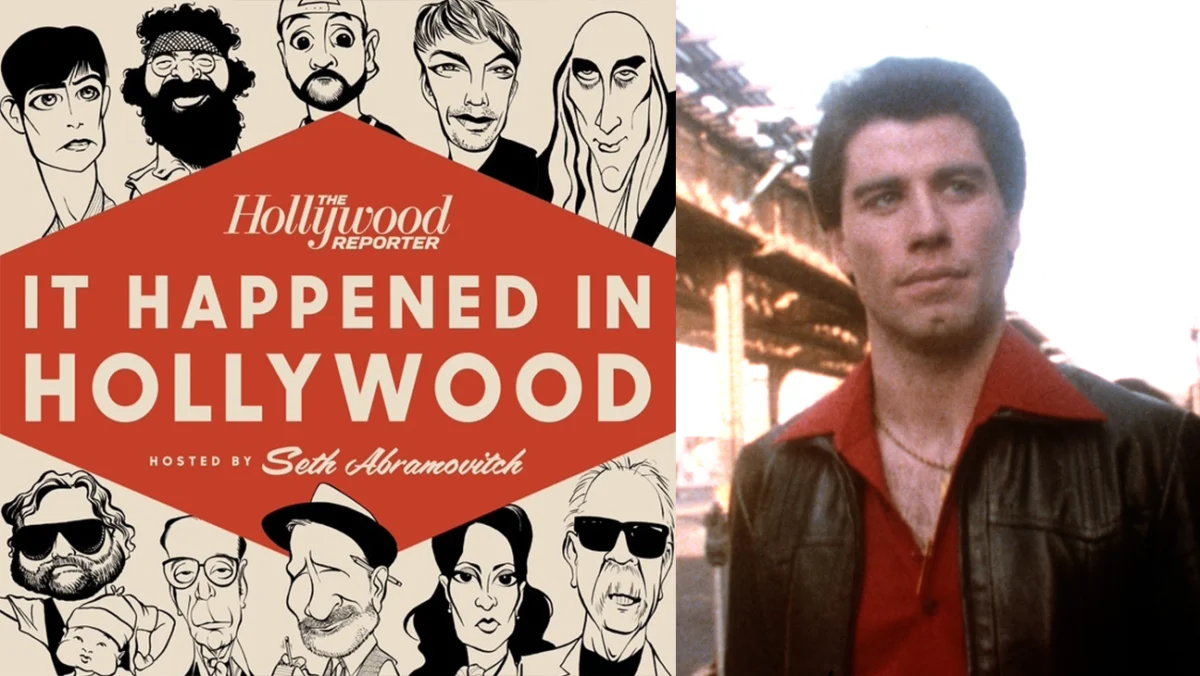
Fifty years after its tumultuous production, director John Badham offers a rare, candid glimpse into the making of Saturday Night Fever, revealing a cinematic phenomenon born from a chaotic blend of raw instinct, low-budget ingenuity, and the electrifying charisma of a young John Travolta. Far from the polished mythology that has accumulated over decades, the film’s origins, as recounted by Badham on the latest episode of It Happened in Hollywood, paint a picture of a production teetering on the brink, held together by sheer nerve and, remarkably, rolls of aluminum foil.
The Genesis of a Cultural Phenomenon: From Magazine Article to Movie Deal
The journey of Saturday Night Fever began not in a film studio, but in the pages of New York magazine. In June 1976, journalist Nik Cohn’s article, "Tribal Rites of the New Saturday Night," captivated readers with its unflinching portrayal of working-class Italian-American youth in Bay Ridge, Brooklyn, who found fleeting escape and identity in the burgeoning disco scene. Cohn’s vivid prose introduced the world to Tony Manero, a paint store clerk whose mundane weekdays dissolved into a dazzling, confident persona under the disco lights each Saturday.
Producer Robert Stigwood, an Australian entertainment mogul known for his work with the Bee Gees and theatrical productions like Jesus Christ Superstar and Evita, quickly recognized the cinematic potential of Cohn’s narrative. Stigwood, ever astute to cultural trends, envisioned a film that could capture the pulsating energy of disco while exploring the deeper social undercurrents Cohn had touched upon. He acquired the rights to the article, setting in motion a project that would inadvertently redefine an era. The initial working title, "Tribal Rites of the New Saturday Night," directly referenced Cohn’s piece, signaling a fidelity to its gritty realism that would ultimately shape the film’s unique tone.
A Turbulent Production Takes Shape: Director Changes and Tight Timelines
The path to the big screen, however, was anything but smooth. Stigwood initially hired John Avildsen, fresh off his Academy Award nomination for directing Rocky, a film that had resonated deeply with audiences for its underdog narrative and gritty Philadelphia setting. Avildsen’s experience with raw, character-driven storytelling seemed a natural fit for the Brooklyn-based drama. However, creative differences quickly emerged between Avildsen and Stigwood, primarily concerning the screenplay’s tone and direction.
Badham recounted the almost farcical circumstances of Avildsen’s dismissal. Stigwood, having learned of Avildsen’s Oscar nomination for Rocky, reportedly congratulated him warmly before delivering the abrupt news that he was fired. This decision, made despite Avildsen’s recent critical acclaim, underscored the high-stakes environment and Stigwood’s uncompromising vision for the film.
Into this maelstrom stepped John Badham, who himself had just narrowly escaped a collapsing production—an early, troubled version of The Wiz starring Diana Ross. Badham, with only one feature film (The Bingo Long Traveling All-Stars & Motor Kings) under his belt, was abruptly tasked with rebuilding the Saturday Night Fever production from the ground up, and with an incredibly tight deadline. The timing was brutal: John Travolta, already a teen idol thanks to his role as Vinnie Barbarino on the TV sitcom Welcome Back, Kotter, was committed to begin rehearsals for Grease opposite Olivia Newton-John. This meant Badham had less than two weeks to prepare before principal photography had to commence, a compressed schedule that would demand unprecedented improvisation and efficiency from the entire crew.
Crafting the Iconic Disco World: Ingenuity on a Shoestring Budget
One of the most enduring images from Saturday Night Fever is the pulsating, illuminated dance floor of the 2001 Odyssey disco. Yet, as Badham reveals, the reality behind this iconic set was far from glamorous. The production took over a rundown Brooklyn disco, transforming it with a blend of clever lighting tricks and sheer low-budget ingenuity. "You turned the lights on, the place looked dreadful," Badham recalled, describing the club in its original state. "But when you had the night, it was a fantasy wet dream."
The celebrated dance floor, now recognized as a cultural artifact and enshrined in the Smithsonian’s National Museum of American History, was custom-built for a mere $15,000—a testament to resourceful production design. Even more remarkably, the sparkling, reflective walls that bounced colored light around the room, creating the film’s signature atmosphere, were achieved using sheets of ordinary aluminum foil, bought cheaply downtown and painstakingly hung by the production designer. This level of ad-hoc creativity, born out of necessity and a desire to maximize visual impact on a constrained budget, became emblematic of the entire production.
Badham’s vision for the club scenes was not just about glitz; it was about authenticity. He wanted the film to feel "like a British documentarian had landed in Brooklyn and was just shooting what he saw." This approach extended to the dancers themselves, who were largely local individuals, not polished Broadway performers. Their slightly rough-around-the-edges style, learned through observation rather than formal training, lent a raw, believable energy to the disco sequences, further grounding the film in its working-class milieu.
John Travolta: The Unstoppable Star and the Challenge of Crowds
At the heart of Saturday Night Fever was John Travolta, a phenomenon in the making. At just 23 years old, Travolta occupied a unique space in the cultural landscape, akin to the fervent adoration seen today for stars like Timothée Chalamet. His transition from television to film was already generating immense buzz, and his presence alone was capable of bringing a city block to a standstill.
Badham vividly remembers the immediate impact of Travolta’s stardom. On the very first day of shooting under the elevated tracks in Brooklyn, a handful of girls spotted him and began screaming "Vinny Barbarino!" Within hours, Badham estimates, a crowd of approximately 15,000 people had materialized, overwhelming the production. Managing Travolta’s fame became an ongoing challenge, forcing the crew to resort to elaborate measures: fake call sheets, predawn shooting schedules, and even duplicate cars to divert attention. Despite these efforts, the chaos was often insurmountable, highlighting the intense public fascination with Travolta.
What Badham understood instantly, however, was that Travolta possessed an innate understanding of Tony Manero. The director saw him not as a young actor painstakingly searching for a performance, but as someone instinctively in tune with the character’s complex blend of vanity, insecurity, and swagger. This intuitive grasp allowed Travolta to embody Tony with a magnetic authenticity, never asking the audience to excuse Tony’s less savory qualities, but instead inviting them to understand the profound human need that drove him to those few hours of transformation under the disco lights each Saturday night. Travolta’s performance, balancing bravado with vulnerability, was crucial to the film’s emotional depth and would earn him an Academy Award nomination for Best Actor, cementing his status as a major movie star.
The Bee Gees and the Soundtrack Sensation: An Unplanned Masterpiece
The music of Saturday Night Fever is inextricably linked to its identity, with the Bee Gees soundtrack becoming one of the best-selling albums in history. Over the years, a persistent myth emerged that the iconic dance scenes were initially shot to Stevie Wonder songs and only later paired with the Bee Gees tracks. Badham, however, firmly debunks this, stating that Bee Gees demos were already being used during filming, long before the album’s meteoric rise.
The collaboration between the Bee Gees and Robert Stigwood’s RSO Records was organic. Stigwood, their manager, conveyed the film’s story to the Gibb brothers, who then crafted songs that perfectly encapsulated its themes and mood. "They had never read the script," Badham said of the group, "But they had been told the story by Stigwood and they just took it and ran with it." This intuitive connection resulted in hits like "Stayin’ Alive," "Night Fever," and "How Deep Is Your Love," which became not just chart-toppers but anthems of a generation.
Released in November 1977, the soundtrack album went on to sell over 40 million copies worldwide, making it one of the best-selling albums of all time. It spawned four number-one singles and won a Grammy Award for Album of the Year, forever changing the landscape of film soundtracks and popular music. Its success was so monumental that it often overshadowed the film’s darker, more nuanced themes, solidifying disco’s place in popular culture while simultaneously ushering in its eventual backlash.
Beyond the Glitz: A Gritty Reality and Enduring Legacy
While the film is famous for its dazzling disco sequences, a rewatch reveals a deeply bruised and melancholy narrative. Tony Manero’s life outside the club is a claustrophobic existence, filled with cramped apartments, ugly family arguments, racial tensions, and dead-end conversations. The disco, far from being a pure fantasy, serves as a temporary, vital escape from the harsh realities of his working-class Brooklyn life. This blend of escapism and stark realism was a deliberate choice by Badham.
The film’s initial title, Tribal Rites of the New Saturday Night, reflected this gritty core. The eventual title, Saturday Night Fever, emerged almost accidentally during a meeting at Stigwood’s apartment. Executives struggled to improve upon the original, until Badham jokingly suggested Saturday Night Fever. The room fell silent, and everyone immediately understood that was the title. This seemingly serendipitous moment, Badham notes, feels like the perfect origin story for a movie that itself was born out of improvisation and unexpected turns.
Saturday Night Fever premiered on December 16, 1977, and quickly became a cultural touchstone. Despite its modest budget of approximately $3.5 million, it grossed over $237 million worldwide, making it one of the most profitable films of its era. Its impact extended far beyond the box office, influencing fashion, dance, and music for years to come. The film’s critical reception was largely positive, praising its raw energy, Travolta’s performance, and its insightful look at working-class youth culture.
The film’s portrayal of social issues, including sexual assault, drug use, and racial tensions, sparked important discussions and cemented its place as more than just a disco movie. It remains a powerful commentary on the search for identity and meaning in a transient world, resonstanding as a testament to the idea that profound art can emerge from the most unlikely, and at times, utterly chaotic, circumstances. John Badham’s recollections serve as a valuable reminder that behind every cinematic legend lies a human story, often fraught with challenges, yet propelled forward by instinct, ingenuity, and a touch of accidental brilliance.