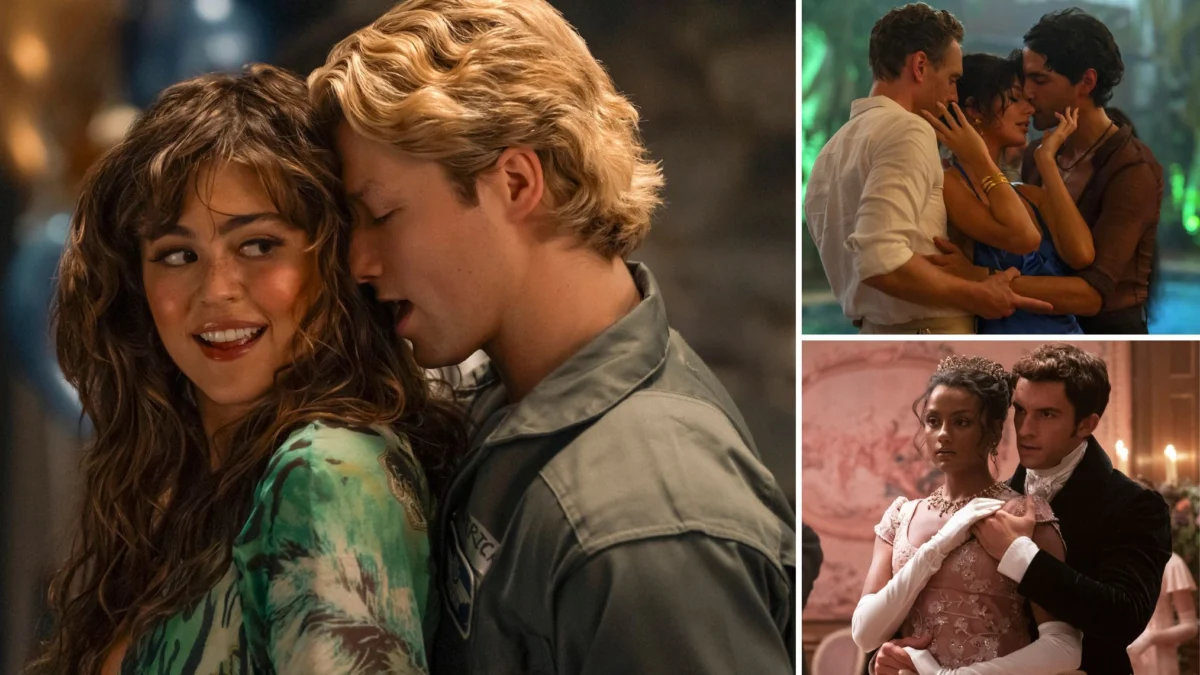
The recent release of the streaming series Off Campus has reignited a long-standing critical and audience fascination with the narrative power of the choreographed dance sequence. Central to this resurgence is the Season 1 performance by actors Stephen Kalyn and Mika Abdalla, portraying Dean Di Laurentis and Allie Hayes respectively. Their performance to the track On the Floor has become a focal point for discussions regarding the "slow burn" romantic trope, illustrating how physical movement can communicate complex character dynamics more effectively than traditional dialogue. This phenomenon is not isolated; rather, it represents a calculated evolution in television production where dance serves as a pivotal storytelling tool to bridge the gap between unspoken attraction and narrative climax.
The Off Campus Effect and the Mechanics of Chemistry
The sequence in Off Campus featuring Dean and Allie has been characterized by industry analysts as a masterclass in tension building. Stephen Kalyn’s portrayal of the confident yet guarded Dean Di Laurentis, paired with Mika Abdalla’s Allie Hayes, utilizes a specific style of contemporary choreography that emphasizes proximity and eye contact. According to production notes and subsequent interviews with the cast, the scene was designed to be a turning point in the characters’ relationship—a moment where their mutual denial is momentarily stripped away by the rhythm of the music.
The choice of Jennifer Lopez’s "On the Floor" provides a high-energy backdrop that contrasts with the internal emotional stakes of the characters. In professional choreography, this is often referred to as "rhythmic counterpoint," where the intensity of the music forces the characters into a state of physical vulnerability. The scene’s viral success on social media platforms indicates a high level of audience resonance, particularly among demographics that value non-verbal character development.
A Chronology of the Narrative Dance Sequence in Television
To understand the impact of the Off Campus sequence, it is necessary to examine the historical trajectory of dance as a plot device in scripted dramas. Television has long utilized the ballroom or the club as a neutral ground where social hierarchies are suspended and personal truths are revealed.
In the early 2000s, teen dramas such as The O.C. and Gossip Girl utilized slow dances at formal events (proms, debutante balls) to signify the culmination of season-long "will-they-won’t-they" arcs. However, these were often static and relied heavily on the lyrical content of the music. The shift toward more complex, highly choreographed sequences began in the mid-2010s with the rise of prestige period dramas.
The 2020s marked a significant turning point with the debut of Netflix’s Bridgerton. The Season 2 dance between Kate Sharma (Simone Ashley) and Anthony Bridgerton (Jonathan Bailey) to a classical cover of "Dancing on My Own" set a new standard for the "seduction through dance" trope. This sequence demonstrated that the choreography could be used to simulate an intimate conversation, with every rotation and hand placement serving as a "line of dialogue." This was followed by similar high-stakes moments in Loki, where Tom Hiddleston’s character engaged in a folk-dance sequence that revealed his internal longing for connection, and Daisy Jones & The Six, which used the loose, improvisational style of the 1970s to showcase the volatile chemistry between its leads.
Supporting Data: The Impact of Viral Choreography on Viewership
Data from streaming analytics platforms suggests a direct correlation between the "shareability" of a dance sequence and the overall growth of a series’ viewership. For Off Campus, clips of the "On the Floor" scene generated millions of impressions within the first 72 hours of the episode’s release.
Statistical trends indicate that:
- Retention Rates: Episodes featuring a central, highly marketed dance scene show a 15-20% higher "rewatch" rate compared to standard narrative episodes.
- Social Media Conversion: Short-form video platforms like TikTok and Instagram Reels act as primary discovery engines. Hashtags related to specific TV dances often trend higher than the show’s title itself, drawing in new viewers who seek out the context of the clip.
- Music Charting: The use of specific tracks in these scenes frequently leads to a "sync boost," where older songs see a 200-500% increase in streaming numbers on platforms like Spotify and Apple Music following the episode’s air date.
This data underscores why production companies are increasingly investing in professional choreographers and extended rehearsal schedules for scenes that might only occupy three minutes of screen time.
Technical Analysis: Why Dance Scenes Resonate Before a Relationship Solidifies
Psychologically and narratively, dance scenes are most effective when the characters are not yet a formal couple. This is due to several factor-based narrative elements:
The Suspension of Social Barriers
In many scripts, characters are separated by class, professional boundaries, or personal animosity. The dance floor creates a "liminal space" where these barriers are temporarily ignored. For Dean and Allie in Off Campus, the dance allows them to explore a physical compatibility that their social roles—the popular athlete and the focused student—would otherwise prohibit.
The Role of the Gaze
Cinematography plays a crucial role in these sequences. Directors often employ close-up shots of hands, eyes, and feet to emphasize the precision of the movement. This "micro-choreography" signals to the audience that the characters are hyper-aware of one another, a hallmark of romantic tension that is difficult to replicate through speech alone.
Physical Risk and Trust
Choreography requires a level of physical trust. When actors perform these stunts or intricate steps, it mirrors the emotional trust the characters are beginning to develop. This subtextual layering is a primary reason why audiences find these scenes "steamy" or "intense"—they are witnessing the literal and metaphorical "falling" of characters into each other’s orbits.
Official Responses and Production Insights
Interviews with the creative teams behind these scenes reveal the rigor involved in their creation. Stephen Kalyn noted in a recent press junket that the rehearsal process for the Off Campus dance was "intensive," requiring several weeks of coordination to ensure the movements felt organic to the characters’ personalities. "It wasn’t just about getting the steps right," Kalyn stated. "It was about making sure Dean’s movements felt like Dean—confident but perhaps showing a bit more than he intended."
Similarly, showrunners have noted that these scenes are often the most expensive and time-consuming parts of an episode to film. The cost of music licensing, combined with the hiring of specialized choreographers and the extended "coverage" (filming from multiple angles), makes the dance sequence a significant production investment. However, the return on investment, measured in audience engagement and brand loyalty, is consistently high.
Broader Impact and Future Implications for Television Production
The success of scenes like those in Off Campus, Bridgerton, and Daisy Jones & The Six suggests a shift in how romantic narratives will be constructed in the future. As audiences become more sophisticated and "shipping" culture (the fan-driven desire for two characters to be in a relationship) continues to dominate social media discourse, the demand for high-quality, non-verbal romantic milestones will only increase.
We are likely to see:
- Increased Integration of Musical Elements: Even non-musical dramas are likely to incorporate more "performance" moments.
- Diversification of Dance Styles: Moving beyond the standard ballroom or club scene to include contemporary, folk, and interpretive styles that reflect a wider range of cultural backgrounds and character types.
- Technological Integration: The use of specialized camera rigs (such as the "SnorriCam" or advanced stabilizers) to place the audience directly into the movement of the dance, enhancing the immersive experience of the tension.
In conclusion, the dance scene between Dean Di Laurentis and Allie Hayes serves as a contemporary benchmark for a narrative tradition that dates back centuries but has found new life in the digital age. By prioritizing the "slow burn" and utilizing movement as a primary language, modern television creators are able to craft moments that remain etched in the cultural consciousness long after the credits roll. These scenes do more than entertain; they provide a visceral, visual representation of the complexities of human attraction, proving that sometimes, the most powerful things a couple can say are the things they don’t speak at all.