A Bold New Film Challenges Distribution Norms with a Straight-to-VHS Release, Championing Human Connection in the Age of AI
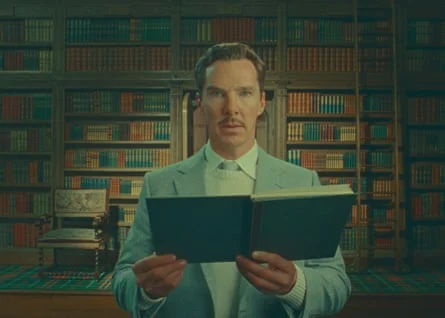
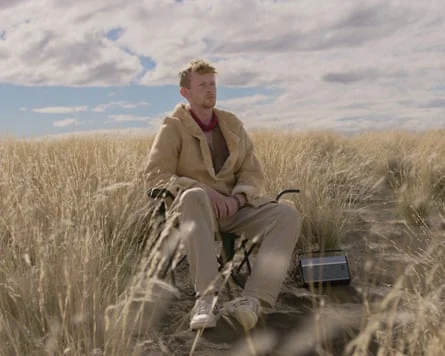
In a cinematic landscape increasingly dominated by digital streaming and immediate accessibility, a new film, "This Is How the World Ends," has emerged not with a bang on a red carpet, but with a quiet, deliberate whir of a VCR. The independent film, described as a poignant narrative of two siblings reconnecting at the twilight of humanity, drawing parallels to the thematic resonance of "On the Beach" but set against the backdrop of a festival akin to Burning Man, has made a radical departure from contemporary distribution strategies. Its most striking feature is its release method: it is the first film in two decades to be launched directly to VHS, a format largely relegated to obsolescence.
The decision to release "This Is How the World Ends" on VHS is a deliberate act of defiance against the prevailing digital tide. In the early 2000s, an estimated 90% of British households owned a VCR, marking the format’s final years of widespread adoption before the swift ascent of DVDs, Blu-ray discs, and ultimately, the ubiquitous nature of streaming services. The global production of VCRs ceased in 2016 with the closure of Funai Electric, the last remaining manufacturer. Consequently, making a film available solely on VHS is an intentional act of creating friction, transforming the viewing experience into a deliberate, almost ritualistic pursuit.
The Philosophy Behind the Format
Director Robert dos Santos, speaking from Cannes, explained the philosophical underpinnings of this unconventional approach. "I love the idea that you need to be part of the club to watch this," he stated, emphasizing a curated audience. "It’s for people that have a specific taste. There is a band of human beings who really understand what we’re doing." This sentiment suggests a desire to foster a sense of community and shared intentionality among viewers, those who are willing to invest more than just a click to engage with the art.
Dos Santos’s journey into filmmaking is as unconventional as his current release strategy. Originally a lawyer, his perspective shifted dramatically after experiencing multiple armed robberies within a short period. "I realised that I’m going to die one day and, if I’m going to die, I might as well do something that I’ll really, truly, passionately enjoy," he reflected. This profound personal revelation appears to have imbued his filmmaking with a sense of urgency and a deep appreciation for the tangible and the human element in creative expression.
This personal narrative is subtly woven into the fabric of "This Is How the World Ends." Contrary to initial assumptions that a VHS release might signal a deliberately lo-fi, genre-driven exploitation film, the movie is reportedly a beautifully shot, modern independent drama. It tackles significant themes, and the film’s exploration of end-of-the-world hedonism is clearly informed by dos Santos’s own brush with mortality. Intriguingly, the catalyst for the world’s end in the film is artificial intelligence, a theme that resonates strongly with dos Santos’s critique of an increasingly automated creative landscape.

The AI Threat and the Human Imperative
The looming specter of AI-generated content served as a primary impetus for dos Santos’s unique release strategy. "It’s a film made by humans for humans," he asserted. "I want people to feel something that’s imperfect, because VHS is not a perfect medium, but there’s also a physical process to it. You have to order a tape and, for some people, actually go out and buy a VCR."
He elaborated on the active participation he seeks from his audience. "I’m asking people to do a lot, but that’s what it means to be a human. That’s what it means to exist in this lifetime, to actually participate in the act of life, and not to just allow things to happen. It’s to go out there, and feel the bumps and the grooves of life." This perspective frames the act of watching the film not as passive consumption, but as an active engagement with a physical artifact and a process that requires effort and commitment, mirroring the very essence of human experience.
Dos Santos articulated a strong aversion to AI’s encroachment on artistic creation. "Someone once said that if your mum can do it, it doesn’t have value," he posited, drawing an analogy to the devaluation of skills. "If everybody can do something, then nobody can do it. You wouldn’t watch a Fifa World Cup that was AI-generated. If there was a reality TV show and they said, ‘Oh, we just generated this,’ you wouldn’t watch it. Because what we’re drawn to is the idea that there are human beings interacting, engaging with one another, being part of the process." This viewpoint underscores a belief that the inherent value of art lies in its human origin, its imperfections, and the emotional and intellectual labor involved in its creation and reception.
The Resurgence of VHS: Nostalgia and Tangibility
While dos Santos has undoubtedly complicated his own distribution by sourcing VHS tapes and mastering the analog recording process, he is not operating in a vacuum. The resurgence of interest in VHS is a demonstrable phenomenon. The online community, particularly on platforms like Reddit, showcases a fervent enthusiasm for the format. The subreddit r/VHS, with its 73,000 members, is a testament to this, filled with users sharing their vintage finds and collecting hauls.
Furthermore, companies like Witter Entertainment are capitalizing on this niche market, releasing specialized VHS editions of cult films such as "Terrifier" and "Mandy." Even major productions are embracing the trend; in 2024, "Alien: Romulus" released a limited edition VHS copy, meticulously reformatted to the classic 4:3 aspect ratio. This indicates a broader cultural appreciation for the tactile and nostalgic qualities of VHS.
The appeal of this format is multifaceted. Firstly, there is a powerful wave of nostalgia. For many, the experience of visiting video rental stores was a significant part of their youth, an event that often led to unexpected cinematic discoveries and the rewatching of rented tapes to maximize their value. This shared memory evokes a sense of communal cultural experience that is increasingly rare in the fragmented digital age.
Secondly, in an era where digital archives are increasingly concentrated in the hands of a few major streaming platforms, the ability to own a physical copy of a beloved film holds significant weight. These digital libraries are subject to the whims of corporate decisions, with titles frequently disappearing from menus without notice. This impermanence amplifies the value of tangible media, offering a sense of permanence and personal ownership.
Dos Santos draws a parallel to his appreciation for vinyl records. "Hey, maybe we shouldn’t digitize everything," he suggested. "I’m a massive fan of vinyl. I love that if I put Led Zeppelin IV on, I have to listen to the whole thing. I’ve got to commit to listening to Stairway to Heaven without skipping it. You’ve got the intentionality of musicians. I know that VHS has a niche audience, but if we can bring people back to the hands-on effort of engaging with art, that’s something that I would love." This philosophy champions a more intentional and immersive form of art consumption, where the medium itself encourages a deeper connection with the content.

The Visual Compromise and the Artistic Intent
While the author of this article had to rely on an online screener due to logistical constraints and the presumed absence of a VCR in contemporary home entertainment setups, the visual quality of "This Is How the World Ends" was noteworthy. The desert landscapes were described as "gorgeous to look at," with "beautiful HD details" evident in the subtle hues of the clouds and the intricate texture of the sand. The screener itself playfully acknowledged the film’s release strategy, with the password "stuartpleasebuyavcr."
However, the inherent nature of VHS playback means that these fine visual details would inevitably be lost or diminished. Standard definition video, with its lower resolution and the characteristic "wobbly" image, presented in the boxy 4:3 aspect ratio, would present a significantly different viewing experience compared to the high-definition footage. When questioned about this potential loss of detail, dos Santos acknowledged the compromise but framed it as an integral part of the film’s artistic statement.
"There will be image loss and a cropped image, and obviously I’m in love with the images we shot, so it’s a compromise," he admitted. "But I think that falls back on what I was talking about. Compromise is a part of experiencing life. Some film-makers would stick their noses up at VHS. But that’s the price you pay for being a human and for bumping up against the four corners of the world, and in this case, the four corners of the screen." This perspective embraces the imperfections of the chosen medium as a metaphor for the inherent imperfections and challenges of human existence.
A Reversal of Traditional Release Models
The release strategy for "This Is How the World Ends" deliberately inverts the conventional film distribution timeline. Historically, films would premiere in cinemas, followed by releases on physical media like VHS and DVD, and eventually find their way to streaming platforms. Dos Santos’s approach flips this model.
"We’re doing the opposite of what used to happen," dos Santos explained with a smile. "First you’d take a film to cinema, and then eventually at the very end you get VHS. And we’re like: no. If you want to watch this, get a VCR and let’s go. Then after that, we’re going to go to Blu-ray and DVD, and then after that, we’re going to go to cinema and streaming. But the first priority is VHS." This strategy aims to generate immediate interest and a sense of exclusivity around the VHS release, building anticipation for subsequent, more widely accessible formats.
Early Success and a Vision for the Future
The unconventional approach appears to be resonating with its target audience. Reports indicate that demand for the VHS copies has necessitated an increase in production orders even before the film’s official release. This early success suggests that there is a viable market for such a niche distribution strategy, fueled by a dedicated group of cinephiles and collectors.
Dos Santos remains optimistic about the film’s future, viewing this VHS-first release as a pioneering step. "Already I’ve had people literally send me a video, just like they just reach out on Instagram and say, ‘Hey, I bought my VCR so I can watch it,’ and I’m like, ‘You’re crazy.’ It’s madness," he expressed with a mixture of disbelief and delight.
While acknowledging that the film will likely never achieve mainstream ubiquity, dos Santos embraces its niche appeal. "This will never be full-on mainstream, but I’m very happy about that. It’s nice to have a niche, and for those who are crazy and passionate enough, it’s saying: ‘Hey, there are others like us. We’re crazy and passionate, just like you are.’" This sentiment underscores a desire to connect with a community that shares his passion for tangible art and deliberate engagement, forging a unique bond between the filmmaker, the film, and its dedicated audience. The success of "This Is How the World Ends" on VHS may well serve as a bellwether for other independent creators seeking to challenge the status quo and reconnect with audiences on a more fundamental, human level.