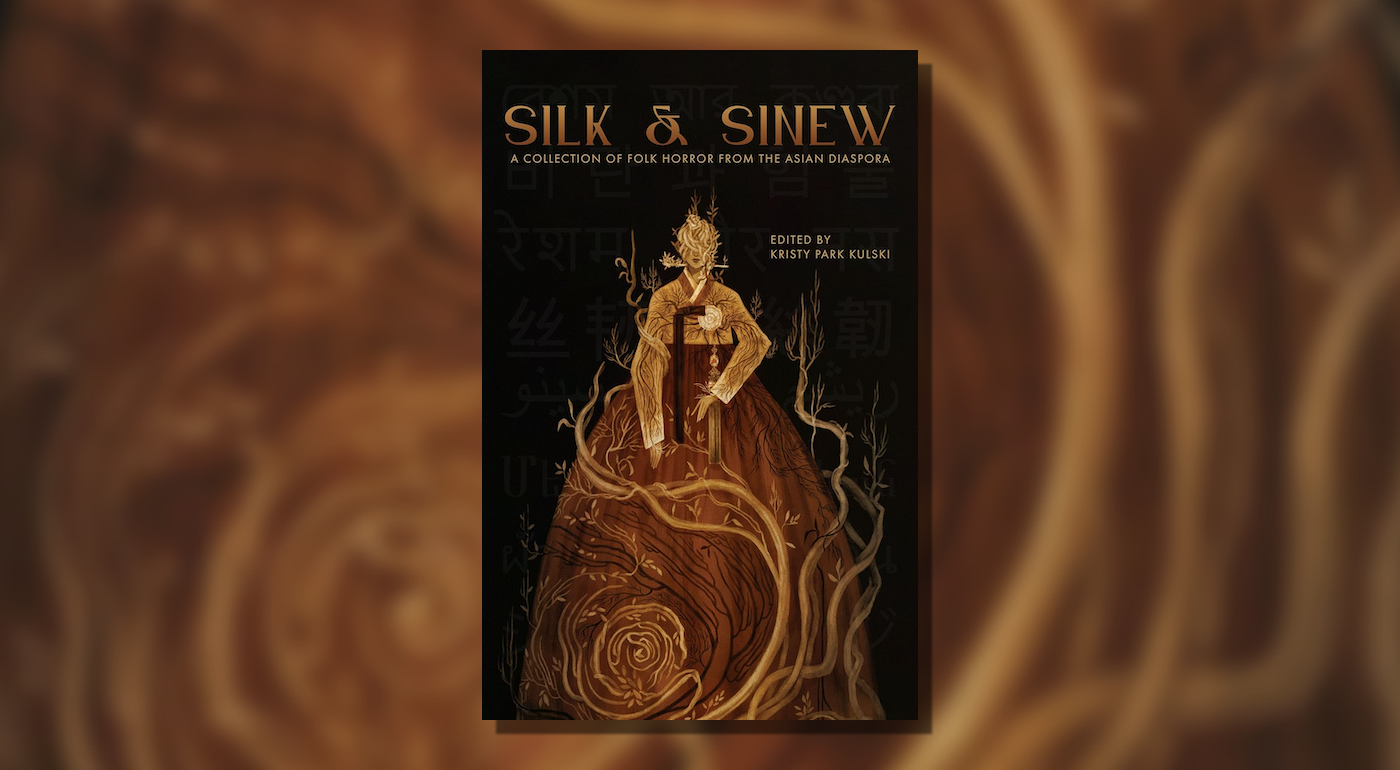
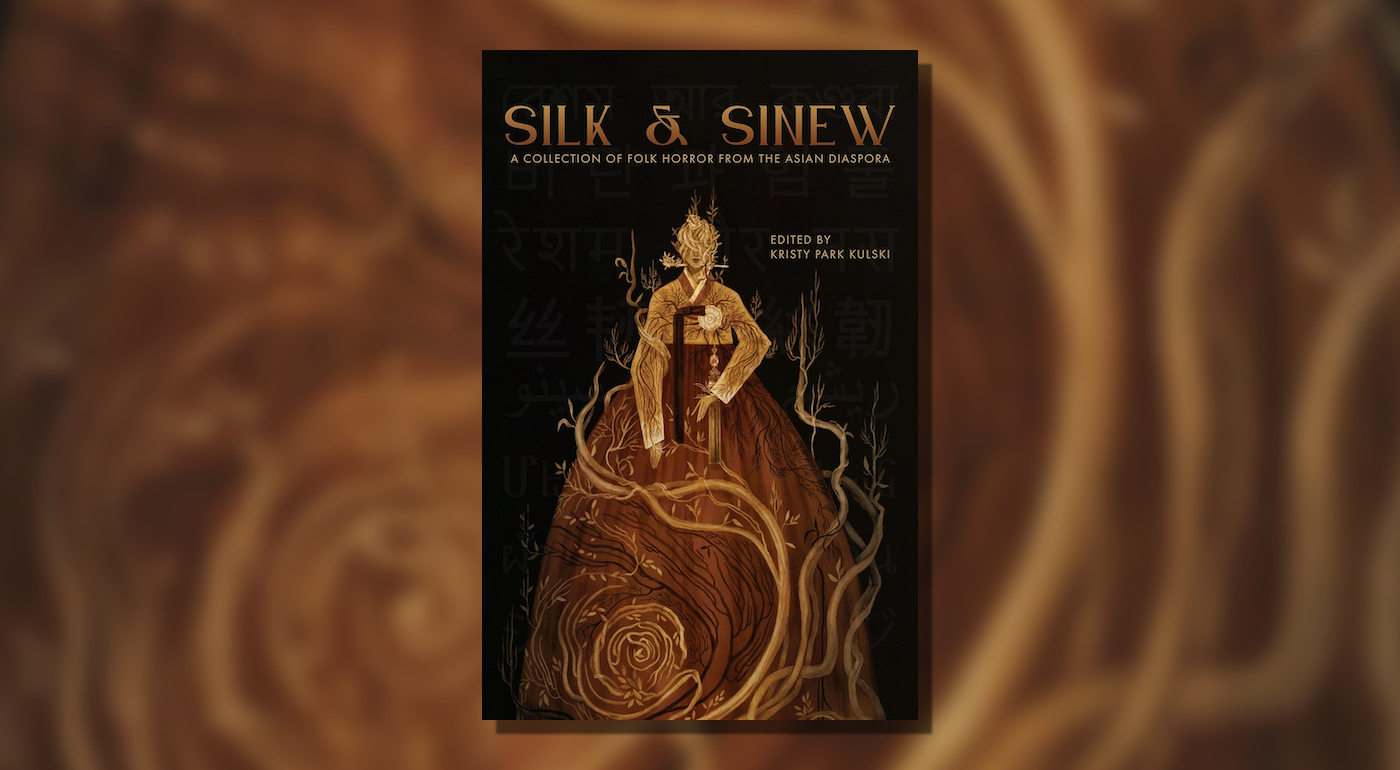
In the evolving landscape of weird fiction, the exploration of cosmic horror and Lovecraftian themes continues to push boundaries, examining both historical roots and contemporary interpretations. This week’s installment of "Reading the Weird" delves into Ayida Shonibar’s evocative short story, "An Unholy Terroir," featured in Kristy Park Kulski’s Stoker-winning anthology, Silk and Sinew: A Collection of Folk Horror From the Asian Diaspora. The narrative, presented as a fable or a warning, intricately weaves together elements of folk horror, colonialism, and the unsettling transformation of identity. This analysis will unpack the story’s core themes, historical context, and its broader implications, offering a comprehensive examination of Shonibar’s contribution to the genre.
The Village Under Siege: Disease and Deference
The story opens in an unnamed village plagued by a mysterious illness. This malady is characterized by a loss of appetite, bone deformation, and a gradual erosion of human features, leaving loved ones to "grieve and watch them disintegrate." Faced with this existential threat, the villagers turn to their Provost, a figure of authority who claims to interpret the inexplicable for their "simple perspectives." This dynamic is immediately established as one of control and extraction, where the Provost’s explanations are bartered for "respect… and a healthy portion of [their] earnings."
An illustrative anecdote highlights the Provost’s manipulative approach. He recounts the tale of a child, Otto Ludwig, who neglected to draw water, thus delaying the Provost’s laundry. The Provost interprets this minor transgression as a celestial punishment for collective "educational failures," underscoring his ability to "procure an actionable warning out of the unknowable." This ensures the villagers’ unwavering compliance, demonstrating how fear and misinterpretation can be weaponized by those in power. Despite their renewed obedience, the sickness persists, suggesting that the Provost’s explanations fail to address the true source of their suffering.
The Arrival of Titli: A Catalyst for Change
The narrative shifts with the arrival of a stranger, Titli, during the winter solstice. Her striking appearance—black hair, brown skin, and a shawl resembling a "woven exoskeleton" of brilliant colors—stands in stark contrast to the villagers’ "uniformly monochrome attire." Her presence immediately captivates and unsettles the community.
Titli is a traveler who trades silks, a skill learned from her family. Rumors about her spread "like the disease," a mix of her own accounts and "mere speculation… spun out of expectations and fantasies." This fuels a spectrum of reactions. The Provost’s daughter, Angelika, finds Titli "rather lovely," hinting at a potential bridge between worlds. However, others project their fears and prejudices onto Titli, imagining her "shapeless" clothing concealing fibrous, scaly skin, and attributing fantastical, terrifying abilities like fire-breathing and cannibalism to her. The villagers’ whispered jokes about cannibalism do not go unnoticed by the Provost, who warns of the dangers of succumbing to "degeneracy" and how the stranger could turn them against him.
The Revelation of Fire and Fury
The villagers’ fascination with Titli culminates when she overhears their fearful speculation about her fire-breathing capabilities. Distressed, she retreats, followed by a shamefaced group led by Angelika. Near the town well, Titli collapses, her face contorting as yellow-green-purple flames erupt from her mouth into the well, boiling its waters. The villagers flee in terror, reinforcing their fear of the unknown and the monstrous.
Later, the Provost finds the village abuzz with celebratory activity. The sickness has vanished, attributed to Titli’s fire cleansing the well. However, the Provost chastises them for rejecting "heaven-sent correction," warning that her "oddities" will lead to the destruction of their homes. Titli overhears this, her eyes darkening. The Provost, driven by suspicion and a desire to maintain control, writes to authorities in the southern colonies, inquiring about Titli’s "exploits." It is at this moment that the village erupts in the same gold-green-purple flames, a terrifying echo of Titli’s earlier outburst. The Provost joins the villagers in fighting the fire, finding grim satisfaction in their curses directed at their former fascination.
Historical Context: The Echoes of Colonialism
The narrative then shifts to a historical revelation, detailing events a century prior. Northerners colonized the south, inflicting "injustice and mistreatment" that transformed Titli’s people into "dagger-fanged monsters." Stripped of their textiles, her people developed the ability to unravel their fingertips into silken thread, weaving in secret. When the northerners retaliated, Titli’s family encased her in a protective cocoon. Upon her emergence, her people were gone, leaving her an isolated survivor of a brutal colonial past.
This historical context is crucial. It reframes Titli’s fire-breathing and monstrous attributes not as inherent evil, but as a response to oppression. The transformation into "dagger-fanged monsters" is a direct consequence of colonial violence, a metaphorical and literal shedding of their former selves in the face of unbearable suffering. The ability to spin silk from their fingertips represents a reclaiming of agency and identity, a creation of beauty and utility from trauma.
Transformation and Reintegration
The second instance of Titli breathing fire ignites the village, a catastrophic event she desperately tries to mitigate. Later, she brings water to Angelika, who acknowledges Titli’s true nature. Angelika confesses to a past incident of accidentally starting a fire in her father’s study, a sin she had never before admitted. This shared experience of unintended destruction creates a nascent understanding between them.
Titli’s fingertip-silk, initially a symbol of her people’s resilience, evolves into a practical resource for rebuilding the village. The villagers come to value her "structural cording," integrating it into their reconstruction efforts. This marks a turning point in their perception of Titli, moving from fear to utility. However, the Provost’s ingrained prejudice remains, as he reprimands Angelika for dining with the "demon outsider." The story ominously concludes this section with the Provost’s foreboding thought: "Before long, Titli will be eating her." This foreshadows a shift in power and a potential reversal of victimhood.
The "Unholy Terroir" of the Colonies
A letter from a southern colonial authority to the Provost provides further context for the colonial project and its dehumanizing rhetoric. The authority describes the natives as "false people" and their land as having an "unholy… terroir." This colonial perspective views the land and its inhabitants as inherently corrupt and uncivilized, justifying their subjugation. The letter details encounters with "demonic vipers shedding artificial skin" and "beastly wings projecting out of the shoulder blades," vivid descriptions that echo the transformations Titli and her people have undergone, but framed as monstrous aberrations by the colonizers. This highlights how the colonizers’ own actions and prejudiced worldview create the very "monsters" they claim to fear.
A Symbiotic Relationship and a Father’s Downfall
The story culminates in a powerful scene between Angelika and Titli. Angelika, perhaps sensing a shared vulnerability or a desire for connection, confronts Titli about her supposed cannibalism and inquires if she would be a desirable victim. Titli’s response—"Angelika will like it, and she’ll stop if asked"—opens the door to a complex intimacy. Angelika’s shy invitation, "Eat me, then," signifies a profound shift in their dynamic, moving beyond fear to an acceptance of the unknown and a subversion of traditional power structures.
The Provost’s violent intrusion interrupts this moment. He finds Angelika in a compromising position with Titli, and drags Titli to the well. In the ensuing struggle, the Provost’s belt pouch spills, revealing a journal, gold, and a tinted bottle. Angelika recognizes the bottle as one of her missing cosmetic tinctures, realizing with horror that it is a potent poison. The implication is clear: the Provost has been poisoning the well.
In a dramatic climax, Titli undergoes a terrifying metamorphosis. Her shoulders elongate, scales erupt, and fangs emerge. Wings unfurl, lifting her and the Provost into the air. As the Provost screams for help, the villagers, once again paralyzed by fear and ingrained prejudice, remain immobile. The Provost falls howling into the well, a grim end for the man who perpetuated fear and deception.
Dawn and Departure
As dawn breaks, Titli flies away, leaving the villagers to whisper their goodbyes, a testament to the profound impact she has had. The receding sounds of a drowning man symbolize the Provost’s demise and the end of his oppressive reign. The villagers, now freed from the immediate threat of the disease and the Provost’s tyranny, are left to rebuild, forever changed by Titli’s intervention.
Analysis of Themes and Implications
Shonibar’s "An Unholy Terroir" masterfully explores several critical themes:
- Colonialism and its Legacy: The story directly confronts the devastating impact of colonialism, illustrating how systemic oppression can force individuals and communities to transform, to become the "monsters" their oppressors perceive them to be. The "unholy terroir" is not an inherent quality of the land or its people, but a consequence of the exploitative practices imposed upon them.
- Identity and Transformation: Titli’s journey is one of profound transformation, driven by trauma and the need for survival. Her monstrous attributes are not inherently evil but are tools of resistance and a manifestation of her people’s suffering. The story challenges the binary of human versus monster, suggesting that these categories are fluid and often dictated by those in power.
- Fear and Prejudice: The villagers’ reactions to Titli—a mixture of fascination, fear, and prejudice—highlight how easily communities can be manipulated by fear-mongering and the demonization of the "other." The Provost expertly exploits these fears to maintain his control.
- Agency and Resistance: Despite the initial fear, the story ultimately portrays Titli as a figure of agency and resistance. Her fire, initially perceived as destructive, ultimately purifies the well and her silk becomes instrumental in rebuilding. Her final transformation and departure signify a reclaiming of her power and an escape from the confines of her oppressors.
- The Power of Narrative: The story itself is presented as a fable and a warning, underscoring the power of narrative to shape perception and influence behavior. The Provost uses narrative to control, while Titli’s story is rewritten by the villagers and the colonial authorities.
The implications of "An Unholy Terroir" are far-reaching. It serves as a potent reminder that the "terroir" of any place, and indeed the identity of its inhabitants, is shaped not only by its natural environment but also by the historical forces and human interactions that have transpired there. The story challenges readers to question who defines monstrosity and to consider how systemic injustice can create the very horrors it claims to combat. Shonibar’s work contributes significantly to the ongoing dialogue within weird fiction about the complex interplay of culture, history, and the supernatural, offering a nuanced and deeply resonant exploration of identity forged in the crucible of oppression.