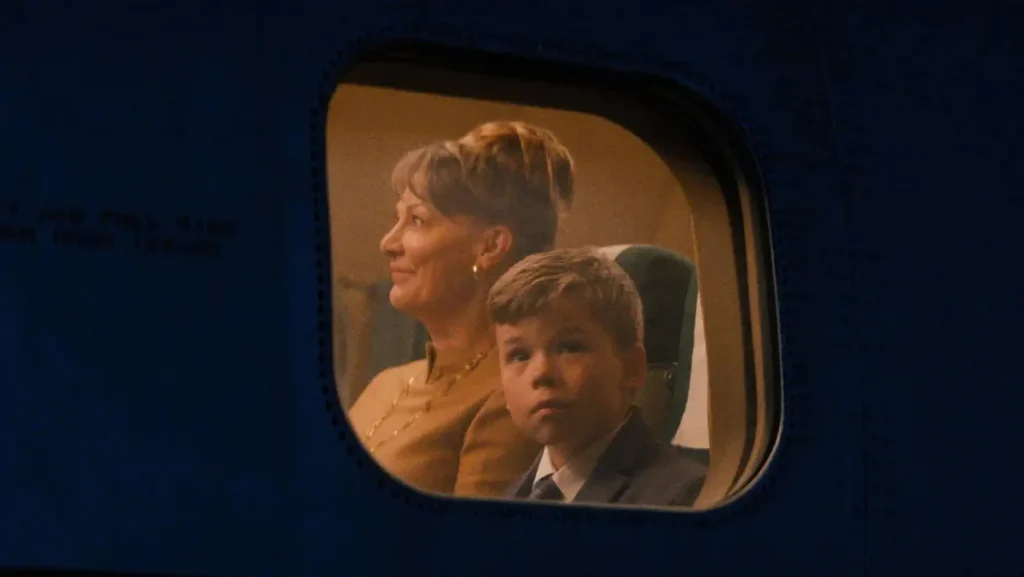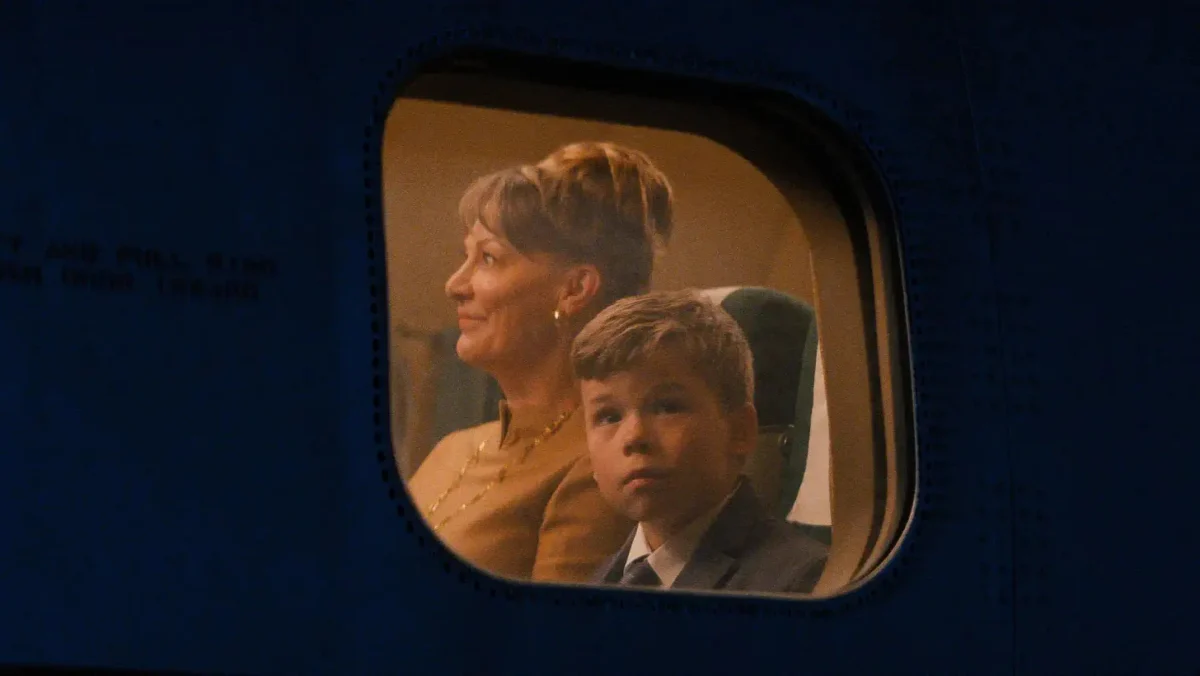
John Travolta’s directorial debut, "Propeller One-Way Night Coach" (2026), has emerged as a significant cinematic event, garnering an honorary Palme d’Or at the Cannes Film Festival and achieving widespread acclaim, including a reported top streaming position on Apple TV. This 60-minute feature, an adaptation of Travolta’s 1997 novella, offers a captivating, deeply personal journey into a child’s first airplane flight in 1962, distinguished by its meticulous attention to detail and a refreshing lack of cynicism that resonated powerfully with audiences and critics alike.
A Vision Realized: From Childhood Memory to Silver Screen
The film’s premiere on the "frantic first Friday night" at Cannes was met with anticipation, especially after Thierry Frémaux, the festival’s general delegate, bestowed an honorary Palme d’Or upon Travolta, acknowledging his storied career before the screening. The unexpected directorial turn from an actor known for iconic roles in films like Saturday Night Fever (1977) and Pulp Fiction (1994) piqued considerable curiosity. Audiences wondered what his vision for a film about a young boy’s inaugural airplane journey would entail.
The answer, as widely received, was an "absolutely charming portrait of experience." "Propeller One-Way Night Coach" transports viewers to 1962 through the eyes of its protagonist, Jeff, portrayed by Clark Shotwell. Travolta’s daughter, Ella Bleu Travolta, makes an appearance as a flight attendant who captivates young Jeff, while Kelly Eviston-Quinnett embodies his mother, Helen, a character whose "keen interest in the world" clearly influenced her son. The film is a deeply personal project, adapting Travolta’s novella of the same name, which itself was based on his own childhood experiences with his mother, sister, and other family members. Critics noted the film’s "loving attention to detail and sense memory," suggesting it arrives on screen "in living color as if intact from Travolta’s own childhood." The film was swiftly acquired by Apple TV, where it reportedly became the most-streamed film globally in its debut week, underscoring its immediate and broad appeal.
The Golden Age of Aviation: A Meticulous Recreation
Travolta’s commitment to faithfully recreating the experience of air travel in 1962 is a cornerstone of "Propeller One-Way Night Coach." Drawing from his own childhood as a "precocious" and "absorbing" observer who collected airline tickets and schedules, he meticulously detailed aspects often overlooked in contemporary cinema. He emphasized the distinct "colors of an interior of a plane" that differed greatly from modern aesthetics. In an era often romanticized as the "Golden Age of Air Travel," in-flight dining was an event in itself, with "colorful and exotic" meals like Chateaubriand and chicken cordon bleu served on "divine" plateware and glassware.
The flight attendants, then known as stewardesses, were outfitted in "beautiful outfits designed by famous designers" such as Don Loper in the early ’60s, and even Dior in the ’50s, adding to the glamour of the journey. Travolta also highlighted the "emptiness of planes," noting they "never felt sold out" due to the prohibitive cost of air travel for many, often appearing only "a fourth full." The pervasive "smoke in the cabin mixed with the scent of the food" further evoked the distinct sensory environment of the era. This attention to detail extended beyond the aircraft itself, capturing the broader mid-century aesthetic, where "big architects and the artists of the world had vision," influencing fashion, car design, and architecture, creating a cohesive visual and experiential backdrop.
A Soundtrack and Cinematic Tapestry
The film’s aural landscape is as meticulously crafted as its visuals, serving as a powerful conduit to the era. Travolta curated a rich soundtrack reflecting the diverse musical trends of 1962. The burgeoning popularity of Brazilian samba music, featuring artists like Antonio Carlos Jobim and Sérgio Mendes, forms a significant part of this tapestry. These sounds are interwoven with the popular tunes of the day from iconic American vocalists such as Frank Sinatra, Tony Bennett, and Barbra Streisand, creating a vibrant and authentic sonic backdrop.
Travolta’s personal connection to this music is evident, describing how these sounds "correlated with my vision in this movie" and "matched everything." He recounted selecting specific tracks for particular scenes, such as Stéphane Grappelli’s "whimsical violin" for the opening credits designed by Shag, and Dave Brubeck’s "Take Five" – "the most famous or popular piece of jazz music in history" – to complement the era’s architecture as the protagonist arrives at the terminal. Other carefully chosen pieces include "Quiet Nights" for night views from the plane, Sinatra’s "Come Fly With Me" for takeoff, Tony Bennett’s "The Good Life" accompanying the meal service, and the evocative "A Man and a Woman" for a poignant final sequence.
Beyond music, the film is an "homage to movies and actors and cinema," drawing inspiration from a diverse array of films that influenced Travolta. He cited Breakfast at Tiffany’s (1961), An American in Paris (1951) with its "Rhapsody in Blue" sequence, The V.I.P.s (1963) featuring Elizabeth Taylor, and later films like A Man and a Woman (1966) and Two for the Road (1967). Travolta also wove in influences from European auteurs, mentioning "a little Bertolucci, there’s a little Fellini," and the "stunning" South American film Black Orpheus (1959). This eclectic mix, Travolta explained, was possible because these diverse artistic elements "all fit" within the similar aesthetic spirit of the mid-century, much like different mid-century designers (Saarinen, Lapidus, Frank Lloyd Wright, Calder, Marrot) could coexist harmoniously. The deliberate use of slow-motion for Ella Bleu Travolta’s flight attendant, set to "A Girl from Ipanema," exemplifies this blend of personal memory and cinematic homage, crafted to capture the child’s idealized perception.
The Observant Child: Narrative Through Voiceover
A central element of "Propeller One-Way Night Coach" is its unique voiceover narration, which provides Jeff’s internal monologue and commentary. Travolta, who wrote the narration, approached it from the perspective of an "adult stating what were the fleeting thoughts of a child, with almost a childlike tonality." This technique allows for a nuanced portrayal of a child’s sincerity and the richness of their experience, capturing moments of wonder and innocent observation.
Jeff’s character is depicted as precocious and deeply observant, noticing details that an adult might miss or misinterpret. He perceives his mother’s "flirtatiousness" and "proclivity to drink and smoke" without judgment, simply recording these behaviors as part of his world. Travolta highlights this non-judgmental quality as "what made that little boy special," emphasizing his ability to correctly prioritize and understand events without moralizing. The narration also reveals a child’s resilience, as Jeff processes unsettling information, such as the story of a neighbor who survived a concentration camp or the news of a real-life plane crash (the famous 1960 Idlewild crash). Instead of dwelling on fear, his thoughts quickly pivot to finding solutions or engaging with the world, such as wondering if the pilot could fix his broken toy plane, reflecting the optimistic and resilient spirit of the era despite concurrent global anxieties like the Bay of Pigs and the Cuban Missile Crisis. This stream-of-consciousness approach provides intimate access to Jeff’s burgeoning understanding of the world, making his journey a deeply empathetic experience for the viewer.
Directorial Insights: Lessons from the Masters
In his transition to directing, Travolta consciously applied lessons gleaned from his extensive career working with some of cinema’s most acclaimed directors, including Quentin Tarantino, Brian De Palma, and Mike Nichols. He distilled valuable insights from his experiences across various film productions, recognizing the common threads that lead to impactful filmmaking.
From Tarantino, Travolta learned the importance of "efficiency" in storytelling, noting that a director can convey a narrative effectively "without having to cut to every single thing that is described in a script." He recalled a specific instance from Pulp Fiction where Tarantino opted for a tight close-up and implied action rather than explicitly showing every detail, trusting the audience’s intelligence. This efficiency translates into a directorial approach that prioritizes impactful moments over exhaustive coverage.
Travolta also emphasized the value of thorough rehearsal and minimizing takes, a principle shared by directors like De Palma and Nichols. He believes that "the better you’re rehearsed and the better the actors know what they’re doing," the less time is spent "rehearsing on screen," leading to more spontaneous and authentic performances in early takes. This approach not only enhances performance quality but also boosts morale on set, creating a "sense of productivity" among both actors and crew who appreciate the swift, effective progress.
Crucially, Travolta highlighted casting as "90% of your issues." Echoing the sentiments of Nichols and De Palma, and even his own mother (who was an acting teacher), he asserted that if actors are "right for those characters," they "already own that character," minimizing the need for extensive micromanagement. This philosophy allows directors to focus on "tweak[ing] them and recommend[ing] and suggest[ing]" subtle nuances that "make that character even more alive," rather than struggling to coax performances from miscast talent. These accumulated insights formed the bedrock of Travolta’s efficient and effective approach to directing "Propeller One-Way Night Coach," particularly impressive given its compressed 15-day shooting schedule across New York, Kansas, and Los Angeles.
An Unconventional Narrative: Embracing Sensory Experience
"Propeller One-Way Night Coach" deliberately eschews the conventional dramatic conflicts often expected in feature films. Travolta openly acknowledged this departure, stating, "I felt the opposite" of pressure to create a "big conflict or drama." He trusted that the "cool journey" itself, populated by "very interesting and bizarre" characters and filled with "fascinating people," would sustain audience interest. The film’s narrative relies not on external obstacles or escalating tension, but on the rich "observation of these fascinating people that he sees along the way."
This experiential narrative aims to transport viewers to another era, immersing them in the sensory details and emotional nuances of Jeff’s journey. The "stated drama," Travolta explained, did not need to be explicitly shown but was rather "reflected" through elements like "the nervous passenger, the crazy behavior, and the acceptance of a person’s past." The breaking of the boy’s toy plane and the kind stewardess’s comforting words about even real planes breaking are presented as sufficiently impactful moments within this framework, because "you’re transported to this time where that becomes the most important thing."
The film’s 60-minute runtime, a departure from standard feature lengths, was lauded by both Thierry Frémaux of Cannes and Eddie Cue of Apple. Both independently remarked that the duration was "exactly what it had to be," underscoring that the film’s artistic integrity and impact were not tied to traditional structural expectations. This unconventional approach highlights a growing trend in cinema where compelling storytelling can take diverse forms, prioritizing sensory immersion and emotional resonance over formulaic plot progression.
The Long Flight to Production: A Personal Artistic Endeavor
The journey of "Propeller One-Way Night Coach" from concept to screen spans over three decades, a testament to Travolta’s unwavering commitment to his deeply personal artistic vision. The story originated in 1993 when Travolta penned it as a novella for his family, creating just 70 copies. Its heartfelt reception encouraged him to release it commercially in 1997 through Warner Brothers, who were keen to publish it without any changes.
Following its publication, there was considerable interest from producers wanting to adapt it into a film. However, Travolta consistently resisted these overtures. He felt the story was "so personal, it’s so intimate, that I just couldn’t afford for them to get it wrong, because it was so subjective." This steadfast resolve to protect the integrity of his vision meant waiting for the opportune moment. That moment arrived a year and a half ago, as Travolta, at 70 and approaching 71, recognized the urgency. He decided to "just freaking finance it, produce it, get your vision, get exactly what you want on screen. Don’t let anyone interfere with it." This decision underscores a powerful statement about artistic control and the pursuit of a lifelong dream.
The film’s subsequent trajectory was remarkably swift and successful. The first person Travolta showed it to was Eddie Cue at Apple, who immediately declared it "spectacular" and committed to ensuring "the world sees this." Following this, and unbeknownst to Apple’s acquisition, Thierry Frémaux of the Cannes Film Festival viewed the film. His reaction was equally enthusiastic, finding "nothing wrong with this movie" and praising it after a 45-minute Q&A. In an unprecedented move, Frémaux accepted "Propeller One-Way Night Coach" as the "first selection of the Cannes Film Festival five months before," promising Travolta "a very special night." The synergy between Apple and Cannes, both recognizing the film’s unique merit, created a powerful platform for its global introduction, with Frémaux even remarking on its low production cost as a model for impactful independent cinema.
Broader Implications and Legacy
The success of "Propeller One-Way Night Coach" carries significant implications for both independent filmmaking and John Travolta’s enduring legacy. For independent cinema, the film stands as a compelling example that a deeply personal vision, executed with meticulous care and a modest budget, can achieve critical acclaim and widespread audience engagement. Frémaux’s specific commendation of the film’s cost-effectiveness, positioning it as an example for aspiring filmmakers, highlights its potential to inspire a new wave of artist-driven projects that prioritize creative integrity over commercial scale. In an industry often dominated by blockbusters, Travolta’s debut proves that heartfelt, introspective narratives can carve out a meaningful space.
For John Travolta, "Propeller One-Way Night Coach" marks a significant new chapter, transcending his iconic acting career to establish him as a compelling auteur. It showcases a depth of artistic sensibility and a meticulous attention to craft previously only hinted at through his performances. This directorial triumph not only reaffirms his artistic vitality in a new medium but also adds a unique dimension to his already illustrious career, demonstrating a willingness to take creative risks and share a deeply personal part of himself with the world. The film’s success on a major streaming platform like Apple TV, combined with its recognition at a prestigious festival like Cannes, also underscores the evolving landscape of film distribution, where traditional accolades and modern accessibility can converge to elevate unique cinematic works. "Propeller One-Way Night Coach" is not merely a nostalgic trip; it is a profound artistic statement, solidifying Travolta’s place not just as a star, but as a compelling and innovative storyteller.