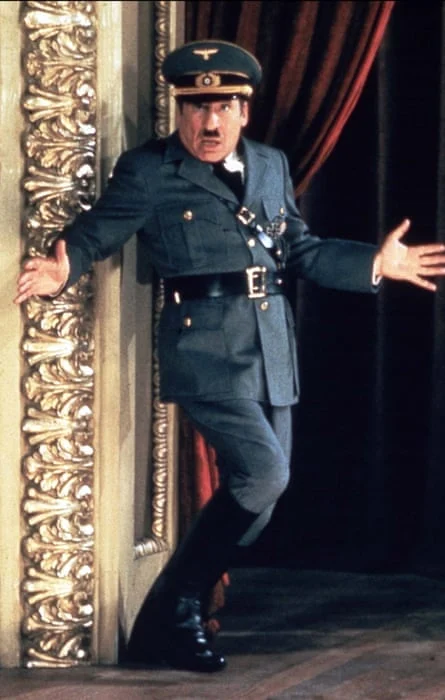
Mel Brooks’s extraordinary life story is inextricably woven into the fabric of the American experience and the rich tapestry of American Jewish comedy. Born a century ago in a Brooklyn tenement, his arrival in this world coincided with Marilyn Monroe’s on the opposite coast. The son of European immigrants, Brooks’s early years were shaped by the profound loss of his father at the tender age of two, leaving him to be raised by his mother. A small, sickly child, and the youngest of four brothers, this upbringing may have fostered a deep-seated, almost pathological, need for attention—a trait that would ultimately fuel his unparalleled comedic genius. As his esteemed colleague Larry Gelbart once quipped, "Mel thought when he got slapped in the ass by the doctor who delivered him that was applause, and he has not stopped performing since." This insatiable drive for connection and validation became the bedrock of his enduring career.
From Brooklyn Tenements to the Borscht Belt: The Genesis of a Comedic Icon
Brooks’s early life was marked by a passion for music, particularly drumming. His tutelage under the legendary Buddy Rich, a titan of jazz, foreshadowed the profound impact Brooks would have on two of America’s most significant art forms: comedy and jazz. However, this formative period was violently interrupted by the cataclysm of World War II. As a teenager, Brooks enlisted in the army and experienced firsthand the brutal realities of combat, participating in the Battle of the Bulge. This crucible of war undoubtedly forged his remarkable fearlessness and ignited an unwavering commitment to using satire as a weapon against tyranny and hatred, particularly Nazism. It was in the trenches that he likely solidified his conviction that "comedy is the opposite of death"—a powerful testament to the human spirit’s capacity to find light even in the darkest of times.

Upon returning home, Brooks tentatively stepped into the burgeoning entertainment industry. His initial foray involved drumming at Borscht Belt resorts in the Catskills, catering to audiences overwhelmingly composed of fellow Jewish patrons. It was during these engagements, when the scheduled comedian fell ill, that Brooks seized an opportunity, filling in and discovering the profound exhilaration of eliciting laughter. This pivotal moment propelled him toward a career in comedy writing. His talent did not go unnoticed, and he was soon recruited for "Your Show of Shows," the iconic Sid Caesar sketch comedy program. This groundbreaking series is widely regarded as having assembled one of the most formidable comedy writing teams in television history. It was on the set of "Your Show of Shows" that Brooks forged a lifelong personal and professional partnership with Carl Reiner, a collaboration that would endure until Reiner’s passing in 2020 at the age of 98.
The 2,000-Year-Old Man: A Testament to Jewish Humor and Cultural Identity
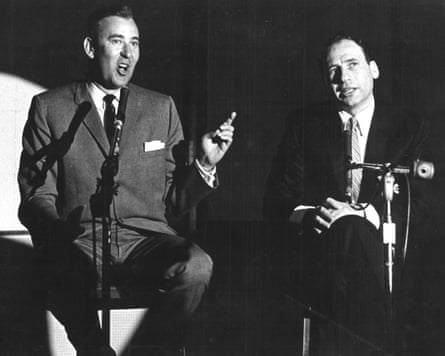
The creative synergy between Brooks and Reiner blossomed beyond the confines of "Your Show of Shows." The pair began improvising comedy routines for their friends, one of which led to the birth of one of comedy’s most enduring characters: the 2,000-Year-Old Man. Reiner’s provocative question, "What was it like to be present at the crucifixion of Jesus Christ?" ignited Brooks’s imagination, leading to a series of hilariously insightful interviews with a man who had witnessed millennia of human history. These routines, first performed in the 1950s and later immortalized on five albums recorded between 1960 and 1997, were unapologetically imbued with Jewish humor and Brooks’s distinctive accent.
Remarkably, this embrace of overt Jewish identity emerged at a time when many in the post-war era might have been inclined to downplay such cultural markers. The duo’s primary concern was that their gentile audiences might be baffled by the cultural nuances. However, these fears were swiftly allayed when Hollywood legend Cary Grant revealed he had played the record at Buckingham Palace, much to the delight of the Queen Mother. Brooks himself recounted this anecdote, noting, "If the biggest shiksa in the world loves it, we’re home free." This anecdote underscores the universal appeal of their humor, transcending cultural boundaries and demonstrating that authentic voices often resonate most profoundly. The success of the 2,000-Year-Old Man was a significant early victory, proving that humor rooted in specific cultural experiences could achieve widespread acclaim.
Breaking Barriers with "The Producers" and the Audacity of Satire
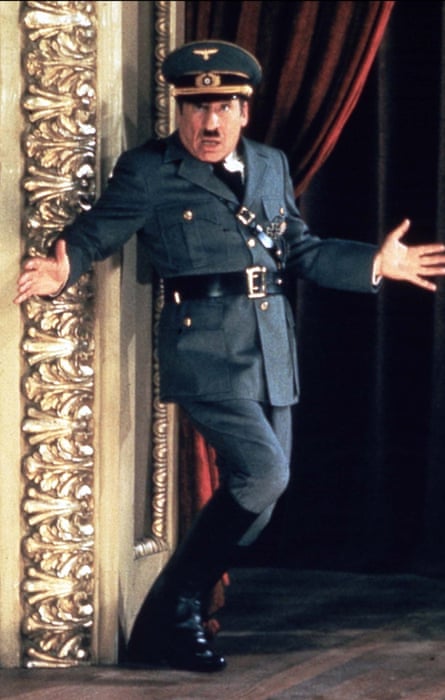
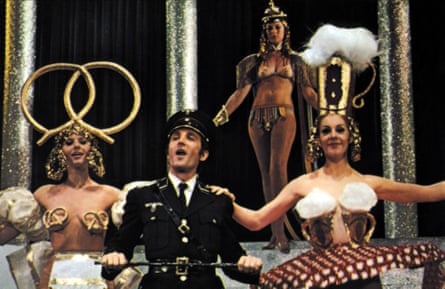
If the 2,000-Year-Old Man pushed comedic boundaries, Brooks’s debut feature film, "The Producers" (1967), was a daring, almost audacious, leap into the realm of controversial satire. The film’s premise—two Broadway producers who deliberately stage a musical destined to fail, "Springtime for Hitler: A Gay Romp with Adolf and Eva at Berchtesgaden," believing a flop would yield greater financial returns than a hit—was a stroke of comedic genius. Larry David, a contemporary master of comedic storytelling, has lauded it as "possibly the greatest comedic premise that anybody has ever dreamed up," even dedicating an entire season of "Curb Your Enthusiasm" as a tribute.
The film’s release, a mere two decades after the end of World War II, sparked considerable debate. Some audiences, still reeling from the fresh trauma of the Holocaust, found the subject matter too sensitive for comedic treatment. One irate viewer reportedly confronted Brooks, stating, "I was in World War Two." Brooks, ever the master of the sharp retort, replied, "So was I, I didn’t see you there." This exchange encapsulates Brooks’s philosophy: confronting darkness with humor, refusing to let historical horrors silence the essential human need for laughter and catharsis. The film’s critical and commercial success, despite initial trepidation, cemented Brooks’s reputation as a filmmaker unafraid to tackle taboo subjects with wit and intelligence.
The Golden Age of Parody: "Blazing Saddles" and "Young Frankenstein"
Brooks’s cinematic output continued to push the envelope. His second film, "The Twelve Chairs" (1970), though often considered underrated, showcased his appreciation for Russian literature, a passion ignited by Nikolai Gogol’s "Dead Souls" during his "Your Show of Shows" tenure. However, it was 1974 that proved to be a watershed year for Brooks, with the release of two masterpieces: "Blazing Saddles" and "Young Frankenstein." These films not only solidified his position as a comedic auteur but also ushered in what many consider the golden age of parody cinema.
"Blazing Saddles," a sharp and irreverent satire of the Western genre, became the highest-grossing Western film in history, a record it held until "Dances with Wolves" in 1990. The film’s groundbreaking approach to race relations, its audacious humor, and its subversion of genre tropes challenged audiences and critics alike. Similarly, "Young Frankenstein," a loving homage and spoof of classic Universal horror films, demonstrated Brooks’s mastery of tone and style, seamlessly blending genuine scares with uproarious comedy. The fact that these parodies often surpassed the originals in popularity speaks volumes about their inventive brilliance and enduring appeal. The success of these films demonstrated that parody could be more than just imitation; it could be a powerful tool for commentary and social critique.
Beyond Parody: A Legacy of Joy and Defiance
While Brooks continued to produce parodies in the 1980s and 1990s, some with diminishing returns, his impact transcended the genre. Over the past half-century, he has cultivated an avuncular persona, a figure who consistently breaks the fourth wall and embraces joyous chaos. His public appearances are often marked by a disarming wit and a refusal to take himself too seriously. Whether being honored by President Barack Obama and playfully feigning a wardrobe malfunction, adding an eleventh prosthetic finger to his Hollywood Walk of Fame handprint, or, in his 90s, audaciously pointing out the peculiarities of the BBC’s "The One Show," Brooks has remained a vibrant and unpredictable force. His comment during the latter incident, "What a crazy show this is," perfectly encapsulates his keen observational humor and his ability to find the absurd in the everyday.
Brooks’s commitment to artistic integrity was also evident in his production of "The Elephant Man" (1980). He selected David Lynch as director and famously insisted his name be removed from the credits to ensure the film was perceived as a serious drama, not a comedy. When studio executives demanded changes, Brooks’s response was characteristically firm: "We are involved in a business venture. We screened the film for you, to bring you up to date as to the status of that venture. Do not misconstrue this as our soliciting the input of raging primitives." This steadfast defense of artistic vision highlights a deeper layer to Brooks’s genius—a profound understanding of storytelling and a refusal to compromise on his creative principles. His impressive accolades, including an Oscar, an Emmy, a Grammy, and a Tony Award, place him among a select group of individuals who have achieved the highest honors in multiple entertainment fields, a remarkable feat for a man often associated with the most irreverent forms of humor.
The American Dream Embodied
Mel Brooks’s life story is a testament to the power of instinct and the resilience forged from a challenging youth. The narrative of a child of immigrants who fought against tyranny and ultimately triumphed across every facet of the entertainment industry is the quintessential American dream realized. His assertion that "comedy is the opposite of death" is not merely a pithy observation but a guiding principle that has informed his entire career. A friend once recounted an encounter with a taxi driver who boasted of having his hero, Mel Brooks, in the back of his cab en route to a speaking engagement. Upon discovering the driver was a fan, Brooks proceeded to perform his entire speech for an audience of one. This act of spontaneous generosity and unwavering commitment to spreading joy exemplifies his profound dedication to making people laugh.
While Brooks may not live to be 2,000 years old, his century of life has been an extraordinary testament to the human spirit’s capacity for resilience, creativity, and unadulterated joy. When asked for the secret to a long life after a screening of "Blazing Saddles" in London years ago, this icon of American entertainment offered a simple yet profound piece of advice that he has evidently lived by: "Don’t die." This seemingly flippant remark belies a deep understanding of life’s preciousness and the enduring power of the human drive to persist, to create, and, most importantly, to laugh. Mel Brooks is more than a comedian; he is a cultural force, a living embodiment of the American spirit, and a timeless reminder that even in the face of adversity, laughter can be our most potent weapon.