Walt Disney Pictures has officially transitioned its 2016 animated hit into the live-action sphere, marking a significant milestone in the studio’s ongoing strategy of reimagining its modern library for a new generation. Directed by Thomas Kail and featuring a blend of returning talent and fresh faces, the live-action "Moana" aims to bridge the gap between the vibrant Polynesian mythology established in the original film and the grounded, tactile nature of live-action cinema. With a running time of 115 minutes, the production serves as a technical and narrative companion to the animated predecessor, navigating the complex waters of artistic fidelity versus creative innovation.
Production Overview and Narrative Framework
The narrative of the live-action "Moana" remains largely consistent with the source material, centering on the journey of Moana, the daughter of Motunui’s chieftain. Driven by a mystical summons from the ocean itself, Moana ventures beyond the safety of her island’s barrier reef to locate the legendary demigod Maui. Her objective is to restore the heart of Te Fiti, an ancient goddess of life, whose missing heart has caused a creeping blight to consume the islands of the Pacific.
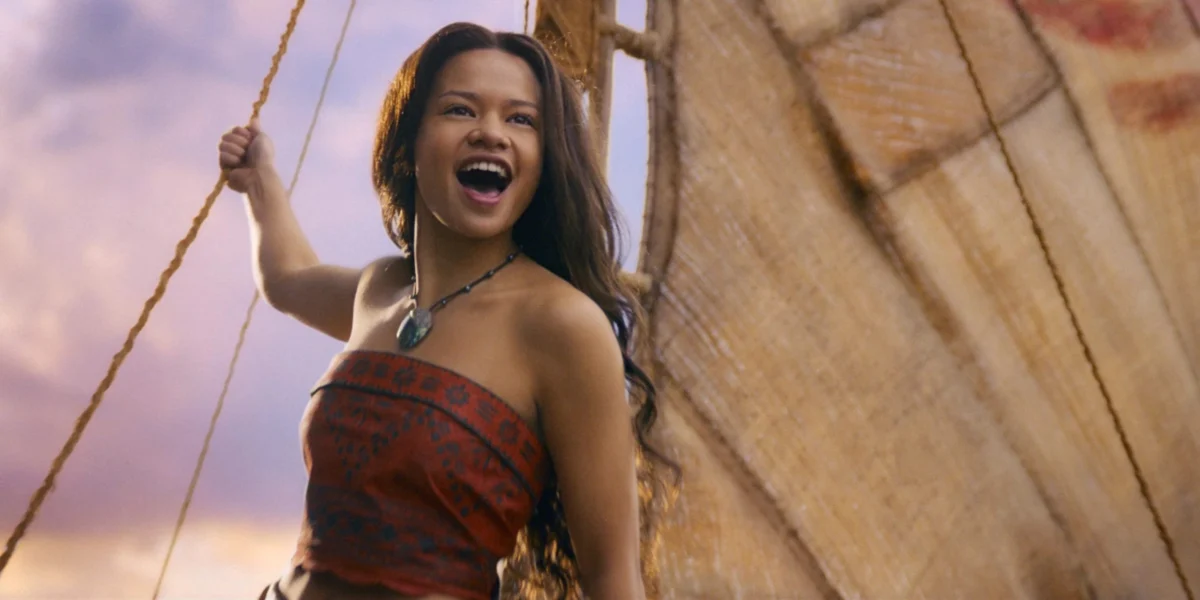
The production is led by director Thomas Kail, best known for his work on the filmed version of "Hamilton" and the musical "In the Heights." The screenplay was developed by Jared Bush, who served as a writer and co-director on the original animated film, and Dana Ledoux Miller. This creative continuity suggests a deliberate effort by Disney to maintain the thematic integrity of the 2016 story while adapting its visual language. The cast features Catherine Laga’aia in the titular role, joined by Dwayne Johnson, who reprises his role as Maui in a physical capacity. The supporting cast includes veteran actors Rena Owen, John Tui, Frankie Adams, and Jemaine Clement, the latter of whom returns to voice the villainous giant crab, Tamatoa.
Chronology of the Moana Franchise
The development of the live-action "Moana" follows an accelerated timeline compared to other Disney remakes. The original animated feature was released in November 2016 to critical acclaim and commercial success. By April 2023, Disney announced that a live-action reimagining was in development, with Dwayne Johnson confirming his involvement via a recorded message from Hawaii. This announcement placed "Moana" as the first film from Disney’s "revival era" (post-2010) to receive the live-action treatment, narrowing the gap between animation and remake to just under a decade.
Principal photography and visual effects development occurred throughout 2023 and 2024, utilizing advanced digital environments to replicate the expansive oceanic settings. The film’s release is positioned to capitalize on the enduring popularity of the characters, which have remained top-tier performers on Disney’s streaming platforms and in consumer products since 2016.
Statistical Context and Commercial Background
The decision to fast-track a live-action "Moana" is supported by significant commercial data. The 2016 animated original grossed approximately $687 million at the global box office and earned two Academy Award nominations. More importantly, "Moana" has demonstrated extraordinary longevity in the streaming era; in 2023, it was reported as the most-streamed movie on any platform in the United States, with over 11.6 billion minutes viewed.
Disney’s broader live-action remake strategy has historically yielded high financial returns despite varying critical receptions. To date, the studio’s remakes have collectively grossed over $9 billion globally. Successes such as "The Lion King" (2019), which earned $1.66 billion, and "Aladdin" (2019), which surpassed $1 billion, have solidified the remake model as a cornerstone of Disney’s theatrical slate. By maintaining a 115-minute runtime—nearly identical to the original—the live-action "Moana" seeks to replicate the pacing and accessibility that drove its predecessor’s success.
Casting and Cultural Representation
One of the most critical aspects of the production was the casting of Moana. After an extensive global search, Catherine Laga’aia was selected to lead the film. A native of Sydney, Australia, with Samoan heritage, Laga’aia represents the production’s commitment to authentic Pasifika representation. This follows the precedent set by the original film, which was praised for its consultation with the "Oceanic Story Trust," a group of anthropologists, historians, and cultural practitioners from the Pacific Islands.
Dwayne Johnson’s participation is both a creative and commercial anchor for the film. Johnson, who is of Samoan descent, has been a vocal advocate for the project, noting that the story of Maui is deeply personal to his family’s history. The inclusion of seasoned actors like Rena Owen (Gramma Tala) and John Tui (Chief Tui) further stabilizes the film’s cultural footing. Jemaine Clement’s return as Tamatoa marks one of the few instances where an actor has transitioned from a voice-only role to a hybrid live-action/CGI performance of the same character in a Disney remake.
Technical Execution and Visual Direction
Transitioning "Moana" to live-action presented unique technical hurdles, particularly regarding the personification of the ocean and the integration of Maui’s "Mini-Maui" tattoos. Director Thomas Kail opted for a visual style that emphasizes the scale of the Pacific landscape. However, reports from the production suggest a heavy reliance on green-screen technology and digital environments to achieve the fantastical elements of the story, such as the Kakamora—the tribe of coconut-armored pirates—and the volcanic demon Te Kā.
Industry analysts have noted that the film faces the "uncanny valley" challenge common to Disney’s remakes. While certain elements, such as the realistic rendering of the Kakamora, add a layer of menace not present in the animation, other sequences—like the comedic "lei-layering" gag or the presence of the pig Pua—require a delicate balance between realism and the exaggerated physics of animation. The visual effects team worked to ensure that the water, which functions as a sentient character in the film, retained its expressive quality while appearing physically grounded in a live-action world.
Critical Analysis of Adaptation Strategies
The live-action "Moana" highlights a recurring debate within the film industry regarding the necessity of "faithful" remakes. Critics often point out that directors of these projects are placed in a precarious position: straying too far from the source material risks alienating the core fanbase, while adhering too closely can lead to questions regarding the film’s artistic purpose.
In the case of "Moana," the creative team appears to have leaned toward reverence. The screenplay retains the episodic structure of the original journey, including the encounter with the monster realm (Lalotai) and the climactic confrontation at Te Fiti. While minor tonal adjustments have been made to account for the heightened stakes of live-action—offering a slightly more mature atmosphere for an audience that has aged alongside the franchise—the core emotional beats remain unchanged. This strategy prioritizes the "comfort watch" factor that has made the original a staple of household viewing.
Official Responses and Industry Implications
While official studio statements emphasize the "reimagining" of the story for a new medium, internal industry reactions suggest that "Moana" serves as a test case for how quickly Disney can cycle its intellectual property. The proximity of the remake to the original release suggests a shift in the studio’s strategy, moving away from "legacy" remakes (based on films from the 1950s-1990s) and toward the monetization of contemporary hits.
The film also serves as a pivotal moment for Catherine Laga’aia’s career. Early feedback from the production has highlighted her vocal ability and screen presence, suggesting that Disney intends to position her as a significant new talent within their ecosystem. Conversely, the performance of Dwayne Johnson has been scrutinized by industry observers, who are curious to see if his physical portrayal of Maui can match the charismatic energy of his 2016 vocal performance, especially given his recent shift toward more dramatic roles in projects like "The Smashing Machine."
Broader Impact on the Cinematic Landscape
The release of the live-action "Moana" is expected to have a ripple effect across the entertainment industry. It reinforces the dominance of "pre-sold" properties in the theatrical market, where audiences are increasingly drawn to familiar stories over original concepts. For Disney, the film is more than a standalone release; it is a brand-reinforcement tool that supports theme park attractions, merchandise, and the upcoming animated sequel, "Moana 2."
Furthermore, the film continues the vital work of Pacific Islander representation in Hollywood. By placing Polynesian culture, navigation techniques, and mythology at the center of a major global blockbuster for the second time in a decade, Disney maintains its role in shaping the diversity of mainstream cinema. Whether the film can transcend its status as a "faithful copy" to become a distinct cinematic achievement remains a point of discussion among critics and audiences alike. However, given the strength of the underlying story and the immense popularity of the brand, the live-action "Moana" is positioned to be a significant cultural and financial event in the current film landscape.