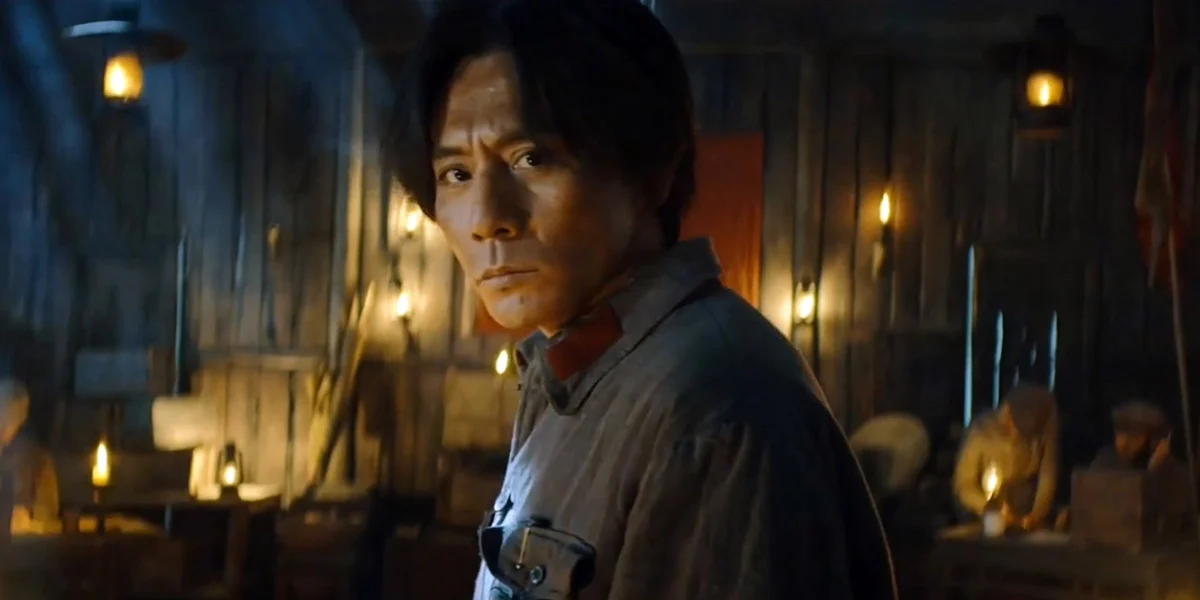
The war drama "Crossing" (original "Si du," literally "Four Crossings"), helmed by director Xu Zhanxiong and produced by the internationally acclaimed Hong Kong filmmaker and cinematographer Andrew Lau, known for his work on "Infernal Affairs," marks the latest entry in a significant wave of historical epics emanating from the People’s Republic of China. This cinematic trend, which has gained considerable momentum over the past few years, often intertwines patriotic heroic narratives with pivotal moments in Chinese history. The rise of such productions is frequently viewed within the broader geopolitical context of escalating tensions between China and its Pacific neighbors, serving to reinforce national identity and collective memory through cinematic storytelling. The narrative of "Crossing" revisits and reinterprets one of the nation’s most sacrosanct national myths, echoing a persistent cultural and political imperative to re-examine foundational historical events.
Historical Context: The Long March and the Four Crossings of Chishui
The film’s core narrative revolves around the legendary Four Crossings of the Chishui River, a series of military maneuvers executed by the Red Army in China’s southwestern Guizhou Province during early 1935. These events unfolded amidst the tumultuous backdrop of the Chinese Civil War (1927-1949) and, more specifically, the arduous Long March. The Long March itself was a monumental military retreat undertaken by the Red Army, the armed forces of the Chinese Communist Party (CCP), to evade the relentless pursuit and encirclement campaigns launched by the Nationalist Party’s Kuomintang (KMT) army, led by Generalissimo Chiang Kai-shek.
Initiated in October 1934, the Long March saw the Red Army, then numbering around 86,000 soldiers, embark on an epic journey that would eventually cover over 9,000 kilometers across some of China’s most challenging terrain. The early stages of the march were disastrous, characterized by heavy casualties and a rigid, predictable strategy that played directly into the KMT’s hands. The CCP’s leadership at the time, heavily influenced by Soviet military advisors, favored direct engagements and static defense, strategies ill-suited to their numerically inferior and less-equipped forces. By late 1934, the Red Army was on the brink of annihilation, trapped in Guizhou province, facing superior KMT forces determined to deliver a decisive blow.
It was in this desperate situation that Mao Zedong, who had been marginalized within the Party leadership for several years, began to reassert his strategic vision. The Four Crossings of the Chishui River were a direct manifestation of Mao’s innovative and unorthodox tactical genius. Facing an overwhelming KMT encirclement, Mao led the Red Army across the Chishui River four times within a span of just three months, from January to March 1935. Each crossing involved a dramatic reversal of direction, feints, and rapid movements designed to confuse, exhaust, and outmaneuver the Nationalist forces.
- First Crossing (January 29, 1935): After the Zunyi Conference, the Red Army moved west into northern Guizhou, crossing the Chishui River into Sichuan, aiming to link up with other Communist forces.
- Second Crossing (February 18-21, 1935): Realizing the KMT had anticipated their move into Sichuan, Mao dramatically reversed course, recrossing the Chishui River eastward back into Guizhou, catching the KMT by surprise.
- Third Crossing (March 16-17, 1935): As the KMT regrouped and began to close in, Mao again led the Red Army west, crossing the Chishui River for a third time, appearing to repeat their earlier move into Sichuan. This feint drew KMT forces westward.
- Fourth Crossing (March 21-22, 1935): In the most crucial and audacious move, while KMT forces were preoccupied with the feint, Mao swiftly turned south, crossing the Chishui River for the final time. This enabled the Red Army to slip past the main KMT concentrations, cross the Wu River, and enter Yunnan Province, successfully breaking out of the encirclement and preserving their core strength.
These maneuvers were not merely tactical retreats; they were a masterclass in mobile warfare, characterized by deception, speed, and an intimate understanding of the terrain and enemy psychology. To this day, the operation is hailed as one of the most brilliant strategic maneuvers of the Long March and is widely credited with playing a crucial, if not decisive, role in the survival of the Communist forces, allowing them to eventually reach Yan’an and regroup.
The Zunyi Conference: A Turning Point in Leadership
The starting point for this spectacular operation, and indeed a pivotal moment in the history of the Chinese Communist Party, was the equally famous Zunyi Conference, held in January 1935. Convened in Zunyi, a city in Guizhou, this expanded meeting of the Political Bureau of the CCP Central Committee was a direct response to the Red Army’s severe military setbacks during the initial phases of the Long March. The conference represented a critical introspection by the Party leadership, which included future longtime Premier Zhou Enlai, regarding the efficacy of their military strategies and command structure.
At the heart of the debate was the critique of the military tactics employed under the influence of the "28 Bolsheviks," a group of Chinese students who had studied in Moscow and held significant sway, and their German military advisor Otto Braun (Li De). Mao Zedong, having previously been sidelined for his differing views, seized the opportunity to present his arguments for a more flexible, guerrilla-style warfare, advocating for a strategy of maneuver and deception rather than head-on confrontation.
The conference ultimately saw a significant shift in power. Mao’s criticisms resonated with a growing number of leaders, who recognized the failures of the current command. While Zhou Enlai initially held significant military authority, he threw his support behind Mao, recognizing the strategic brilliance of his proposals. It was at this conference that Mao Zedong gained decisive influence over the military leadership, effectively taking command of the Red Army’s operations. This development proved instrumental in his subsequent rise to the undisputed top of the Party, cementing his position as the paramount leader who would eventually found the People’s Republic of China. The Zunyi Conference thus not only saved the Red Army from imminent destruction but also fundamentally reshaped the trajectory of the Chinese Communist revolution.
Filmmaking Vision and Execution
Director Xu Zhanxiong, who also co-wrote the screenplay for "Crossing," is no stranger to patriotic subject matter, having previously directed similarly themed films such as "The Pioneer" (2021) and "Burning Stars" (2024). His established directorial approach—combining historical events with a modern, visually dynamic style of storytelling—is prominently showcased in "Crossing." The film endeavors to present a complex historical narrative with a sense of urgency and contemporary cinematic flair. Consequently, the film races through its rather intricate plot like a high-speed train, culminating its journey after a brisk 122 minutes. By contemporary filmmaking standards, this runtime is almost surprisingly concise, particularly for an epic of this scale, though hints within the narrative suggest that a sequel may not be entirely out of the question.
Xu’s primary focus throughout "Crossing" is demonstrably on the military action sequences. These scenes, while energetically staged, offer little in the way of innovative choreography or visual grammar. A notable aspect, however, is the conspicuously frequent use of AI-generated imagery. This technology is employed without any explicit indication to the audience, raising questions about transparency in modern filmmaking and the seamless integration of artificial intelligence into cinematic visuals. The Zunyi Conference, despite its monumental historical significance, is handled in a very cursory fashion, summarized rather than deeply explored, which critics noted as a missed opportunity to provide crucial political and character development context.
As the narrative progresses, the profound ideological and military conflict between former comrades Mao Zedong and Chiang Kai-shek is increasingly distilled into something resembling a private duel. This rivalry is visually staged with a recurring motif reminiscent of a game of chess, symbolizing the strategic minds at play, yet potentially simplifying the broader historical forces at work. Complementing the grand military narrative are the almost obligatory sentimental relationships between individual soldiers, a common trope in war films designed to humanize the conflict and evoke emotional resonance. Towering above everything else, as one might anticipate in a film of this genre produced in contemporary China, is the unequivocal portrayal of the genius of Mao Zedong and his loyal comrades, reinforcing their heroic status within the national narrative.
Casting and Performances: A Critical Look
Despite its ambitious scope and a cast featuring several well-known performers, "Crossing" faced considerable criticism regarding its acting quality. This was identified as a major stumbling block for the film’s overall impact. Foremost among the cast is the multi-award-winning actor Liu Ye, celebrated for his roles in films like "Balzac and the Little Chinese Seamstress." In "Crossing," Liu Ye takes on the monumental task of portraying Mao Zedong, a figure of immense historical weight and enduring reverence in China. However, his performance was widely perceived as a major disappointment. Critics noted his portrayal as almost expressionless, utterly devoid of the charisma and dynamic presence historically attributed to Mao Zedong. This lack of vigor and emotional depth left audiences and reviewers underwhelmed.
It has been speculated that the immense respect and almost sacrosanct status commanded by this larger-than-life historical figure might have played a part in Liu Ye’s cautious, almost restrained, performance. The challenge of embodying such an iconic figure without risking misinterpretation or disrespect can be daunting. It further fits this narrative that seemingly no real effort was made to approximate Mao’s distinctive manner of speaking or his regional accent, which would have added a layer of authenticity. The same critique extends to the portrayals of other prominent historical figures, including Zhou Enlai and Chiang Kai-shek. Chiang Kai-shek, in particular, was depicted in a manner that bordered on caricature, coming across as a hot-tempered, almost Rumpelstiltskin-like figure, which undermined the historical gravity of his role as Mao’s principal adversary. This superficial characterization of key historical figures contributed to the film’s perceived lack of depth and nuance.
A Shadow from the Past: The 1983 Predecessor
What undoubtedly did not help "Crossing’s" critical reception was the indelible existence of a famous predecessor: "The Four Crossings of the Chishui River" (1983), directed by Cai Jiwei and Gu Dexian. This earlier film was produced in the aftermath of the tumultuous Cultural Revolution, a period when China’s film industry was slowly re-emerging, and the limited number of films being made were expected to convey appropriate ideological messages, often focusing on revolutionary history.
The 1983 classic benefited from the casting of Gu Yue, famously known as the "eternal" Mao Zedong actor. Gu Yue bore such a striking resemblance to the Great Chairman that many Chinese audiences, in an era before widespread media scrutiny, believed him to be Mao’s illegitimate son—a testament to his uncanny likeness. However, the resemblance alone was not the sole point of its success. What truly mattered was the film’s narrative approach. The earlier production took considerably more time—a runtime of 156 minutes—and used this extended duration to recount these complex historical events, including the intricate military operations themselves, in a far more coherent, detailed, and emotionally resonant manner. It provided greater depth to the strategic challenges, the human toll, and the political machinations. The comparison between the two films, particularly in terms of narrative coherence, character development, and historical gravitas, was almost deemed unfair by critics, with the 1983 version often cited as the superior adaptation.
Commercial Performance and Critical Reception
The inevitable benchmark set by its classic predecessor weighed heavily on Xu Zhanxiong’s film when "Crossing" opened in Chinese cinemas at the end of June 2026. The film was met with a largely negative critical response from reviewers, who pointed to its structural weaknesses, superficial characterizations, and notably weak acting performances. Audiences also responded rather lukewarmly, failing to connect with the film’s portrayal of such a revered historical event.
The lukewarm audience reception translated directly into a modest box-office performance. After just two weeks in release, "Crossing" garnered a gross of approximately US$30 million. In the context of the burgeoning Chinese film market, where blockbusters regularly exceed hundreds of millions of dollars, this figure represents a very modest and disappointing result for a historical epic of this scale and subject matter. For a film aiming to capitalize on a deeply patriotic narrative, its commercial underperformance signaled a disconnect between the filmmakers’ vision and the audience’s expectations or preferences, particularly when held against the high standards set by previous successful historical dramas.
Broader Implications: Patriotic Cinema and National Narratives
The reception of "Crossing" offers a microcosm of the broader trends and challenges facing patriotic historical cinema in China. Over the past decade, Chinese cinema has seen a significant proliferation of films that dramatize pivotal moments in the nation’s history, often focusing on revolutionary heroes, military victories, and the triumph of the Communist Party. These films, frequently backed by state resources and promoted through official channels, serve a dual purpose: to entertain audiences and to reinforce a specific national narrative, fostering patriotism and collective memory.
This wave of historical epics is not merely an artistic phenomenon; it is deeply intertwined with China’s contemporary sociopolitical landscape. Against the backdrop of growing international scrutiny and geopolitical competition, these films contribute to a cultural assertion of national strength, resilience, and historical legitimacy. They aim to instill pride in the nation’s past struggles and achievements, thereby solidifying public support and national unity.
However, "Crossing" demonstrates that even films with a clear patriotic message and access to substantial resources can falter if the execution is perceived as lacking. The critique leveled against "Crossing" highlights several recurring challenges within this genre:
- Balancing Ideology with Artistry: The imperative to convey an "appropriate ideological message" can sometimes overshadow the demands of compelling storytelling, nuanced character development, and artistic innovation. When historical figures are presented as infallible heroes without genuine internal conflict or development, their stories can feel flat and unengaging.
- The Weight of History: Adapting sacrosanct national myths comes with immense pressure. Filmmakers must navigate the delicate balance between historical accuracy, established narratives, and artistic interpretation. Deviating too much risks alienating traditionalists, while adhering too strictly can stifle creativity and result in formulaic productions.
- Audience Sophistication: Chinese audiences are increasingly sophisticated, exposed to a wide array of domestic and international cinema. They expect high production values, strong performances, and engaging narratives, even from patriotic films. A reliance on spectacle or a simplistic retelling of history is often insufficient to guarantee success.
- The Role of AI in Filmmaking: The unacknowledged use of AI-generated imagery in "Crossing" also touches upon the evolving landscape of film production. While AI offers new creative possibilities, its integration, particularly in historical dramas, raises questions about authenticity, transparency, and its impact on the audience’s perception of historical events.
The modest box office returns and critical backlash for "Crossing" suggest that even well-intentioned historical epics require more than just patriotic fervor to succeed. They demand compelling narratives, strong directorial vision, and, crucially, genuinely powerful performances that can breathe life into historical figures rather than reducing them to caricatures or static symbols. The film’s struggle serves as a poignant reminder that while history provides a rich tapestry for storytelling, its cinematic adaptation requires a delicate touch, profound understanding, and unwavering commitment to artistic excellence to truly resonate with audiences and leave a lasting impact. The ongoing evolution of Chinese historical dramas will undoubtedly continue to grapple with these complexities as filmmakers strive to balance national narratives with universal storytelling principles.