The annual Primetime Emmy Awards, set to unfold on September 14, represent a monumental undertaking for the Television Academy, far exceeding the logistical complexities of other major awards ceremonies. While the Academy Awards focus on a singular medium, the Emmys cast a vast net across the entire television landscape, encompassing a dizzying array of genres and formats. This year, 23 awards will be distributed during the main Primetime telecast, celebrating achievements in comedy, drama, limited series, variety, and reality competition. However, this is merely the tip of the iceberg; approximately 100 additional Emmys are conferred in highly specialized, craft-focused categories, alongside guest acting honors, during the two Creative Arts Emmy ceremonies held a week prior to the main event. Adding another layer of intricacy, the Television Academy consistently refines its rules and regulations, leading to a perennial state of flux within its award categories. These adjustments, often subtle, can dramatically reshape competitive landscapes and influence nomination outcomes.
Navigating Regulatory Shifts: The Guest Actor Rule
One notable rule modification implemented this year directly impacts the eligibility criteria for guest actors. This new regulation stipulates that a performer cannot be nominated as a guest actor for a role if they have previously received a lead or supporting actor nomination for the identical role. This change aims to prevent scenarios where an actor, having already been recognized for their sustained performance in a significant capacity, then receives further accolades for a brief reprisal of the same character.
A prominent historical example illustrating the spirit of this rule, though predating its formal implementation, is Claire Foy’s 2021 win for her concise appearance as a young Queen Elizabeth in the fourth season of The Crown. This win was particularly notable given that Foy had previously secured an Emmy for Best Actress in a Drama in 2018 for her more extensive portrayal of the same monarch. The recent rule adjustment, however, directly led to the disqualification of Jon Hamm from the guest actor category for his role on Apple’s The Morning Show. The streaming platform, in an administrative oversight, submitted Hamm as a guest actor despite his existing 2024 supporting actor nomination for the very same character. While this specific nomination was rescinded, Hamm’s overall Emmy prospects remain robust, as he is still eligible for two other awards this year, highlighting the multifaceted nature of his ongoing contributions to television. The Academy’s rationale behind such rule refinements typically centers on maintaining fairness, preventing category confusion, and ensuring that awards reflect distinct types of performances and contributions.
A Century of Evolution: The Variety Series Category’s Tumultuous History
Perhaps the most compelling and politically charged category shift this year involves the variety series arena, setting the stage for an intense and potentially historic battle among some of television’s most prominent figures. The contenders include late-night titans Stephen Colbert, Jimmy Kimmel, John Oliver, and the venerable sketch comedy institution, NBC’s Saturday Night Live. The journey of the variety series category itself is a testament to the dynamic evolution of television programming over seven decades.
Established in 1951, the category initially encompassed a broad spectrum of entertainment. Its first significant structural change occurred briefly in the early 1970s, when it was bifurcated into two subcategories. This division was a direct response to the increasing diversification of variety programming, aiming to create more equitable competition. Talk shows, exemplified by The Tonight Show with Johnny Carson and The Dick Cavett Show, were separated from musical and sketch-driven series such as Rowan & Martin’s Laugh-In and The Carol Burnett Show. This brief experiment acknowledged the distinct creative and production demands of these differing formats.
However, from the mid-1970s through 2014, the category reverted to a single, unified entity. This period often saw an eclectic and, at times, incongruous mix of competitors vying for the same award. The 1990s, in particular, produced what many observers now consider "bizarre outcomes," where programs with vastly different structures and comedic approaches were pitted against each other. For instance, in 1995, The Tonight Show with Jay Leno famously triumphed over the critically acclaimed and format-innovating MTV Unplugged. Similarly, the political debate show Politically Incorrect found itself competing against the family-friendly Muppets Tonight, with both ultimately losing to the acerbic stand-up vehicle Dennis Miller Live. This era underscored the inherent challenges of judging disparate forms of entertainment under a single umbrella.
By the mid-2000s, the landscape of the variety series category began to shift decisively. Late-night talk shows, helmed by influential hosts like Stephen Colbert, Jimmy Fallon, Jimmy Kimmel, Bill Maher, Conan O’Brien, and Jon Stewart, increasingly dominated the nominations and wins. While Saturday Night Live continued to receive occasional nominations, the male-dominated sphere of late-night commentary and interviews became the prevailing force. Jon Stewart’s The Daily Show epitomized this dominance, establishing an unprecedented record with 10 consecutive wins, solidifying its status as a critical and popular powerhouse.
Recognizing the persistent competitive imbalances, the Television Academy once again intervened in 2015, splitting the category into "Variety Talk Series" and "Variety Sketch Series." This division was widely welcomed, as it allowed distinct comedic forms to be judged on their own merits. The initial winners in the Variety Sketch Series category were Inside Amy Schumer and Key & Peele, both critically lauded programs that pushed the boundaries of sketch comedy. Following these initial wins, Saturday Night Live embarked on an impressive six-year winning streak, reclaiming its rightful place at the pinnacle of sketch television.
Concurrently, in the Variety Talk Series category, HBO’s Last Week Tonight with John Oliver emerged as an almost unstoppable force. Its incisive, deeply researched, and often scathing political commentary resonated strongly with Academy voters, leading to an extraordinary seven consecutive Emmy wins in that category. This remarkable run, however, prompted further re-evaluation by the Academy. In 2023, Last Week Tonight was moved into a newly created "Scripted Variety Series" category, where it continued its winning ways, securing an additional three Emmys.
The current 2026 awards cycle marks another significant turn: the two variety categories have been merged once more. This decision means that the seemingly unbeatable Last Week Tonight with John Oliver will now return to compete directly against the traditional network late-night shows, as well as Saturday Night Live. This re-merger injects a fresh dose of unpredictability and heightened stakes into one of the Emmys’ most closely watched races.
Late-Night Under Siege: Political Pressures and Industry Shifts
The timing of this category re-merger is particularly intriguing, coinciding with a period of unprecedented political pressure and industry upheaval for several prominent late-night programs. The Trump administration has historically demonstrated a contentious relationship with late-night hosts, often viewing their satirical commentary as direct attacks. This dynamic has manifested in tangible consequences for some of the genre’s biggest names.
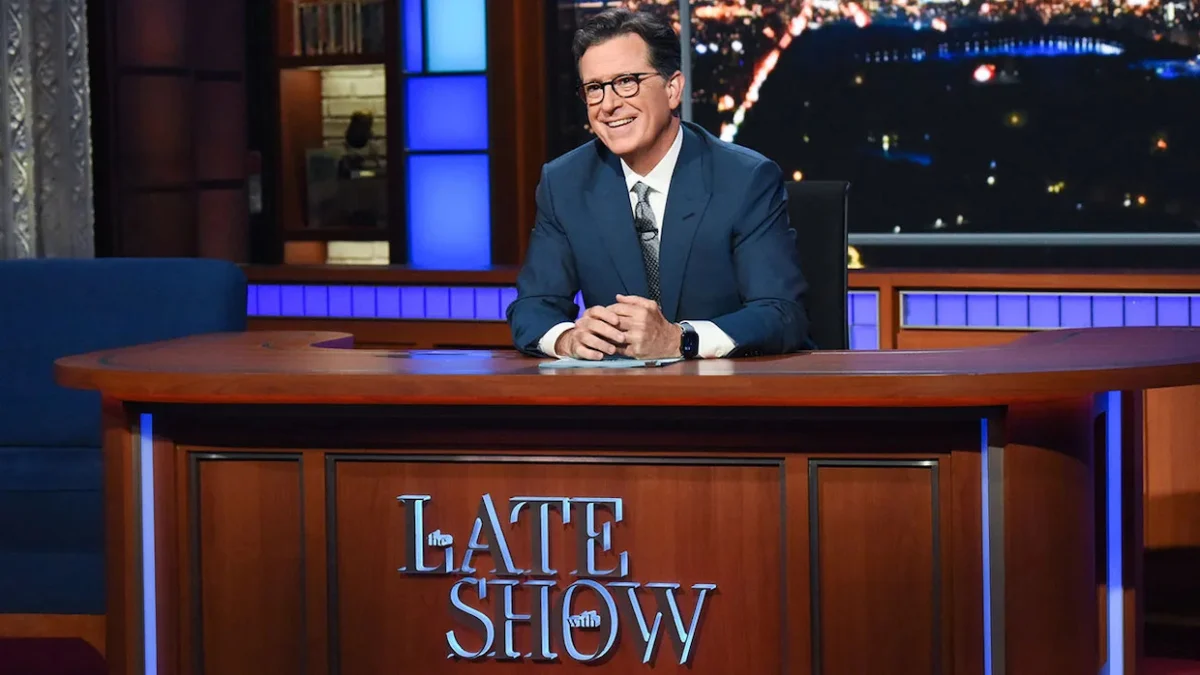
Stephen Colbert and The Late Show: Stephen Colbert, who took over hosting duties for The Late Show from David Letterman in 2015, quickly established himself as a sharp and often vociferous critic of the Trump administration. His biting political commentary resonated with a significant portion of the audience, often positioning his show at the forefront of the late-night political discourse. However, this outspokenness appeared to come with a cost. On May 21, 2026, after an 11-season run, The Late Show was abruptly canceled by CBS, ending a franchise that had been a network staple for 33 years. The official explanation from parent company Paramount Global, following its sale to David Ellison’s Skydance Media, cited the show’s reported annual losses of $40 million. This financial justification, however, was met with considerable skepticism from industry critics and observers. Many suggested that the cancellation was more directly linked to Colbert’s sustained and unflinching criticism of Trump, pointing to the well-documented friendly relationship between the Ellison family and the current administration.
Despite the controversial termination, Colbert’s final year proved to be a triumphant swan song. Ahead of its conclusion, The Late Show earned its first Emmy for Outstanding Variety Talk Series in September 2025, a momentous win after years of consistent nominations. The ceremony itself offered a poignant moment, with Colbert, appearing as a presenter, receiving a spontaneous and heartfelt standing ovation, a clear signal of industry solidarity and appreciation for his work. The final season saw a parade of high-profile guests reflecting on Colbert’s abrupt exit, turning the cancellation into a narrative arc that showcased his enduring impact. For an 11-time Emmy-winning host, this final recognition and the outpouring of support provided a powerful, if bittersweet, conclusion to his tenure.
Jimmy Kimmel and Jimmy Kimmel Live!: Hot on the heels of Colbert’s cancellation, another significant late-night controversy erupted involving Jimmy Kimmel Live!. On September 17, 2026, the show was temporarily pulled from the air following intense pressure from the Trump administration and FCC Chairman Brendan Carr. The catalyst was a comment made by Kimmel in an opening monologue regarding the assassination of conservative commentator Charlie Kirk. While late-night hosts frequently push boundaries, this particular remark triggered a severe backlash from conservative media and political figures.
The pressure escalated rapidly, with major broadcast groups, including Nexstar Media Group and Sinclair Broadcast Group, reportedly threatening to pull Jimmy Kimmel Live! from their ABC affiliates. This placed Kimmel’s future in a precarious position, creating momentary uncertainty about the longevity of his program. However, the swift and overwhelming public backlash against the show’s removal, coupled with widespread threats of audience boycotts, quickly forced a reversal. Within a week, Kimmel was back on television, a testament to the power of public opinion and audience loyalty. His return episode on September 23, 2026, garnered a staggering 6.26 million viewers, setting a new series record. Furthermore, the monologue from that episode alone accumulated an impressive 26 million views across various social media platforms, underscoring the immense public engagement and support for Kimmel. This incident not only highlighted the fragility of late-night programming in a highly politicized environment but also demonstrated the significant cultural capital these hosts command.
The 2026 Variety Series Showdown: Contenders and Predictions
The recent experiences of both Stephen Colbert and Jimmy Kimmel are widely anticipated to significantly influence the outcomes of this year’s Emmy nominations and awards. The political climate surrounding their shows, coupled with the dramatic events of the past year, provides a unique narrative backdrop for the voting process.
Stephen Colbert’s The Late Show holds a distinct emotional and political advantage. For Academy voters, particularly those with liberal leanings, this represents not only the last opportunity to honor a show and host who consistently delivered incisive political commentary but also a potential opportunity to cast a vote against the perceived political interference that led to its cancellation. The prospect of an acceptance speech from Colbert and his team, undoubtedly infused with their signature wit and perhaps a pointed message, could be a powerful motivator for voters. Having finally secured its first Variety Talk Series Emmy last year, The Late Show has proven its ability to win, making it a formidable contender despite its cancellation.
Jimmy Kimmel’s Jimmy Kimmel Live!, a perennial nominee in this category for the past 12 years (despite the various category iterations), faces a different challenge. While his show has been consistently recognized for its quality, it has yet to secure the coveted Variety Series Emmy. The recent controversy, and the subsequent public outpouring of support, could galvanize voters. However, whether this translates into a win depends on the extent to which Emmy voters prioritize political statements in their choices, and crucially, if John Oliver’s formidable HBO program fails to maintain its winning momentum.
John Oliver’s Last Week Tonight enters this re-merged category as a consistent and dominant force. Its seven consecutive wins in Variety Talk Series, followed by three additional Emmys in Scripted Variety, underscore its critical acclaim and consistent excellence. The question now is whether its unique blend of long-form investigative journalism and sharp comedic analysis can continue to impress voters when placed alongside the more traditional late-night formats and sketch comedy. Its historical winning streak suggests it remains a frontrunner, but the political narratives surrounding Colbert and Kimmel could introduce an unpredictable element.
NBC’s Saturday Night Live, a titan in the sketch comedy world, is almost certain to secure a nomination. SNL often navigates political satire differently than late-night talk shows, occasionally even hosting figures like Donald Trump during his 2015 presidential campaign, which positioned it somewhat differently in the political crosshairs. The show is currently riding high on the momentum of its 50th-anniversary celebrations last year, a testament to its enduring cultural impact. Despite the December departure of fan-favorite Bowen Yang, who earned four acting nominations during his tenure, SNL has demonstrated remarkable resilience and creative energy in 2026. The show has reportedly leaned harder into absurdist humor, perhaps as a strategic move to maintain relevance and appeal beyond overt political timeliness. The unexpected success of the debut season of SNL UK, broadcast live from London, further solidifies Lorne Michaels’s status as an unparalleled comedy institution, reinforcing the brand’s global appeal and creative dynamism.
Finally, Comedy Central’s The Daily Show is highly likely to secure the fifth nomination slot in this highly competitive category, if recent history serves as a reliable predictor. The program has undergone significant changes, with Jon Stewart making a highly anticipated return to the desk on Monday nights, complemented by a rotating roster of guest hosts throughout the remainder of the week. The Trevor Noah-hosted iteration of The Daily Show notably won the talk show Emmy when Last Week Tonight was moved to the scripted variety category, demonstrating its ability to win in a less crowded field. Furthermore, the multi-host version of the show also earned a nomination last year, indicating sustained critical recognition for its evolving format.
Broader Implications: Politics, Prestige, and the Future of Late Night
The impending Emmy race in the variety series category is more than just an awards competition; it is a cultural barometer, reflecting the turbulent intersection of entertainment, politics, and media influence. For the numerous liberal-leaning members of the Television Academy, the Emmy ballot presents a unique opportunity to make a symbolic political statement, to register approval or disapproval of the pressures exerted on late-night hosts. The outcomes, regardless of who ultimately takes home the statue, will undoubtedly be scrutinized through a political lens.
The evolving role of late-night television in a deeply polarized media landscape is also under examination. These shows are no longer merely comedic outlets; they have become significant platforms for political commentary, social critique, and even, at times, instruments of public discourse. The controversies surrounding Colbert and Kimmel underscore the increasing stakes for networks and hosts alike, who must navigate the delicate balance of satire, entertainment, and political engagement in an era where every word can be amplified and scrutinized.
Beyond the immediate political implications, the re-merger of the variety categories and the intense competition among these heavyweights also highlight the Television Academy’s ongoing struggle to adapt its awards structure to the rapidly changing television ecosystem. The shift from traditional broadcast dominance to the rise of streaming, and the blurring lines between different content formats, necessitate constant re-evaluation of how excellence is defined and celebrated.
One thing remains almost certain: by the time the award ceremony concludes on September 14, the reverberations of the winners’ speeches and the political narratives surrounding the category will likely extend far beyond the confines of the television industry, potentially eliciting a characteristic, rambling rant from the President on Truth Social, further cementing the inextricable link between late-night television and the political zeitgeist. The 2026 Emmys are poised to be a dramatic and deeply symbolic event, offering a snapshot of television’s current cultural and political landscape.