Historical Context: The Shadow of the Junta
To understand the weight of the narrative, one must consider the historical reality of Argentina between 1976 and 1983. Following the military coup on March 24, 1976, the junta led by Jorge Rafael Videla initiated a systematic campaign of state-sponsored terrorism. According to official reports compiled by the National Commission on the Disappearance of Persons (CONADEP) and subsequent human rights investigations, an estimated 30,000 people were disappeared.
These individuals were abducted by paramilitary forces and taken to clandestine detention centers, such as the infamous ESMA (Navy Mechanics School) and Garage Olimpo. The latter, which features prominently in Bechis’s film, served as a nexus for interrogation, torture, and the preparation of prisoners for the "death flights." During these flights, victims—many still alive—were drugged and thrown into the Atlantic Ocean, a tactic designed to eliminate both the people and the evidence of the state’s crimes.
The political climate of the late 2000s, when the film is set, marked a critical period for Argentina. After years of impunity protected by the "Full Stop" and "Due Obedience" laws of the late 1980s, the Argentine Supreme Court declared these amnesty laws unconstitutional in 2005. This paved the way for a wave of high-profile trials against military officers and civil collaborators, creating the atmospheric backdrop for the protagonist’s reluctant return to Buenos Aires to provide testimony.
Narrative Arc and Character Complexity
The film opens in Turin, Italy, in 2008. Mariano, a 50-year-old paramedic, lives a life defined by silence and professional detachment. His life is interrupted by the arrival of a subpoena from an Argentine court, compelling him to testify against the perpetrators of the regime he survived three decades prior.
The narrative structure oscillates between the clinical, sterile environment of the contemporary courtroom and the visceral, claustrophobic memories of 1976. As a young man, Mariano was an activist swept up in the crackdown. However, the film avoids the trope of the pure, heroic martyr. Instead, it explores the agonizing "gray zone" of the concentration camp, where survival often required becoming a pawn of the captors. Mariano’s role as an involuntary medical assistant to the torturers—a position that kept him alive but stained him with the blood of his comrades—serves as the primary source of the conflict between him and the other survivors waiting to testify.
The film’s strength lies in its refusal to offer easy absolution. The disdain shown toward Mariano by his fellow victims captures the complexity of post-traumatic collective memory. Can a survivor who was forced into collaboration ever be truly rehabilitated in the eyes of his peers? Bechis poses this question without providing a reductive answer.
Analysis of the Cinematographic Approach
Bechis, who himself survived a clandestine detention center during the dictatorship, brings a level of verisimilitude to the film that is rarely achieved in historical dramas. The sequence in which Mariano returns to the physical site of his imprisonment with the daughter of a deceased comrade, Evelyn, is particularly potent. By walking through the empty, demarcated spaces where cells once stood, the film transforms the physical architecture of the detention center into a character itself.
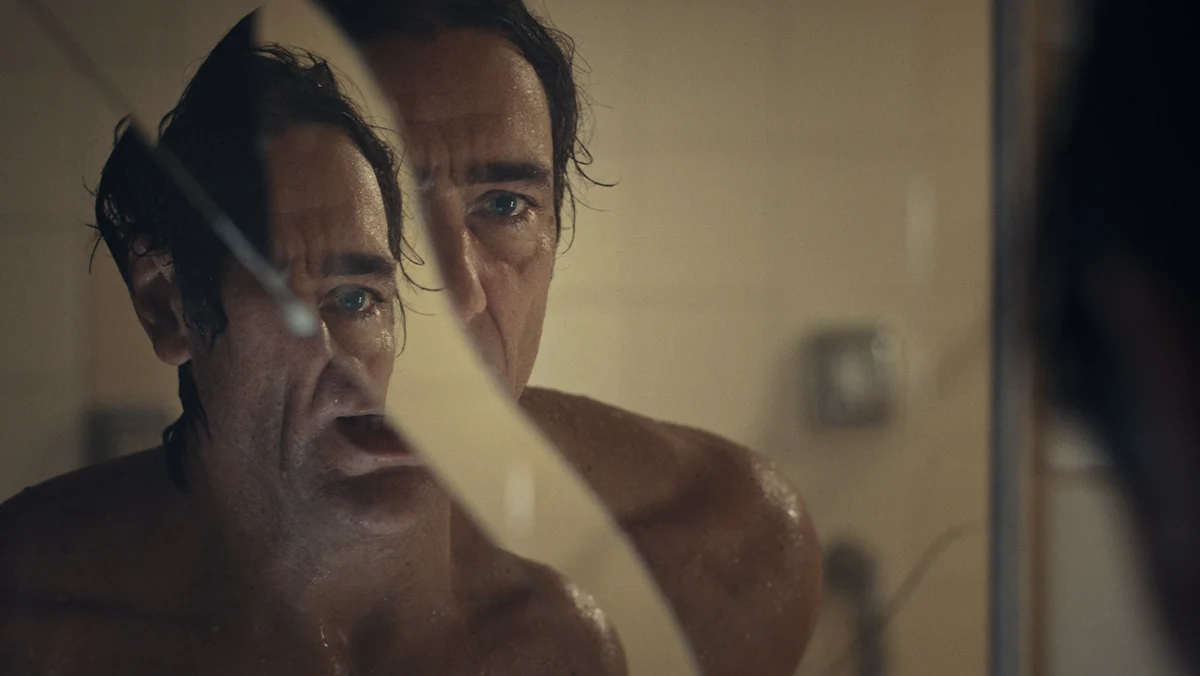
The performance of Adriano Giannini is instrumental in maintaining the film’s tone. His portrayal is one of internalized suffering; he carries the physical and psychological burden of his past in his posture and his silence. The directorial choice to keep dialogue minimal until the final act emphasizes the inadequacy of language when confronted with systemic atrocity.
However, the film is not without its narrative frictions. While the core of the story is grounded in historical research, some critics and observers note that the subplot involving a predatory, mustache-twirling doctor feels disconnected from the gritty realism of the main plot. These moments of contrivance occasionally distract from the otherwise clinical examination of guilt and the long-term impacts of psychological trauma.
The Human Rights Perspective and Legal Implications
The transition of the story into a courtroom drama in the third act reflects the broader societal shift in Argentina during the mid-2000s. The trials were not merely legal proceedings; they were a collective act of historical reclamation. Statements from organizations such as the Mothers of the Plaza de Mayo emphasize that these trials were vital for the "reconstruction of the truth."
The legal implications of Mariano’s testimony are significant. In the context of the film, he risks self-incrimination by acknowledging his survival tactics. This reflects the real-world dilemma faced by many survivors who were forced to navigate the regime’s power structures to stay alive. The legal system, while providing a venue for justice, often struggles to categorize the nuance of human survival under totalitarian control. By exploring this, Back to Buenos Aires aligns itself with the ongoing discourse on transitional justice in Latin America.
The Broader Legacy of the Disappeared
The impact of the Dirty War continues to resonate in contemporary Argentine society. The "death flights" and the systematic erasure of individuals remain a profound national scar. Films like Bechis’s contribute to a broader effort to ensure that the events of 1976–1983 remain in the public consciousness, preventing the historical revisionism that often attempts to minimize the scale of state-sponsored violence.
While Back to Buenos Aires is a somber piece of cinema, its value lies in its earnest attempt to bridge the gap between historical fact and personal experience. It suggests that while the scars of trauma may never fully heal, the process of bearing witness—even through the shame and guilt of survival—is a necessary component of the healing process for both the individual and the nation.
Conclusion: A Testament to Survival
Ultimately, Back to Buenos Aires stands as a challenging, if occasionally uneven, portrait of a man struggling to reconcile his past with a present that demands he finally speak. Through the eyes of Mariano, the audience is forced to confront the reality that for many survivors, the "dark days" of the dictatorship never truly ended; they simply took on new, more complex forms of psychological captivity.
As the film moves through festival circuits in Europe and Latin America, its reception will likely center on its emotional honesty. By focusing on the moral complexities of the desaparecidos, Bechis provides a nuanced addition to the canon of films addressing the Argentine military junta. It is a work that underscores the necessity of remembrance, even when that memory is fraught with discomfort, guilt, and the unresolved questions of a life defined by the necessity of survival in a time of absolute darkness.