The Genesis of an Impossible Dream
The narrative trajectory of the film is rooted in the mid-1970s, a decade defined by the spectacle of death-defying stunts popularized by figures such as Evel Knievel. Ken Carter, born Kenneth Gordon Polsjek in Montreal, sought to replicate the global attention garnered by Knievel’s 1974 Snake River Canyon jump. While Knievel’s attempt was a high-profile failure that nonetheless solidified his status as an American icon, Carter aimed to push the envelope further, envisioning a one-mile-long leap across the St. Lawrence River.
The film meticulously recreates this period, utilizing production design that captures the aesthetic of rural Ontario and New York during the late 70s. Carter’s goal was not merely a jump; it was a complex engineering project that required the construction of a 1,400-foot take-off ramp in Morrisburg, Ontario, and an elaborate landing zone in Ogden Island, New York. To facilitate the landing, the design called for a 200-square-foot bed of roses, a detail that underscores the theatricality Carter brought to his pursuit.
A Cast of Characters in Pursuit of Glory
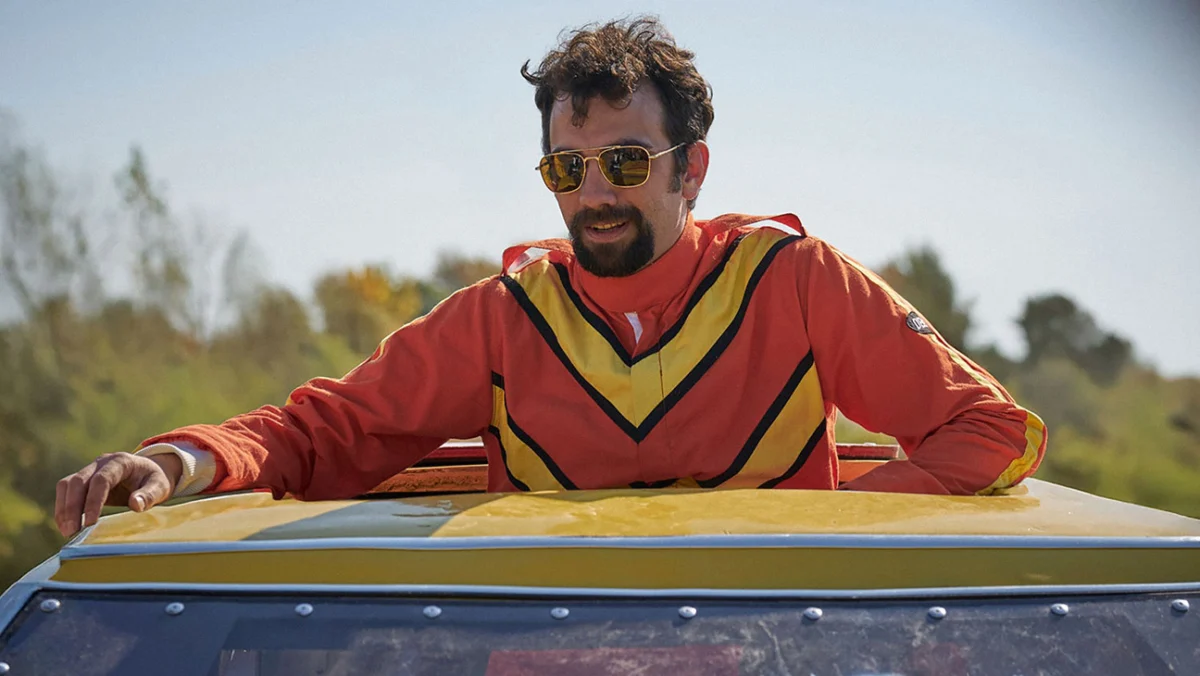
The production relies heavily on the chemistry between its lead performers to anchor the technical aspects of the script. Jay Baruchel’s portrayal of Carter is widely regarded as a standout performance, characterized by an uncanny mimicry of Canadian cadence and a stoic, almost melancholic demeanor. Baruchel presents Carter not as a reckless adrenaline junkie, but as a man searching for validation through a singular, grand gesture.
Supporting Baruchel is Ed Helms, who takes on the role of Dick Keller, the cynical, pragmatic engineer tasked with making the impossible physics of a rocket-powered Lincoln Continental a reality. Keller serves as the film’s voice of reason, constantly questioning the structural integrity of the vehicle and the sanity of the mission. Ben Foster provides a compelling turn as Evel Knievel, functioning as a mentor and foil to Carter. Foster’s interpretation of Knievel captures the bravado and underlying fragility of a man who lived his life in the shadow of potential catastrophe. The interactions between these three actors form the emotional core of the film, highlighting the conflict between engineering logic and the raw, sometimes irrational, human desire for transcendence.
The Chronology of the St. Lawrence Jump
The timeline of the actual events, which the film follows closely, spans several years of planning, setbacks, and delays. By 1979, the project had been hampered by significant financial strain and interpersonal friction. The film depicts the involvement of manager Bill Wilkins, played by Dan Bakkedahl, who becomes increasingly desperate as the project faces mounting pressure from backers.
The climax of the historical event—and the film—centers on October 5, 1979. Behind the scenes, concerns regarding Carter’s physical and emotional stability reached a breaking point. In a decision that highlights the volatility of the production, Wilkins and other stakeholders orchestrated a plan to have understudy Kenny Powers—fictionalized in the film as Danny LaFortune—execute the jump without Carter’s direct knowledge. The result was a catastrophic mechanical failure. The vehicle disintegrated in mid-air, resulting in severe injuries for the pilot, including multiple spinal fractures, marking a somber end to the grand experiment.
Production Analysis and Cinematic Execution
From a technical standpoint, the film integrates original 16mm footage from the 1981 documentary, blending archival reality with the modern production. Under the guidance of director Michael Dowse and cinematographer Sara Mishara, the film succeeds in establishing a distinct period atmosphere. The use of a muted, sepia-toned color palette reflects the faded glory of the 1970s stunt circuit.
However, critics have noted that the film’s pacing is frequently interrupted by repetitive dialogue and interview sequences that prioritize exposition over character development. While the performances are lauded, the narrative structure occasionally struggles to maintain momentum, leading to a viewing experience that feels at odds with the high-speed subject matter. The film is rated R and runs for one hour and 39 minutes, a duration that allows for deep focus on character study but occasionally sacrifices the tension required to elevate the stakes of the jump itself.
Societal Implications and Historical Context
The story of Ken Carter serves as a case study in the evolution of extreme sports and the public’s obsession with high-stakes performance. In the 1970s, the "daredevil" phenomenon was a fixture of television programming, often driven by the prospect of live-broadcast injury or death. The St. Lawrence jump represents the zenith—and the eventual collapse—of this era.
The inclusion of a Japanese documentary crew in the film’s narrative serves as a meta-commentary on how these events were commodified for global consumption. The tragedy was not merely the physical injury sustained by the stunt driver, but the systemic failure of a team that prioritized a "show" over the safety and well-being of the human beings involved. By focusing on this, the film transcends the genre of a sports biopic and touches upon the darker aspects of the entertainment industry.
Final Assessment and Reception
The film is slated for a wide release on September 25, following its successful, albeit measured, reception at the Toronto International Film Festival. While it may not satisfy audiences seeking the rapid-fire humor of a satirical comedy, it offers a poignant and well-researched exploration of a specific slice of Canadian history.
The bottom line for potential viewers is that the film is a deliberate, character-driven drama that values nuance over spectacle. Those expecting a traditional, high-octane stunt movie may find the pacing deliberate; however, those interested in the human psychology behind the "rocket man" trope will find much to consider. Despite some narrative inconsistencies, the film successfully captures the tragic inevitability of Carter’s dream, leaving the audience with a sobering reflection on the cost of chasing a legacy that was, from the very beginning, anchored in shifting sands. As the film concludes, it serves as a reminder that even the most ambitious trajectories can end in an abrupt, unavoidable landing, cementing the story of Ken Carter as a permanent fixture in the annals of Canadian daredevil lore.