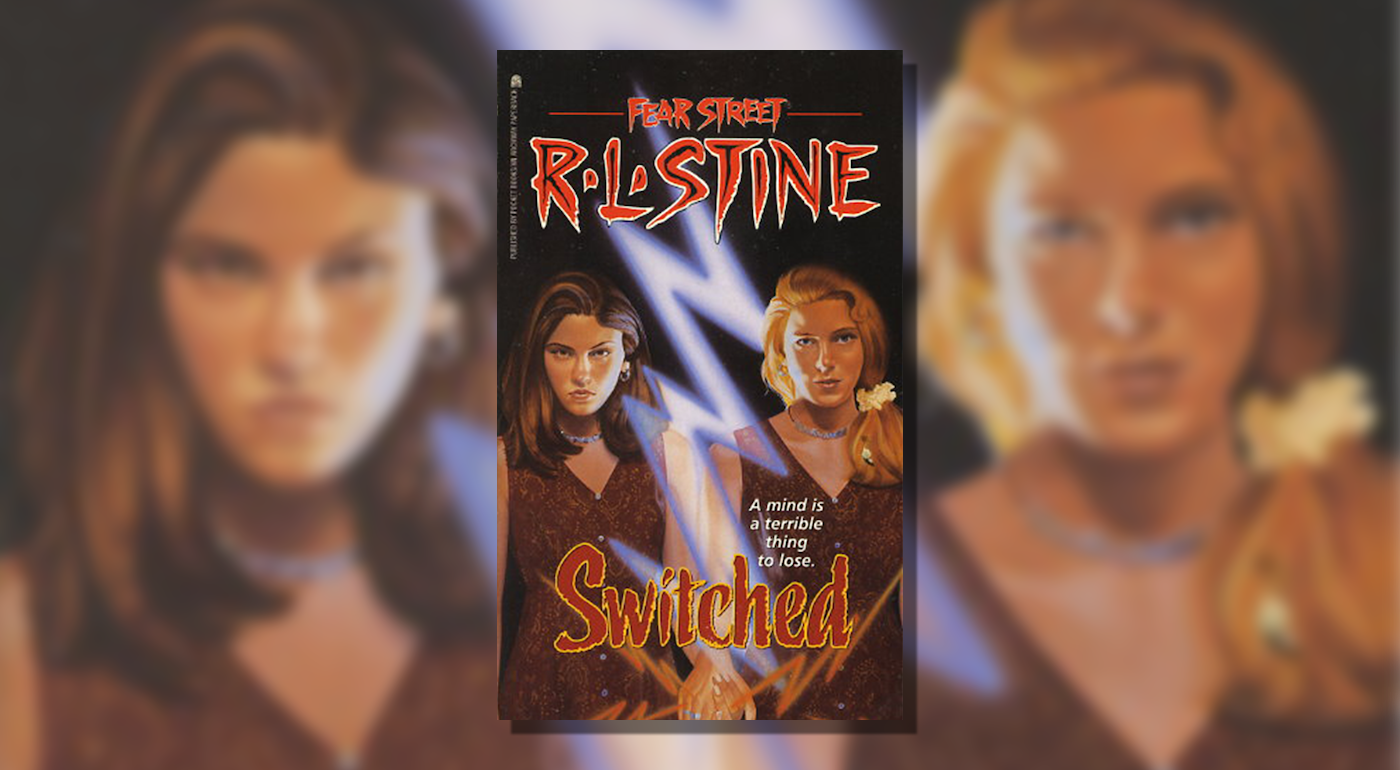
On Fear Street, people aren’t always what—or who—they seem to be, a thematic cornerstone that defines the enduring legacy of R.L. Stine’s seminal young adult horror franchise. Since its inception in 1989 by publisher Simon & Schuster, the Shadyside universe has captivated generations of readers by subverting the familiar safety of suburban adolescence into a landscape of existential dread, supernatural phenomena, and profound psychological distress. Among the extensive bibliography of the Fear Street series, specific titles stand out for exploring identity erasure and body appropriation. In The Secret Bedroom (1991), a protagonist named Lea surrenders her agency to the malevolent spirit of Catherine, a former resident who perished within the home. Similarly, in The Perfect Date (1996), protagonist Brady Karlin discovers that his new romantic partner, Rosha, is actually Sharon, a former girlfriend presumed dead following a fatal and disfiguring sledding accident. Furthermore, the recurring Fear Street Cheerleaders miniseries features a persistent, parasitic evil entity that leaps from athlete to athlete, subjugating their minds and compelling them to commit unspeakable acts of violence. While these supernatural possession narratives frequently rely on external forces to drive their central mysteries, titles such as Switched (1995) pivot inward, examining the terrifying intersections of adolescent alienation, unresolved grief, and acute psychological dissociation.
The Anatomy of a Breakdown: Background Context in Switched
Published in May 1995, Switched presents a distinct departure from traditional Stine-esque monster narratives by anchoring its terror in the deteriorating mental health of its protagonist, Nicole Darwin. Introduced as an academically strained senior teetering on the precipice of academic failure, Nicole internalizes her identity as the high school "loser." The narrative establishes her fragile emotional state through immediate, granular stressors: an overprotective family dynamic, an impending biology project required for graduation within weeks, and a recent, abrupt romantic rejection from her boyfriend, David, who dismisses their relationship by declaring, "It’s just too much."
This relentless accumulation of pressure pushes Nicole to an emotional threshold where ordinary minor inconveniences precipitate profound psychological crises. In the novel’s opening chapters, Nicole admits to bursting into tears merely after tearing a fingernail while dressing for school, signaling an underlying vulnerability that renders her susceptible to manipulation. It is within this vacuum of self-worth and exhaustion that her classmate and best friend, Lucy Kramer, approaches her with an unorthodox proposition: to escape their respective teenage realities by swapping bodies.
Mechanics of the Myth: The Lore of the Changing Wall
The narrative mechanism facilitating the supposed body swap relies on local Shadyside folklore centered around the Changing Wall, a historical landmark located deep within the ominous Fear Street Woods. According to lore introduced by Lucy, the wall was utilized over a century prior by malevolent actors seeking to evade justice by forcibly exchanging physical vessels with unwilling victims. Despite these glaring historical warnings—coupled with the fact that Lucy’s own home life is fraught with turbulent parental conflict—Nicole accepts the proposition with minimal skepticism.
The ritual itself is deceptively simple: both participants must ascend the stone structure, interlock hands, and leap simultaneously to effectuate the transposition. Driven by desperation and psychological exhaustion, Nicole ignores multiple red flags, including Lucy’s evasive responses to follow-up inquiries. Following the leap, Nicole awakens operating under the absolute conviction that her consciousness now resides within Lucy’s physical form, while Lucy occupies Nicole’s body.
Chronology of an Investigation: The Escalation of Panic
Upon completing the purported swap, Nicole navigates to what she believes is her new domestic reality, only to encounter a horrifying crime scene: Lucy’s parents have been brutally stabbed to death in their living room. Rather than suspecting foul play or betrayal by her friend, Nicole’s immediate cognitive priority centers on locating Lucy to apprise her of the tragedy.
A frantic chronology of pursuit unfolds across Shadyside:
- Initial Discovery: Nicole arrives at the Kramer residence, discovering the murdered parents and initiating her search for Lucy.
- The Shadyside Mall Incident: Nicole encounters classmates Margie and Hannah at a local pizzeria alongside sightings of Lucy, though her peers deny seeing Lucy or knowing her whereabouts.
- Escalating Pursuit: Everywhere Nicole travels, citizens and family members repeatedly contact the authorities, viewing her behavior with alarm and dispatching what Nicole perceives as police detectives to track her every movement.
- The Second Murder Scene: Returning to the home of Lucy’s former boyfriend, Kent, Nicole discovers him decapitated in the living room, intensifying her erratic behavior. Desperate for answers, she briefly contemplates using a stolen kitchen knife to coerce information from Kent prior to finding his corpse, utilizing dangerous mental gymnastics to justify the intimidation tactic as a harmless means to an end.
- The Final Confrontation: Believing Lucy has retreated to her grandmother Carla’s rural farm—where the two friends spent summers past—Nicole pursues her adversary to a barn. Lucy engages in psychological torment before fleeing toward Grandma Carla’s water well, where she falls in and drowns.
The Climax and the Revelation of Trauma
The narrative reaches its emotional climax upon the arrival of a vehicle at Grandma Carla’s driveway. To Nicole’s profound shock, the individuals emerging from the car include not only her own parents, but also Lucy’s parents and Kent—all entirely alive and unharmed.
The subsequent resolution shatters Nicole’s subjective framework. It is revealed that no body-swapping phenomenon ever occurred; Lucy Kramer tragically died in an automobile accident three years prior to the events of the novel. The overwhelming trauma of Lucy’s untimely death induced a severe dissociative break in Nicole, characterized by elaborate hallucinations of violent demises—foreshadowed by her imagined murders of Kent and the Kramers. As Nicole’s mother explains to Grandma Carla, Nicole coped with her grief by continuously talking to an imagined iteration of Lucy, occasionally convincing herself that she physically embodied her deceased friend.
The figures Nicole mistook for police detectives throughout her flight across Shadyside were, in reality, clinical medical professionals dispatched to intervene during her acute psychotic episode and transport her to a psychiatric facility for necessary care.
Psychological Implications and Critical Analysis
Literary analysts examining Switched note that the novel utilizes supernatural tropes as a profound metaphor for unresolved adolescent grief and clinical dissociation. While Stine’s work is primarily categorized as commercial horror, the psychological framework of Nicole Darwin addresses complex themes of survivor’s guilt and mental health stigmatization during the mid-1990s.
The manifestation of the body swap served as a subconscious coping mechanism, allowing Nicole to maintain a tactile proximity to her deceased friend while simultaneously projecting her internal rage and feelings of abandonment onto an external antagonist. By externalizing Lucy as a betrayer who revealed their secret to the town, Nicole unconsciously processed the complicated resentment often accompanying the sudden loss of a peer.
Despite medical intervention and an apparent return to physical stability, the novel concludes on an ambiguous, chilling note. While clinical assessments suggest a positive trajectory toward recovery, Nicole’s internal monologue reveals that the hallucinations persist beneath a placid exterior: "the main reason I feel so wonderful is that Lucy comes to visit me every day." Through this closing sentiment, Stine underscores the permanence of psychological scars, illustrating that while Nicole has returned to her own physical body, the ghost of her past remains permanently internalized, residing safely—and invisibly—within her mind.