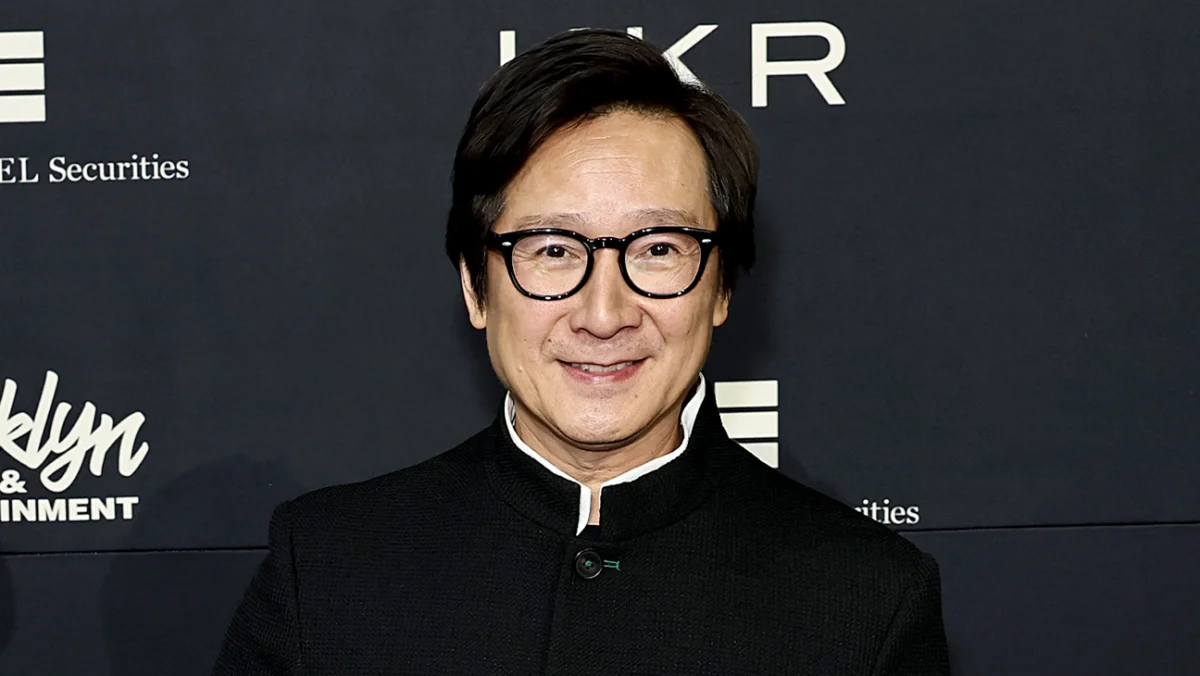
The journey of Ke Huy Quan from a child actor to an Academy Award winner is a narrative defined by resilience, unexpected opportunities, and the profound impact of industry mentorship. In his newly released memoir, Never Say Die, the actor provides a candid look at the early days of his career, specifically highlighting a financial milestone that occurred shortly after the 1984 release of Steven Spielberg’s Indiana Jones and the Temple of Doom. Quan, who was just 12 years old when he portrayed the iconic character Short Round, recounts the moment he discovered a residual check for nearly $100,000—a windfall that fundamentally altered his family’s economic trajectory and solidified his lifelong bond with the film’s creators.
The Genesis of a Hollywood Icon
To understand the significance of this financial revelation, one must examine the context of the mid-1980s film industry. When Quan was cast as Short Round, he was a newcomer navigating a high-stakes production environment alongside Harrison Ford and director Steven Spielberg. The sequel to 1981’s Raiders of the Lost Ark was a massive cultural undertaking, and the pressure on the production team to replicate the commercial success of the original was immense.
For a young actor from an immigrant family, the base salary for the role provided a baseline of professional stability. However, the concept of "residuals"—compensation paid to performers when a project is re-aired or distributed in various formats—was an arcane and often misunderstood aspect of the industry for a child performer. When the check arrived from Lucasfilm, the sheer magnitude of the sum was incomprehensible to the 12-year-old.
"One afternoon, I walked into the kitchen and found my parents standing together at the table," Quan writes in his memoir. "Mom was holding an envelope with my name printed across it. Dad had the papers that had been inside." He recalls his parents wearing expressions of pure, unadulterated disbelief. Upon opening the envelope, he discovered a payment for nearly $100,000, a figure that, adjusted for inflation, would represent a significantly higher purchasing power in today’s economy.
The Mechanics of Generosity: Spielberg and Lucas
The inclusion of a young, unproven actor in the profit-sharing or residual structure of a blockbuster film was, and remains, an anomaly. In the 1980s, profit participation was generally reserved for A-list stars, directors, and high-level producers. By granting a child actor a slice of the film’s earnings, Steven Spielberg and George Lucas engaged in a quiet, deliberate act of generosity that transcended standard contractual obligations.
"Back then, almost no actors got a piece of a movie’s profits," Quan explains in his book. "Even today, only the biggest stars do. That a kid like me, making his first film, would be included in something like that was unheard of." This gesture was not merely a financial transaction; it served as a foundational support system for Quan’s family, providing them with a level of security that allowed him to pursue further opportunities in the entertainment industry, including his role in the 1985 cult classic The Goonies.
Chronology of a Career Trajectory
The timeline of Quan’s professional life is marked by sharp peaks and extended valleys. After his early success in the 1980s, the roles for Asian actors in Hollywood began to dwindle, leading to a long hiatus from on-camera work.
- 1984: Indiana Jones and the Temple of Doom is released; Quan receives his first unexpected residual check.
- 1985: The Goonies hits theaters, further cementing Quan’s status as a recognizable child star.
- 1990s–2000s: Quan pivots behind the camera, working as an assistant director and stunt choreographer, largely stepping away from the spotlight.
- 2022: The release of Everything Everywhere All at Once triggers a massive career renaissance for the actor.
- 2023: Quan wins the Academy Award for Best Supporting Actor, marking one of the most successful "comeback" stories in modern cinematic history.
Throughout this long arc, the memory of his early support from Spielberg remained a constant. During his 2023 Golden Globes acceptance speech, Quan explicitly recognized the director, stating, "As I grew older, I started to wonder if that was it, if that was just luck. For so many years, I was afraid I had nothing more to offer. No matter what I did, I would never surpass what I achieved as a kid."
Economic Implications and Industry Standards
From an industry analysis perspective, the "Short Round" residual check illustrates the importance of equitable treatment for child actors. The Screen Actors Guild (SAG-AFTRA) has long fought for the rights of performers regarding residuals, but the specific structure of profit participation remains a contentious and often opaque subject.
When a director or producer opts to include a supporting performer—particularly a minor—in a backend profit deal, it acts as a form of "career insurance." For a family navigating the volatility of the entertainment business, $100,000 in the mid-80s was not just pocket money; it was a buffer against the instability that often follows a child actor’s first major success. By contrast, many child actors from that era faced significant financial ruin due to mismanagement or the lack of long-term residual protections.
The fact that Quan highlights this moment in his memoir suggests that the emotional weight of that check was equal to its financial value. It represented a recognition of his contribution to the film’s success—a validation that he was not just an extra, but a vital component of the cinematic experience that audiences flocked to see.
The Lasting Legacy of a Mentorship
The relationship between Ke Huy Quan and Steven Spielberg is a rare example of a Hollywood connection that spans four decades without fading. Spielberg’s willingness to look after his young protégé set a standard for professional mentorship that continues to influence how the industry views the treatment of newcomers.
While Quan’s recent success is entirely his own, driven by his performance in the A24 powerhouse Everything Everywhere All at Once, the foundation of his resilience was built during those early days on the set of Temple of Doom. The $100,000 check served as a quiet reminder that even in an industry defined by cold numbers and bottom-line calculations, there is room for human decency and long-term investment in talent.
As Quan transitions into this new chapter of his career—one defined by international acclaim and a second, perhaps more mature, stage of stardom—the lessons of his youth remain central. He is now an elder statesman of the industry, and his memoir serves as a guide for how to navigate the highs and lows of fame. By sharing the story of the residual check, he provides more than just a piece of industry trivia; he offers a blueprint for how a simple, generous gesture from a mentor can ripple through a person’s life for forty years, providing the confidence necessary to return to the craft after decades in the shadows.
Conclusion: Looking Forward
Ke Huy Quan’s reflections in Never Say Die emphasize that his career was never a straight line, but a series of moments that demanded patience and gratitude. The revelation of the $100,000 residual check is a testament to the fact that early success, when coupled with the right kind of support, can provide a platform for a lifetime of artistic contribution. As the industry continues to evolve, the story of the young boy from Temple of Doom serves as a poignant reminder that the most significant impacts in Hollywood are often the ones made behind the scenes, away from the flashbulbs and the red carpets. For Quan, those early days were not just about the money; they were about being seen, valued, and ultimately, set on a path that would lead him back to the summit of the industry.