The landscape of American television is undergoing a profound structural and political realignment, culminating in a fiercely competitive race for the Primetime Emmy Awards. As the Television Academy prepares for its upcoming ceremonies, the intersection of shifting award eligibility rules, high-profile cancellations, regulatory pressures, and intense political scrutiny has transformed a standard industry competition into a cultural referendum. At the center of this year’s drama is the controversial remerging of the variety series categories, forcing titans of late-night and sketch comedy—including Stephen Colbert, Jimmy Kimmel, John Oliver, and Saturday Night Live—into a direct head-to-head collision.
The complexity of the Emmy Awards has long been a challenge for industry professionals and casual viewers alike. With approximately 23 main awards presented during the Primetime Emmys on September 14, and nearly 100 additional accolades distributed across two Creative Arts Emmy ceremonies a week prior, the logistics of honoring television excellence are immense. However, the operational complexity of the awards is frequently overshadowed by the Television Academy’s continuous adjustment of its governing rules and regulations.
Regulatory Adjustments and Disqualifications
The Academy’s eligibility framework is designed to adapt to the evolving medium of television, but these adjustments frequently trigger logistical challenges for networks, streaming platforms, and performers. A prominent example implemented for the current awards cycle prohibits a performer from receiving a guest actor nomination for a role in which they were previously recognized in a lead or supporting capacity.
This regulatory shift had immediate consequences for high-profile contenders. Most notably, Jon Hamm was disqualified from consideration in the guest actor category for his critically acclaimed appearance in Apple TV+’s The Morning Show. The platform had inadvertently submitted Hamm as a guest actor, overlooking the fact that he had previously secured a 2024 supporting actor nomination for the exact same character. While Hamm remains eligible for other accolades this cycle, the disqualification underscores the rigorous oversight applied by the Television Academy to its nomination pools.
Yet, while individual acting categories face strict governance, the structural modifications applied to the variety programming categories have generated the most intense industry speculation.
The Evolution of the Variety Series Category
The governance of variety, talk, and sketch programming at the Emmys has a volatile history. Established in 1951, the category has repeatedly undergone fragmentation and consolidation to accommodate the shifting nature of television entertainment.
During the early 1970s, the Television Academy briefly split the genre into two distinct subcategories to separate talk-format programs—such as The Tonight Show Starring Johnny Carson and The Dick Cavett Show—from musical and sketch-based revues like Rowan & Martin’s Laugh-In and The Carol Burnett Show. From the mid-1970s through 2014, however, the Academy maintained a single, unified category. This long stretch frequently produced eclectic and mismatched competition lineups. Throughout the 1990s, late-night staples and alternative formats competed directly, with figures like Jay Leno occasionally prevailing over non-traditional entries such as MTV Unplugged.
By the mid-2000s, late-night talk shows anchored by Stephen Colbert, Jimmy Fallon, Jimmy Kimmel, Bill Maher, Conan O’Brien, and Jon Stewart came to dominate the field. Stewart’s tenure on Comedy Central’s The Daily Show established a historical benchmark by securing ten consecutive wins in the category.
To create a more equitable playing field, the Academy introduced a structural bifurcation in 2015, dividing the field into distinct "Outstanding Variety Talk Series" and "Outstanding Variety Sketch Series" categories. The sketch category initially honored programs such as Inside Amy Schumer and Key & Peele before NBC’s Saturday Night Live commenced a commanding six-year winning streak that extended through 2023. Concurrently, HBO’s Last Week Tonight with John Oliver dominated the variety talk series arena, securing seven consecutive victories before the Academy reclassified the program into the scripted variety series category, where it subsequently earned three additional Emmys.
For the current awards cycle, the Television Academy has reversed course, merging the variety talk and sketch series categories back into a single, unified competition. This consolidation sets the stage for a high-stakes showdown between late-night television mainstays and sketch comedy giants.
The Political Dimension: Colbert, Kimmel, and Federal Scrutiny
The timing of this category merger coincides with an unprecedented period of political pressure directed at late-night television hosts and their corporate parent companies. Over the past year, programs hosted by Stephen Colbert and Jimmy Kimmel have faced intense scrutiny from federal regulators and political figures, resulting in seismic industry disruptions.
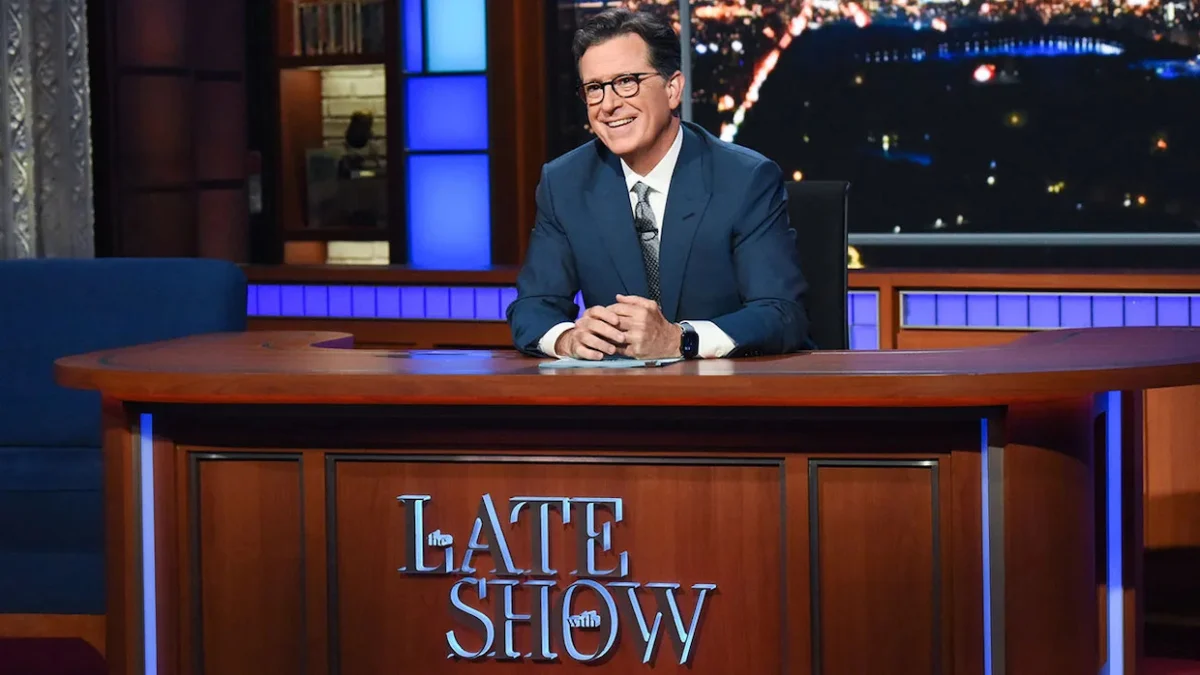
The Late Show with Stephen Colbert, a cornerstone of the CBS schedule following Colbert’s assumption of the mantle from David Letterman in 2015, concluded its historic 11-season run on May 21. The cancellation followed the acquisition of CBS parent company Paramount Global by Skydance Media, led by David Ellison. While corporate leadership attributed the decision to ongoing financial losses—asserting that the franchise was operating at an annual deficit of approximately $40 million—industry critics and media analysts questioned the official rationale. Observers pointed to Colbert’s sustained, sharp comedic critiques of Donald Trump and the political alignment between the Ellison family and the incoming presidential administration as contributing factors.
Despite the abrupt termination, the conclusion of The Late Show offered a narrative arc rich with industry recognition. Last September, the program secured its first victory in the talk series category, followed by a triumphant final season characterized by guest retrospectives celebrating Colbert’s cultural footprint.
Shortly after the conclusion of Colbert’s run, ABC’s Jimmy Kimmel Live! became the epicenter of a separate regulatory and corporate controversy. On September 17, the program was temporarily pulled from the airwaves amid mounting pressure from the federal administration and Federal Communications Commission (FCC) Chairman Brendan Carr. The regulatory pressure followed comments made by Kimmel during an opening monologue concerning the assassination of conservative political activist Charlie Kirk.
Faced with threats from major broadcast affiliates, including Nexstar Media Group and Sinclair Broadcast Group, to preempt the program, ABC momentarily paused production. The suspension triggered immediate public backlash, widespread criticism from free-speech advocates, and threats of coordinated audience boycotts. The commercial pressure resulted in a rapid reversal; Kimmel returned to the air on September 23. The return episode achieved a series-record 6.26 million television viewers, while the monologue itself generated over 26 million views across digital and social media platforms.
Implications for the Emmy Ballot
Industry analysts suggest that the unique trials experienced by Colbert and Kimmel over the past year will significantly influence voting dynamics among members of the Television Academy.
The Late Show enters the race with considerable momentum. Academy voters may view the category as a final opportunity to honor Colbert’s enduring contributions to late-night television, as well as an implicit statement regarding the corporate pressures that led to the show’s termination. Conversely, Jimmy Kimmel Live!, which has maintained a consistent presence among nominees for over a decade without securing a win in the primary category, represents a formidable challenger, provided voters prioritize the program’s recent resilience against regulatory interference.
Complicating the race is the enduring presence of John Oliver’s Last Week Tonight with John Oliver. Despite moving through various subcategories in recent years, Oliver’s program maintains a reputation for critical acclaim and consistent Emmy dominance, representing a major hurdle for network late-night contenders.
Meanwhile, NBC’s Saturday Night Live continues to occupy a formidable position within the genre. Capitalizing on the momentum of its landmark 50th-anniversary celebration, the sketch institution navigated the departure of fan-favorite cast member Bowen Yang while maintaining its production energy throughout its 51st season. Emphasizing absurdism over direct political commentary, and bolstered by the international expansion of franchise iterations such as the London-produced SNL UK, creator Lorne Michaels’ enterprise remains a favored fixture among voters.
Rounding out the anticipated field is Comedy Central’s The Daily Show. Following the return of Jon Stewart to the anchor desk on Monday nights, supported by a rotating roster of correspondents and guest hosts for the remainder of the week, the program remains a strong contender for a nomination slot, continuing a legacy that saw its previous iterations capture top industry honors.
As the September 14 ceremony approaches, the convergence of regulatory friction, corporate consolidation, and artistic achievement has elevated the Primetime Emmy Awards beyond a routine industry gala. For an Academy membership with traditionally progressive leanings, the ballot offers a platform to register artistic and cultural preferences against a backdrop of intense national debate.