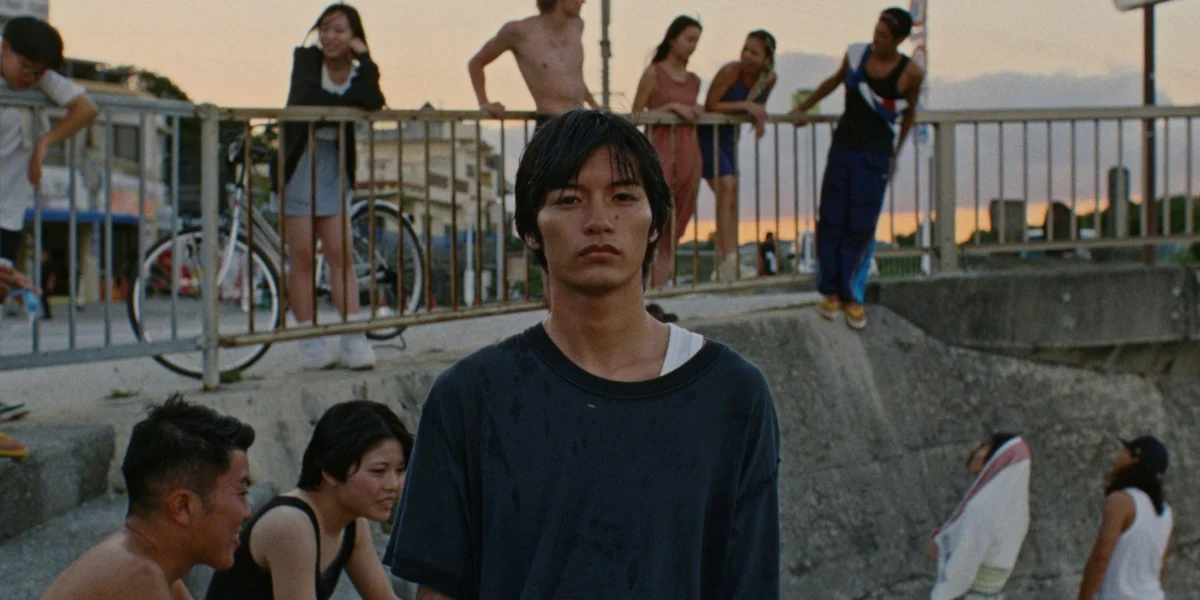
The 110-minute feature film The Color of the Sun marks the compelling directorial debut of Canadian filmmaker Xavier Tera, offering a poignant examination of youth, grief, and geopolitical friction set against the picturesque yet heavily militarized backdrop of Okinawa, Japan. Running at a deliberate and contemplative pace, the film brings together a diverse cast featuring Naoto Shimajiri, West Mulholland, Ichiro Andre Castro, Daido, Yuma Taira, Shiyun Nakamura, Erika Oda, and Sachiko Fukumoto. Set in the early 2010s, the narrative centers on Kamei, a young Okinawan teenager navigating the final summer before his last year of high school. As Kamei struggles with the recent loss of his father and the stifling expectations of his grieving mother and restrictive grandfather, his world is disrupted by the arrival of Colin, an American teenager raised on one of the island’s prominent military bases. Against a persistent auditory backdrop of roaring helicopter blades and fighter jets, the two youths forge an intense, complex bond that forces them to confront emerging sexual identities, blurred loyalties, and the heavy legacy of occupation. Tera’s debut has quickly garnered critical acclaim, emerging as one of the standout independent features of the cinematic calendar for its ambitious blending of intimate personal drama with macro-level historical critique.
Historical Context and the Okinawan Landscape
To fully understand the resonance of Xavier Tera’s cinematic vision, one must examine the complex historical and geopolitical reality of Okinawa Prefecture. Following the devastating Battle of Okinawa in 1945—one of the bloodiest engagements of the Pacific War—the Ryukyu Islands were placed under the administration of the United States military. While the administrative rights of the islands were officially reverted to Japan in 1972 through the Okinawa Reversion Agreement, the physical footprint of the United States Armed Forces remained vast. Today, despite comprising less than one percent of Japan’s total land area, Okinawa hosts roughly 70 percent of all exclusive U.S. military base facilities in the country.
This heavy concentration of foreign military power has historically been a source of profound friction between local residents and national authorities in Tokyo, as well as the U.S. government. Decades of protests, civil unrest, and political negotiations have centered on issues ranging from environmental degradation and noise pollution to aircraft accidents and crimes committed by military personnel. The early 2010s setting of The Color of the Sun captures a particularly sensitive era, marked by persistent public anger over jurisdictional inequalities granted to U.S. service members under the U.S.–Japan Status of Forces Agreement (SOFA). Incidents of misconduct, when met with perceived impunity, frequently ignite localized demonstrations and heighten communal anxiety. In Tera’s film, this real-world historical tension is not merely a distant background detail; it actively permeates the domestic and emotional spaces of the characters, acting as a constant, thundering reminder of an imposed occupation that outlived the Second World War by generations.
Chronology of a Transitional Summer
The narrative timeline of The Color of the Sun unfolds across a pivotal summer break, a traditional literary and cinematic juncture representing the precipice of adulthood. For protagonist Kamei, this period is defined by a deep sense of dislocation. The film utilizes period-specific markers, such as early social media interfaces, to anchor the story in the cusp of the 2010s—a time when global connectivity was accelerating, rendering Kamei’s profound sense of local alienation all the more stark.
Following the sudden death of his father, Kamei’s family unit has fractured. He is caught between a heartbroken mother unable to process her grief and an authoritarian grandfather who seeks to enforce rigid traditional structures. Early in the summer, Kamei spends his days wandering the island, dreaming of escape, until a chance encounter introduces him to Colin. Colin, a rebellious and carefree American teenager from the base, shatters the predictable rhythm of Kamei’s days. As their friendship deepens into a romantic and sexual awakening, the boys navigate the delicate space between camaraderie and cultural division. However, this private trajectory of self-discovery runs parallel to escalating community unrest. When allegations of sexual assault involving base personnel emerge in the local news, public outrage boils over. The resulting societal pressure and generalized prejudices begin to hem in Kamei’s personal choices, transforming a tender coming-of-age narrative into a high-stakes exploration of trust, betrayal, and belonging.
Cinematic Craftsmanship and Stylistic Choices
Director Xavier Tera and renowned cinematographer Sayombhu Mukdeeprom—celebrated for his masterwork in films like Call Me by Your Name—employ a distinct visual grammar to articulate Kamei’s internal landscape. Utilizing staggering celluloid compositions, Mukdeeprom relies heavily on the rule of thirds during the film’s opening acts. This framing physically isolates Kamei within his community and natural environment, visually externalizing his grief and alienation following his father’s passing. As the narrative progresses and Kamei experiences a gradual internal awakening through his relationship with Colin, the cinematography evolves. The image compositions become more diverse and integrated, symbolizing a growing sense of idealism and emotional liberation within the young protagonist.
A notable stylistic choice by Tera is the inclusion of sparse, didactic narration from Kamei at the beginning and end of the film. While these moments attempt to ground the viewer in the historical and psychological weight of the protagonist’s mindset, some critics note that they occasionally border on over-explanation, briefly interrupting the otherwise subtle and immersive dramaturgy. Fortunately, the emotional core of the film relies far more on physical performance and minimalist direction than on expositional dialogue. Extended, carefully coordinated long takes allow the audience to witness the unspoken tensions between Kamei and Colin. An awkward, beautifully restrained sex scene captures the acute uncertainty of youth, highlighting the second-guessing and vulnerability inherent in discovering one’s sexuality under the weight of societal scrutiny.
Socio-Political Implications and Universal Themes
Though firmly rooted in the specific geography and socio-political climate of Okinawa, The Color of the Sun achieves a remarkable universality through its thematic explorations. Tera, drawing in part from his own Canadian background, recognizes the systemic parallels between imperialist legacies across different global contexts. Just as Okinawa bears the scars of prolonged foreign military occupation, Canada and other nations grapple with the intergenerational trauma and power imbalances stemming from historical colonization and modern geopolitical hegemonies.
The film’s implications extend beyond a simple critique of militarism; it serves as a nuanced commentary on the human capacity for empathy in times of systemic conflict. By positioning an Okinawan youth and an American base-resident as the focal points of a romantic and emotional awakening, the narrative challenges binary notions of "friend" and "enemy." The community’s legitimate anger toward the occupying military apparatus creates a hostile environment for genuine cross-cultural connection, yet Kamei and Colin find a way to bridge this divide through vulnerability and shared experience.
Critical Reception and Industry Standing
Since its premiere, The Color of the Sun has drawn praise from film critics and festival programmers alike for its fearless handling of delicate thematic material. Industry analysts have highlighted Tera’s ability to balance the macro-level trauma of geopolitical occupation with the micro-level intimacies of adolescent desire. The performances of the ensemble cast, particularly the natural chemistry between Naoto Shimajiri and West Mulholland, have been lauded for anchoring the film’s ambitious narrative scope in authentic human emotion.
As a debut feature, the film demonstrates a mature command of tone, pacing, and visual storytelling. By refusing to offer easy resolutions or neat moral binaries, Tera challenges audiences to reflect on the complexities of coexistence. The narrative concludes not with a sweeping political victory, but with a quiet, hard-won realization about self-acceptance and social tolerance. In doing so, The Color of the Sun solidifies its place as a notable cinematic achievement of the year, offering a vulnerable and deeply sensitive odyssey that champions human connection amidst the enduring shadows of historical conflict.