In a high-stakes presentation delivered on Friday morning, David Ellison, the architect behind the newly consolidated media titan, officially christened the merged Paramount and Warner Bros. entity under the banner of Skydance. The unveiling was accompanied by a cinematic sizzle reel underscored by the evocative Hans Zimmer score from Inception, a choice that signaled a transition toward high-concept, franchise-driven storytelling. While the rebranding effort was intended to signal a unified future for two of Hollywood’s most storied studios, the most significant takeaway for industry observers was the visual prominence of the DC brand, which appeared in a constellation of logos alongside the legendary Paramount mountain and the iconic Warner Bros. shield.
The Strategic Importance of DC in the New Skydance Era
The inclusion of the DC bullet logo at the top tier of the Skydance brand architecture serves as a definitive signal that the intellectual property held by DC Studios and its publishing arm will remain a primary pillar of the company’s long-term business strategy. This visual confirmation comes at a time of profound internal flux, as the combined company undergoes a massive organizational shakeout.
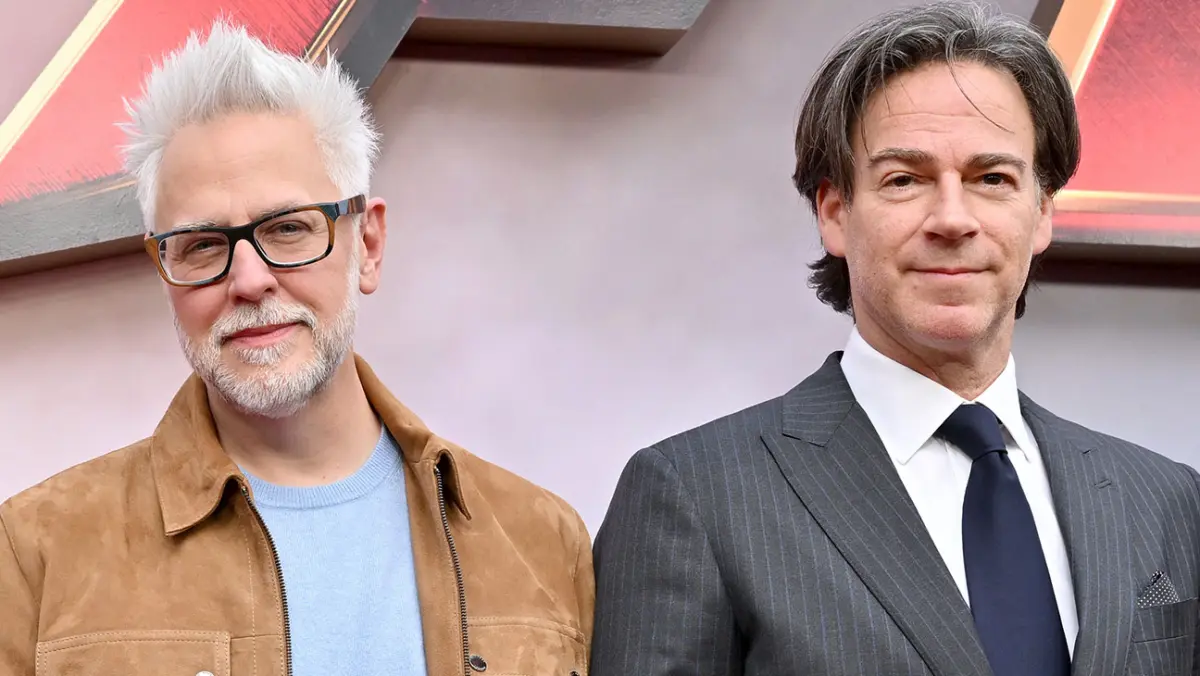
Despite the sweeping changes, which include the expected departure of prominent executives like Warner film chiefs Pam Abdy and Michael De Luca, DC Studios co-heads James Gunn and Peter Safran have been confirmed to remain in their current roles. Multiple sources familiar with the matter confirmed that Gunn and Safran held a constructive in-person meeting with Ellison this past Thursday. During this session, the leadership duo was reportedly encouraged to maintain their existing creative roadmap, effectively signaling a vote of confidence in their vision for the DC Universe (DCU).
Navigating the Organizational Hierarchy
While the stability of the creative leadership is established, the exact reporting structure remains a point of ambiguity. Within the previous Warner Bros. Discovery regime, Gunn and Safran reported directly to CEO David Zaslav. Under the new Skydance umbrella, it is currently unclear whether they will retain a direct line to Ellison or if their operations will be integrated into a larger hierarchy overseen by Josh Greenstein and Dana Goldberg. Greenstein and Goldberg, the incumbent heads of Paramount’s film division, are expected to assume broader control over the company’s combined film output.
The uncertainty regarding the reporting chain reflects the broader challenges inherent in such a massive corporate integration. Industry analysts note that for the merger to succeed, Skydance must balance the autonomy required for creative excellence with the operational efficiencies demanded by a newly formed, highly leveraged media conglomerate.
Chronology of Creative Continuity
The decision to retain Gunn and Safran is rooted in a desire to avoid the "lame duck" phenomenon that plagued the transition period of the previous DC regime. In 2023, the films The Flash and Aquaman and the Lost Kingdom suffered at the global box office, a performance widely attributed to the fact that they were greenlit by a previous management team and released into a market where the brand’s future was uncertain.
To mitigate such risks, Ellison has taken a proactive approach, including a summer visit to the Atlanta set of the highly anticipated Superman sequel, Man of Tomorrow, which is currently slated for a July 2027 release. This gesture was seen as a deliberate effort to stabilize morale and ensure that the production remains on track. Furthermore, the company is expected to maintain its current slate, including the horror-thriller Clayface, scheduled for release on October 23, providing a stable foundation during the transition phase.
DC Comics: A Renaissance in Market Share
The strength of the DC brand extends beyond film and television. In recent years, DC Comics has experienced a significant commercial and critical resurgence, notably narrowing the market share gap with rival Marvel Comics. The introduction of the "Absolute Universe" imprint and a renewed focus on fostering healthy relationships with top-tier creators have revitalized the publisher’s footprint.
Industry data suggests that the comics division has become a robust IP incubator. For years, rumors persisted that Warner Bros. Discovery might seek to divest the publishing division, yet those scenarios never materialized. Under the Skydance banner, the likelihood of such a sale is considered negligible. Insiders describe DC not merely as a publisher, but as a critical "IP generator" that provides the foundation for the company’s most lucrative film and streaming projects.
Broader Implications for Cross-Platform IP Integration
The merger opens the door for potentially unprecedented cross-pollination of intellectual property. With the combined resources of Paramount—which holds the rights to franchises such as Star Trek, Mission: Impossible, and the Teenage Mutant Ninja Turtles—and the vast library of Warner Bros. and DC, the creative possibilities are expansive.
There is significant speculation that DC Comics could expand its publishing scope to include comic adaptations of Paramount-owned properties. While industry sources suggest that certain divisions, such as Nickelodeon and Cartoon Network, are prime candidates for operational consolidation to achieve cost efficiencies, the DC brand is viewed as a "hands-off" asset. The consensus among analysts is that the brand’s unique value lies in its standalone creative strength, and any attempt to dilute its identity through excessive corporate layering could prove counterproductive.
The Human Cost of Corporate Consolidation
While Gunn and Safran have secured their positions, the atmosphere within the executive suites is reportedly tense. The departure of Pam Abdy and Michael De Luca serves as a stark reminder of the volatility inherent in media mergers. According to insiders, the pair had received assurances regarding their tenure post-merger, only to see those expectations evaporate as the organizational strategy evolved.
"They met with David months ago and felt secure," one source noted regarding the ousted executives. "Clearly a lot has changed since then." This narrative underscores the reality that in the current media landscape, strategic alignment is often subject to rapid shifts in board-level priorities.
Forward-Looking Analysis: The Road Ahead
As Skydance moves forward, the primary objective will be to prove that the consolidation of two massive legacy studios can lead to a more streamlined and profitable operation. The reliance on the DC brand as a tentpole of this strategy is a calculated risk. By securing Gunn and Safran, Ellison is banking on the success of their long-term vision to provide the necessary fiscal runway for the rest of the company’s assets.
The integration process will likely take several years to fully manifest in the company’s balance sheet. Key metrics to watch in the coming 18 to 24 months include the box office performance of the Superman reboot, the success of the unified streaming strategy, and the ability of the company to leverage its combined IP library across gaming, merchandising, and theme park licensing.
Ultimately, the branding event on Friday was more than a cosmetic update. It was a declaration of intent. By placing the DC logo alongside the historic symbols of Paramount and Warner Bros., David Ellison has staked his reputation on the idea that these storied entities can function better as a singular, unified force. Whether the internal culture can adapt to this new reality remains the central question for the future of the company. For now, the "Bat-signal" is lit, and the industry is watching to see if the new Skydance can turn its grand vision into a sustainable reality.